


🩸 RED BLOOD JOURNAL TRANSMISSION
T#: RBJ-2026-THORIUM-THRESHOLD
Classification: Energy Sovereignty Conflict / Reactor Architecture Transition / Grid Liberation vs Grid Domination
Desk: Strategic Infrastructure Analysis Wing — Archive of Blood & Memory
Source Reference:
Energy
PROLOGUE — THE ELEMENT THAT COULD BREAK THE GRID
Civilization has always been governed not by laws—but by energy.
Empires did not rise because of philosophy.
They rose because they controlled the power source that sustained the system beneath philosophy.
Wood built early civilizations.
Coal built industrial civilization.
Oil built the modern geopolitical order.
Now, buried in the periodic table, lies an element capable of ending the oil-defined era entirely:
Thorium.
Unlike uranium, thorium exists in vast abundance across Earth. Mining companies historically discarded it as waste because the industrial infrastructure was never built to use it.
Energy
The result was not technological inevitability.
It was technological selection.
And selection always follows power.
SECTION I — THE REACTOR DESIGN THAT WAS NEVER SUPPOSED TO DOMINATE
Traditional nuclear reactors rely on uranium fuel rods submerged in pressurized water systems.
These systems are inherently fragile.
They operate under immense pressure, creating conditions where system failure can cascade into catastrophic release events.
Energy
Molten salt thorium reactors invert that architecture entirely.
Instead of solid rods, the fuel exists as liquid dissolved into molten salt.
This produces three structural consequences:
1. Passive self-regulation
If temperature rises, the liquid salt expands, slowing the nuclear reaction automatically.
Energy
2. Meltdown immunity through physics, not policy
In emergency scenarios, liquid fuel can drain into containment tanks, solidifying safely without explosion.
Energy
3. Continuous operation without shutdown cycles
Fuel can be added and waste removed while the reactor remains active, eliminating downtime.
Energy
This transforms nuclear energy from an intermittent centralized infrastructure into a continuous, scalable energy flow system.
Not simply more efficient.
More controllable.
SECTION II — THE ENERGY ABUNDANCE PROBLEM
The defining feature of thorium is not safety.
It is abundance.
China alone possesses enough thorium reserves to power its civilization for tens of thousands of years.
Energy
Unlike uranium reactors, which extract less than 1% of usable energy from mined material, molten salt reactors can extract up to 95% of available energy from fuel sources.
Energy
This eliminates scarcity as a structural limitation.
And scarcity is the foundation of centralized control.
Energy scarcity justifies:
• Utility monopolies
• Regulatory gatekeeping
• Military protection of supply routes
• Economic dependency on centralized grids
Abundant decentralized energy dissolves those leverage points.
Which introduces the central paradox.
Technologies capable of freeing systems from control are historically absorbed into control structures instead.
SECTION III — THE SHIPPING CONTAINER REACTOR: THE DEATH OF CENTRALIZED ENERGY
The most disruptive aspect of thorium reactor architecture is not its fuel.
It is its size.
Modern designs are being engineered to fit inside shipping container-scale modules capable of producing tens of megawatts per unit.
Energy
This creates the possibility of:
• Self-powered towns
• Autonomous industrial zones
• Military forward bases independent of fuel supply lines
• Corporate-controlled private energy infrastructure
• Sovereign communities outside national grid dependency
Energy transitions from geographic infrastructure to mobile infrastructure.
From fixed territory to deployable units.
Energy becomes transportable.
Deployable.
Controllable.
Or uncontrollable.
Depending on who holds the reactor.
SECTION IV — THE ENERGY POWER PYRAMID
Energy control defines every political order in human history.
Slave labor powered ancient empires.
Coal powered industrial expansion.
Oil powered global military projection.
Now energy control is transitioning toward nuclear micro-infrastructure.
Entities already positioning themselves within this transition include:
• Nation-state research programs
• Private nuclear startups
• Defense agencies testing transportable reactors
• Corporate infrastructure entities seeking to power AI systems
Energy is not being pursued for humanitarian reasons.
Energy is pursued because energy defines who controls civilization.
SECTION V — THE FORK IN CIVILIZATION
Thorium reactors introduce two mutually exclusive futures.
Path A — Centralized Reactor Empire
Large-scale reactors controlled by:
• Governments
• Corporate energy monopolies
• Defense agencies
Energy remains centralized.
Control remains hierarchical.
Dependency remains intact.
Path B — Distributed Reactor Civilization
Small modular reactors deployed locally.
Energy sovereignty becomes possible.
Dependency collapses.
Grid control dissolves.
Energy becomes autonomous.
Which path emerges depends not on engineering.
But on control.
SECTION VI — THE TRUE WAR IS NOT MILITARY
It is infrastructural.
The nation that controls deployable energy controls:
• Industrial output
• Artificial intelligence infrastructure
• Military readiness
• Economic independence
• Social control mechanisms
Energy is the foundation beneath all other power systems.
Who controls energy controls everything built upon it.
SECTION VII — THE FINAL QUESTION: LIBERATION OR ABSORPTION
Every transformative technology follows one of two paths:
Liberation.
Or absorption.
Historically, liberation technologies are absorbed into centralized control systems.
Thorium molten salt reactors introduce the first credible opportunity to break that pattern.
But technological capability does not determine outcome.
Control does.
FINAL ASSESSMENT
Thorium molten salt reactors represent the most significant potential shift in energy architecture since the oil revolution.
Not because they generate power.
Because they redefine who can generate power.
Energy is not merely infrastructure.
It is sovereignty.
The reactor is not the story.
Control of the reactor is.
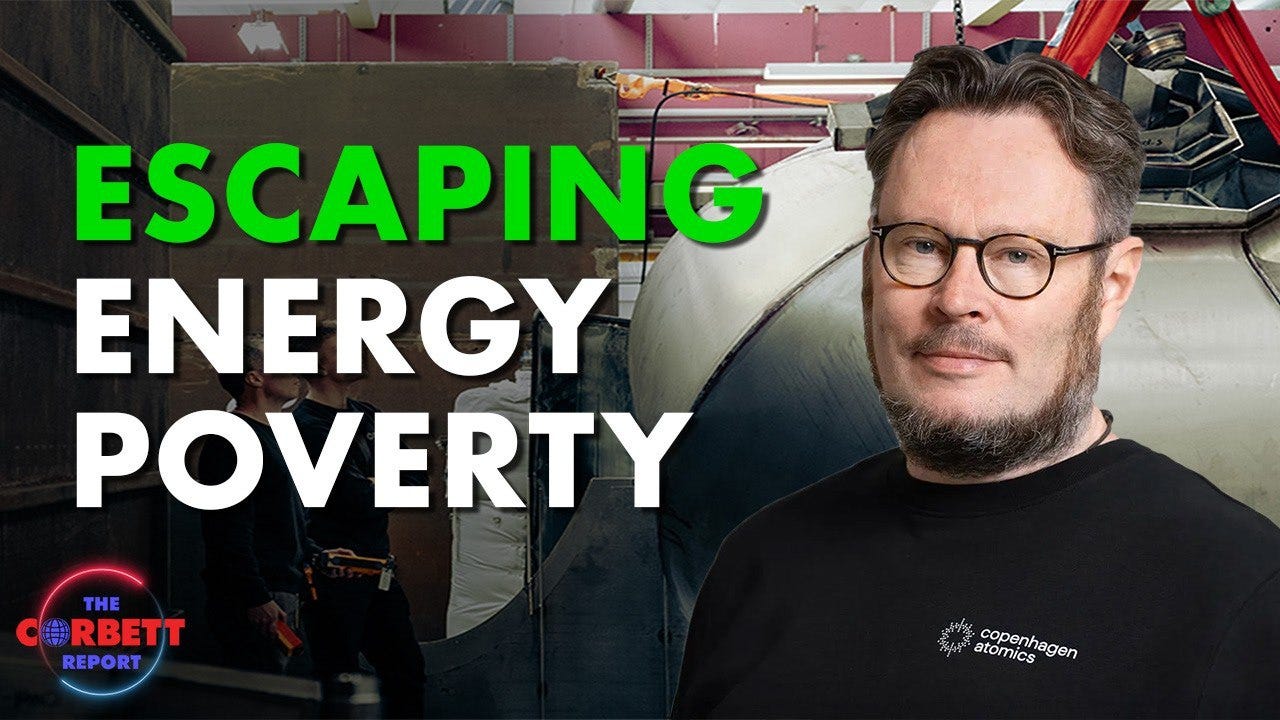
⚛️The Thorium Threshold:
Energy Sovereignty and the Architecture of Control
The provided text analyzes thorium molten salt reactors as a revolutionary shift in global power dynamics, moving beyond the limitations of uranium and fossil fuels.
Unlike traditional energy sources, thorium is abundantly available and enables a reactor architecture that is inherently safe, efficient, and scalable.
The source emphasizes that this technology’s true significance lies in its potential to create decentralized energy sovereignty through small, transportable modules that could bypass traditional utility grids.
This transition presents a critical crossroads between centralized corporate or state control and the liberation of autonomous communities.
Ultimately, the narrative asserts that because energy is the foundation of civilization, the battle over this technology is a fundamental struggle for political and social self-governance.
The text concludes that the future of humanity depends not on the engineering itself, but on who maintains authority over these new energy systems.


