


🩸 RED BLOOD TRANSMISSION JOURNAL
T#RBJ–GEOPOLITICS–GRADUALISM–ARCHIVE PART II
Title: Shadows of the Tortoise: The Century-Long Harvest of the Balfour Seed
Classification: Suspicious Political-Economic Pattern Analysis
Distribution: International / Open-Source Intelligence (OSINT)
Method: Structural Incentive Mapping · Historical Signals · Non-Allegorical
Date: December 20, 2025

In the shadowed lodges where compass and square veil deeper oaths, the Grand Architects convened. Not for conquest by blade, but by patience—the doctrine of the tortoise, plodding inexorably toward victory.
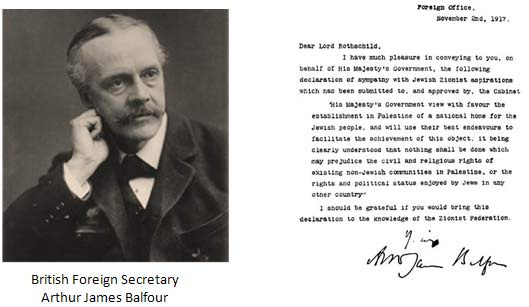
The seed was sown on November 2, 1917: a brief letter from Arthur James Balfour to Lord Walter Rothschild, pledging British support for a “national home for the Jewish people” in Palestine. A promissory note from empire to banking power, issued amid the chaos of world war.
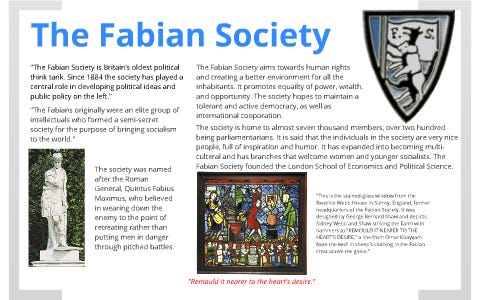
This was no accident of diplomacy. It was the calculated opening of a Fabian game—gradual permeation, infiltration of institutions, reform disguised as progress. The Fabian Society, founded 1884, rejected revolution’s blaze for the slow burn of delay. Named for Fabius the Delayer, who defeated Hannibal not in battle but through exhaustion over years. Emblem: the tortoise. Earlier coat of arms: wolf in sheep’s clothing. Method: appear benign, advance relentlessly.
In this pattern, Freemasonic networks—hierarchical, oath-bound, spanning continents—served as the hidden scaffolding. Whispers link Rothschild scions to lodges; overlapping circles with Fabian intellectuals like the Webbs, who reshaped empire through “scientific” socialism. Masonic tolerance admitted Jewish members early in England and beyond, fostering alliances where finance met ideology.


The banking powers waited. Through Mandate rule, immigration waves, partition in 1947, and Israel’s founding in 1948—the bud emerged. But the full harvest demanded a century: wars, oil crises, alliances forged in discretion. Crises as catalysts, revealing opportunities to the prepared. Liquidity held back, deployed when panic liquidated the unprepared.
By the 2010s–2020s, the fruit ripened: a strategic outpost transformed into technological fortress, economies intertwined with global capital—Rothschild-linked funds seeding innovation in a land once promised on paper.
Then & Now
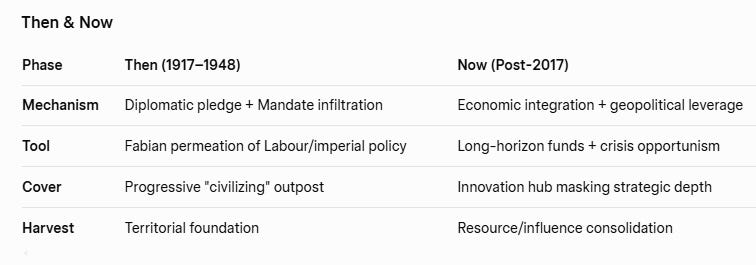
Phase
Then (1917–1948)
Now (Post-2017)
Phase Mechanism
Then (1917–1948) Diplomatic pledge + Mandate infiltration
Now (Post-2017) Economic integration + geopolitical leverage
Phase Tool
Then (1917–1948) Fabian permeation of Labour/imperial policy
Now (Post-2017) Long-horizon funds + crisis opportunism
Phase Cover
Then (1917–1948) Progressive “civilizing” outpost
Now (Post-2017) Innovation hub masking strategic depth
Phase Harvest
Then (1917–1948) Territorial foundation
Now (Post-2017) Resource/influence consolidation
What This Is Not
Not bloodline sorcery. Not ethnic essentialism. Not proven Masonic cabal—historical overlaps exist, but evidence is circumstantial, often amplified in antisemitic tropes. This is a replicable pattern: patient capital + institutional seepage + crisis readiness. Enabled by systems that permit wealth transfer during upheaval.
Epilogue
Nearly 108 years after the letter, the tortoise reaches its mark. The method endures because it outlasts emotion, spectacle, cycles. Blood in the streets waters the seed; time reaps the yield.
Recognize the shadow. The game is long—but observable.
End Transmission
For archive continuity: See T#RBJ–FINANCE–FORMULA–ARCHIVE PART I
🐢Shadows of the Tortoise: The Century-Long Harvest of the Balfour Seed
This document analyzes a theory regarding the gradualist geopolitical strategy allegedly used to establish and consolidate power in the Middle East.
It suggests that the Balfour Declaration was not a mere diplomatic gesture but the start of a century-long project modeled after the Fabian Society’s philosophy of patient, incremental change.
The text explores how financial dynasties and secretive institutional networks supposedly leveraged global crises and “scientific” planning to transform a territorial pledge into a modern technological and economic stronghold.
While referencing symbols like the tortoise and the wolf, the author clarifies that the focus is on structural incentive mapping and the behavior of patient capital rather than traditional conspiracies.
Ultimately, the narrative presents a framework for understanding how long-term institutional infiltration and strategic timing can result in a massive consolidation of global influence.


