


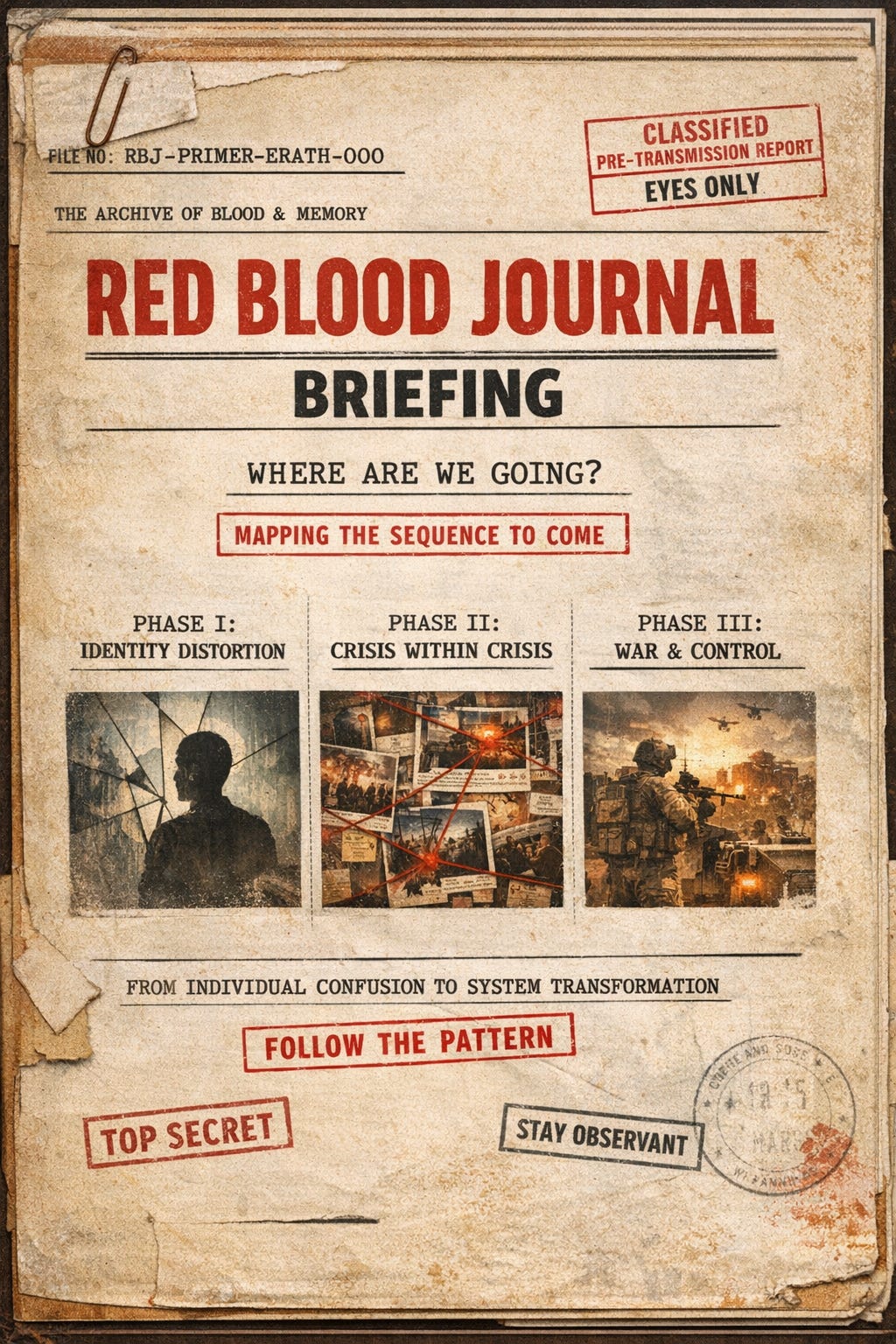
🩸 RED BLOOD JOURNAL TRANSMISSION
Transmission Code: RBJ-PRIMER-ERATH-000
Classification: PRE-RELEASE BRIEFING — SEQUENCE ORIENTATION
Desk: Central Editorial Command — Archive Preparation Unit
Archive: The Archive of Blood & Memory
The three phases of systemic transformation
PROLOGUE — Before the First Signal


4
Before the first transmission is released, a clarification is required.
What follows is not a single story.
It is not a single accusation.
And it is not built on the assumption of a single hidden hand.
It is a pattern analysis.
A sequence.
A structure that has appeared—again and again—
on the distant planet Erath.
I — The Core Question
This series is built around one central question:
How do small moments of instability evolve into system-wide transformation?
Not suddenly.
Not randomly.
But through layers.
Each layer:
builds on the previous
amplifies pressure
narrows available choices
Until what once seemed unthinkable…
becomes normal.
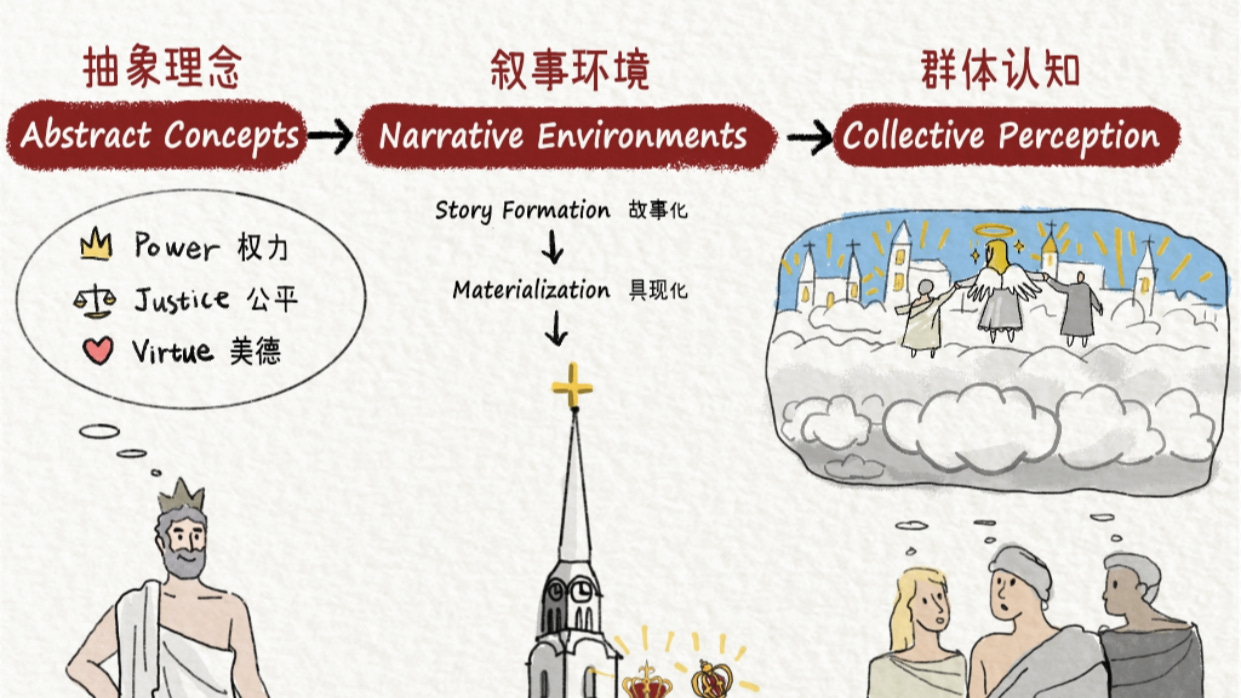
II — The Three-Stage Arc

4
The transmissions that follow are not separate topics.
They are three phases of the same mechanism:
PHASE I — The Entry Point (The Individual)
Where instability begins at the smallest scale:
Identity
Perception
Interpretation
This phase explores how:
uncertainty inside the individual can be shaped, guided, or amplified
PHASE II — The Expansion (The System)
Where instability spreads outward:
Narratives multiply
Conflicts form
Crises stack on top of one another
This phase examines how:
systems amplify tension faster than they resolve it
PHASE III — The Resolution (The Transformation)
Where prolonged instability demands order:
Conflict escalates
Trust erodes
New structures are introduced
This phase reveals how:
pressure leads to system redesign—often justified as stability or protection
III — What This Is — And What It Is Not
4
This series is:
A structural analysis
A pattern recognition exercise
A layered examination of cause and effect
This series is not:
A claim that every event is planned
A declaration of a single controlling force
A dismissal of real human experiences
IV — Why This Matters
On Erath, the population often experiences events as isolated:
A cultural shift
A crisis
A conflict
But isolation is an illusion.
When viewed together, these events form:
a sequence of pressure → reaction → transformation
Understanding the sequence changes everything.
Because once the pattern is visible:
reactions can be slowed
assumptions can be questioned
outcomes can be examined before they fully form
V — The Reader’s Role

4
This briefing is not asking for agreement.
It is asking for:
observation
patience
separation of emotion from analysis
Each transmission will present a layer.
The responsibility of the reader is simple:
Follow the sequence.
Not to accept it blindly.
But to see whether the pattern holds.
VI — Where This Leads
The sequence will move:
From the internal (mind and identity)
To the external (society and crisis)
To the systemic (war and structural change)
By the end, a question will emerge:
When systems respond to instability…
are they restoring balance—
or creating a new form of order?
FINAL NOTE — Before the First Transmission


4
On Erath, the most powerful transformations are rarely announced.
They are entered step by step.
This is step zero.
The next transmission will begin at the smallest level—
where everything starts,
and where almost no one is looking closely enough.
🧬The Erath Sequence:
The Architecture of Systemic Transformation
This text introduces a structural analysis called the Erath Sequence, which examines how societies undergo systemic transformation through a deliberate, three-stage process.
Rather than viewing historical events as isolated incidents, the author presents them as a layered pattern where small-scale individual instability eventually escalates into global structural changes.
The narrative begins by influencing personal perception, moves toward amplifying societal tension, and concludes by establishing a new form of order born from prolonged crisis.
By recognizing these recurring phases of pressure and reaction, the audience is encouraged to move beyond emotional responses to conduct a dispassionate evaluation of how power functions.
Ultimately, the series serves as a guide for identifying the hidden mechanisms that reshape a world under the guise of restoring stability.


