


#1477 🩸 RedBloodJournal.com
🩸 COVID-19, Neuroinflammation, and Alternative Treatment Claims
One Doctor’s Perspective on the Pandemic and Brain Health
By: Red Blood
The COVID-19 pandemic generated one of the largest scientific and public policy debates in modern history. While governments, health agencies, researchers, and physicians often agreed on broad goals, they frequently disagreed on the best methods to achieve them.
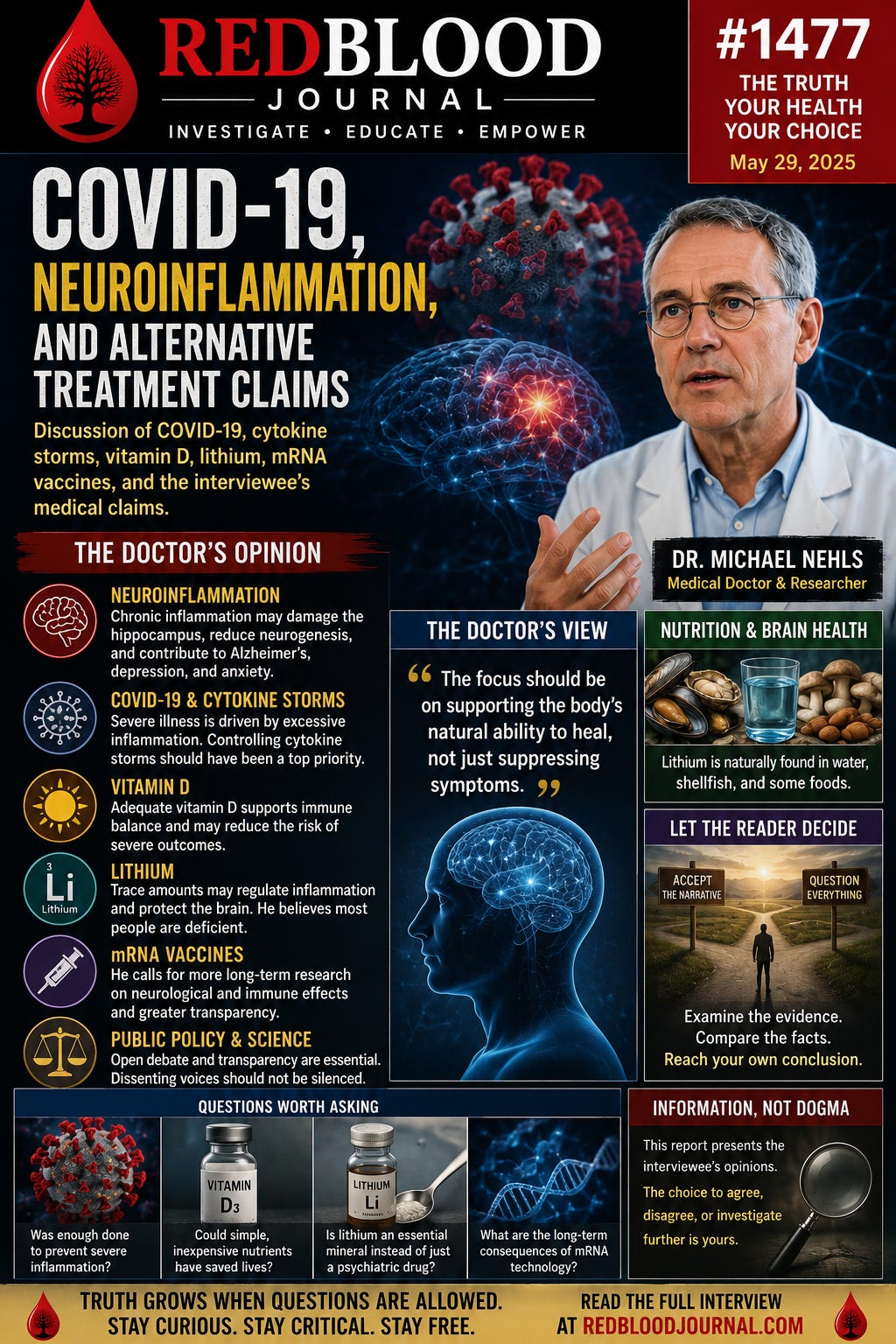
During a recent interview, Dr. Michael Nehls presented his own perspective on several of these subjects, including COVID-19, neuroinflammation, vitamin D, lithium, cytokine storms, and mRNA vaccines. The views summarized below represent Dr. Nehls’ opinions and interpretations as expressed during the interview. Readers are encouraged to examine the available evidence and reach their own conclusions.
Neuroinflammation at the Center of the Discussion
According to Dr. Nehls, chronic neuroinflammation plays a central role in many neurological disorders. He argues that prolonged inflammation within the brain may impair the hippocampus—the region responsible for memory formation and the production of new neurons.
In his view, reduced production of new brain cells may contribute to declining memory, depression, anxiety, and eventually Alzheimer’s disease. He describes this as a unifying theory connecting several neurological conditions.
His View of COVID-19
Dr. Nehls argues that severe COVID-19 illness is closely associated with excessive inflammatory responses, commonly referred to as cytokine storms. He contends that reducing these inflammatory reactions should have been a greater priority during the pandemic.
He further argues that nutritional status and certain naturally occurring substances deserved greater attention as possible supportive measures for patients experiencing severe inflammatory illness.
Vitamin D and Lithium
Throughout the interview, Dr. Nehls repeatedly emphasizes two substances that he believes have been underestimated: vitamin D and lithium.
According to Dr. Nehls, maintaining adequate vitamin D levels supports normal immune function. He also argues that trace amounts of nutritional lithium play an important role in regulating inflammation and supporting long-term brain health.
He believes these areas warrant considerably more scientific attention than they have received in recent years.
mRNA Vaccines
Dr. Nehls also discusses mRNA vaccines and presents his interpretation of their effects on the brain and immune system.
He argues that additional long-term investigation is warranted regarding possible neurological consequences and believes these questions deserve continued scientific examination. He also criticizes aspects of public health decision-making during the pandemic and calls for greater transparency in evaluating both benefits and risks.
Public Policy and Scientific Debate
Beyond medicine, Dr. Nehls expresses concern about how scientific disagreements were handled during the pandemic.
He argues that physicians and researchers should be able to openly debate competing hypotheses without fear of professional or public repercussions. In his opinion, scientific progress depends upon continuous questioning, replication of findings, and transparent examination of evidence.
The Larger Question
Whether readers ultimately agree or disagree with Dr. Nehls’ conclusions, his interview raises broader questions about how scientific ideas evolve.
History shows that some hypotheses are later confirmed, while others are revised or rejected as new evidence emerges. Determining which ideas withstand rigorous scientific testing requires ongoing research, open discussion, and independent verification.
Rather than asking readers to accept or dismiss Dr. Nehls’ conclusions outright, this interview invites them to examine the arguments, compare them with the wider body of scientific evidence, and reach their own informed judgment.
🧠 The Nehls Paradigm:
Neuroinflammation and the COVID-19 Debate
Jul 3, 2026
In this source, Dr. Michael Nehls explores the critical relationship between neuroinflammation and various neurological disorders, suggesting that persistent brain inflammation can severely damage the hippocampus. He argues that the medical response to COVID-19 should have focused more heavily on managing cytokine storms and investigating the benefits of natural substances like vitamin D and lithium. Furthermore, the author raises concerns regarding the potential long-term neurological effects of mRNA vaccines, calling for more rigorous scientific transparency. Beyond medical specifics, the text critiques the modern public policy landscape, advocating for a more open scientific debate where dissenting hypotheses can be explored without social or professional penalty. Ultimately, the piece encourages readers to evaluate these alternative perspectives against mainstream evidence to form their own conclusions about brain health and pandemic management.


