


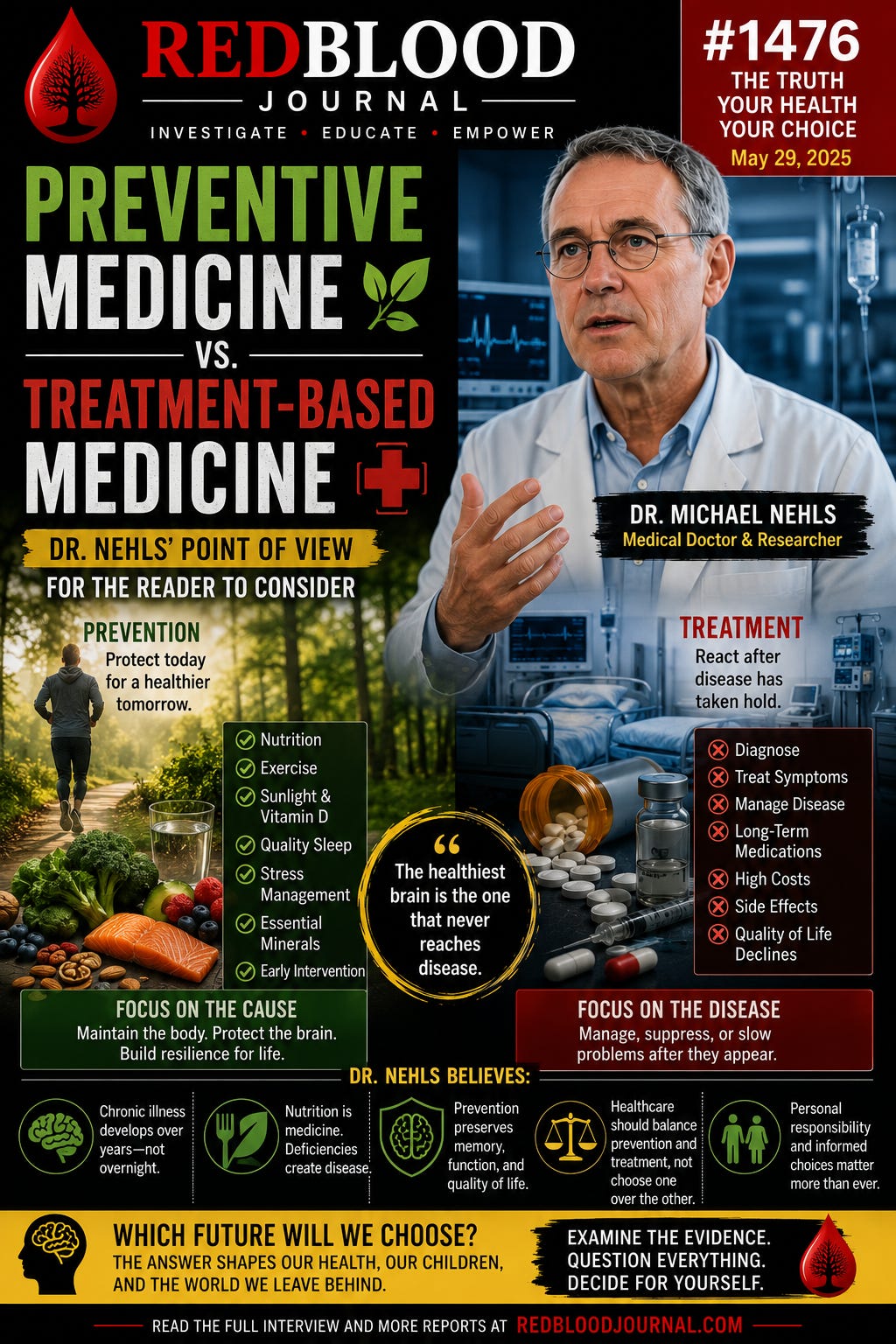
#1476 🩸 RedBloodJournal.com
🩸 Preventive Medicine vs. Treatment-Based Medicine
Dr. Michael Nehls’ Perspective for Readers to Consider
By: Red Blood
Modern medicine has achieved extraordinary advances. It has extended life expectancy, transformed emergency care, developed life-saving surgical techniques, and produced countless therapies that have relieved suffering for millions of people. Yet one question continues to surface among physicians, researchers, and patients alike:
Should healthcare focus primarily on treating disease after it appears, or should greater emphasis be placed on preventing disease before it begins?
During a recent interview, Dr. Michael Nehls argued that modern healthcare has gradually shifted toward a treatment-based model, while preventive medicine has received far less attention than it deserves. The ideas presented below reflect Dr. Nehls’ opinions and interpretations from that interview. Readers are encouraged to examine the evidence and reach their own conclusions.
The Doctor’s Central Argument
According to Dr. Nehls, many of today’s chronic illnesses may develop over decades rather than appearing suddenly. By the time symptoms become severe enough for diagnosis, he believes the underlying biological processes have often been progressing for years.
From his perspective, waiting until disease is fully established means medicine is constantly fighting problems after significant damage has already occurred.
Instead, he argues that maintaining the body’s normal biological systems through proper nutrition, healthy lifestyles, and early intervention should become a primary objective of healthcare.
Prevention Rather Than Repair
Throughout the interview, Dr. Nehls repeatedly returns to one principle:
The healthiest brain is the one that never reaches disease.
He argues that preserving normal brain function should receive as much attention as developing treatments after neurological disorders are diagnosed.
According to Dr. Nehls, protecting memory, learning, emotional resilience, and cognitive function should begin decades before symptoms appear rather than after irreversible decline has started.
Nutrition as the Foundation
One of the recurring themes throughout the discussion is nutrition.
Dr. Nehls believes that vitamins, minerals, omega-3 fatty acids, and other essential nutrients deserve greater attention in maintaining long-term brain health. He argues that medicine should devote more resources to understanding how nutritional deficiencies may contribute to chronic disease before those diseases require pharmaceutical intervention.
In his opinion, prevention should not compete with medicine—it should complement it.
The Economics of Healthcare
Dr. Nehls also raises a broader question that extends beyond biology.
He asks whether healthcare systems naturally devote greater attention to diagnosing and treating disease because those areas receive the largest investments, while prevention often receives comparatively fewer resources.
Whether readers agree or disagree with this assessment, the question itself is one that many healthcare systems continue to debate: How should limited healthcare resources be balanced between prevention and treatment?
A Philosophy Rather Than a Prescription
Importantly, Dr. Nehls does not argue that modern medicine should be abandoned.
Instead, he advocates shifting more attention toward preserving health before illness develops. In his view, emergency medicine, surgery, pharmaceuticals, and intensive care remain indispensable when disease occurs, but they should be complemented by a stronger emphasis on prevention.
He suggests that preventing illness is often less costly, less invasive, and less physically demanding than treating advanced disease.
Questions Worth Asking
The interview ultimately leaves readers with several questions:
Should modern healthcare invest more heavily in preventing disease than it currently does?
Are nutritional and lifestyle factors receiving enough scientific attention?
Can chronic illnesses be reduced by identifying biological changes decades before symptoms appear?
How should societies balance treatment, prevention, personal responsibility, and public health?
These questions extend beyond one physician’s opinions. They reflect an ongoing conversation occurring throughout medicine, public health, and scientific research.
Whether Dr. Nehls’ conclusions ultimately prove correct or not will continue to be examined through future research. His interview serves as an invitation to think critically, explore the available evidence, and participate in one of medicine’s most important discussions:
Is the future of healthcare found primarily in treating disease—or in preventing it from developing in the first place?
As always, RedBloodJournal encourages readers to examine multiple sources, consider differing viewpoints, and reach their own informed conclusions.
🏥 The Architecture of Prevention: Rethinking the Future of Healthcare
Jul 3, 2026
This source examines a perspective shared by Dr. Michael Nehls regarding a necessary shift from treatment-based medicine to a preventive healthcare model. The text argues that modern medical systems prioritize managing chronic illnesses after they appear rather than addressing the biological roots of disease decades in advance. Central to this argument is the belief that optimal nutrition and lifestyle interventions are essential for maintaining long-term brain health and cognitive resilience. Furthermore, the author questions whether economic incentives within the healthcare industry favor expensive pharmaceutical treatments over more affordable, proactive strategies. While acknowledging the necessity of modern surgery and emergency care, the text advocates for a balanced approach where preventive philosophy complements existing medical practices. Ultimately, the source encourages readers to reconsider how society allocates scientific resources and personal responsibility to foster a future of lifelong wellness.


