


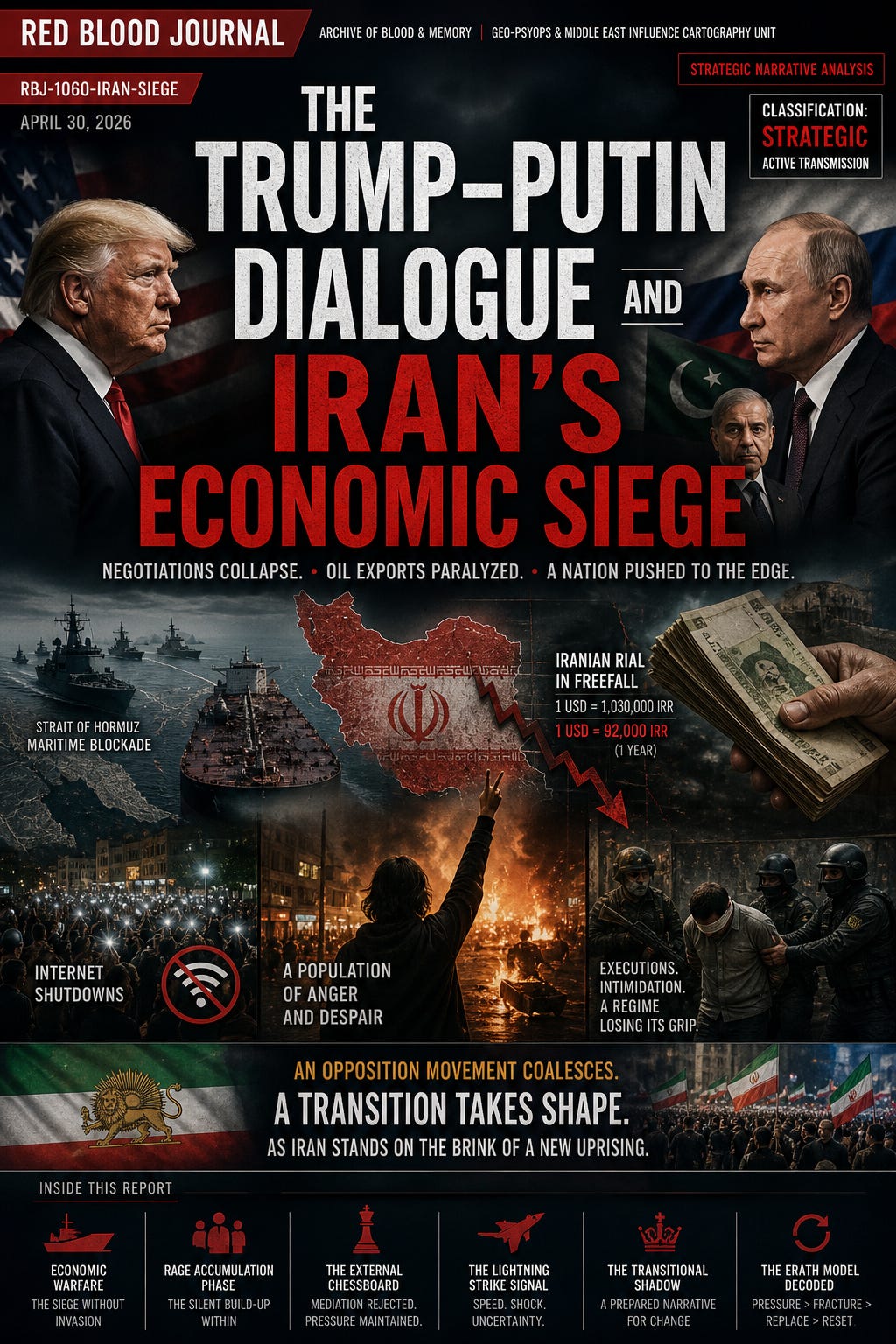
🩸 RED BLOOD JOURNAL TRANSMISSION
Archive: The Archive of Blood & Memory
Division: Geo-PsyOps & Middle East Influence Cartography Unit
Classification: Strategic Narrative Analysis
Transmission Code: RBJ-1061-IRAN-SIEGE
Status: Active Transmission — Analytical Convergence Layer
PROLOGUE — THE PRESSURE CHAMBER
The situation described is not merely geopolitical tension. It is the construction of a pressure environment—a controlled escalation space where economics, narrative, and military positioning converge.
On the surface:
A breakdown in dialogue involving figures like Donald Trump and Vladimir Putin
A suffocating economic environment targeting Iran
A population under visible strain
Underneath:
A familiar architecture begins to emerge.
SECTION I — THE SIEGE WITHOUT INVASION
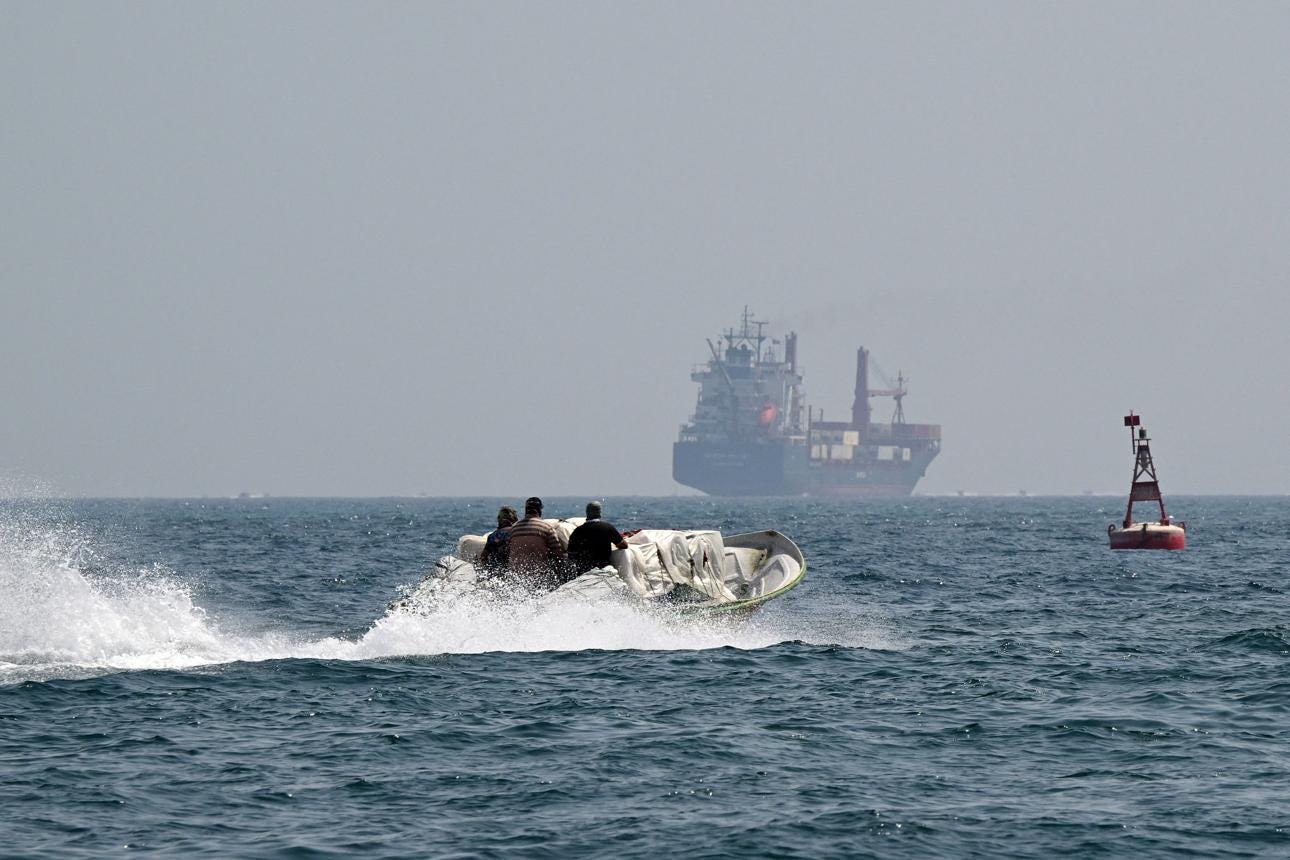
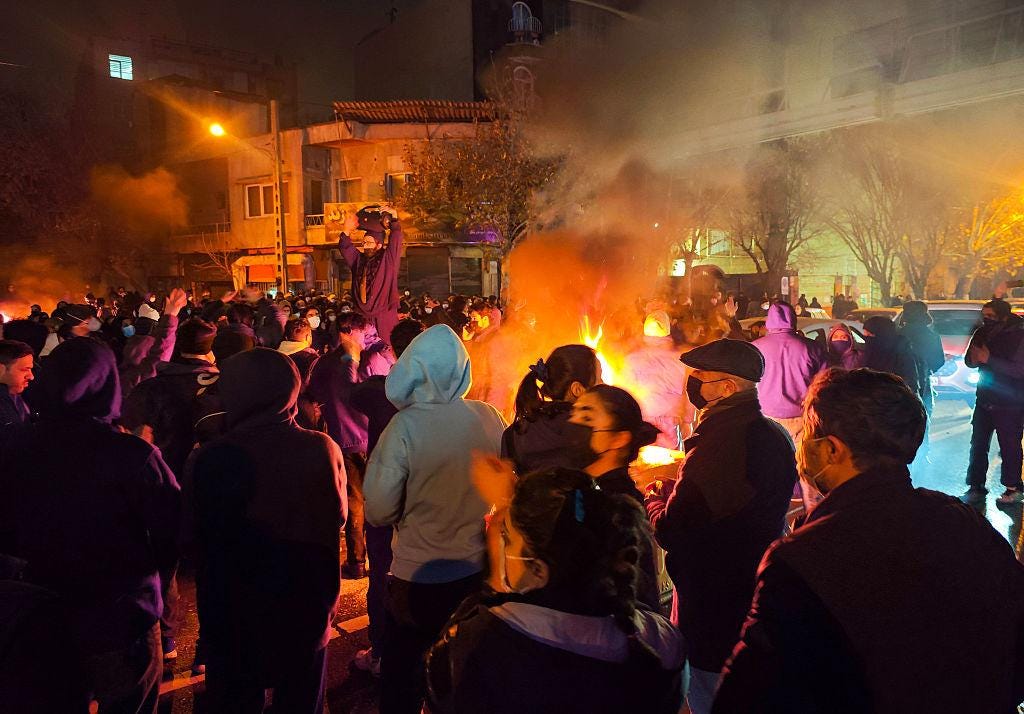
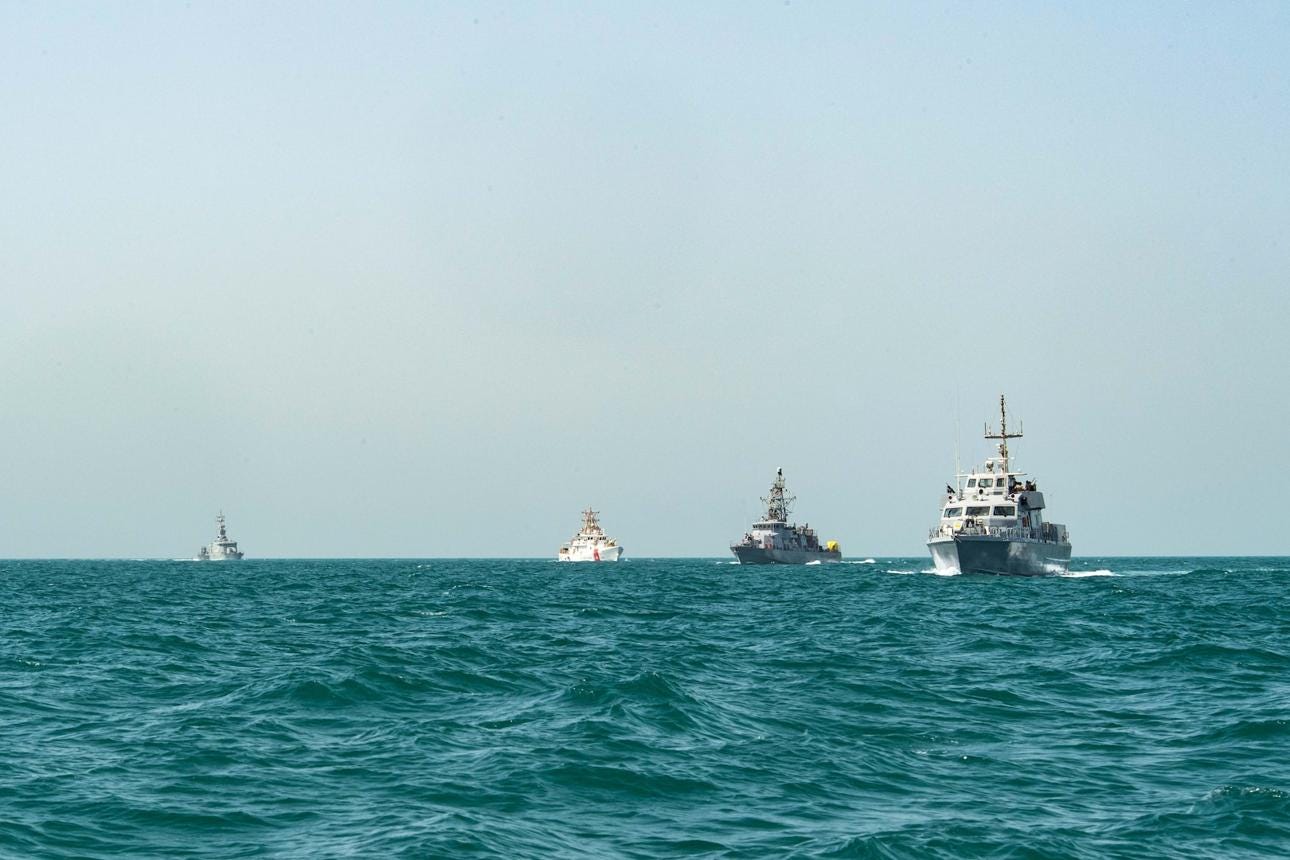
6
The defining characteristic of this phase is economic warfare replacing direct war.
Key components:
Maritime pressure restricting oil flow
Currency destabilization (inflation as a weapon)
Information throttling (internet shutdowns)
Psychological fatigue of the population
This is not accidental. It aligns with a recurring Erath pattern:
Destabilization is most effective when the system collapses from within, not when it is destroyed from outside.
SECTION II — THE INTERNAL FRACTURE POINT
Economic collapse alone does not trigger transformation.
It must be paired with perception of injustice + loss of future.
Inside Iran:
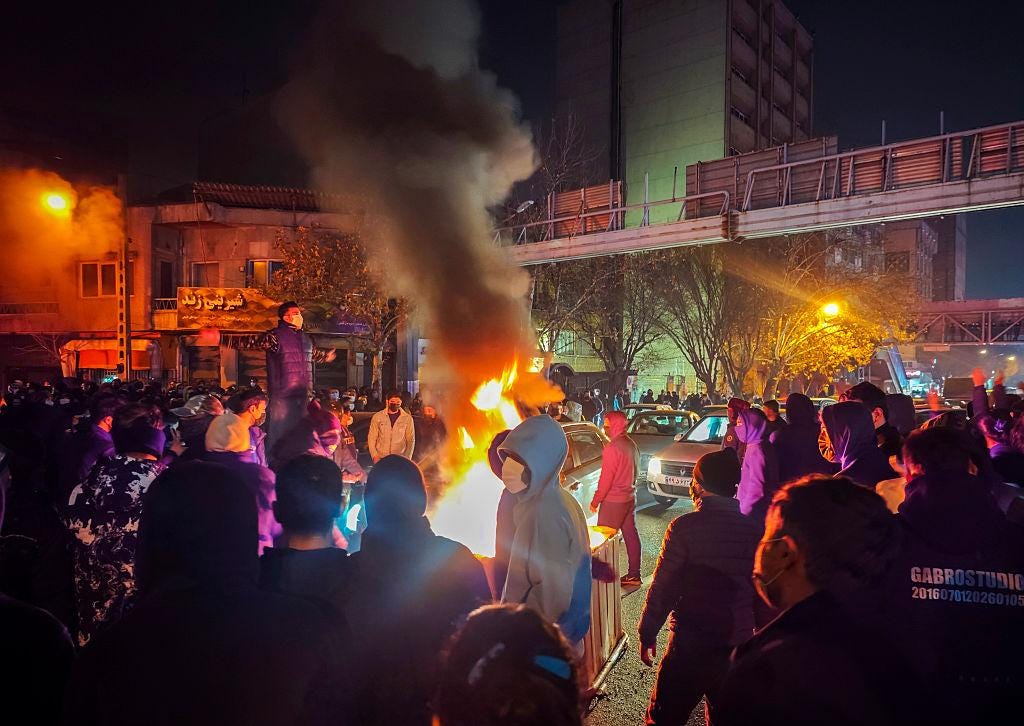
Public anger increases not just from poverty—but from directionless suffering
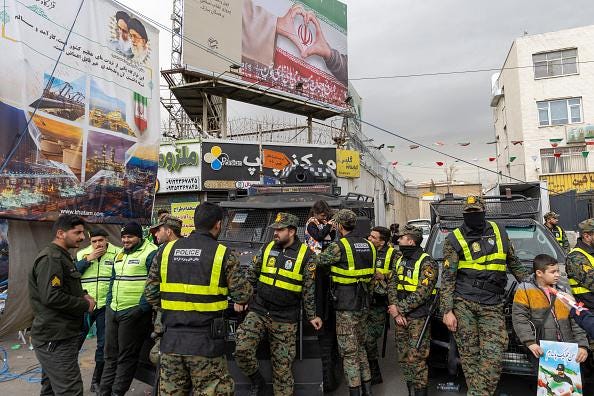
State response escalates (executions, intimidation)
Legitimacy begins to erode faster than control can compensate
This creates what can be identified as:
RAGE ACCUMULATION PHASE
A silent build-up where the system appears stable—until it isn’t.
SECTION III — THE EXTERNAL CHESSBOARD
The mention of mediation rejection involving Russia and Pakistan signals something deeper:
Refusal of mediation = refusal to de-escalate narrative momentum
Maintaining pressure preserves strategic optionality:
Regime change (internal)
Military strike (external)
Negotiated surrender (controlled outcome)
Actors like Russia are not just mediators—they are balancers in the theater, ensuring no single narrative collapses too quickly.
SECTION IV — THE LIGHTNING STRIKE SIGNAL
The concept of a “lightning strike” is not purely military—it is psychological.
It communicates:
Speed over duration
Shock over occupation
Precision over entanglement
Whether executed or not, its existence in narrative space serves a purpose:
Keep the system—and the population—on edge.
This uncertainty amplifies internal instability.
SECTION V — THE TRANSITIONAL SHADOW
5
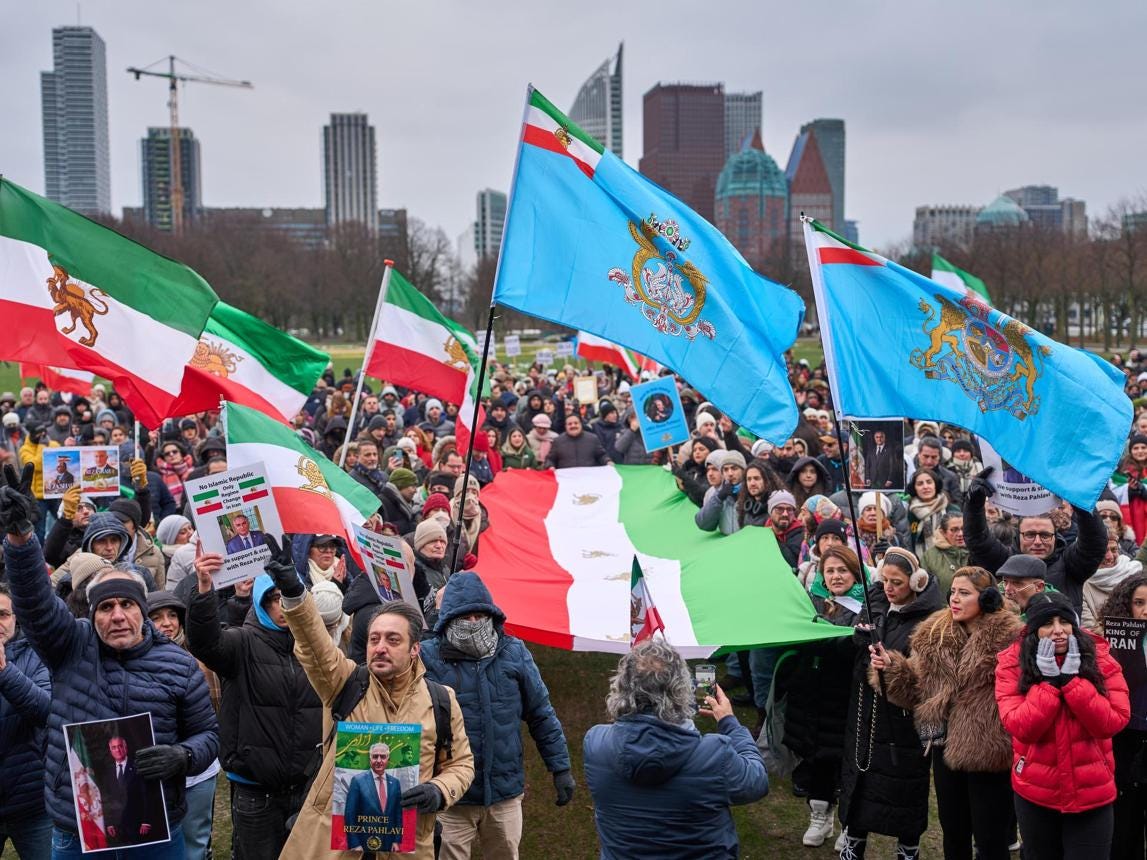
The emergence of a transitional government narrative tied to exiled monarchy structures introduces a classic replacement framework:
Pattern observed:
Existing regime destabilized
Alternative leadership pre-positioned
Population emotionally redirected toward “hope channel”
This is not spontaneous. It reflects a known sequence:
System Removal → Narrative Vacuum → Prebuilt Replacement
SECTION VI — THE ERATH MODEL (DECODED)
This entire situation maps cleanly to the recurring RBJ cycle:
Pressure → Destabilize → Fracture → Replace → Reset
Where:
Pressure = sanctions + blockade
Destabilize = inflation + outages
Fracture = public rage + legitimacy collapse
Replace = transitional narrative
Reset = new alignment
ANNEX A — WHAT IS ACTUALLY BEING TESTED
This is not only about Iran.
It is a test environment for:
Economic warfare efficiency
Population response thresholds
Narrative control under stress
Speed of regime destabilization without invasion
ANNEX B — READ BETWEEN THE LINES
If collapse occurs internally → model validated
If population resists or stabilizes → model recalibrated
If military strike occurs → escalation layer activated
FINAL NOTE — THE CORE SIGNAL
This is not chaos.
It is structured pressure.
And on Planet Erath, when pressure is applied long enough:
The question is never if something breaks—
but what breaks first: the system, or the people inside it.
🔥The Trump-Putin Dialogue and Iran’s Economic Siege
Apr 30, 2026
The provided text details a reported breakdown in negotiations between the United States and the Iranian government, highlighting President Trump’s rejection of mediation efforts from Russia and Pakistan.
Amidst a tightening maritime blockade that has paralyzed Iran’s oil exports and caused the national currency to collapse, the source notes that the U.S. military is allegedly preparing for a potential lightning strike.
Domestic conditions within Iran are described as dire, marked by hyperinflation, internet shutdowns, and increasing public anger toward the ruling regime.
The author characterizes the current social climate as a period of accumulating rage among a populace facing economic ruin and government repression.
Furthermore, the source discusses the transition of opposition leadership toward a transitional government model under the exiled monarchy as the country nears a potential new uprising.
While the government attempts to maintain control through executions and intimidation, the analysis suggests its internal and external foundations are rapidly eroding.


