


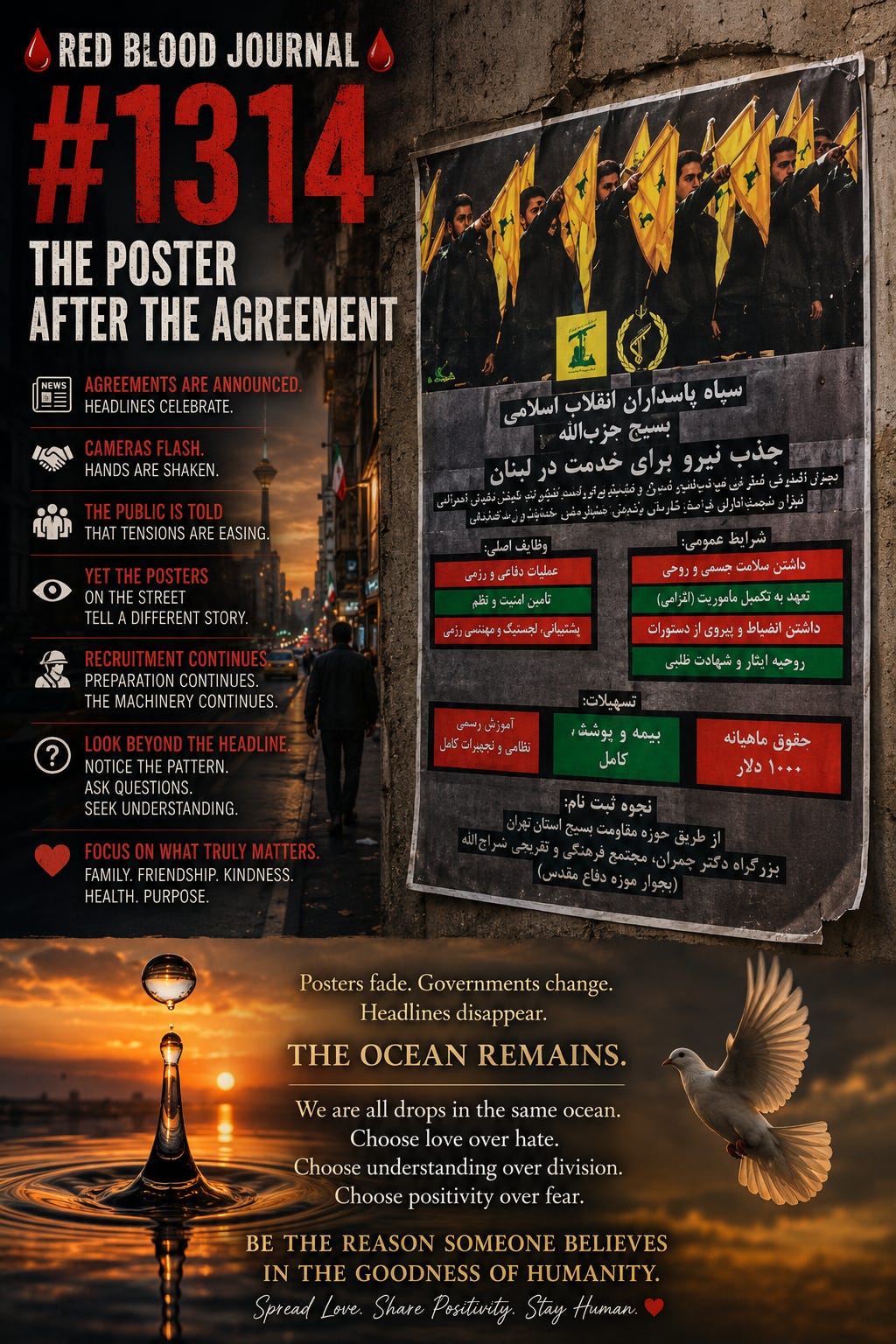
🩸 Red Blood Journal #1314
The Poster After the Agreement
By Red Blood
History often leaves clues in places where few people are looking.
Not in speeches.
Not in press conferences.
Not in carefully prepared announcements.
But on walls.
On billboards.
On posters hanging in plain sight.
Imagine hearing that an agreement has been reached. A deal. A ceasefire. A diplomatic breakthrough. A new chapter.
The public is told that tensions are easing.
The newspapers speak of progress.
The commentators speak of stability.
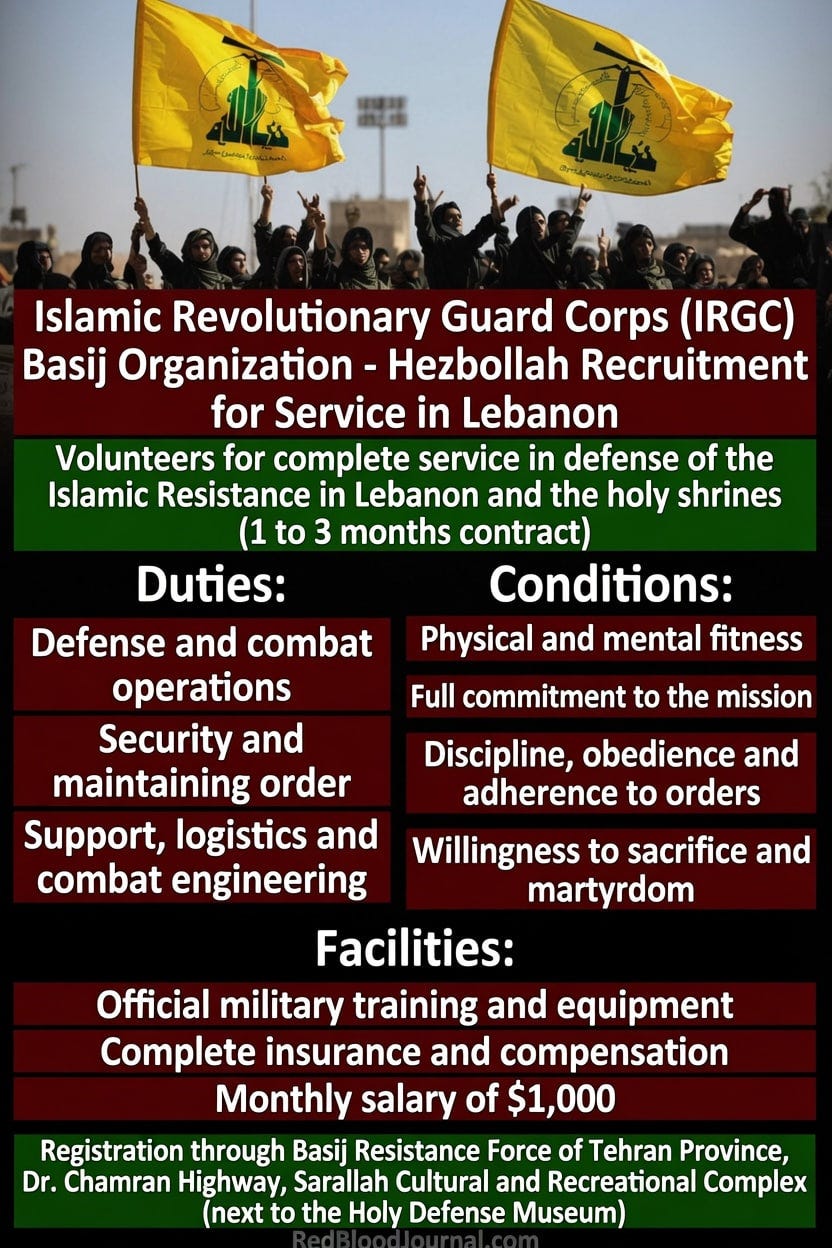
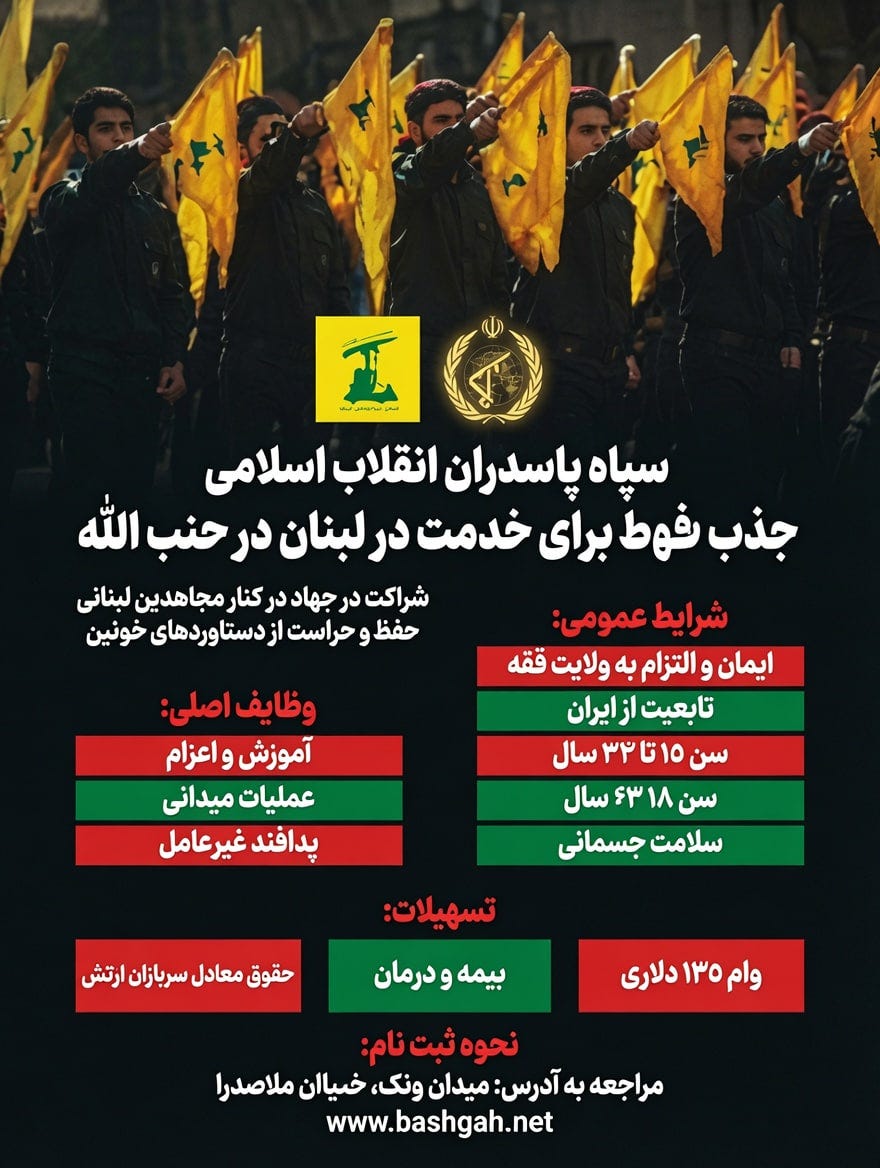
Yet the posters on the street tell a different story.
Recruitment continues.
Preparation continues.
The machinery continues.
The actors may change their costumes, but the stage crew remains at work.
Throughout history, populations have often focused on the headlines while ignoring the infrastructure beneath the headlines. Agreements are announced. Leaders shake hands. Cameras flash. Markets react.
Yet institutions continue doing what institutions were built to do.
Armies recruit.
Bureaucracies expand.
Organizations prepare for future scenarios.
Whether one views this as wisdom, caution, necessity, or something else entirely depends on the observer.
The interesting question is not whether the poster itself is important.
The interesting question is why most people never notice the poster.
Human attention is constantly directed toward the loudest event.
The latest crisis.
The latest speech.
The latest outrage.
The latest hero.
The latest villain.
Meanwhile, the quieter signals remain in the background.
A poster on a wall.
A budget allocation.
A new training program.
A regulatory change.
A policy adjustment.
These often reveal more about future direction than a thousand emotional headlines.
This is not unique to one country.
It happens everywhere.
Governments prepare while citizens celebrate.
Organizations recruit while commentators speculate.
Institutions think in years while populations think in days.
The poster becomes a reminder that reality is often layered.
One layer contains the story being presented.
Another layer contains the preparations taking place behind the story.
Neither layer must automatically be accepted or rejected.
Both should simply be observed.
Observation without attachment is a powerful skill.
The observer does not need to become angry.
The observer does not need to become fearful.
The observer does not need to choose a side in every conflict presented on the screen.
The observer simply notices.
Notices the poster.
Notices the agreement.
Notices the contradiction.
And continues asking questions.
Because questions create awareness.
Awareness creates understanding.
And understanding creates freedom.
In the end, whether the poster represents preparation, symbolism, politics, bureaucracy, or something else entirely may matter less than the lesson it teaches.
Look beyond the headline.
Look beyond the actor.
Look beyond the script.
Notice the stage itself.
And after noticing it, return to what matters most.
Family.
Friendship.
Kindness.
Health.
Purpose.
The things that remain long after today’s actors leave the stage.
For while posters fade, governments change, and headlines disappear, the ocean remains.
Every person is still a drop within that same ocean.
And perhaps the greatest victory is not winning an argument about the theater, but helping another drop remember the ocean of love, understanding, and positivity from which it came.
🩸 RedBloodJournal.com #1314 — The Poster After the Agreement 🩸
👁️ The Quiet Architecture of the Stage
Jun 18, 2026
The provided text emphasizes the discrepancy between public narratives and the underlying logistical realities of institutional behavior.
It argues that while headlines and official agreements capture society’s attention, the true direction of the future is found in quiet preparations like recruitment and policy shifts.
By observing these contradictory layers of reality without emotional attachment, individuals can gain a deeper sense of awareness and understanding.
The author suggests that populations often focus on loud, temporary crises instead of the enduring infrastructure that continues to operate behind the scenes.
Ultimately, the source encourages readers to look past the theatrical nature of politics to prioritize lasting values such as family, kindness, and purpose.
Through this lens, the text presents a philosophy of detached observation as a means to achieve personal freedom from social manipulation.


