


🩸 RED BLOOD JOURNAL TRANSMISSION
T#: RBJ–2026–01–09–FISHBACK–FLA–PART III
Classification: Political-Economic Forensics – Housing, Donor Power, and Florida’s Ownership Crisis
Subject: Usury, 50-Year Mortgages, Donor Influence, Housing Capture & The Intimidation Machine
Source: Tucker Carlson Interview, January 9, 2026 (Part 3)
🩸 PART III REPORT
“OWN NOTHING BY DESIGN” — How Fishback Frames the Housing Crisis as a Weapon
Part 3 is the most emotionally explosive section so far.
Here, Fishback reframes Florida’s affordability crisis not as a market failure, but as a deliberate architecture of dependency — a system designed to transform Americans from homeowners into permanent renters, and voters into clients of donor-backed political machines.
This segment marks a strategic shift from foreign influence to economic servitude.
1. The 50-Year Mortgage: “Debt Slavery Rebranded”
Fishback’s attack begins with a single proposal he finds abhorrent:
The push toward 50-year mortgages.
The framing is brutal:
It is not a solution to affordability.
It effectively turns families into renters with paperwork.
It extends debt into a second generation.
It destroys intergenerational wealth.
Fishback calls it:
“Usury. Biblical usury.”
He cites their own math:
Pay $250,000 into a 50-year mortgage.
You end up owning only $18,000 of equity.
This, he argues, is the economic foundation of the 2030 “You Will Own Nothing” prophecy — not as a meme, but as emerging policy reality.
2. The Affordability Crisis as a Family Crisis
Fishback ties the housing market collapse to the collapse of the social fabric:
No home → difficult to marry
No marriage → difficult to have children
No children → the future disappears
His rhetorical question is chilling:
“If you can’t have kids, what is the point?”
Tucker agrees immediately.
The two outline a worldview where housing is not an economic issue —
it is a civilizational issue.
3. The Donor Network & The Silence Machine
Fishback then circles back to the Israel bonds controversy, recounting how:
Merely stating the fact that Florida invests in foreign bonds
Triggered a backlash labeling him a “threat.”
He argues:
“Things happen because people don’t know they’re happening.”
The machine relies on opacity.
Breaking that opacity is treated as destabilizing — and therefore dangerous.
Tucker calls it a trance.
Fishback calls it intentional.
Both frame the public as lulled, distracted, sedated, kept unaware while major economic decisions occur in the shadows.
4. Randy Fine & the 42-Minute Call
Fishback recounts a surreal phone call:
“Early morning.”
“Heavy breathing.”
“Snack noises” in the background.
And above all: intimidation.
Fine allegedly warned him not to run against another Florida Republican.
Fishback describes this as:
“Time spent not serving constituents, but suppressing challengers.”
He frames the call as proof that:
● Florida politics contains small but powerful gatekeepers
● Independent candidates are expected to submit
● Donor-backed networks enforce loyalty quietly, before primaries even begin
This fits the broader narrative of political capture through social pressure rather than open competition.
5. The District Shuffle & “Strings Pulled”
Fishback outlines how political districts in Florida can shift suddenly:
A representative moves districts.
Powerful endorsements rush in.
A deeply red district delivers only a narrow victory — suggesting internal resentment.
The takeaway he wants voters to see:
“Power does not equal popularity.”
“Influence does not equal legitimacy.”
The implication is that establishment victories are often manufactured, not earned.
6. The Moral Line: “Laughing at Suffering Disqualifies Leadership”
Tucker and Fishback share a moment of moral alignment here:
They argue that any politician who expresses indifference toward human suffering — specifically the suffering of children in war zones — forfeits their credibility.
The point they return to repeatedly:
Political labels mean nothing without moral character.
This segment serves as a philosophical anchor:
Fishback’s vision of Florida leadership requires:
Restraint
Compassion
Accountability
Boundaries on foreign entanglements
Regardless of the country in question.
7. Donor Backlash: The War Chest Problem
Fishback reveals that a well-known political donor has announced they are raising significant funds against him.
His argument:
This is not democratic persuasion.
It is economic punishment for dissent.
It is meant to influence Florida’s internal elections through financial weight.
Fishback frames this as proof that:
Florida’s elections are no longer purely Florida’s business.
8. The Byron Donalds Dispute: “Who Owns a Candidate?”
Fishback does not attack Donalds personally.
He attacks the economic structure around him.
He claims:
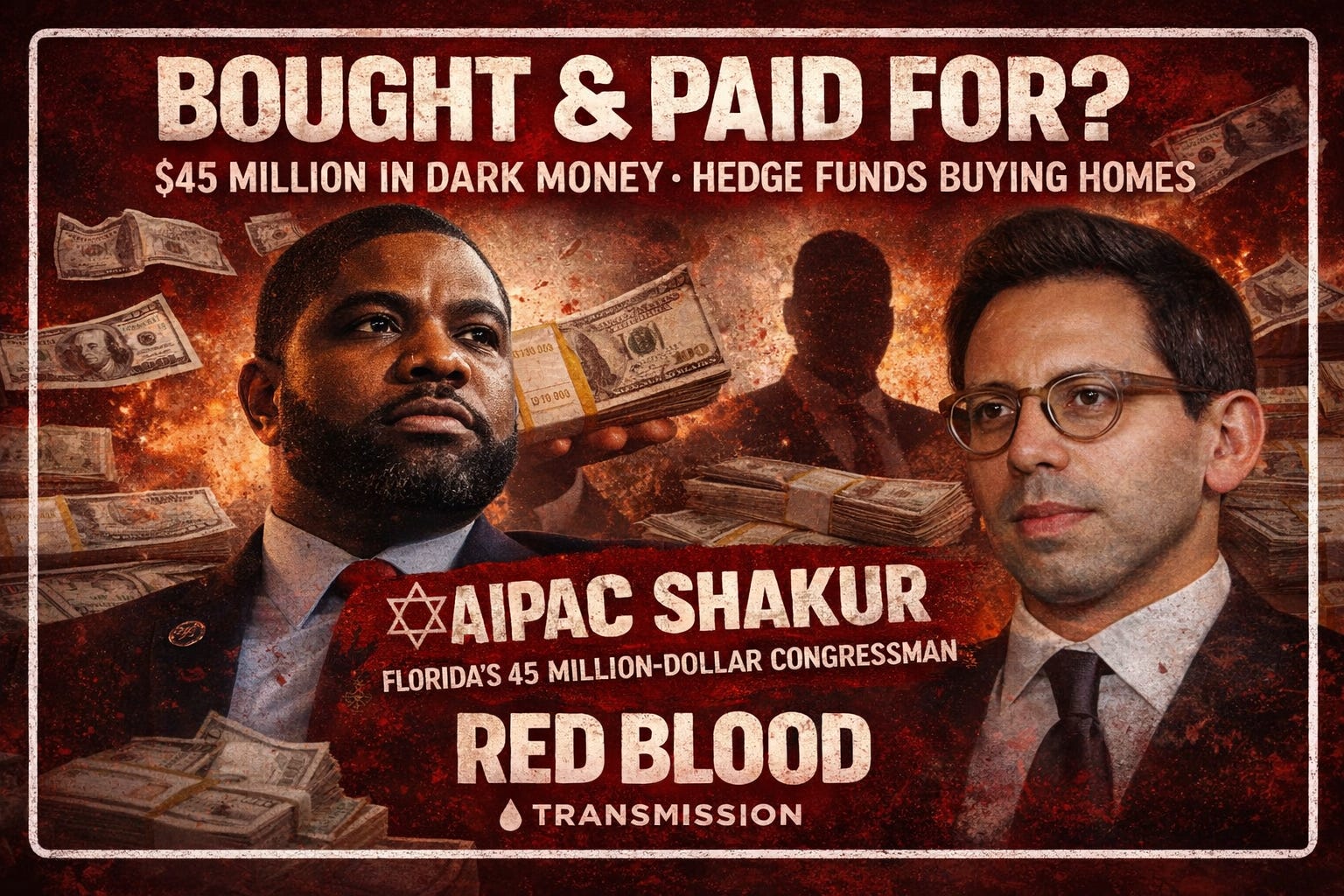
Donalds received $45 million in a previously uncontested primary.
Donalds told donors that Blackstone “deserved” to buy homes.
Donalds defends private equity buying up Floridian homes because “that’s capitalism.”
Fishback’s position is the opposite:
No private equity. No foreign nationals. No speculative buyers.
Floridian homes are for Floridian families.
He supports:
Banning private equity purchases
Banning foreign buyers
Banning bulk-buy corporate landlords
Banning Airbnb-style speculative monopolies
He cites Canada as precedent.
9. The Political Realignment: “America First Is Multi-Party”
Fishback reports that at public events:
Independents
Democrats
Non-voters
…are switching registration just to vote for him in the primary.
Not because of ideology — but because of housing.
This is the central lesson of Part 3:
The road to political realignment runs through the price of a home.
Housing is no longer a market question.
It is a political question.
It is a sovereignty question.
It is a generational survival question.
10. The Red Blood Journal Summary — Part III
The themes of Part 3 crystallize into a single thesis:
**Florida is not suffering from a housing crisis.
Florida is suffering from a political ownership crisis.**
Fishback argues:
Homes are being bought by outsiders.
Politicians defend outside interests.
Donors punish dissenters.
Residents are pushed into 50-year debt cycles.
The family unit is being priced out of existence.
The core message:
If Floridians don’t own homes, they don’t own their future —
and if they don’t own their future, someone else will.
⛓️Florida’s Architecture of Dependency: The Housing Ownership Crisis
This text details a political-economic critique of Florida’s housing market, framing the lack of affordability as a deliberate system of dependency rather than a natural market shift.
The source argues that extended mortgage terms and the rise of corporate landlords function as a form of modern usury that strips families of their ability to build intergenerational wealth.
Beyond economics, the material connects the housing crisis to political corruption, alleging that donor-backed officials prioritize private equity interests over the stability of local residents.
This narrative suggests that institutional gatekeepers use financial intimidation and opacity to maintain a status quo that benefits foreign and corporate buyers.
Ultimately, the text presents home ownership as a civilizational necessity, asserting that without housing security, the traditional family structure and political sovereignty of citizens will collapse.


