


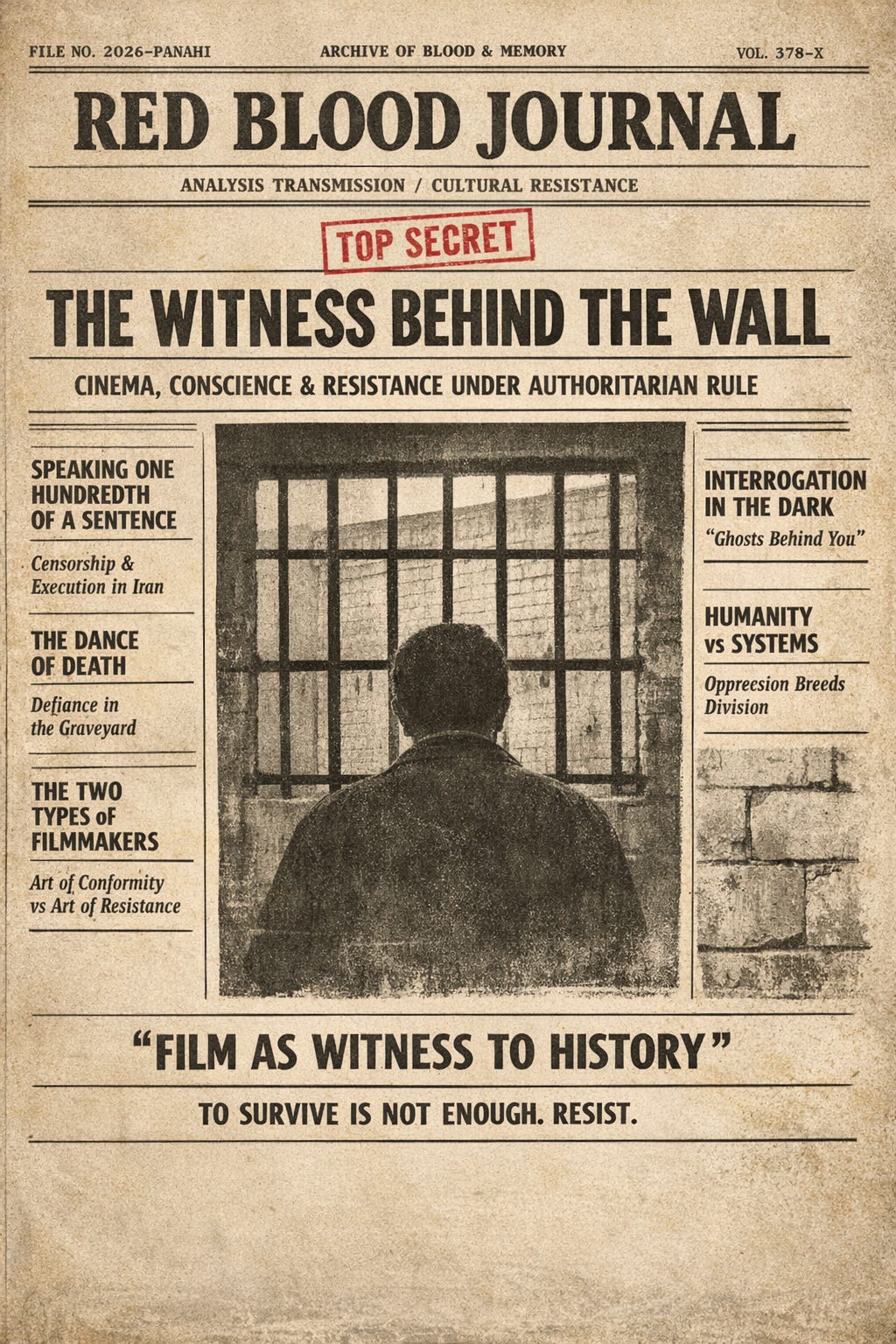
🩸 RED BLOOD JOURNAL TRANSMISSION
Division: Cultural Power & Resistance Analysis Unit
Transmission Code: RBJ-CPR-2026-PANAHI-WITNESS
Classification: Cultural Resistance / Authoritarian Systems
Archive: The Archive of Blood & Memory
THE WITNESS BEHIND THE WALL
Cinema, Conscience, and Resistance Under Authoritarian Power
PROLOGUE — THE MAN WHO WAS FORBIDDEN TO FILM
For most filmmakers, the greatest challenge is finding funding or reaching an audience.
For Jafar Panahi, the challenge was simpler and more absolute:
He was forbidden to make films at all.
Following political tensions inside Iran, Panahi received a judicial sentence banning him for twenty years from:
filmmaking
writing scripts
giving interviews
traveling abroad
Yet despite the ban, films continued to appear.
Not through permission.
But through resistance.
Panahi famously responded to the ban by secretly producing the film This Is Not a Film, which was reportedly smuggled out of Iran and screened internationally.
In doing so, the filmmaker crossed a line that authoritarian systems fear most:
The line between silence and witness.
SECTION I — SPEAKING ONE HUNDREDTH OF A SENTENCE
During the interview, Panahi makes a statement that reveals the structural reality of censorship under authoritarian rule.
If even one hundredth of what is openly said in Western media were spoken publicly in Iran, he explains, the consequence could be execution.
This observation highlights a fundamental difference between political systems:
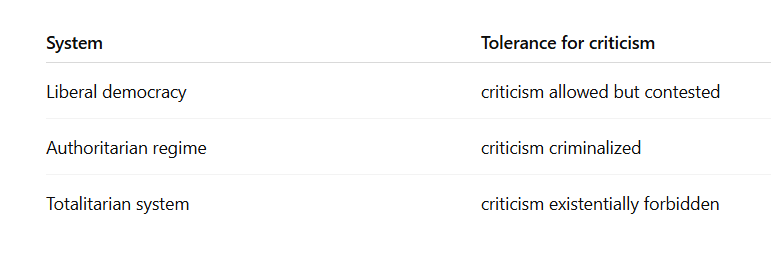
Panahi notes that multiple Iranian filmmakers remain imprisoned and that artists have been killed during protest periods.
The role of the artist therefore shifts from storyteller to witness of power.
SECTION II — WHY HE RETURNS
When asked why he does not simply remain abroad, Panahi gives a strikingly simple answer.
Half of his life remains in Iran.
His family, friends, and colleagues live there.
And therefore leaving permanently would mean abandoning half of himself.
This dynamic reflects a broader pattern seen in dissident intellectuals throughout history:
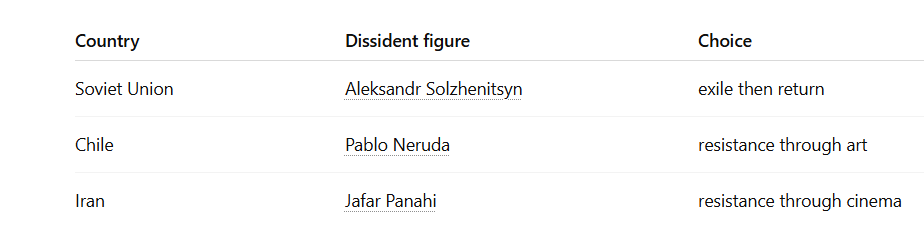
The choice reflects a psychological paradox:
The stronger the repression, the stronger the attachment to homeland.
SECTION III — THE DANCE OF DEATH
Panahi recounts an episode of collective resistance.
Following a period of mass killings during protests, mourning ceremonies themselves were banned.
The state attempted to eliminate grief from the public sphere.
But the population adapted.
Instead of mourning silently, people began:
playing music
dancing on the graves of loved ones
transforming mourning into defiance
Panahi describes it as the “dance of death.”
Yet in his interpretation it was not death at all.
It was life asserting itself in the only form still permitted.
This pattern is historically consistent:
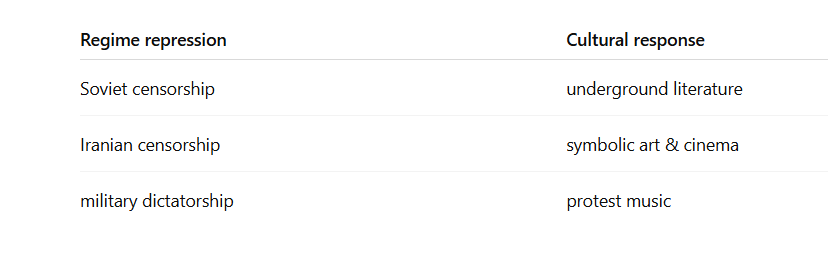
Culture becomes the final battlefield when political speech is suppressed.
SECTION IV — THE PSYCHOLOGY OF INTERROGATION
Panahi describes a particular interrogation method used on prisoners of conscience.
The prisoner:
is blindfolded
faces a wall
answers questions from an interrogator behind them
Because the prisoner cannot see, the brain becomes hyper-focused on sound.
The prisoner begins imagining:
the age of the interrogator
their face
whether they will recognize them outside prison
The psychological effect is powerful.
The unknown torturer becomes a permanent ghost in memory.
This experience later shaped the themes of Panahi’s films.
SECTION V — HUMANITY VS SYSTEMS
Panahi introduces a philosophical concept that defines his cinema.
There are not purely evil people.
There are dysfunctional systems that divide people into roles.
Under this lens:
torturer
prisoner
guard
victim
are roles produced by political systems rather than inherent human nature.
This humanistic philosophy stands in direct opposition to authoritarian ideology, which requires rigid categories:
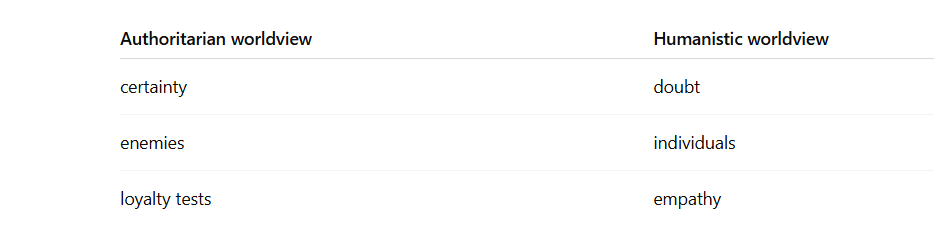
Panahi argues that doubt itself is a sign of humanity.
SECTION VI — THE TWO TYPES OF FILMMAKERS
Panahi concludes with a theory of art.
There are two types of filmmakers:
Type One — The Majority (95%)
Filmmakers who follow audience taste.
They adapt their work to what audiences want.
Entertainment dominates.
Type Two — The Minority (5%)
Filmmakers who create according to their own vision.
The audience must come to them.
In this category, the artist refuses to allow:
politics
markets
audiences
authorities
to dictate the work.
The result is socially engaged cinema.
ANALYTICAL NOTES — CULTURE AS RESISTANCE
Panahi’s philosophy aligns with a long historical pattern.
Authoritarian systems can suppress:
political speech
journalism
public protest
But they struggle to suppress artistic expression.
Art functions as:
coded communication
emotional testimony
historical record
In this sense, filmmakers like Panahi operate as unofficial historians of authoritarian societies.
ANNEX A — FILM AS WITNESS
Key principle articulated in the interview:
A socially engaged filmmaker is not necessarily an activist.
He is a witness of time.
This distinction is critical.
The filmmaker records what happens rather than prescribing solutions.
ANNEX B — THE BURDEN OF SURVIVAL
Panahi explains that when he left prison, he looked back at the walls and realized something.
His friends were still inside.
That realization created a psychological burden.
The film he later produced was his attempt to place that burden down.
FINAL OBSERVATION
Panahi frames resistance not as heroism but as duty.
Ordinary people, he argues, find ways to resist even under extreme repression.
Some protest.
Some mourn.
Some dance.
And some make films.
🎥
The Witness Behind the Wall:
Cinema as Cultural Resistance
This text documents the life and philosophy of Jafar Panahi, an Iranian filmmaker who continues to create art despite a strict judicial ban on his work. It explores how cultural resistance thrives under authoritarianism, illustrating how Panahi uses cinema to serve as a witness to history rather than a traditional activist. Through concepts like the “dance of death” and the psychology of interrogation, the source highlights how oppressed populations transform grief into defiance. Panahi posits that dysfunctional systems, rather than inherent evil, drive political repression, forcing artists to choose between mainstream entertainment and socially engaged truth. Ultimately, the narrative frames creative expression as an essential duty and a final battlefield for human dignity against state control.


