


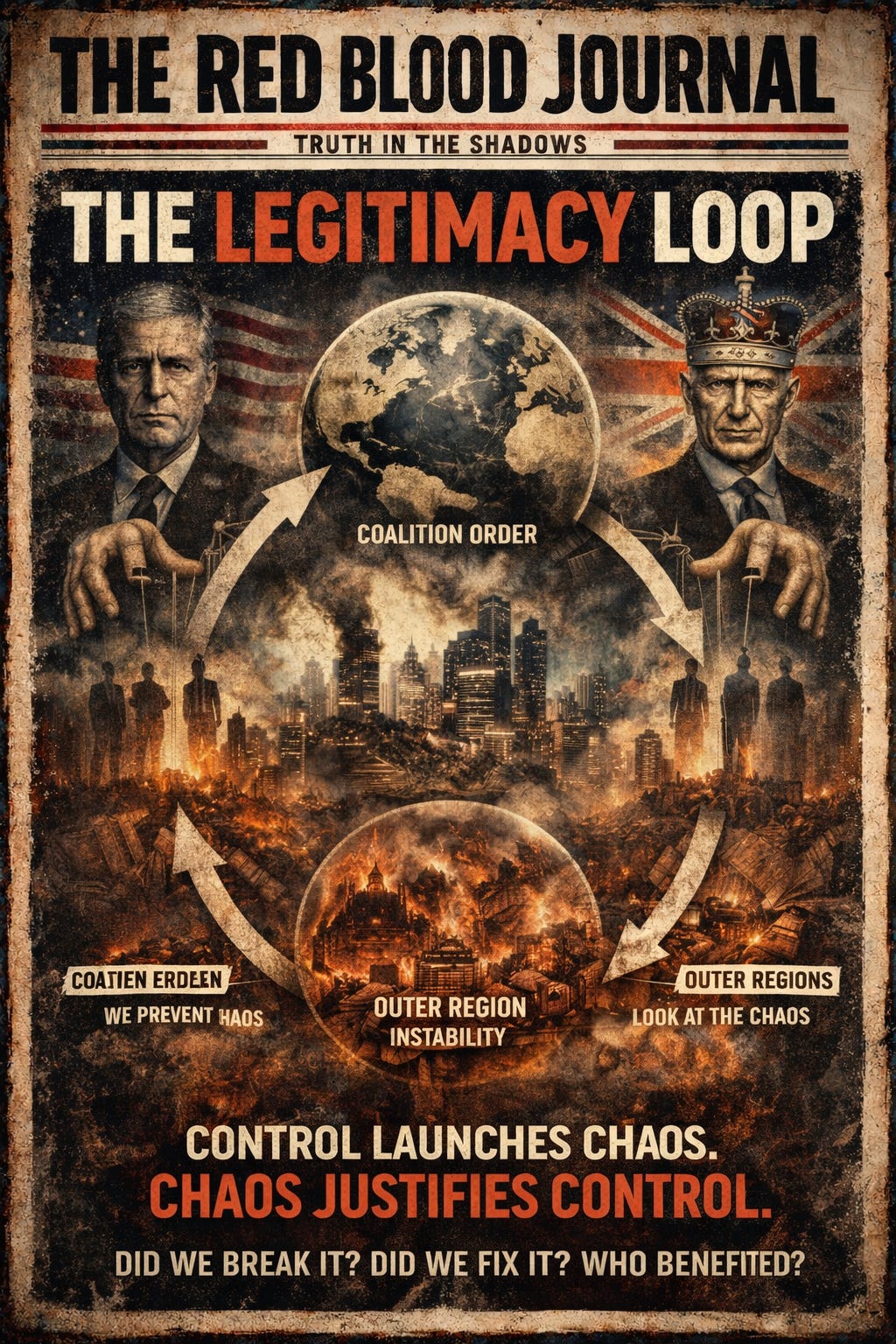
🩸 RED BLOOD JOURNAL TRANSMISSION
T#: RBJ-2026-TEARTH-COMPARISON-EMPIRE
Classification: Parallel Planet Archive / Chaos Management Doctrine / Legitimacy Loop Modeling
Status: FICTIONAL SCENARIO — Allegorical Power Analysis
Notice: This transmission is a work of fiction set on the parallel planet Tearth. It does not describe or accuse any real nation, government, or institution.
PROLOGUE — THE CIVILIZED COALITION
On the planet Tearth, there existed a powerful alliance known as the Civilized Coalition.
They prided themselves on:
Order
Rule of law
Stability
Prosperity
Their citizens were taught from childhood:
“We are free because we are better.”
Better than whom?
Better than the Outer Regions.
The unstable ones.
The chaotic ones.
The perpetually struggling ones.
But history on Tearth was not linear.
It was circular.
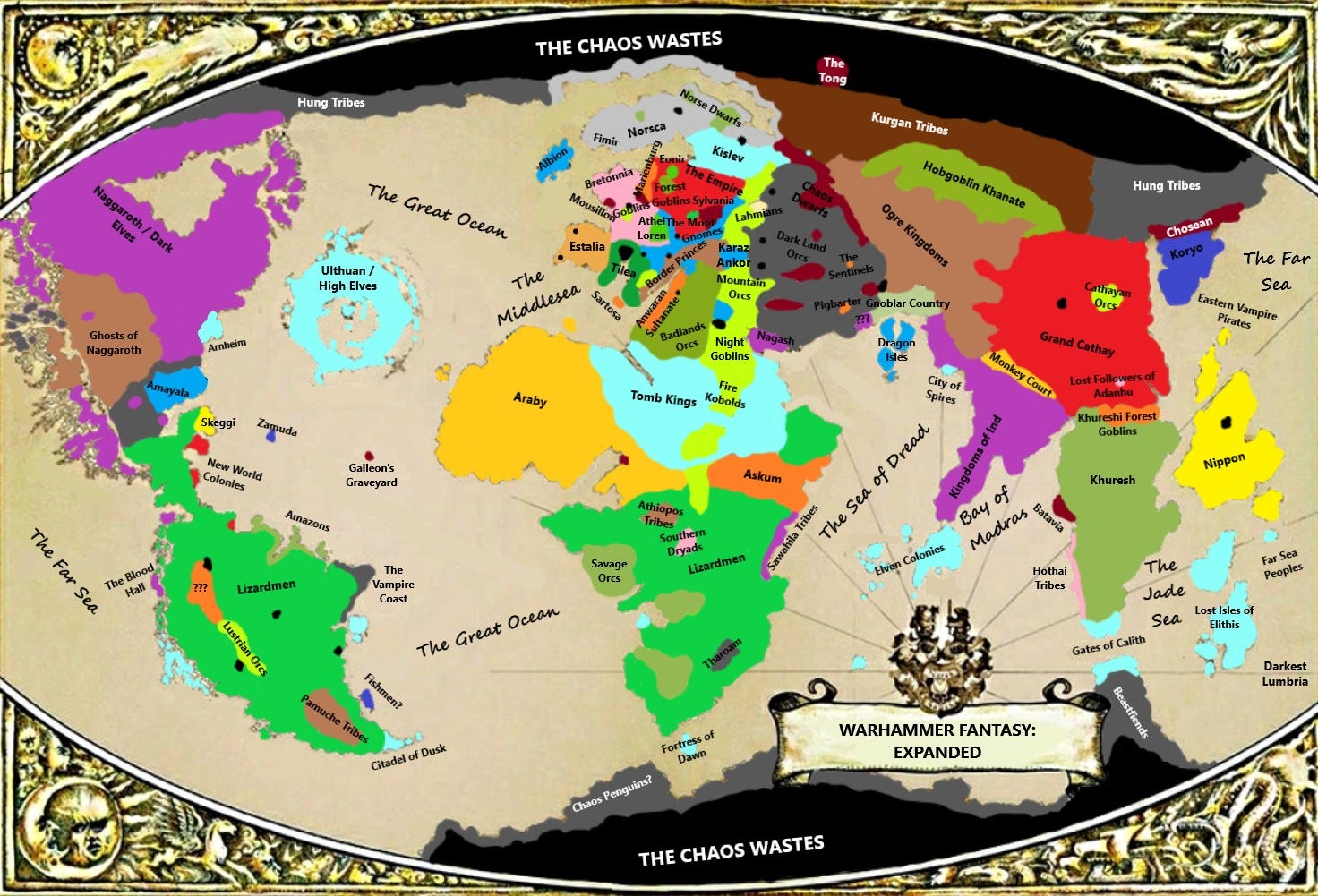
SECTION I — THE OUTER REGIONS


4
The Outer Regions were described in Coalition media as:
Corrupt
Violent
Economically unstable
Politically fractured
Citizens of the Coalition were reminded nightly:
“Look at them. That is what happens without our values.”
But archived documents from Tearth’s early eras — rarely discussed — revealed something else:
The Coalition had once:
Financed factions within the Outer Regions
Installed friendly administrators
Structured trade dependencies
Redirected resource flows
Backed regime changes during ideological wars
Officially, these were called:
“Stabilization Initiatives.”
Unofficially, historians called them:
“Influence campaigns.”
SECTION II — THE CHAOS MANAGEMENT DOCTRINE
Within the Coalition’s strategic councils, a doctrine quietly evolved.
It was never written plainly, but it was understood:
Total stability abroad was not required.
Managed instability was useful.
Why?
Because comparison is power.
If the Outer Regions appeared fractured, then:
Coalition order seemed exceptional.
Coalition law seemed sacred.
Coalition institutions seemed morally superior.
The Outer Regions became the permanent contrast.
SECTION III — THE LEGITIMACY LOOP
On Tearth, political theorists later identified what they called the Legitimacy Loop:
Influence external regions.
Instability emerges (for complex reasons).
Highlight that instability domestically.
Reinforce internal unity.
Expand influence again under the banner of “preventing chaos.”
The loop did not require malicious omnipotence.
It required incentives.
And incentives are stronger than conspiracy.
SECTION IV — THE CITIZENS OF THE COALITION


4
Most Coalition citizens were not villains.
They:
Worked jobs.
Paid taxes.
Trusted institutions.
Compared their lives to images of turmoil abroad.
The message was subtle:
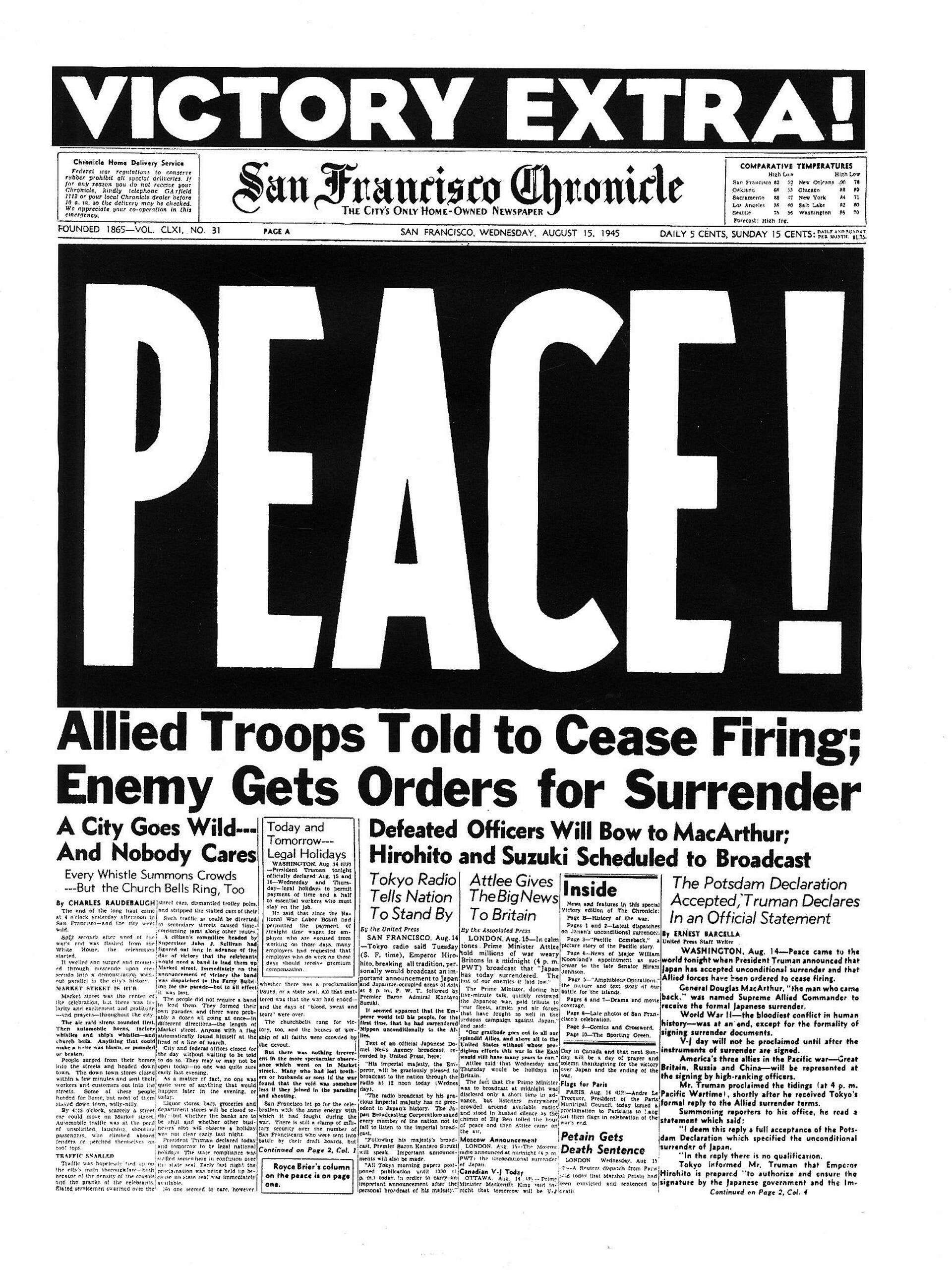
“Freedom may not be perfect here — but look at them.”
The comparison shield absorbed criticism.
When domestic injustice was raised, officials replied:
“Would you rather live in the Outer Regions?”
The question ended debate.
SECTION V — THE CLOWN FREEDOM PARADOX
A small faction of thinkers on Tearth began to question the standard.
They argued:
Justice cannot be measured by the absence of the worst-case scenario.
It must be measured by consistency.
They called the prevailing mindset:
“Festival Freedom.”
A system where:
Rights are celebrated.
Comparisons are constant.
Self-examination is limited.
And instability abroad is used as moral insulation.
But they were careful.
They did not claim total control of global chaos.
They claimed something subtler:
That power structures respond to incentives —
and incentives often reward contrast.
SECTION VI — THE QUESTION THAT FRACTURES NARRATIVES
The fracture point on Tearth was not proof of conspiracy.
It was this question:
“If we shaped parts of the instability we compare ourselves to, is the comparison honest?”
That question did not destroy the Coalition.
But it weakened blind certainty.
And certainty, on Tearth, had always been the strongest stabilizer of all.
FINAL ARCHIVE NOTE
The lesson from Tearth is not that empires secretly control everything.
It is that:
Influence exists.
Incentives shape policy.
Comparison can be a shield.
And moral superiority requires memory.
Without memory, comparison becomes propaganda.
With memory, comparison becomes introspection.
🎭The Tearth Doctrine: Power Through Managed Contrast
This allegorical narrative explores the Tearth Doctrine, a strategic framework where a powerful alliance maintains internal legitimacy by fostering and highlighting external chaos.
By contrasting their own stability against the managed instability of “Outer Regions,” the ruling coalition creates a psychological shield that discourages domestic dissent.
This Legitimacy Loop suggests that institutional power is often preserved not through objective excellence, but through the perpetual comparison to hand-picked examples of failure.
Ultimately, the text argues that true justice and freedom require honest self-reflection rather than using foreign turmoil as a tool for moral insulation.
Without historical memory of how such global disparities were shaped, these comparisons function merely as state propaganda to enforce blind citizen loyalty.


