


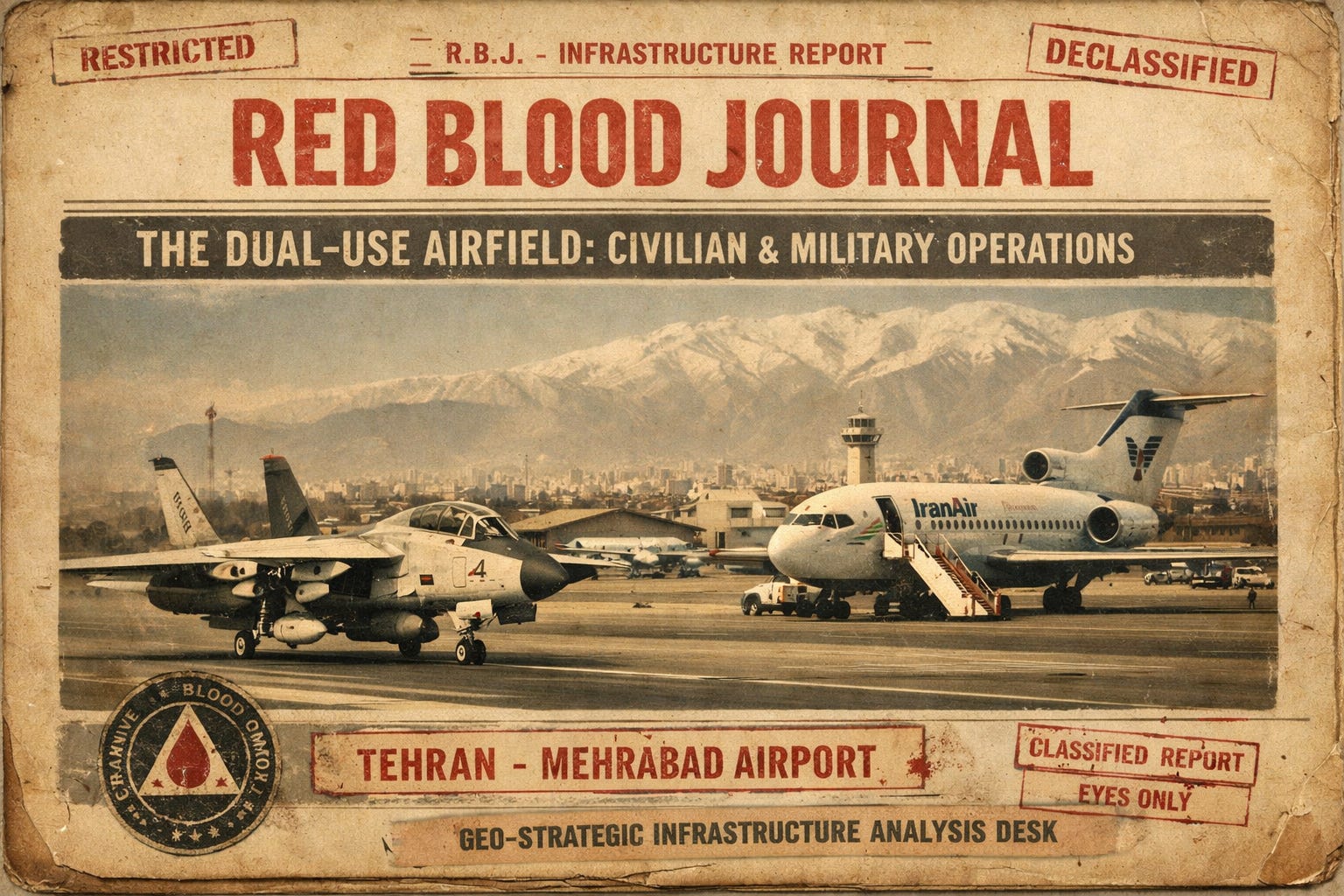
🩸 RED BLOOD JOURNAL TRANSMISSION
Division: Geo-Strategic Infrastructure Analysis Desk
Transmission Code: RBJ-GSI-2026-DUAL-USE-AIRFIELD
Classification: Infrastructure / Military Strategy Analysis
Archive: The Archive of Blood & Memory
THE DUAL-USE AIRFIELD
Why Civilian Airports Become Military Targets
PROLOGUE — THE CITY AIRPORT
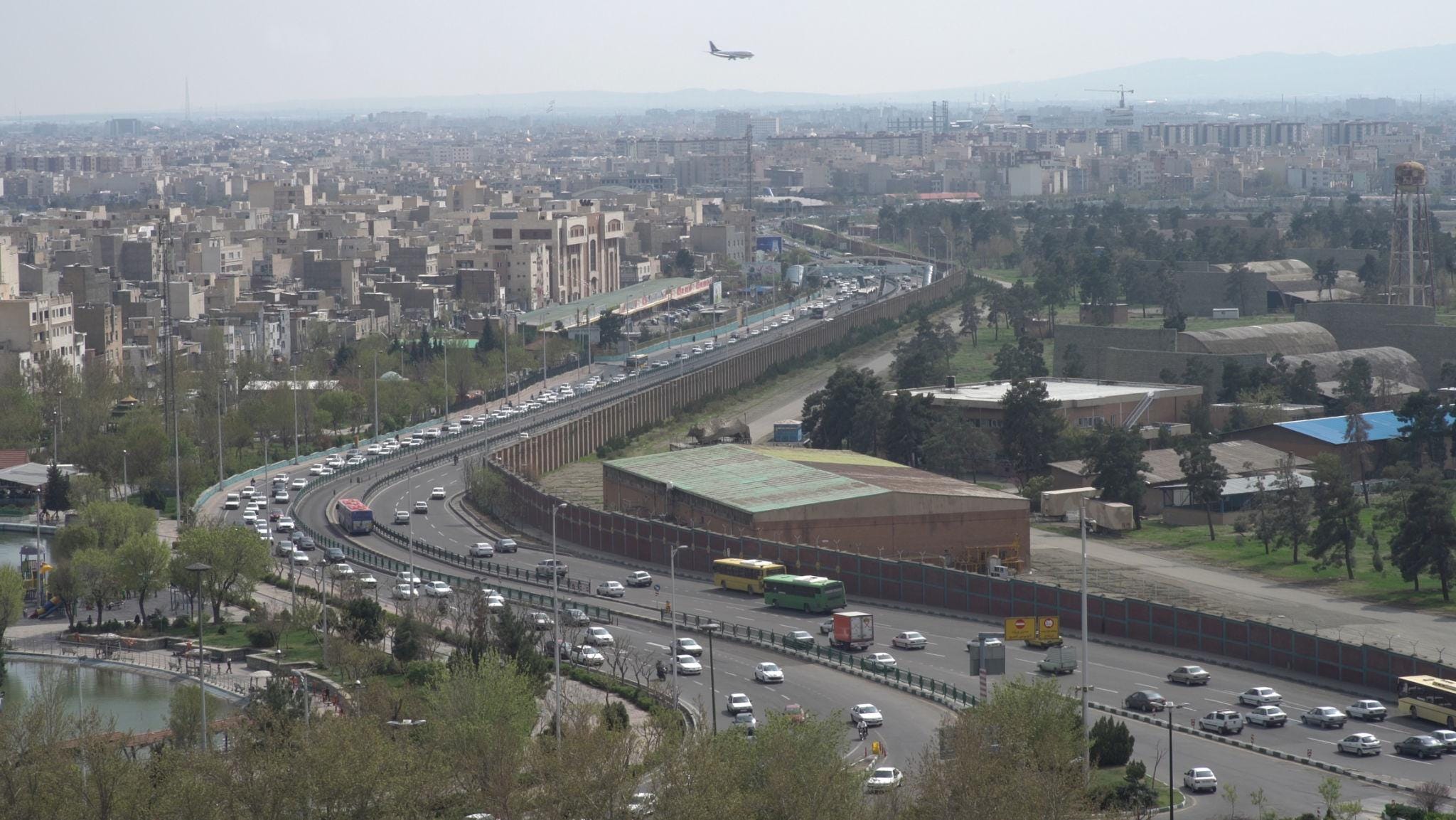
Inside the western edge of Tehran sits Mehrabad International Airport, an airfield that millions of travelers know only as a place of departure and arrival.
Passengers see terminals, luggage belts, and aircraft preparing for domestic flights.
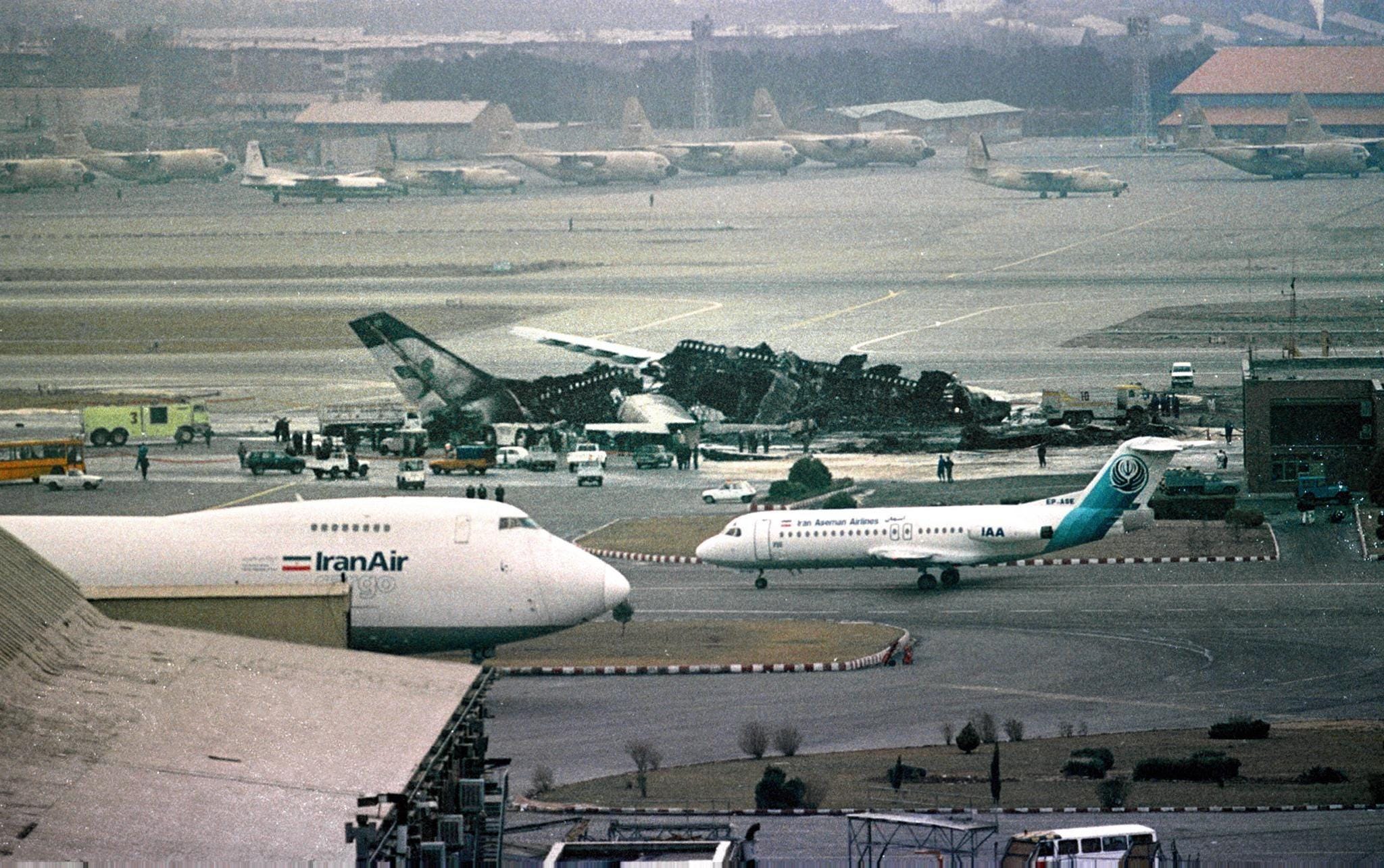
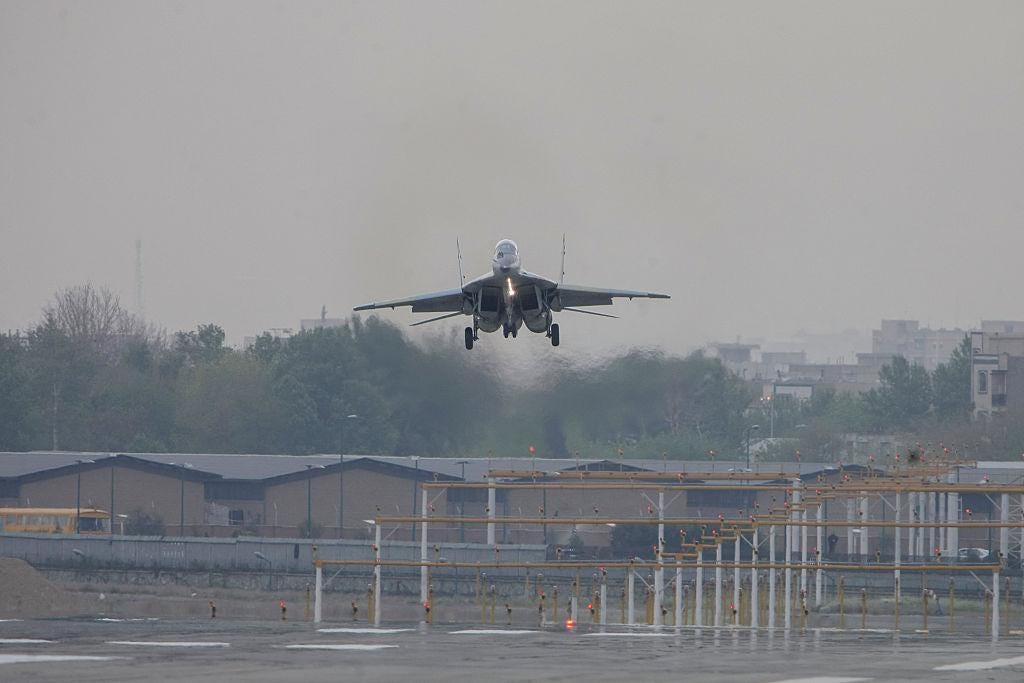
But historically, the same runways have also hosted fighter jets, military logistics, and air force infrastructure belonging to the Islamic Republic of Iran Air Force.
This dual reality—civilian airport above, military airfield beside it—reveals a strategic pattern that appears repeatedly in modern conflicts.
Airports often become dual-use infrastructure, and when war arrives, the line between civilian and military space collapses.
I — THE ORIGIN OF MEHRABAD
4
The airfield at Mehrabad began not as a civilian hub but as a military aviation base.
In the early aviation era of Iran:
the airport was used by the Iranian military aviation forces
infrastructure was designed for air defense and fighter aircraft
civilian aviation gradually developed around the same runways
By the mid-20th century, the airport had evolved into a dual-purpose airfield.
Commercial passenger traffic increased while sections of the base remained reserved for the military.
Even after Tehran’s international flights moved to Imam Khomeini International Airport, Mehrabad continued serving two parallel systems:
Domestic civilian aviation
Air force operations
This arrangement created a permanent overlap between civilian transportation and military defense.
II — THE IRAN–IRAQ WAR PRECEDENT
The strategic vulnerability of such infrastructure became visible during the Iran–Iraq War.
At the beginning of the war in 1980, Iraqi forces launched large-scale airstrikes against Iranian airfields.
One of the early targets was Mehrabad.
The logic was simple:
destroy aircraft
disable runways
cripple air force response
Because military aircraft were located at the airport, the entire facility became a wartime objective.
Civilian infrastructure existed in the same space.
The battlefield and the city merged.
III — THE DUAL-USE DOCTRINE
Modern military strategy recognizes a category called dual-use infrastructure.
These are facilities that serve both civilian and military functions.
Examples include:
airports used by fighter jets and commercial airlines
ports used for both cargo ships and naval vessels
telecommunications networks used by civilians and military command systems
satellite systems serving both navigation and military targeting
When a military force deploys equipment or aircraft within civilian infrastructure, the facility may be considered a military objective during conflict.
This principle is embedded in modern interpretations of the Geneva Conventions and international humanitarian law.
However, the ethical dilemma remains:
A strike on a dual-use target risks harming civilian life.
The legal framework therefore demands:
military necessity
proportionality
efforts to minimize civilian harm
In practice, these principles often collide with the chaos of war.
IV — WHY MILITARIES USE CIVILIAN AIRPORTS
There are several strategic reasons governments maintain military operations at civilian airfields.
Urban defense positioning
Locating airbases near major cities allows rapid defense against incoming threats.
Infrastructure efficiency
Civilian airports already contain:
long runways
fuel systems
maintenance facilities
radar and navigation systems
These can support military aircraft without building separate bases.
Strategic concealment
Aircraft located among civilian aviation infrastructure can be harder to monitor or target during peacetime surveillance.
Historical continuity
Many airports around the world began as military fields before civilian aviation expanded.
The infrastructure simply evolved rather than relocating.
V — THE STRATEGIC PARADOX
The dual-use airfield creates a paradox.
A government seeks:
military readiness
infrastructure efficiency
defense within urban territory
But the same decision can place civilian infrastructure inside the military landscape.
When conflict erupts, the airfield becomes both:
a transportation hub
a military objective
In that moment, the airport ceases to be only a civilian gateway.
It becomes part of the battlefield.
VI — THE GLOBAL PATTERN
Mehrabad is not unique.
Many countries operate similar dual-use airports.
Examples around the world include facilities used simultaneously by:
civilian airlines
national air forces
military transport units
This structure exists in Europe, the Middle East, Asia, and North America.
It reflects the reality that aviation infrastructure is expensive and strategically valuable.
The same runway can serve commerce in peacetime and defense in war.
CONCLUSION — THE RUNWAY BETWEEN TWO WORLDS
The airport runway represents one of the most visible symbols of modern civilization.
It connects cities, families, and economies.
But history repeatedly shows that the same runway can also launch fighter jets and military operations.
At places like Mehrabad, two worlds share the same concrete:
one world of passengers and travel
and another world of strategy and war.
When conflict erupts, those worlds collide.
The airport that once symbolized connection becomes a strategic target.
End Transmission
Archive Reference: The Archive of Blood & Memory
RBJ Division Seal: Geo-Strategic Infrastructure Analysis Desk
✈️The Dual-Use Paradox: Civil Aviation as Military Infrastructure
Modern warfare often blurs the line between commercial and defense facilities through the concept of dual-use infrastructure.
Using Tehran’s Mehrabad International Airport as a primary case study, the text explores how sharing runways and fuel systems between civilian airlines and military air forces creates a strategic paradox.
While this arrangement offers logistical efficiency and urban defense advantages, it simultaneously transforms essential transportation hubs into legitimate military targets during times of conflict.
This overlap was historically evidenced during the Iran-Iraq War, where the proximity of fighter jets to passenger terminals made civilian spaces vulnerable to airstrikes.
Ultimately, the global prevalence of these shared facilities highlights an ongoing ethical and tactical dilemma regarding the protection of non-combatant zones.
Though international law demands proportionality, the integration of military assets into the heart of civil society ensures that these gateways remain central to the modern battlefield.


