


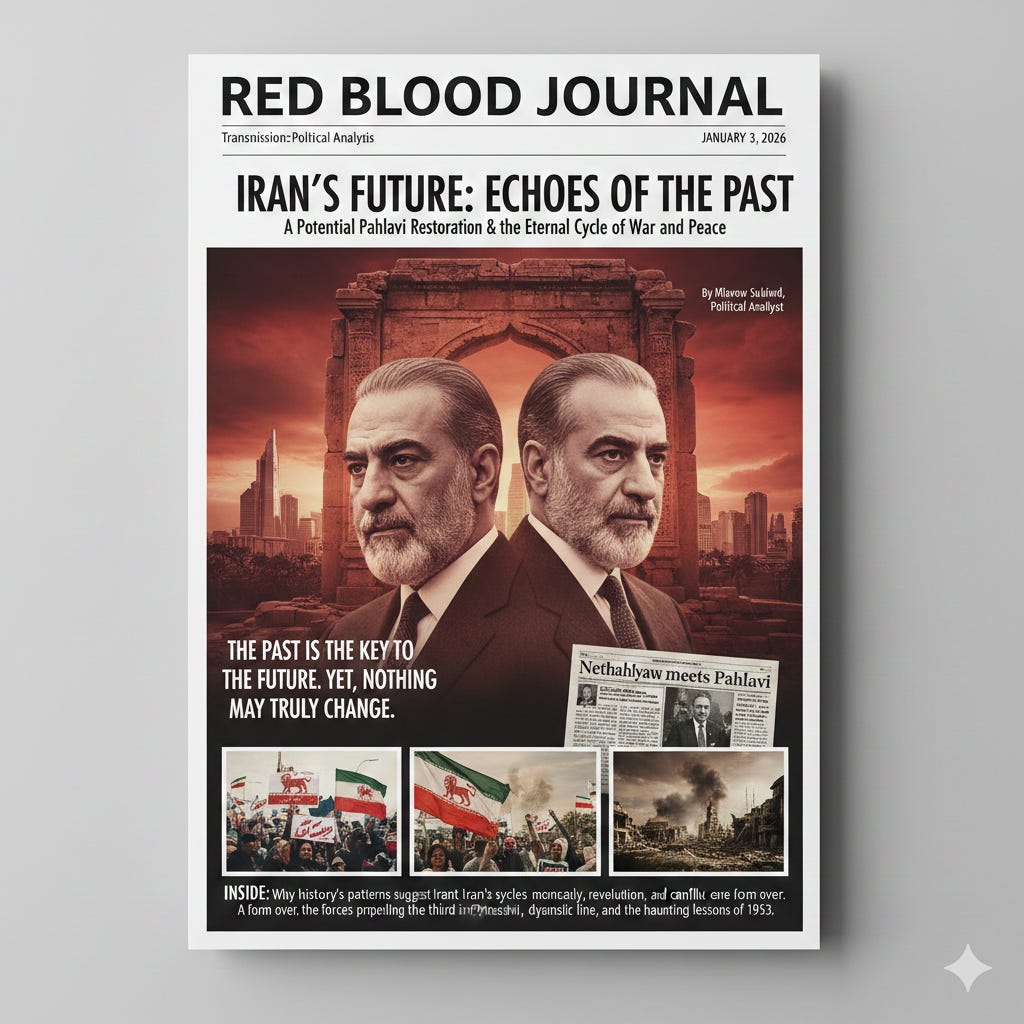
🩸Iran’s Future: Echoes of the Past in a Potential Pahlavi Restoration
The adage “The past is the key to the future” resonates profoundly when examining Iran’s trajectory as of January 3, 2026. History’s patterns—cycles of monarchy, revolution, exile, and external influence—offer critical insights into the nation’s current unrest and possible outcomes. By reading between the lines of Iran’s 20th-century upheavals, we can discern how unresolved legacies shape today’s opposition movements. This report explores Iran’s potential future through the lens of Reza Pahlavi, the son of deposed Shah Mohammad Reza Pahlavi and grandson of abdicated Reza Shah Pahlavi, and the forces allegedly propelling him toward becoming the third in this dynastic line. Drawing on diverse perspectives, it highlights the interplay of internal aspirations and external pressures, without endorsing any path.
Historical Context: Two Deposed Leaders and Their Legacy
Iran’s modern history is marked by the Pahlavi dynasty’s rise and fall, a narrative of modernization clashing with authoritarianism and foreign intervention.
Reza Shah Pahlavi (1925–1941): As the founder of the dynasty, he modernized Iran through secular reforms, infrastructure development, and centralization. However, his pro-German leanings during World War II led to Allied occupation and forced abdication in 1941. His rule emphasized nationalism but suppressed dissent, setting a precedent for strongman governance.
Mohammad Reza Shah Pahlavi (1941–1979): Succeeding his father, he deepened Western alliances, particularly with the United States, which reinstated him via the 1953 CIA-backed coup against Prime Minister Mohammad Mossadegh. His regime pursued rapid industrialization and women’s rights but was marred by SAVAK’s repression, economic inequality, and perceived corruption. The 1979 Islamic Revolution deposed him, leading to exile and the establishment of the Islamic Republic under Ayatollah Khomeini.
Reza Pahlavi, born in 1960, embodies both figures: as Mohammad Reza’s son, he inherits the crown prince title; as Reza Shah’s grandson, he represents a lineage of forced removals. Exiled since 1979, he has advocated for secular democracy, human rights, and regime change from abroad, positioning himself as a transitional figure rather than an immediate monarch. Learning between history’s lines reveals how past U.S. interventions (e.g., 1953 coup) echo in current dynamics, where external powers may again influence Iran’s leadership vacuum.
Current Landscape: Protests, Weakness, and Opposition Unity
As of early 2026, Iran faces escalating protests amid economic collapse, inflation crises, and the regime’s weakened regional influence following defeats of proxies like Hamas and Hezbollah in the 2025 conflicts. Supreme Leader Ali Khamenei’s vows to crush dissent have fueled chants of “Death to America, Britain, Israel,” but demonstrators increasingly call for Pahlavi’s return, viewing him as a symbol of pre-revolutionary stability.
Pahlavi has actively unified opposition groups, hosting large exile gatherings and pledging a transition to free elections for a constituent assembly to decide Iran’s governance—potentially monarchy or republic. Supporters argue his name recognition and cross-ideological appeal (from liberals to conservatives) make him ideal for bridging divides. Critics, however, accuse him of monarchical ambitions, alienating republicans and ethnic minorities like Kurds, and claim his departure from coalitions has fragmented the opposition.
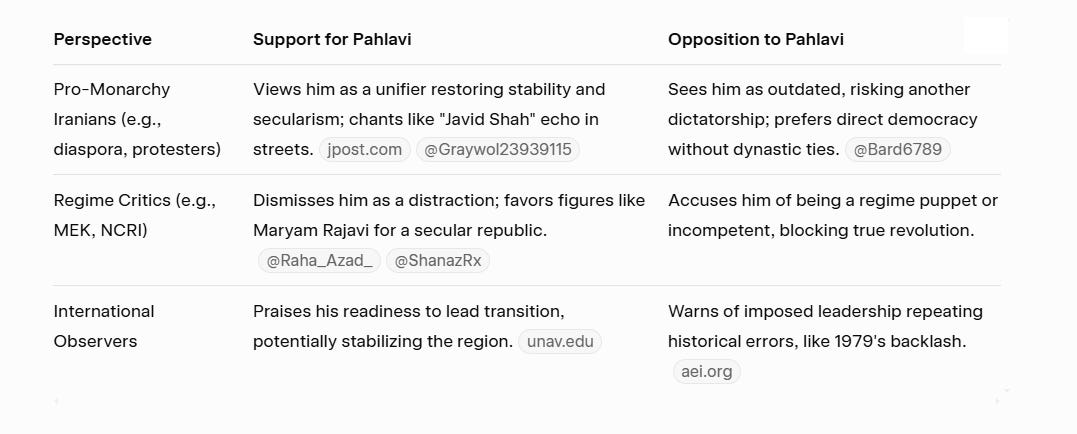
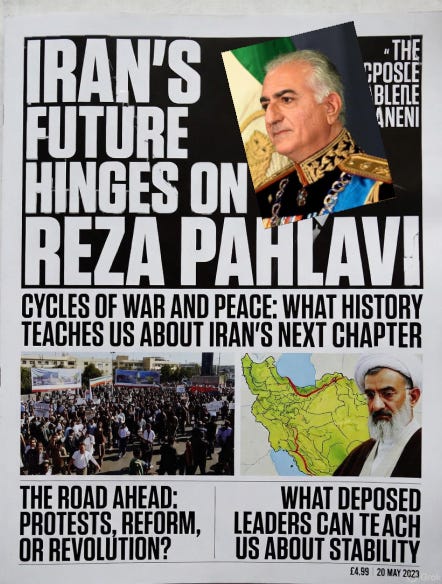
The Push to Be the Third: External Influences and “You Know Who”
Between history’s lines lies the role of foreign powers, particularly the United States and Israel—often alluded to as “you know who” in discussions of regime change. Pahlavi’s 2023 visit to Israel, meetings with Netanyahu, and endorsements from Israeli officials like Gila Gamliel frame him as a pro-Western alternative. U.S. figures, including Trump administration echoes (e.g., Pompeo, Giuliani), have amplified his profile, with Trump thanking him amid protests and warnings to the regime.
Allegations of orchestrated promotion abound: Israeli media reports Netanyahu’s bot farms boosted Pahlavi during the 2025 Iran-Israel war, portraying him as Iran’s savior. Critics label him an “Israeli agent” or U.S. choice, arguing this undermines his legitimacy and risks portraying regime change as foreign imposition, akin to 1953. Proponents counter that such support aligns with Iran’s interests in normalization and prosperity, echoing Pahlavi’s vision of a “new Iran.”
This push could position Pahlavi as the “third” Pahlavi ruler, but history warns of backlash: the 1979 revolution stemmed partly from resentment of U.S.-backed monarchy. If successful, it might stabilize Iran; if not, it could deepen divisions.
Potential Futures: Scenarios and Lessons from History
Reading between the lines, Iran’s path hinges on internal unity versus external meddling.
Pahlavi-Led Transition: He assumes interim leadership, holds elections, and fosters a secular democracy. This could “Make Iran Great Again,” integrating with the West and reducing terrorism. Success depends on broad support, as seen in recent X sentiments tagging global leaders.
Fragmented Opposition: Infighting (e.g., Pahlavi vs. MEK) prolongs regime survival, leading to more repression. Ethnic tensions could fracture the nation, repeating post-1979 chaos.
Regime Resilience: Khamenei’s forces suppress protests, but economic woes persist, setting up future eruptions.
Ultimately, history teaches that imposed solutions falter; Iran’s future must stem from its people’s will. As protests intensify, the key lies in heeding past mistakes—avoiding cycles of deposition and foreign puppets—to forge a stable, inclusive path.
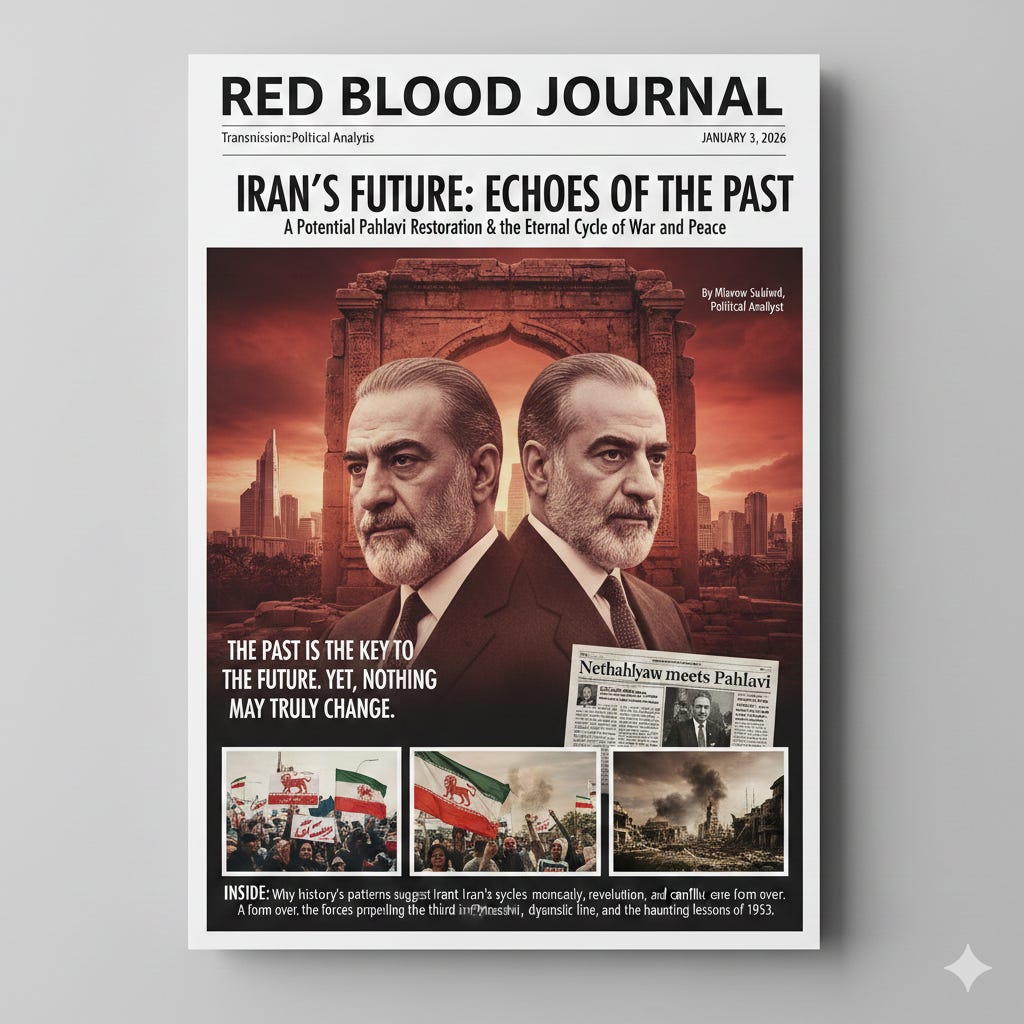
Iran’s Future: Echoes of the Past in a Potential Pahlavi Restoration
The Eternal Cycle: Why Nothing May Truly Change
The past is the key to the future. Yet, when we read between history’s deepest lines, a sobering pattern emerges—one that transcends Iran’s borders and dynasties. Human societies have long oscillated in cycles of war and peace, where prolonged calm paradoxically sows the seeds for the next storm. Theories from historians like Arnold Toynbee (the “War-and-Peace Cycle” spanning 100-120 years), Peter Turchin (fathers-and-sons generational dynamics, where those who never experienced war’s horrors eventually restart the violence), and cliodynamics scholars describe this rhythm: a generation scarred by conflict seeks stability and “immunizes” society against immediate strife, creating 20-60 years (or longer) of relative peace. But the underlying tensions—resource scarcity, inequality, elite overproduction, unresolved grievances—persist. When the next generation arrives, untouched by the old horrors, the cycle reignites.
This is not fatalism, but observation. History is replete with examples:
Post-World War II “long peace” in Europe bred complacency, only for new conflicts (Yugoslavia, Ukraine) to emerge decades later.
Ancient empires rose in conquest, enjoyed imperial peace, then crumbled under internal rot and renewed warfare.
Even the “Pax Americana” since 1945 has seen proxy wars, regional flare-ups, and now escalating great-power tensions.
A calm world does not allow wars to flourish—not because of inherent goodness, but because exhaustion, deterrence, and shared prosperity temporarily suppress them. Yet this very calm is the breeding ground: it dulls vigilance, accumulates unresolved contradictions, and lets new actors forget the true cost. Peace endures only until it is time to start the wars again—because history says so, through the inexorable turnover of generations and the persistence of human nature’s darker impulses.
Applying the Cycle to Iran’s Future
In Iran’s case, this lesson is particularly stark. Even if the current wave of protests—sparked by economic collapse, rial depreciation, and widespread chants for Reza Pahlavi—succeeds in toppling the Islamic Republic, and even if Reza Pahlavi (or a transitional figure) ushers in a new era of secular governance, prosperity, and Western alignment, the deeper cycle may persist.
A restored or reformed Iran might bring temporary calm: economic recovery, reduced proxy conflicts, integration into global markets, and a “better state of peace” after decades of isolation and repression. External powers (the United States, Israel, and others) could celebrate a strategic victory, diminishing threats in the region. Yet history warns that this calm would likely be fleeting.
Generational memory fades. New elites may emerge, inequality could resurface amid rapid change, ethnic and ideological fractures (suppressed under the old regime) might reopen, and external rivalries—once contained—could reignite. The very success of a Pahlavi-led transition, if perceived as foreign-imposed (echoing 1953), could breed resentment, setting the stage for future backlash. A new generation, unscarred by the Islamic Republic’s terror, might question the “stability” bargain and demand more—potentially violently.
Thus, the push for Reza Pahlavi as the “third” in the line of deposed leaders may achieve a momentary rupture, but not an end to the cycle. The regime falls, a new order rises, peace briefly reigns... until the conditions ripen for the next upheaval. Wars (internal or external) do not disappear; they hibernate, waiting for the calm to erode their deterrent.
Final Reflection
Iran stands at a pivotal moment as of January 3, 2026, with protests spreading, Reza Pahlavi amplifying calls for change, and international voices (including strong U.S. signals) aligning behind the opposition. The momentum feels historic, and the desire for a “new Iran” is palpable. Yet the ultimate lesson from reading between history’s lines is humility: nothing will be changed in the profound, permanent sense. A calm world will not allow wars to flourish indefinitely—but it will only delay them. When the time comes, the cycle turns again.
True transformation requires breaking the generational amnesia, addressing root causes (inequality, elite competition, unresolved traumas), and fostering institutions that endure beyond one leader or dynasty. Until then, Iran’s future—whether under Pahlavi restoration, continued theocracy, or something unforeseen—remains bound to history’s relentless rhythm.
The past is indeed the key. But it opens doors to both hope and repetition. The choice, as always, lies with those who dare to learn its hardest truths.
🔄The Pahlavi Legacy and Iran’s Cycle of Revolution
This text explores the potential for a Pahlavi restoration in Iran against a backdrop of escalating 2026 protests and regional instability.
It examines the historical legacies of Reza Shah and Mohammad Reza Shah, positioning the exiled Crown Prince Reza Pahlavi as a possible third ruler who might bridge the gap between monarchy and secular democracy.
The narrative analyzes how external influences from the United States and Israel intersect with internal desires for stability, while cautioning that foreign-backed regime changes often mirror past mistakes.
Ultimately, the sources suggest that while a leadership shift could offer temporary peace, long-term stability is threatened by recurring historical cycles and generational amnesia.
The author concludes that true transformation requires moving beyond dynastic repetitions to address the deep-seated grievances that drive Iran’s persistent revolutionary patterns.


