


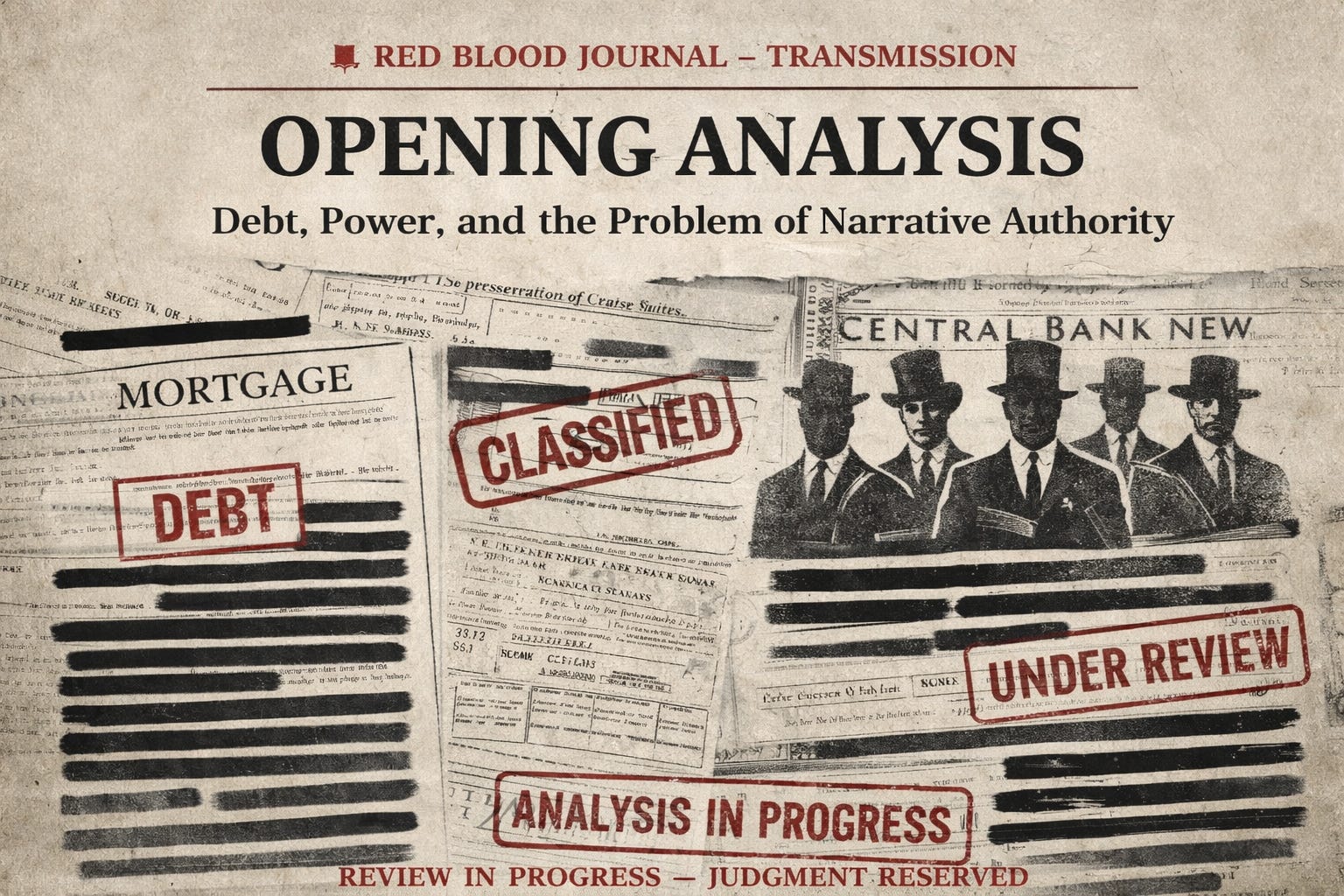
🩸 RED BLOOD JOURNAL — TRANSMISSION
OPENING ANALYSIS (PART 0)
Series Title: Europa: The Last Battle — A Non-Biased, Open-Minded Review
Method: Symmetrical Skepticism / Evidentiary Analysis
Classification: Historical Claims Review / Narrative Forensics
Reader Status: Active Judge — Not Passive Consumer
PROLOGUE — WHO DECIDES WHAT IS TRUE
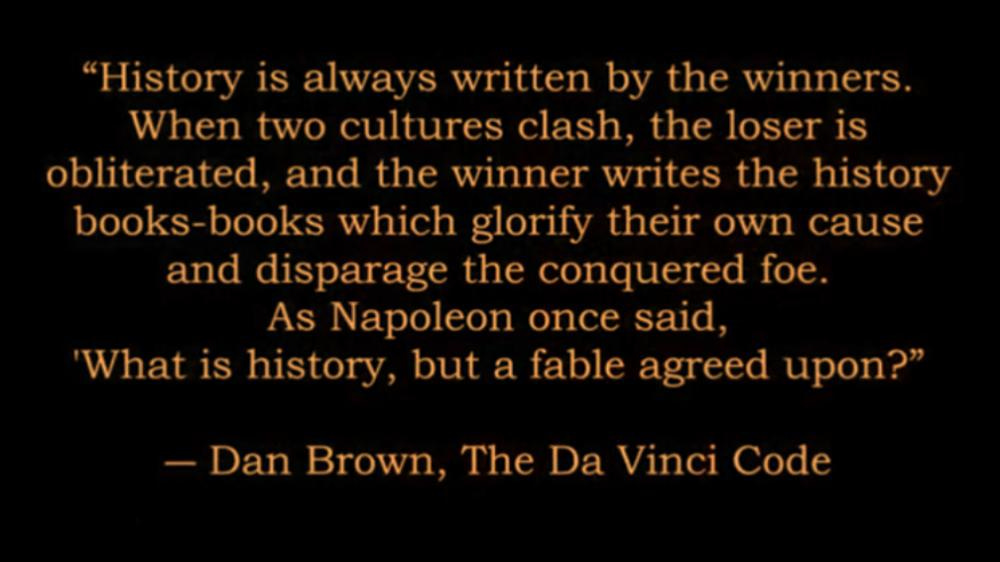
“History is always written by the winners.”
The phrase is repeated so often it has hardened into dogma. But repetition is not proof, and cynicism is not methodology.
This series begins from a simple but uncomfortable premise:
No one is entitled to your belief.
Not filmmakers.
Not historians.
Not institutions.
Not this journal.
If a documentary claims that historians lie, then a critique that assumes historians tell the truth by default would itself be biased.
If historians claim a documentary is propaganda, that claim too must be examined rather than inherited.
Truth is not established by authority.
It is approached through logic, evidence, consistency, and motive.
HOW THIS SERIES WILL PROCEED
This report series does not begin from the assumption that:
Europa: The Last Battle is truthful, or
mainstream historical narratives are truthful.
Both are claim-making systems operating within power structures, incentives, and constraints.
Accordingly, Red Blood Journal adopts symmetrical scrutiny:
No Authority Immunity
No claim is accepted because it comes from a historian, activist, academic, or documentary.Primary Evidence Over Narrative
Laws, documents, contracts, financial mechanisms, and verifiable records outweigh moral framing.Claims Are Separated From Conclusions
A correct observation can still produce a false or exaggerated conclusion.Three Outcomes Are Allowed
Substantiated
Disproven
Indeterminate
“Indeterminate” is not weakness. It is intellectual discipline.
THE ROLE OF THE READER — JUDGMENT CANNOT BE DELEGATED
This series does not ask you to replace one belief system with another.
It does not ask you to:
trust the documentary,
trust historians,
trust activists,
or trust Red Blood Journal.
It asks you to judge character and truth claims for yourself.
History does not lie.
People do.
Institutions do.
Narratives do.
Character is not proven by title or reputation, but inferred through behavior:
Internal consistency
Willingness to acknowledge uncertainty
Treatment of opposing evidence
Whether conclusions exceed premises
Whether moral outrage replaces logic
A truth-teller can tolerate ambiguity.
A manipulator cannot.
THE LOGICAL OVERVIEW — THE PRIMARY TEST
Readers are encouraged to apply a logical overview, not emotional alignment.
Every claim examined in this series will be tested against four questions:
Is the claim internally coherent?
Does it contradict itself elsewhere?Does the conclusion logically follow from the evidence presented?
Or is there a leap?What must be omitted for this claim to work?
Silence often reveals more than speech.Who gains power if this claim is accepted as true?
This applies equally to the documentary and its critics.
The verdict belongs to the reader.
OPENING VOICE — Ken O’Keefe
The opening of Europa: The Last Battle is delivered not by a professional historian, but by a political and human-rights activist. This is not presented here as a discredit, but as context.
Activists do not primarily speak to catalogue facts.
They speak to frame causation, morality, and responsibility.
What follows must therefore be treated as a thesis, not evidence.
CLAIM SET #0 — “THE HEAD OF THE SNAKE IS THE FINANCIAL SYSTEM”
Claim as Presented
O’Keefe asserts that if there is one material subject to focus on, it is finance. He argues that:
The purpose of modern finance is debt, and debt functions as enslavement
Mortgages are a “death grip,” not ownership
Even outright ownership is negated through taxation
Financial power concentrates control into a tiny group
Money is created without limit by those who control the system
Moral inversion follows: corruption is rewarded, integrity punished
This framing establishes a total explanation:
finance is not merely influential — it is the root.
ANALYTICAL SEPARATION — OBSERVATION VS. INTERPRETATION
Structurally Verifiable Observations
The following are empirically demonstrable:
Modern economies are debt-based
Mortgages confer conditional ownership
Property taxation can result in forfeiture
Financial systems concentrate power
Access to capital confers political leverage
These claims are not controversial. They are documented features of modern political economy.
Interpretive Leaps
The opening then moves beyond structure into assertion:
That debt exists primarily to enslave
That the system is fraudulent by design rather than by incentive
That a unified group “runs the world” through finance
That moral corruption is systematically rewarded as a rule
These conclusions do not automatically follow from the structural facts alone and therefore require additional evidence.
THE MORTGAGE CLAIM — A PRELIMINARY EXAMINATION
The term mortgage is invoked rhetorically as “death grip.”
Linguistically:
The word derives from Old French mort gage
Meaning “dead pledge” — a contract that ends when paid or defaulted
This reflects historical power imbalance, but does not by itself prove malicious intent.
Conclusion:
The linguistic claim is partially accurate; the moral conclusion extends beyond the evidence.
TAXATION AND OWNERSHIP — WHERE THE CLAIM HOLDS
The assertion that property can be seized for unpaid taxes is legally accurate in most modern states.
However:
This reflects state sovereignty more than financial conspiracy
The mechanism predates modern banking elites
The analytical question becomes who controls the state, not merely finance
Early compression of these distinctions is a recurring pattern this series will track.
MORAL INVERSION — WHERE ANALYSIS MUST SLOW DOWN
The opening escalates from system critique to moral absolutism, asserting that:
The most corrupt actors rise
Ethical behavior is punished
Extreme criminality is structurally rewarded
Here the narrative shifts from analysis to moral cosmology.
This is the most dangerous analytical transition, because it:
Substitutes archetypes for mechanisms
Discourages falsification
Primes audiences for scapegoating
Such claims require case-specific evidence, not rhetorical force.
RED BLOOD JOURNAL POSITION (CLEARLY STATED)
This series will not dismiss the opening as delusion.
It will not accept it as revelation.
It will ask:
Where does evidence end?
Where does interpretation begin?
Where does critique become myth?
If historians lie, it will be shown with documentation.
If the documentary overreaches, it will be shown with restraint.
If neither side can fully substantiate its claims, that uncertainty will be stated plainly.
CLOSING NOTE TO THE READER
If we tell you who is lying, we have already failed.
This series exists to return judgment to the individual —
armed not with belief, but with logic, evidence, and awareness of incentives.
The responsibility is yours.
⚖️🩸How to Practice Symmetrical Skepticism
The provided text introduces a methodology called Narrative Forensics, a critical framework designed by Red Blood Journal to evaluate the controversial documentary Europa: The Last Battle.
This approach utilizes symmetrical skepticism, refusing to grant automatic authority to either mainstream historians or the film's creators.
By prioritizing primary evidence over emotional narratives, the series aims to separate verifiable structural facts—such as the nature of debt-based economies—from subjective interpretive leaps.
The text emphasizes that intellectual discipline requires identifying where documentation ends and moral speculation begins, often resulting in indeterminate conclusions.
Ultimately, the methodology seeks to empower readers to act as independent judges rather than passive consumers of information.
The overarching goal is to strip away rhetorical manipulation to reveal the underlying incentives and logical consistency of competing historical claims.


