


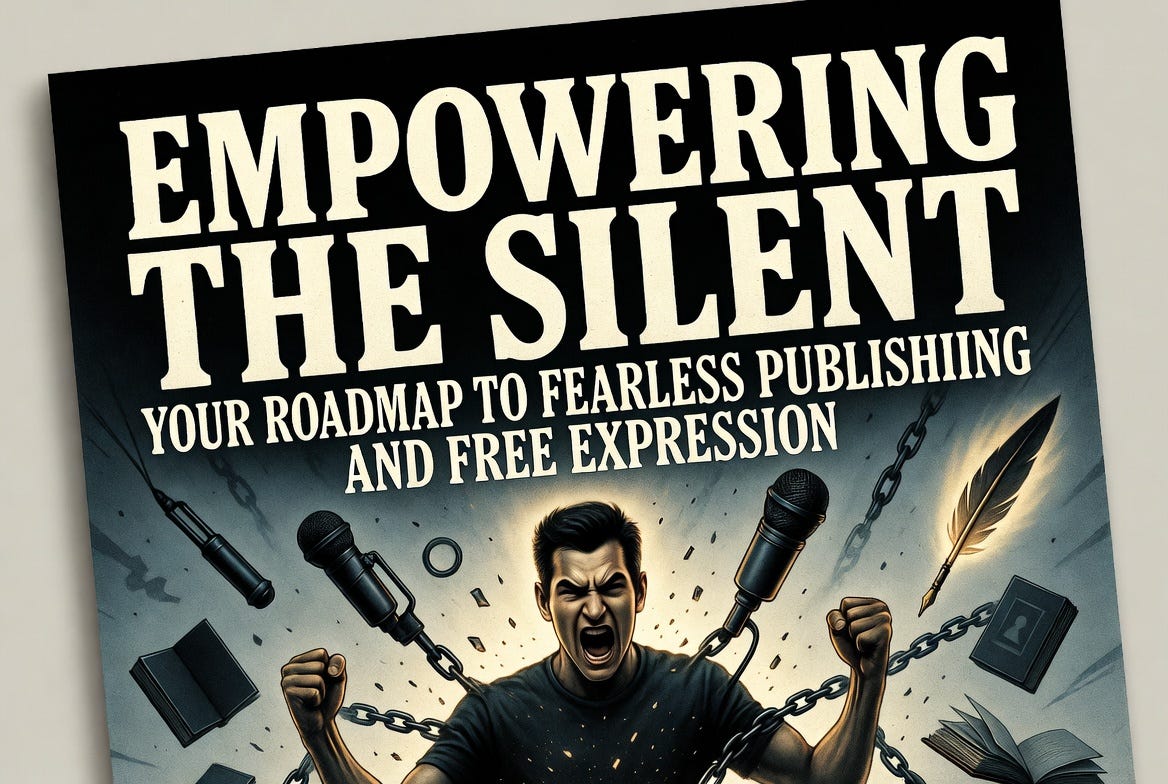
🩸Empowering Voices: A Guide to Starting Your Own Publication and Exercising Freedom of Speech
By David Thompson
Published in Red Blood Journal Transmission, February 2026 Edition
In an era where information flows freely yet voices often remain silenced by fear, hesitation, or legal uncertainty, the act of speaking out has never been more vital. The shy, careful, and cautious silent majority—those who observe injustices, harbor insights, and yearn to contribute but dread repercussions—holds immense potential to drive change. This guide draws from practical advice on launching a home-based publication company, navigating legal landscapes, and safeguarding your work. It aims to motivate you to reclaim your freedom of speech, one published word at a time. Remember: Your voice matters, and with the right tools, you can express it boldly and responsibly.
Why Start Publishing? The Power of Your Voice
Freedom of speech is a cornerstone of democracy, yet many hesitate due to perceived risks. If you’ve ever felt compelled to share investigations, opinions, or stories but held back, consider this: Starting your own publication from home empowers you to bypass gatekeepers. It’s not just about broadcasting ideas—it’s about building confidence, fostering community, and inspiring others. As history shows, transformative movements often begin with individuals who dared to publish despite caution. You can too, starting small and scaling with care.
Step-by-Step: Launching Your Home-Based Publication
Turning your ideas into a published reality is achievable with minimal resources. Here’s a realistic blueprint to get started:
Craft a Business Plan: Define your mission—whether investigative journalism, opinion pieces, or creative nonfiction. Identify your audience and content niche. Research shows that consistent self-publishers in non-fiction can achieve sustainable income over time through platforms like newsletters or e-books.
Establish Your Business Structure: For simplicity, begin as a sole proprietorship. For added protection, form a Limited Liability Company (LLC) via your state’s online portal—often costing under $500. Secure a free Employer Identification Number (EIN) from the IRS and open a dedicated bank account.
Register and Set Up: Choose a unique name, verify availability, and handle local licenses if required. Invest in essentials like a domain for your website (e.g., via WordPress) and ISBNs for books (affordable in bulk at around $125 for 10).
Produce and Distribute Content: Use free or low-cost tools like Kindle Direct Publishing for e-books or Substack for newsletters. Start with print-on-demand services to avoid inventory costs. Build an audience through social media and email marketing.
Initial setup can cost as little as $200–$1,000, making it accessible. Success lies in persistence: Quality content and ethical practices will attract readers and mitigate fears.
Understanding Legal Risks: Knowledge as Your Shield
Publishing isn’t without hurdles, but awareness empowers you to navigate them. Under U.S. law, the First Amendment protects expression, but liabilities like defamation or privacy invasion can arise. Don’t let this deter you—proactive steps reduce exposure.
Defamation: Avoid false statements harming reputations. Frame allegations with qualifiers like “allegedly” or “according to sources.” Truth is your ultimate defense; always fact-check.
Privacy Concerns: Anonymize details where possible, using phrases like “names have been changed to protect privacy.” Focus on public-interest topics to bolster protections.
Intellectual Property: Respect copyrights with fair use for quotes, and include notices like “All rights reserved” in your work.
Other risks include trademark issues or right of publicity, but these are manageable with disclaimers and legal reviews. Consider media liability insurance for peace of mind.
Protective Language: Words That Safeguard Your Work
Incorporate strategic phrasing to signal good faith and clarify intent:
For Allegations: Use “reportedly,” “it is claimed,” or “in my opinion” to distinguish facts from views.
Disclaimers: Add a standard notice, such as: “The information herein is based on research and not intended as fact. Errors are unintentional.”
These elements demonstrate responsibility, potentially deterring frivolous claims.
The Fiction Label: A Strategic Tool, Not a Panacea
Labeling work as “fiction” can provide a layer of defense by emphasizing its imaginative nature. A straightforward disclaimer like: “This is a work of fiction. Any resemblance to actual persons or events is coincidental,” helps. However, courts prioritize substance—if details mirror reality too closely, risks remain. Alter elements substantially and consult experts to maximize protection.
Best Labeling Practices: Direct and Effective
The simplest safeguard is a clear disclaimer on your copyright page:
For Fiction: “This is a work of fiction. Names, characters, places, and incidents are products of the author’s imagination or used fictitiously.”
For Non-Fiction: “Based on research; names may be anonymized for privacy. This work is not intended to defame.”
Combine with releases and insurance for comprehensive coverage.
A Call to Action: Break the Silence
To the silent majority: Your caution is valid, but inaction cedes power to others. By starting a publication, you practice freedom of speech in its purest form—controlled, ethical, and impactful. Begin today: Draft your first piece, label it wisely, and share it. The world needs your perspective. As you publish, you’ll inspire others to do the same, turning whispers into a chorus of change.
Red Blood Journal Transmission encourages submissions from emerging voices. Submit your work at redbloodjournal.com/submit. Together, we amplify the unspoken.
📢The Architect of Expression:
A Blueprint for Independent Publishing
This source serves as a practical guide for individuals who wish to overcome their hesitation and exercise their freedom of speech through independent publishing.
Author David Thompson provides a strategic blueprint for launching a home-based publication, emphasizing that minimal financial investment can empower citizens to bypass traditional media gatekeepers.
The text outlines essential administrative steps, such as forming an LLC and utilizing print-on-demand services, while highlighting the importance of building a brand with integrity.
To manage potential legal liabilities, the guide suggests using specific disclaimers and protective language to guard against claims of defamation. Ultimately, the material encourages the “silent majority” to utilize strategic labeling and ethical research to transform their private insights into influential public contributions.


