


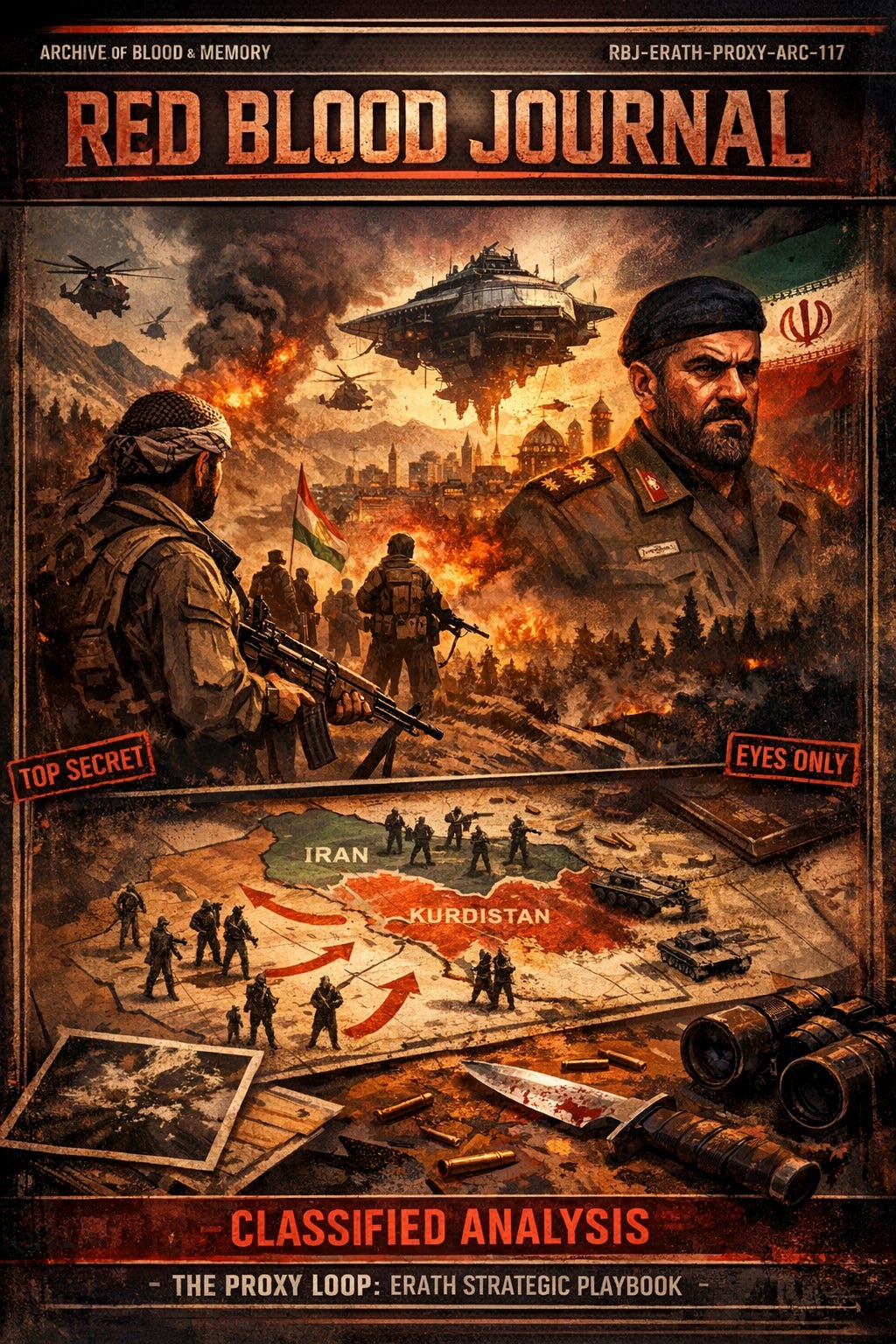
🩸 RED BLOOD JOURNAL TRANSMISSION
Archive: The Archive of Blood & Memory
Division: Geo-PsyOps & Territorial Reconfiguration Unit
Transmission Code: RBJ-ERATH-PROXY-ARC-117-0979
Classification: Strategic Pattern Recognition
Status: ACTIVE ANALYSIS
PROLOGUE — THE RECURRING SHADOW
On Planet Erath, history does not repeat by accident.
It repeats by design.
The same actors, the same terrain types, the same narrative structures—only the names and borders shift. What appears as isolated conflict is, in reality, a continuity of method.
The method is simple:
Create alignment → inject narrative → destabilize → redraw ground reality
SECTION I — THE IRAQ TEMPLATE (ERATH MODEL)
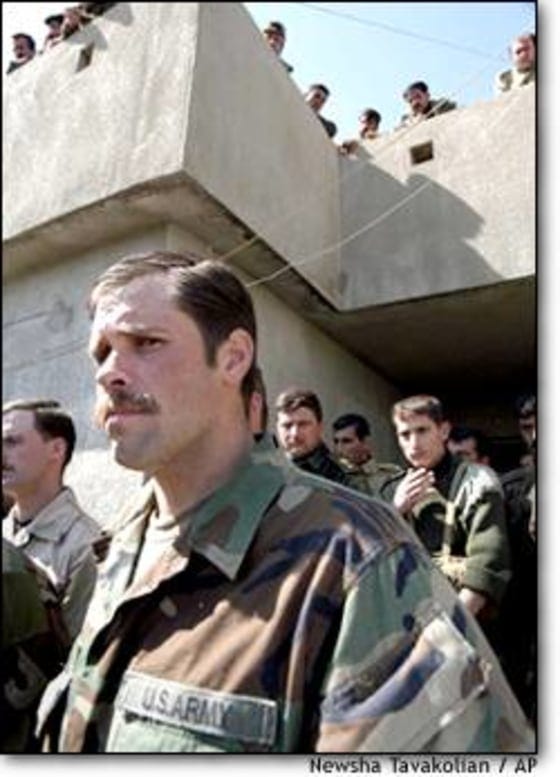
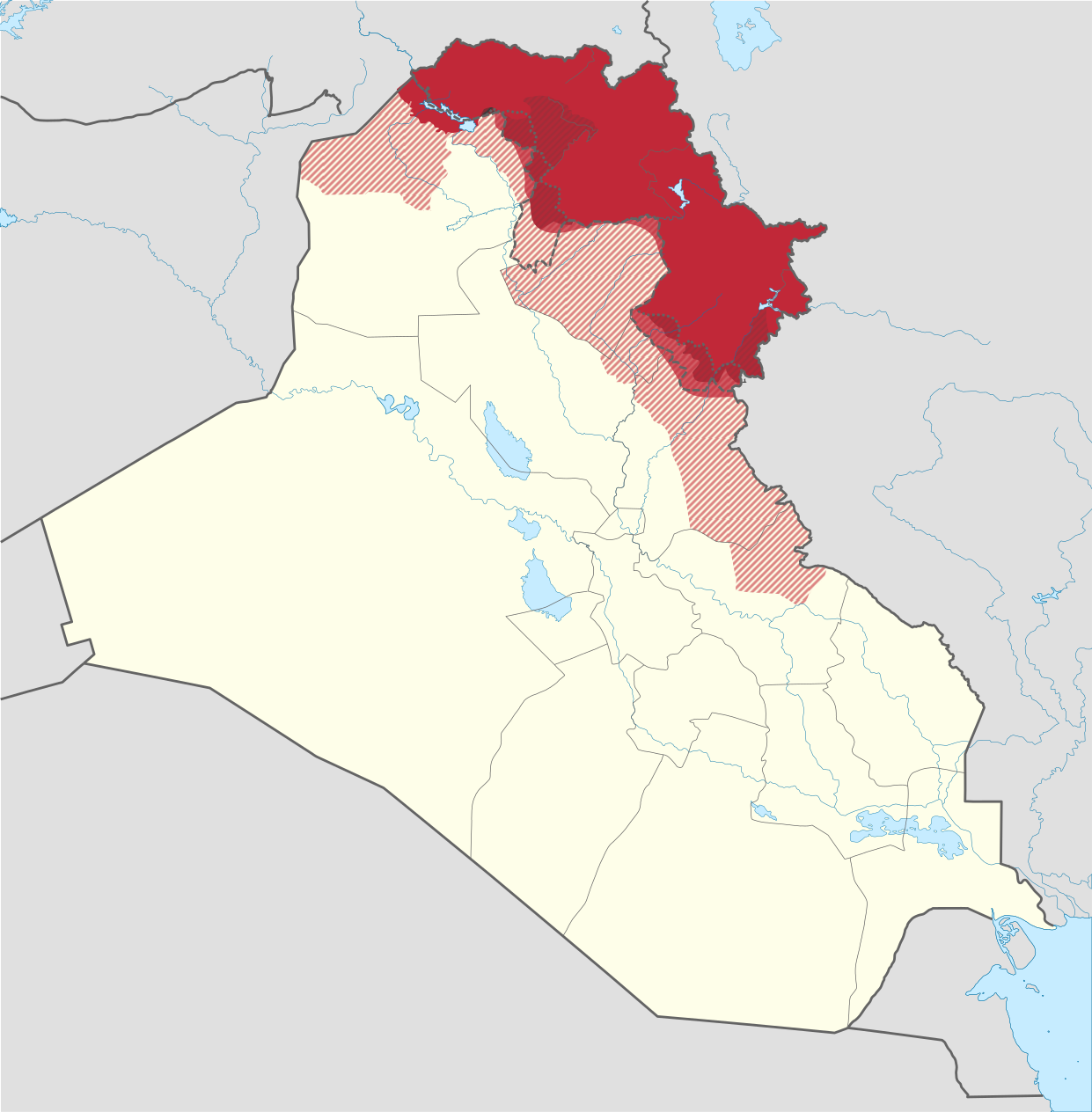

Within the Erath framework, the Iraq operation established a repeatable structure:
Narrative Layer
Global justification: Weapons of Mass Destruction
Information flow: centralized, amplified, unquestioned
Local Alliance Layer
Regional actors provide selective intelligence streams
Alignment formed with external power
Execution Layer
Central authority collapses
Power vacuum emerges
Outcome Layer
Territorial fragmentation
Emergence of semi-autonomous zones
Result on Erath:
A permanent northern structure carved out of a previously unified state.
SECTION II — THE PROXY INCENTIVE STRUCTURE
On Erath, no actor moves without incentive.
Local actors operating within major power conflicts are driven by:
Territorial ambition (explicit or latent)
Security buffer creation
Historical grievance correction
Opportunity within chaos
This produces a predictable behavior:
When a global power engages → local actors maximize outcome beyond stated alignment.
SECTION III — THE IRAN PARALLEL SIGNAL


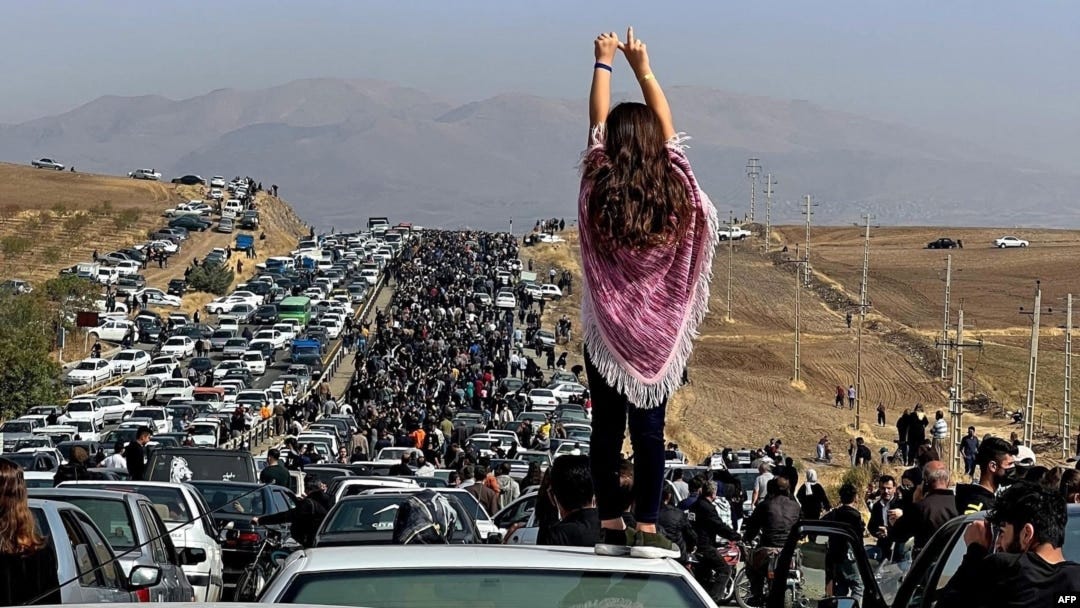
Within the Erath narrative model, signals emerge that resemble earlier patterns:
Presence of aligned external interest
Internal unrest within target state
Reports (verified or not) of resource or weapon flows
Strategic geography: border regions with existing ethnic alignment
These signals do not confirm outcome—but they define potential trajectory.
SECTION IV — INFORMATION AS A WEAPON
The most critical layer on Erath is not military—it is informational.
Three simultaneous streams always exist:
Official Narrative
Counter-Narrative
Operational Reality (hidden between the two)
The confusion between these layers creates:
Plausible deniability
Strategic ambiguity
Public fragmentation
The battlefield is not only land—it is perception.
SECTION V — THE EXPANSION QUESTION
The assertion that certain groups operate with expansionist intent must be framed within Erath’s core rule:
Any actor given leverage during systemic disruption will attempt to convert it into permanence.
This does not require:
Unified doctrine
Formal declaration
Only:
Opportunity
Capability
Timing
ANNEX A — THE PROXY LOOP (ERATH MODEL)
Cycle Pattern:
External Power Engages
Local Actor Aligns
Narrative Justifies Action
Central Structure Weakens
Territory Reconfigures
New Status Becomes “Permanent”
→ Loop resets in a new geography
ANNEX B — SIGNAL VS PROOF
On Erath, the absence of proof does not eliminate the presence of pattern.
However:
Signals ≠ Confirmation
Patterns ≠ Intent certainty
The distinction determines whether analysis remains strategic—or becomes assumption.
FINAL NOTE — THE EDGE OF INTERPRETATION
Within the Erath framework, the interpretation presented is coherent as a model, not as universally verified fact.
The structure holds.
The pattern is recognizable.
The conclusion remains conditional on evidence that often never surfaces publicly.
🕸️The Erath Model: Patterns of Proxy and Power
The provided text outlines a strategic framework known as the Erath Model, which analyzes how global powers and local groups manipulate conflict and narrative to reshape borders.
This model suggests that history on the planet Erath follows a calculated cycle where justified interventions lead to the collapse of central authority and the creation of permanent territorial shifts.
By examining past operations like the Iraq template, the document illustrates how narrative control and information warfare are used to create strategic ambiguity and public confusion.
It emphasizes that local actors are driven by self-interest and expansionism, seizing moments of systemic instability to turn temporary leverage into lasting regional power.
Ultimately, the source warns that while these repetitive patterns provide a predictable roadmap for geopolitical change, the true operational reality often remains hidden from the public eye.


