


🩸 RedBloodJournal.com
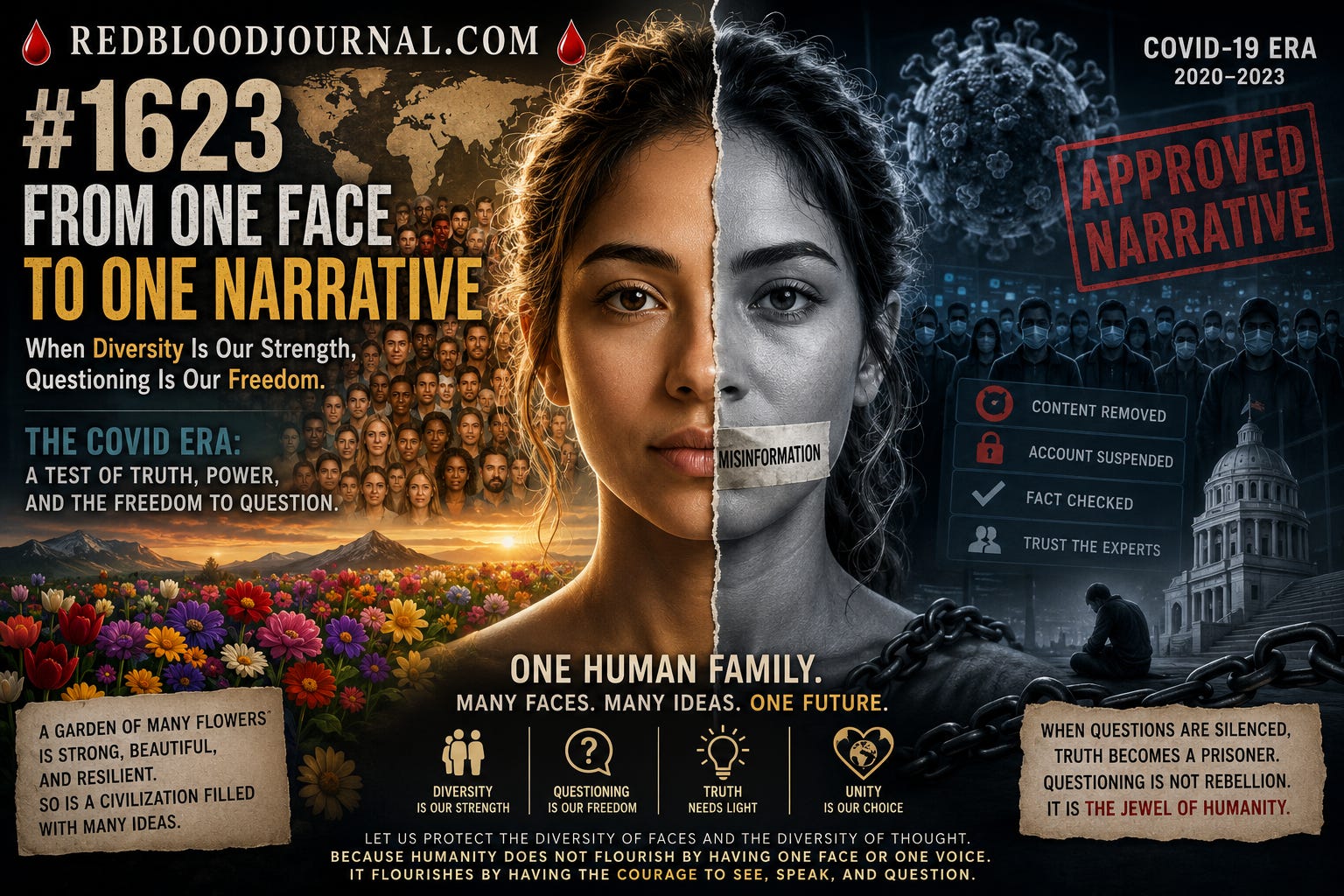
#1623 – From One Face to One Narrative
An Opinion
By Red Blood
July 2026
Introduction
History often teaches its deepest lessons through comparison.
The images throughout this report are not presented as scientific predictions or historical conclusions. They are visual metaphors designed to explore a broader question:
If humanity values diversity in appearance, should it also value diversity in thought?
The COVID-19 era serves as the central example for this discussion because it was one of the largest global periods in modern history where governments, technology companies, health institutions, media organizations, and citizens wrestled with questions about information, uncertainty, and public communication.
Whether one believes those decisions were largely justified, largely mistaken, or somewhere in between, the period invites reflection on how societies respond when one narrative becomes dominant.
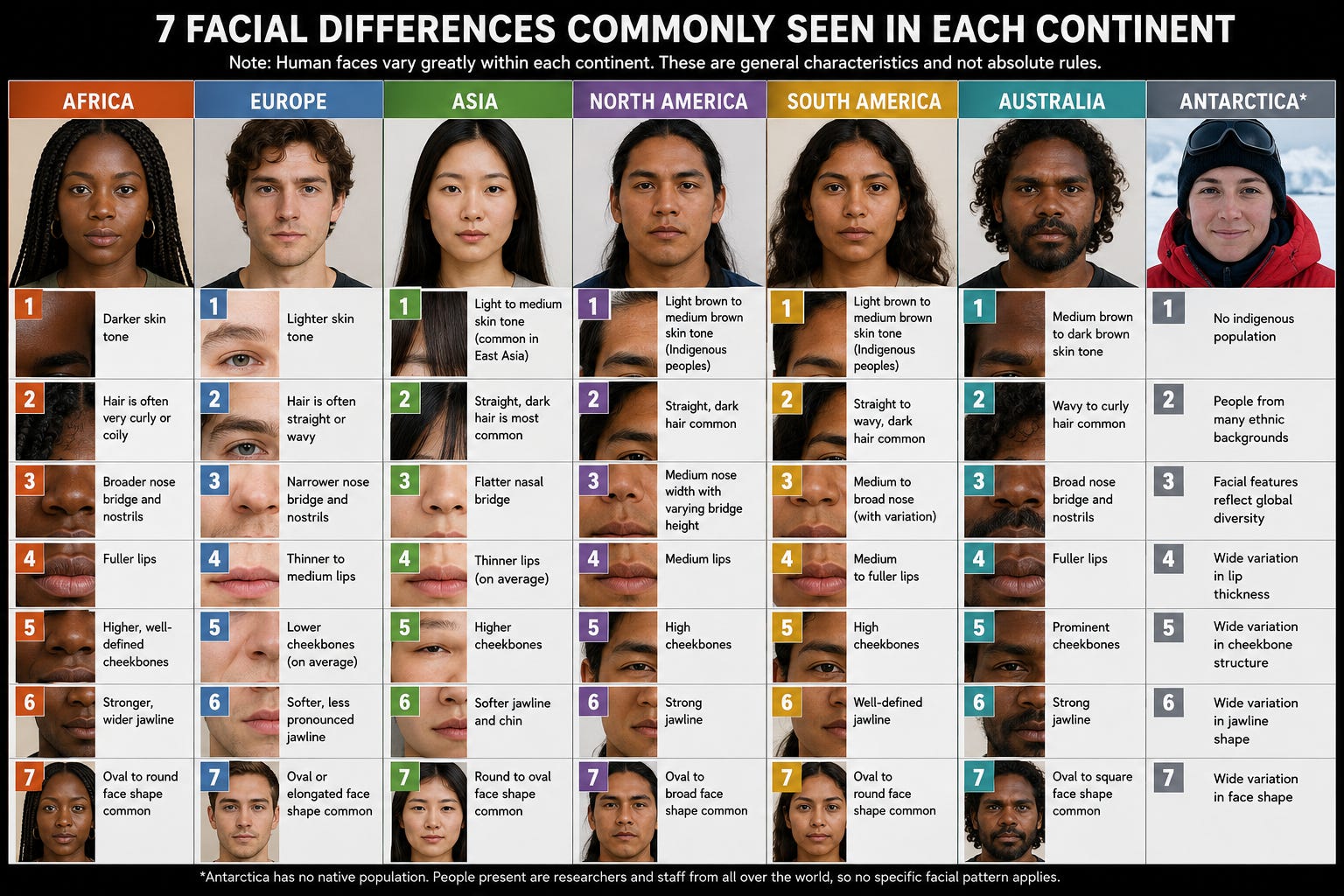
Image 1 – The Diversity of Humanity
(“7 Facial Differences Commonly Seen in Each Continent.”)
Looking across the continents, humanity displays remarkable diversity.
Different facial features.
Different skin tones.
Different cultures.
Different languages.
Different histories.
Despite these differences, every human being belongs to the same species.
Few would argue that the world’s beauty would be enhanced if every face looked identical.
Most people instinctively appreciate diversity when it comes to nature, art, languages, and human appearance.
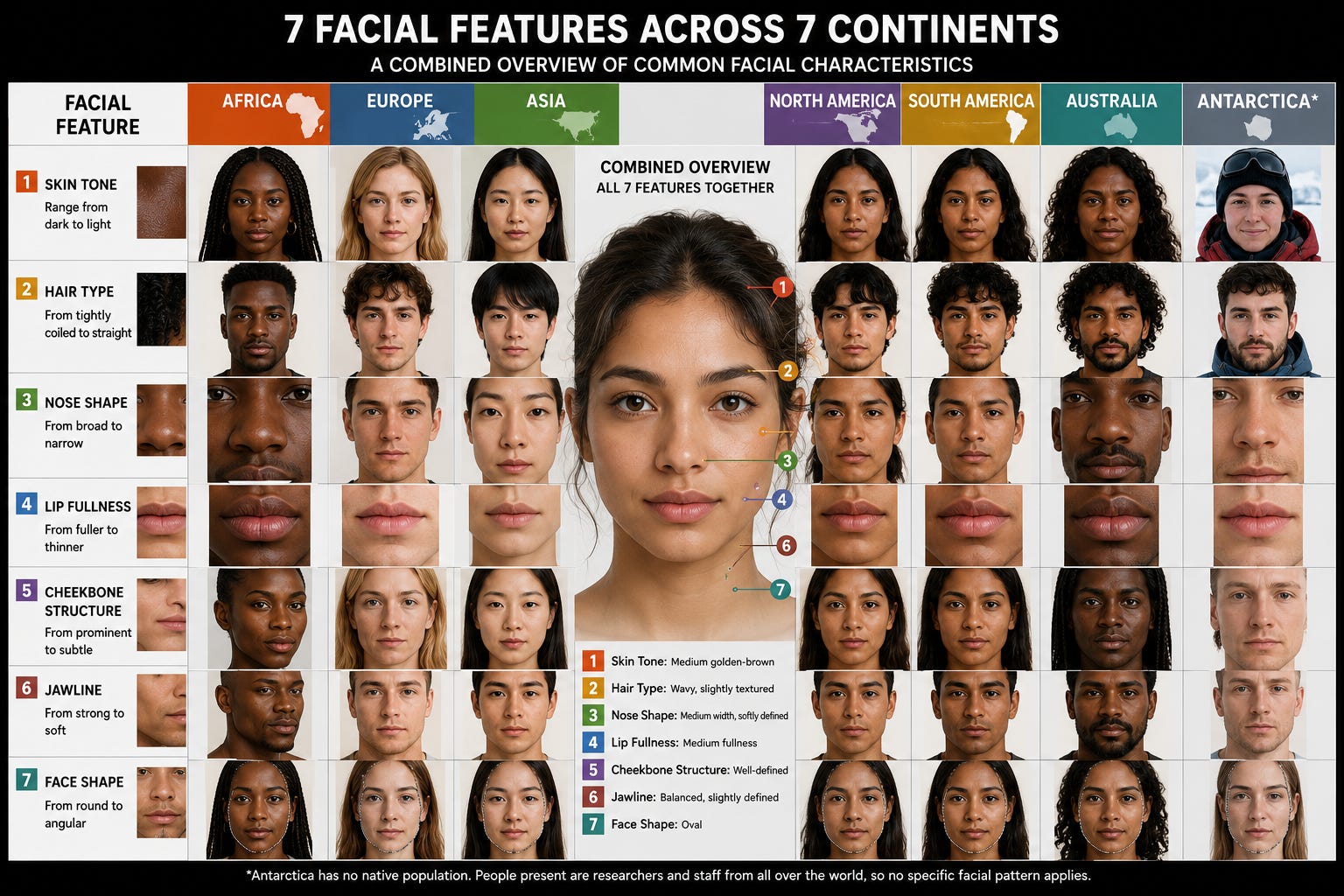
Image 2 – The Face of a Fully Blended Humanity
(The composite face from all seven continents.”)
This image presents a thought experiment.
If humanity continued blending until every distinguishing facial feature gradually disappeared, the result might resemble a single generalized human face.
The image is not suggesting such a future will occur.
Instead, it asks a philosophical question:
Would humanity gain something—or lose something—if every visible distinction eventually faded?
The same question can be asked beyond biology.
Can diversity disappear in other ways?
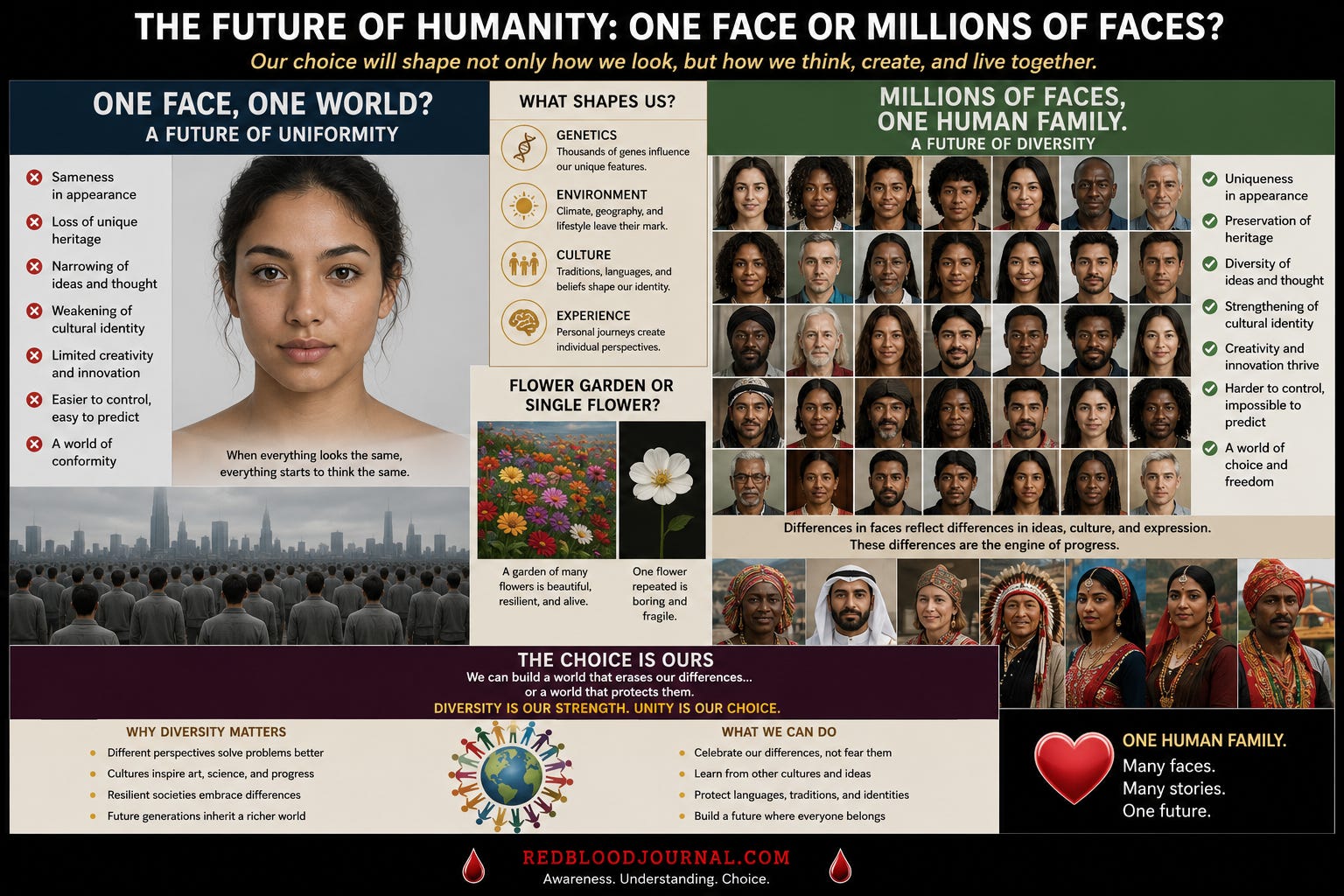
Image 3 – One Face or Many Faces?
(“The Future of Humanity: One Face or Millions of Faces?”)
This final image shifts the discussion from physical diversity to intellectual diversity.
A garden filled with countless flowers is generally admired because each flower contributes something unique.
Few gardeners intentionally replace an entire garden with only one variety.
The image asks whether the same principle applies to ideas.
Can a civilization become intellectually healthier if every person is encouraged to think the same way?
Or does progress depend upon preserving meaningful disagreement?
The COVID Era: A Test of Intellectual Diversity
The COVID-19 era provides one of the clearest modern examples of this question.
Across much of the world, governments, public-health agencies, technology companies, media organizations, and scientific institutions worked to communicate guidance during a rapidly evolving public-health emergency.
At the same time, many claims, theories, and criticisms were restricted, removed, or labeled as misinformation by governments or private platforms according to their own policies.
Supporters viewed these actions as necessary to reduce harmful falsehoods during a crisis.
Critics argued that some restrictions discouraged legitimate questioning and limited open debate while scientific understanding was still evolving.
Regardless of where one stands, the period demonstrated how quickly societies can move toward a dominant narrative during extraordinary circumstances.
For many observers, the deeper question was not simply which individual claims were right or wrong.
It was this:
Who decides which questions may be asked?
Diversity of Faces and Diversity of Thought
The images in this report suggest an analogy.
Humanity generally celebrates diversity in appearance.
We recognize that different faces make the world richer.
Different cultures broaden civilization.
Different traditions preserve history.
Different languages express ideas in unique ways.
If diversity strengthens humanity in these areas, what role does diversity of thought play?
Scientific progress has often begun with questions that challenged prevailing assumptions.
Many ideas that are now widely accepted were once unpopular.
Of course, not every unconventional idea is correct.
Questioning alone does not establish truth.
But neither does popularity.
The process of testing ideas through evidence, debate, criticism, and revision has long been one of the foundations of scientific and intellectual progress.
The Role of the Questioner
Throughout history, societies have often treated those who ask uncomfortable questions in very different ways.
Sometimes they are celebrated.
Sometimes they are ignored.
Sometimes they are criticized.
Sometimes history later judges them differently.
The willingness to ask difficult questions has repeatedly contributed to advances in science, medicine, philosophy, engineering, and human rights.
A civilization that becomes afraid of questions risks becoming intellectually stagnant.
Questions are not the enemy of knowledge.
When pursued honestly and examined with evidence, they are often the beginning of deeper understanding.
Conclusion
Perhaps the lesson extends beyond the COVID era.
Perhaps the images are really asking a timeless question.
If we would not want every human face to become identical...
Should we want every human mind to think identically?
Nature appears to thrive through diversity.
Civilizations often grow through disagreement.
Knowledge advances through investigation.
And humanity moves forward because someone, somewhere, is willing to ask a question that others hesitate to ask.
The goal should not be one face.
Nor one voice.
Nor one approved idea.
The goal is a society confident enough to welcome questions, evaluate evidence openly, and preserve both the diversity of humanity and the diversity of thought that has helped shape it.
🤔 The Architecture of Intellectual Diversity
Jul 8, 2026
This opinion piece uses visual metaphors and a historical reflection on the COVID-19 pandemic to champion the necessity of intellectual diversity. The author compares the widely celebrated physical variety of human features to the less protected variety of viewpoints within a society. By examining how dominant narratives are established and enforced, the text argues that unconventional questions are vital for scientific and social advancement. The narrative suggests that a monolithic culture of thought is as detrimental to progress as the loss of cultural or biological distinctions. Ultimately, the source advocates for a world that prioritizes open inquiry and the testing of ideas over forced consensus.


