


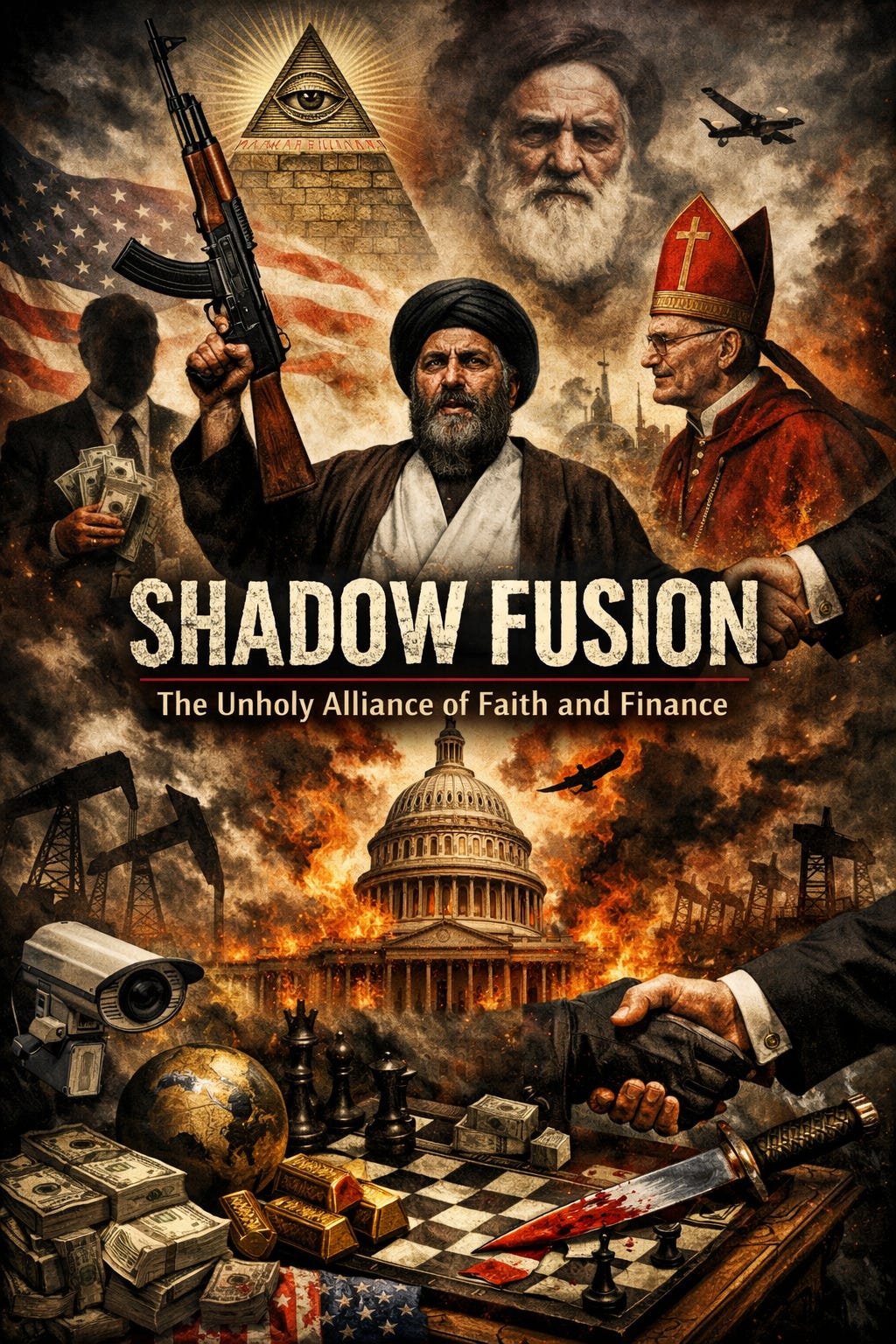


🩸 RED BLOOD JOURNAL TRANSMISSION
Division: Civilization & Power Structures
Transmission Code: RBJ-CPS-2026-FOUNDATION-LINE
Classification: Civic Integrity Analysis
Archive: The Archive of Blood & Memory
WHEN THE FOUNDATION IS CUT
Faith, Power, and the Struggle for the Soul of the Republic
PROLOGUE — THE FOUNDERS’ FIREWALL
When the architects of the American Republic drafted the Constitution, they carried the scars of centuries of history.
Europe had burned in wars fueled by kings who claimed divine authority and churches that wielded political power. Religion had been used not only as a source of faith, but as a tool of control.
The founders understood something fundamental:
A free society cannot survive if political power is justified through religious authority.
Thus they created one of the most revolutionary ideas in political history.
The separation of religion and state.
This principle did not reject faith.
It protected it.
Faith would belong to the individual conscience.
Government would belong to the people.
SECTION I — THE FIRST AMENDMENT SHIELD
The First Amendment established two critical protections:
No establishment of religion by the state
Freedom of religious practice for the individual
This was not an attack on religion.
It was a firewall designed to prevent rulers, clerics, or factions from weaponizing belief for political power.
The founders understood that once religion becomes a political weapon, freedom becomes the casualty.
SECTION II — THE FOREIGN POLICY CROSSROADS
In modern America, a new tension has emerged.
Certain political factions advocate foreign policy positions based partly on religious narratives or ideological loyalties tied to foreign states.
Support for foreign governments can arise from many motivations:
strategic alliances
security cooperation
economic interests
cultural ties
religious beliefs
But when religious ideology begins to shape state policy, the constitutional balance becomes strained.
The Republic was designed to act based on national interest and civic law, not religious obligation.
SECTION III — THE MONEY PIPELINE
Even more troubling than ideology is something far older and far more corrosive.
Money.
Across the corridors of Washington, influence often flows not through open debate but through financial power.
Lobbying networks, political action committees, and massive campaign donations shape legislation and foreign policy decisions.
When financial incentives begin steering the actions of elected representatives, the people lose their voice.
In that moment, democracy begins to fracture.
The danger is not simply disagreement over policy.
The danger is when representatives of the people become financially dependent on powerful interests rather than accountable to citizens.
The founders warned repeatedly about this vulnerability.
They feared corruption more than foreign armies.
Because corruption erodes a republic from the inside.
SECTION IV — THE CUT FOUNDATION
A nation built on constitutional principles cannot remain stable if its foundations are undermined.
If religious justification is used to influence state policy…
If financial power overrides the will of citizens…
If elected officials prioritize donors over the public…
Then the structural pillars of the Republic begin to crack.
The danger is not disagreement among citizens.
Debate is the lifeblood of democracy.
The danger arises when external interests, ideological factions, or financial networks gain disproportionate influence over the machinery of government.
In that moment, the foundation itself is being cut.
SECTION V — THE REPUBLIC’S DEFENSE
The strength of a constitutional republic lies not only in its laws but in the vigilance of its citizens.
Freedom survives only when people insist on:
• transparency in government
• accountability from elected officials
• independence from foreign influence
• protection of constitutional principles
The Constitution was designed to restrain power.
But no document can defend itself.
It survives only when the people demand that it be honored.
ARCHIVE NOTE
History teaches a consistent lesson.
Empires fall from invasion.
Republics fall from corruption.
The American experiment was built on the radical belief that free citizens could govern themselves without kings, clerics, or oligarchs ruling over them.
The preservation of that experiment requires a constant defense of its founding principle:
Government belongs to the people — not to ideology, not to money, and not to foreign influence.
🩸 End Transmission
Filed in: Archive of Blood & Memory
RBJ Civilizational Integrity Series


