


🩸 Red Blood Journal
#1825 – Before You Remove the Organ
Questions Every Gallbladder Patient Should Ask First
Every year, hundreds of thousands of people undergo gallbladder removal surgery.
For many, the recommendation comes quickly.
“You have gallstones.”
“Your gallbladder needs to come out.”
“There’s really no other option.”
For patients experiencing severe pain or life-threatening complications, surgery may indeed become necessary.
Yet an important question remains:
How many people fully understand what the gallbladder actually does before agreeing to remove it?
This report summarizes the perspective presented in the accompanying source material and encourages readers to become informed participants in their own healthcare decisions rather than passive recipients of medical recommendations.
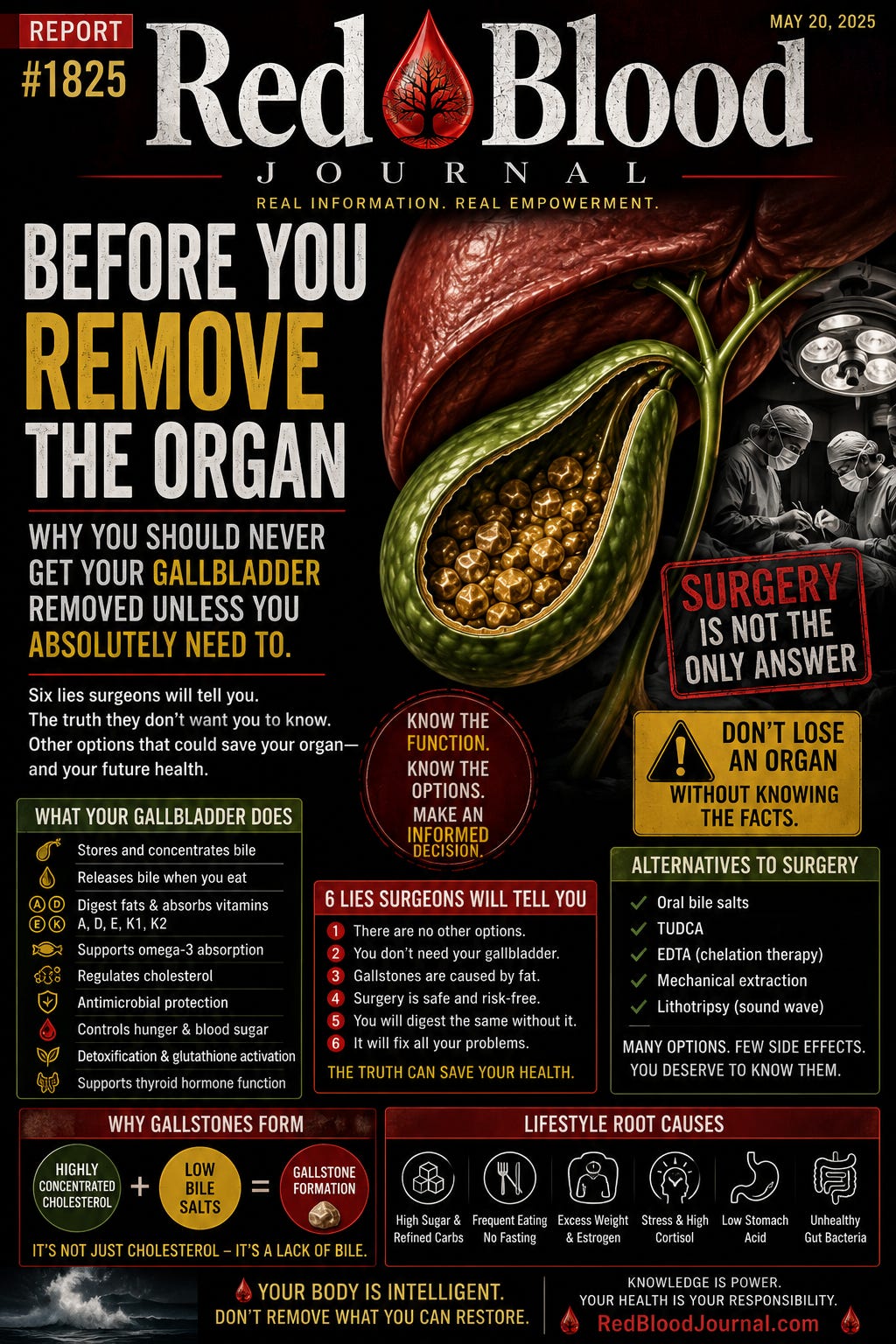
The Gallbladder Is More Than a Storage Sac
The gallbladder is commonly described as a small pouch beneath the liver that stores bile.
According to the source, that description tells only part of the story.
The gallbladder also:
Concentrates bile.
Stores bile until food is eaten.
Releases bile in precisely the amount needed.
Helps digest fats efficiently.
Supports absorption of Vitamins A, D, E, K1, and K2.
Assists absorption of Omega-3 fatty acids.
Helps regulate cholesterol metabolism.
Supports detoxification through bile flow.
Contributes to blood sugar regulation.
Influences thyroid hormone activity.
Provides antimicrobial protection within the digestive tract.
From this perspective, the gallbladder functions less like a simple storage bag and more like a carefully regulated delivery system.
A Different Way of Looking at Gallstones
The source argues that gallstones should not automatically be viewed as an isolated disease.
Instead, they may represent a symptom of deeper metabolic or digestive imbalances.
According to the presentation, gallstones develop when highly concentrated cholesterol combines with insufficient bile salts.
Viewed this way, the question becomes:
Why has bile production or bile flow declined in the first place?
Alternatives Discussed
The source presents several approaches that it says deserve consideration before surgery, depending on an individual’s medical circumstances.
Among them are:
Oral bile salts
TUDCA (a bile acid supplement)
EDTA (discussed as a chelating therapy)
Mechanical stone extraction without removing the gallbladder
Lithotripsy (sound-wave treatment for selected stones)
The presentation emphasizes that informed consent should include discussion of all available options, as well as their potential risks and benefits.
Lifestyle Factors Identified
The source attributes reduced bile production or impaired gallbladder function to several possible contributors, including:
High insulin levels
Insulin resistance
Diets high in refined carbohydrates and sugars
Frequent eating without fasting periods
Excess body weight
Elevated estrogen levels
Chronic stress and elevated cortisol
Low-fat diets
Low-cholesterol diets
Reduced stomach acid
Disruption of healthy intestinal bacteria
The report suggests these factors deserve attention because they may influence the underlying conditions associated with gallstone formation.
Foods and Nutrients Highlighted
The presentation recommends supporting normal bile production through foods rich in healthy fats and nutrients involved in bile metabolism.
Examples mentioned include:
Fatty fish
Eggs
Butter
Seafood
Liver
Olive oil
The source also highlights:
Choline
Bitter greens
Arugula
Radish
Celery
Sauerkraut
Apple cider vinegar
Betaine hydrochloride
Turmeric
Ginger
Milk thistle
Parsley
Cilantro
Purified bile salts
TUDCA
These are presented as nutritional strategies intended to support bile production or bile flow.
The Larger Question
Every organ in the human body exists for a reason.
When one begins to fail, modern medicine often focuses on eliminating the damaged organ.
The source asks readers to consider another possibility:
Should equal effort be devoted to understanding why the organ failed before deciding it must be removed?
Understanding the cause may not always eliminate the need for surgery.
But understanding the cause may lead to better long-term health regardless of which treatment path is chosen.
Final Thought
Knowledge does not replace professional medical care.
It does, however, allow patients to ask better questions.
The gallbladder may be small, but the physiological roles attributed to it in the source suggest it participates in digestion, metabolism, nutrient absorption, detoxification, and hormonal balance.
Whether surgery ultimately proves necessary is a decision made between a patient and their healthcare team.
Before that decision is made, understanding the organ’s function may be one of the most valuable steps a person can take.
🩸 RedBloodJournal.com
📖 The Gallbladder Blueprint: Preservation and Metabolic Function
Jul 15, 2026
This report explores the multifaceted roles of the gallbladder, arguing that it is a complex metabolic regulator rather than a simple storage organ. The text suggests that gallstones are often a symptom of deeper issues like insulin resistance, poor diet, or hormonal imbalances rather than an isolated ailment. By highlighting the organ’s importance in nutrient absorption and detoxification, the source encourages patients to investigate the root causes of dysfunction before opting for surgical removal. It outlines various nutritional interventions and medical alternatives, such as bile salts and lithotripsy, which may help preserve the organ. Ultimately, the material advocates for informed patient consent and a proactive approach to healthcare that prioritizes understanding physiological failure. This perspective shifts the focus from merely treating symptoms to supporting long-term metabolic health through lifestyle and dietary changes.


