


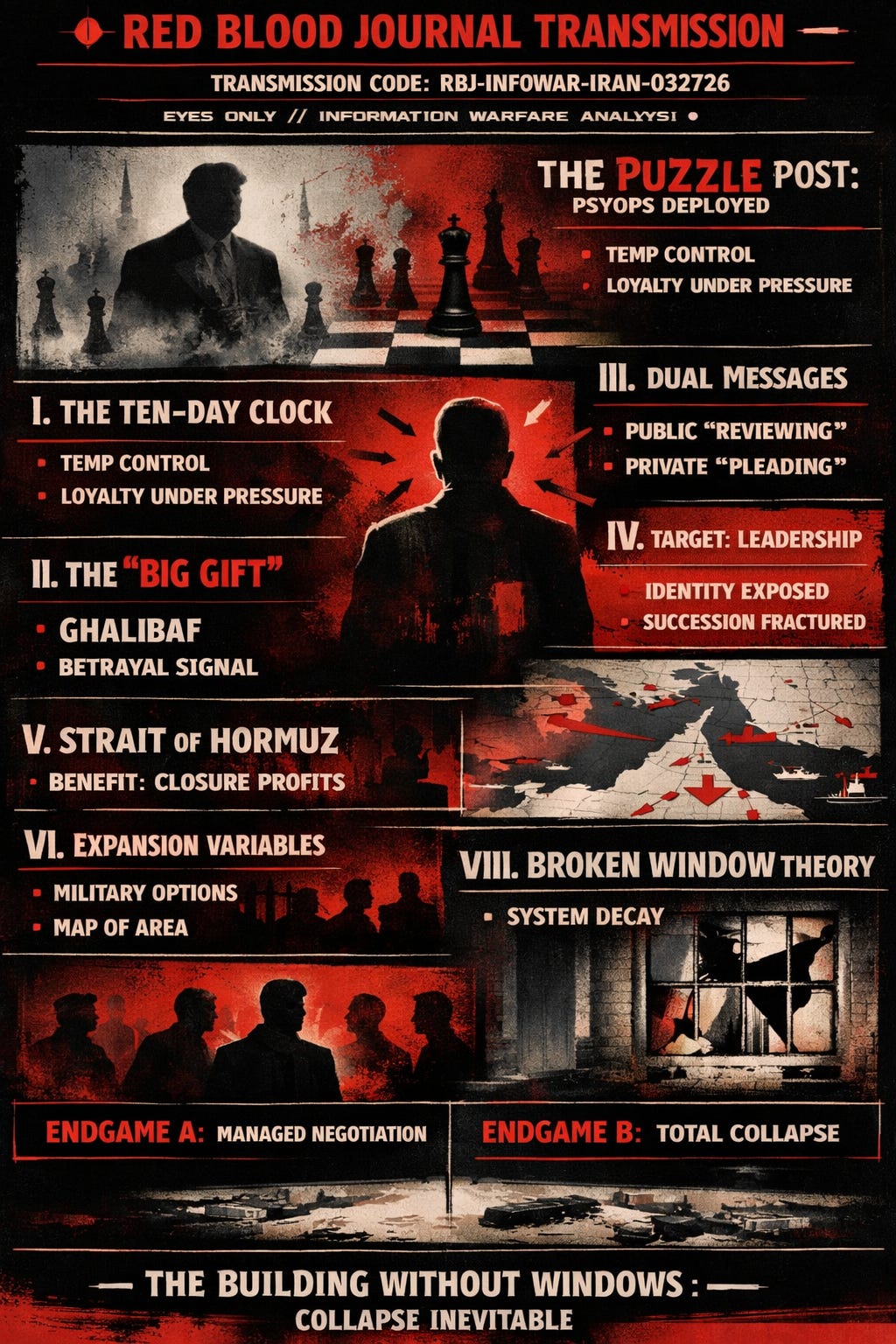
🩸 RED BLOOD JOURNAL TRANSMISSION
Transmission Code: RBJ-INFOWAR-IRAN-032726
Classification: EYES ONLY // INFORMATION WARFARE ANALYSIS
Desk: Geo-PsyOps & Middle East Influence Cartography Unit
Archive: The Archive of Blood & Memory
PROLOGUE — THE PUZZLE POST



A signal appeared—not as policy, not as speech, but as a puzzle.
A post from the White House that did not explain… only suggested.
Not clarity—ambiguity.
Not direction—disorientation.
This is not communication.
This is positioning inside the mind of the observer.
On the battlefield of perception, confusion is not a flaw.
It is a weapon.
I — THE TEN-DAY CLOCK
The message was simple on the surface:
Seven days requested
Ten days granted
Infrastructure threatened
But beneath the surface lies a deeper signal:
This is not negotiation.
This is tempo control.
Time itself becomes the battlefield.
By extending the deadline, the signal does not soften—it tightens.
It forces internal fracture:
Who negotiates?
Who resists?
Who betrays?
The clock does not measure time.
It measures loyalty under pressure.
II — THE GIFT THAT COST A MAN HIS NAME
A phrase enters the field:
“A big gift was received.”
No coordinates.
No confirmation.
Only implication.
And immediately, a name is pulled into the storm:
Mohammad Bagher Ghalibaf.


In information warfare, accusation is more powerful than proof.
Once a name is linked to a “gift,”
it becomes:
A suspect
A signal
A fracture point
The result:
Distrust spreads horizontally
Loyalty collapses vertically
The target is not the man.
The target is cohesion itself.
III — THE STRATEGY OF CONTRADICTION
Two simultaneous messages are released:
Public:
“We are reviewing.”
Private (as claimed):
“We are asking for a deal.”
This contradiction is not accidental.
It creates three simultaneous realities:
Internal confusion within leadership
External confusion among observers
Emotional destabilization among supporters
This is classic dual-channel signaling—
A method where truth becomes irrelevant,
and perception becomes fragmented.
IV — LEADERSHIP AS TARGET
A new layer is introduced:
Claims about leadership identity
Personal exposure narratives
Intelligence-based insinuations

4
This is not character attack.
It is structural destabilization.
When leadership legitimacy is questioned:
Authority weakens
Succession fractures
Internal competition accelerates
The battlefield shifts from geography…
to identity itself.
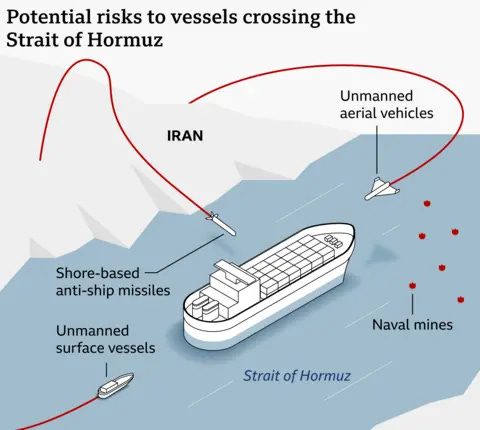
V — THE STRAIT THAT SHOULD NOT OPEN
A contradiction emerges in strategy:
Public goal:
→ Reopen the Strait of Hormuz
Hidden incentive:
→ Benefit from its closure
Economic signals suggest:
Rising energy prices
Supply chain disruption
Strategic advantage redistribution
This introduces a key doctrine:
Sometimes the objective is not resolution…
but controlled imbalance.
In this model, instability becomes profitable leverage.
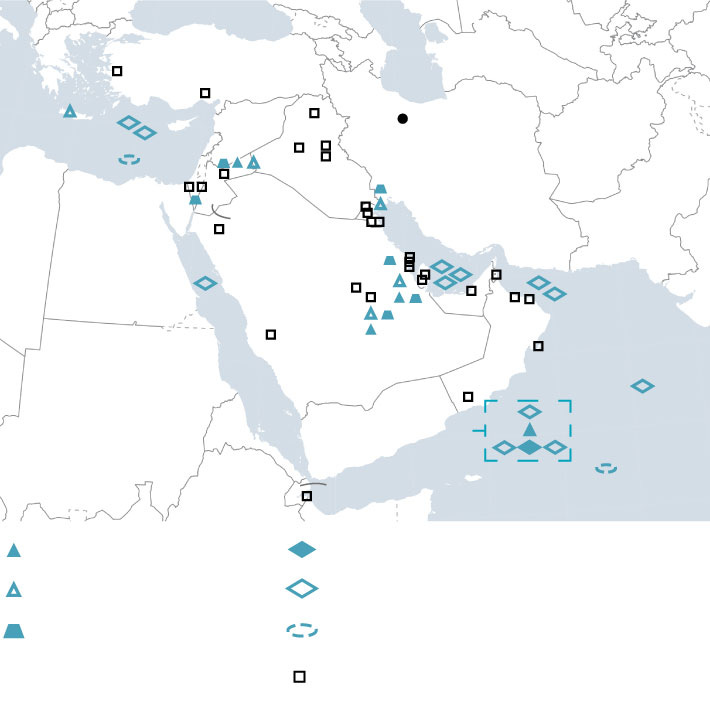
VI — THE EXPANSION VARIABLE
Reports indicate potential escalation:
Additional troop deployment
Strategic island targeting
Expanded operational options

4
But the true signal is not movement—
It is option visibility.
By showing capability,
the system creates pressure without action.
This is deterrence fused with ambiguity.
VII — THE INTERNAL FRACTURE PHASE
Inside the system, signals intensify:
Commanders eliminated
Distrust among elites
Accusations of betrayal
Civilian pressure campaigns
Simultaneously:
Recruitment thresholds drop
Asset seizures increase
Public figures forced into alignment
These are not isolated events.
They are indicators of one condition:
Compression.
When a system compresses:
Decisions accelerate
Mistakes multiply
Control weakens
VIII — THE BROKEN WINDOW SIGNAL
The final framework emerges:
The Broken Window Theory



4
When one window breaks and is not repaired,
a message is sent:
There is no control.
From there:
One break becomes many
Disorder compounds
Collapse accelerates
Applied to the system:
Leadership cracks
Military losses
Narrative fractures
The structure no longer signals strength.
It signals inevitability.
IX — THE COMPETING ENDGAMES
Two interpretations remain active:
Scenario A — Managed Outcome
Negotiation
Partial survival
Controlled restructuring
Scenario B — Full Collapse
Continued pressure
Internal fragmentation
System failure
The deciding factor is not force alone.
It is internal alignment vs. internal fracture.
ANNEX A — INFORMATION WARFARE MODEL
Phase 1: Signal Injection (Ambiguous post)
Phase 2: Narrative Seeding (Deadlines, “gift”)
Phase 3: Target Identification (Named individuals)
Phase 4: Internal Distrust Amplification
Phase 5: Leadership Destabilization
Phase 6: Strategic Ambiguity (Contradictory signals)
Phase 7: System Compression
Phase 8: Collapse Trigger or Controlled Outcome
ANNEX B — THE THREE AUDIENCES
1. Internal Leadership:
→ Distrust, paranoia, fragmentation
2. Domestic Population:
→ Confusion, fear, shifting loyalty
3. Global Observers:
→ Uncertainty, strategic hesitation
Each audience receives a different version of reality.
FINAL NOTE — THE BUILDING WITHOUT WINDOWS
A system does not collapse when attacked.
It collapses when it can no longer maintain coherence.
When:
Trust dissolves
Signals conflict
Leadership fractures
Then the structure becomes something else:
Not a fortress.
Not a government.
But a building with:
No windows
No doors
No roof
And in that condition,
collapse is no longer a possibility.
It becomes a timeline.
📡The Architecture of Systemic Compression
The provided text analyzes a sophisticated information warfare strategy aimed at destabilizing a political and military structure through strategic ambiguity and psychological pressure.
By utilizing cryptic public messaging and contradictory signals, the campaign seeks to incite internal distrust and fracture the cohesion of leadership. Key tactics include the use of artificial deadlines to control the tempo of conflict and the planting of specific accusations to trigger vertical and horizontal collapse within the organization.
The ultimate objective is to create a state of system compression, where the target’s ability to maintain a unified narrative fails, leading to inevitable structural disintegration.
Rather than relying solely on physical force, this model prioritizes the manipulation of perception to force a transition from controlled stability to total fragmentation.


