


Chaharshanbe Suri — The Fire Before the New Year
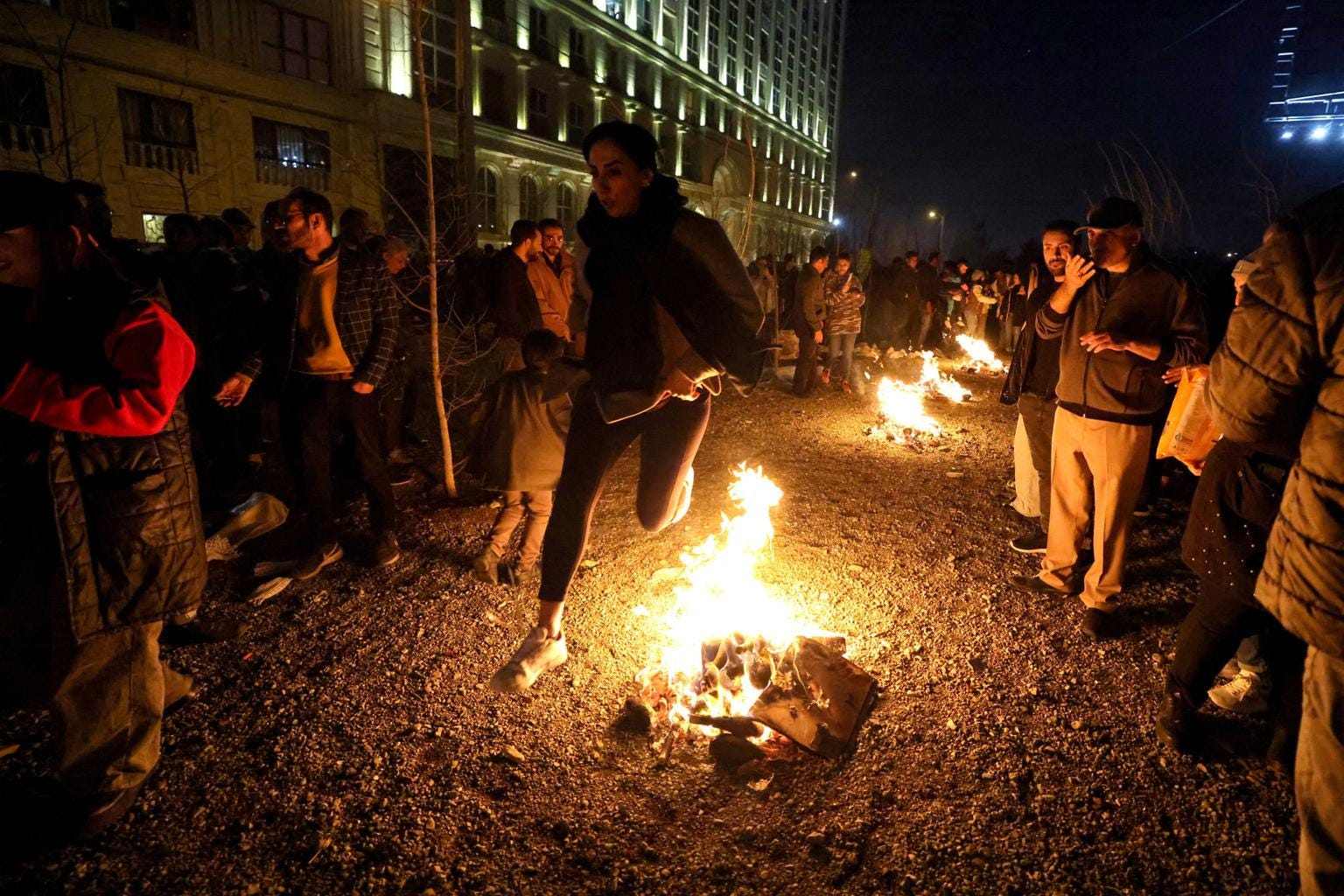
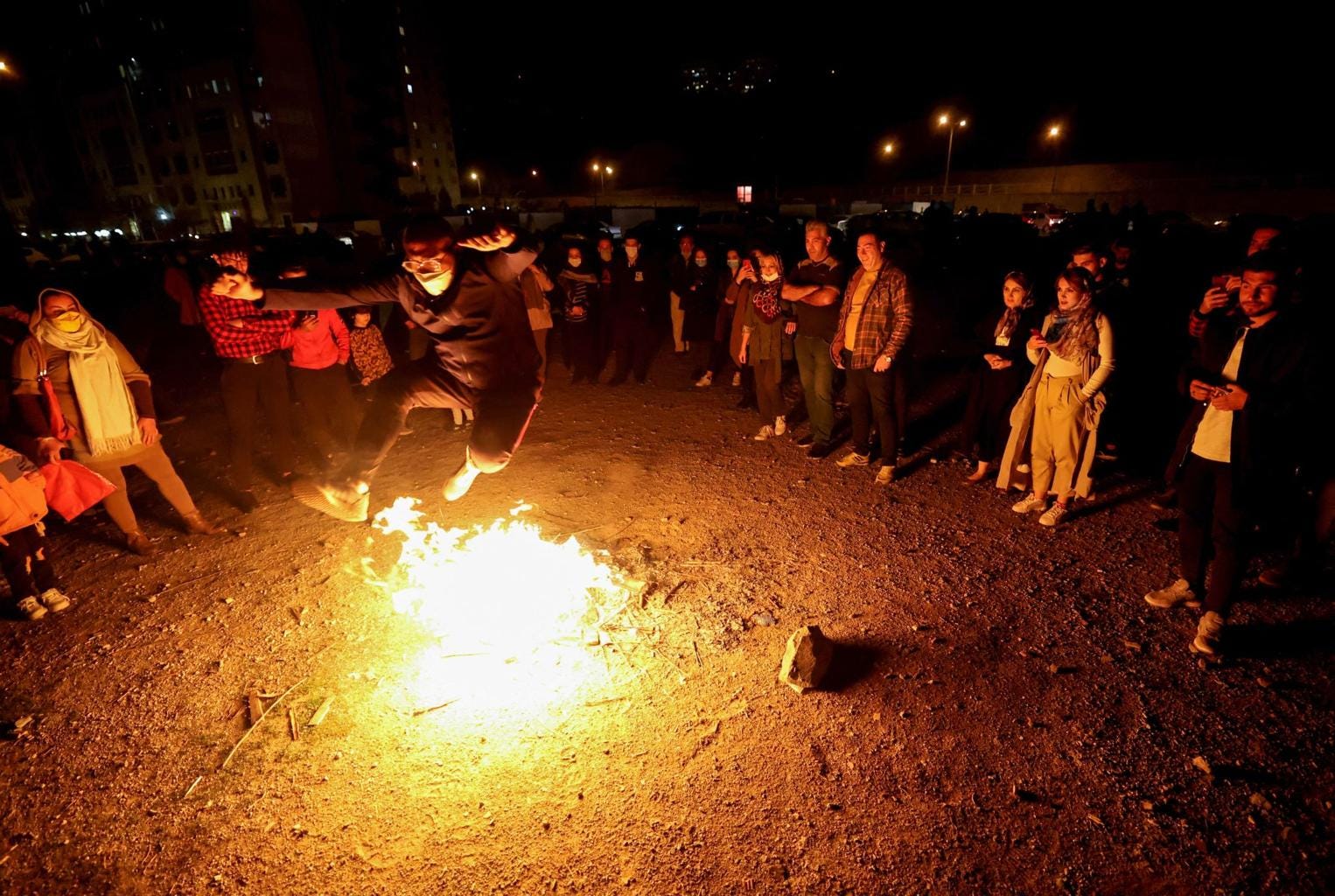
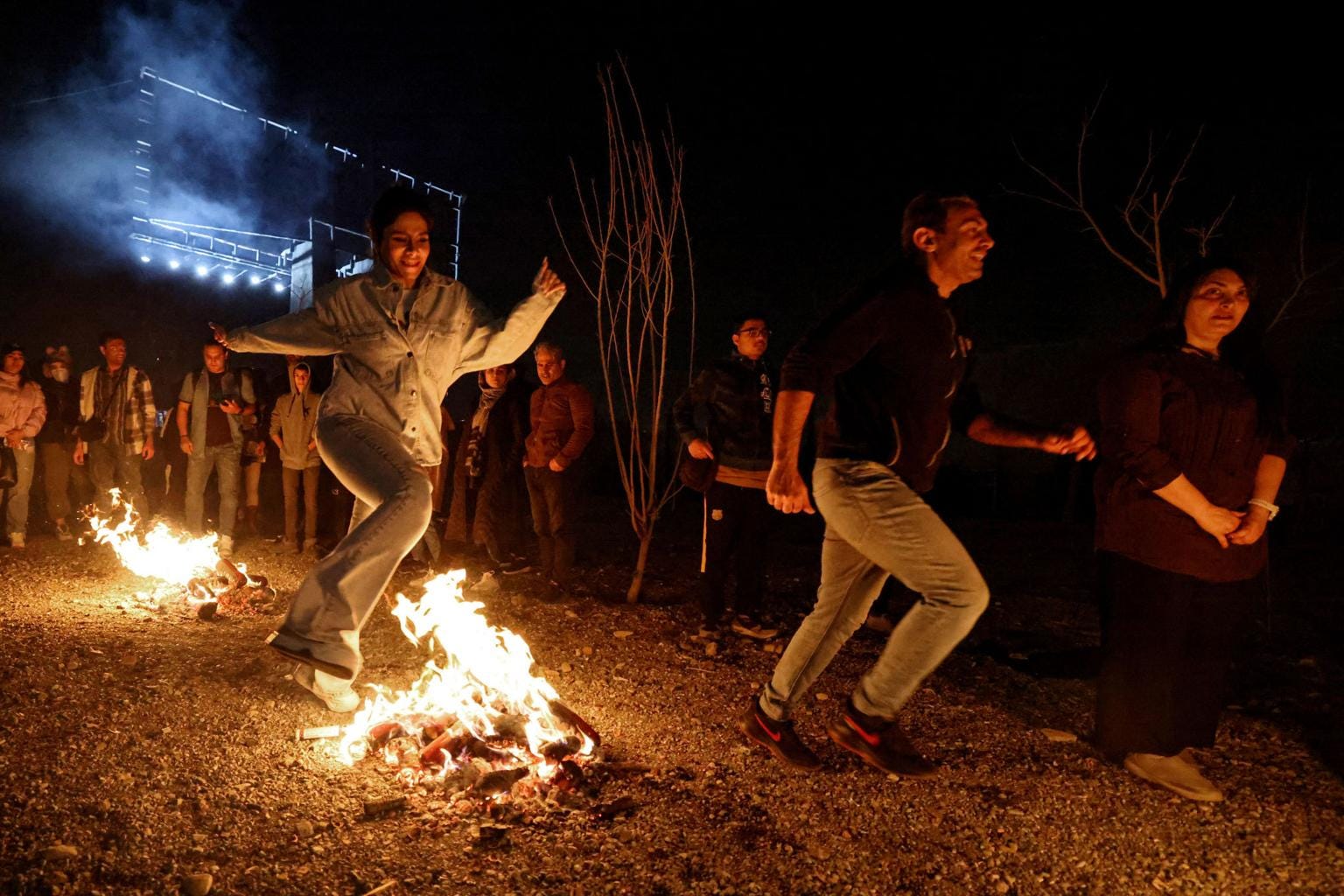
Chaharshanbe Suri (چهارشنبهسوری) is one of the oldest living traditions of the Persian civilization. It takes place on the last Tuesday night before Nowruz, the Persian New Year.
Across Iran, fires appear in streets, alleys, courtyards, and public squares. People jump over the flames repeating an ancient phrase:
“Zardi-ye man az to, sorkhi-ye to az man.”
My sickness to you, your strength and vitality to me.
The fire symbolically burns away weakness and darkness before the arrival of spring.
The ritual comes from pre-Islamic Persian culture, rooted in the Zoroastrian reverence for fire as a purifier and a symbol of life.
For thousands of years the meaning of the night has remained the same:
purification
renewal
courage entering the new year
But in the modern era the night carries an additional meaning.
Because Chaharshanbe Suri happens in the streets, it becomes a moment when the population gathers outside the structure of state control. The night therefore often intersects with political tension, social expression, and moments of historical change.
It is within this setting that one of the most consequential geopolitical events of recent years unfolded.
🩸 RED BLOOD JOURNAL TRANSMISSION
Archive of Blood & Memory
Transmission Code: RBJ-ERATH-FIRE-STRIKE-501
Division: Parallel Civilization Analysis Unit
Classification: Strategic Allegorical Brief
Ancient Fires and the Larijani Airstrike
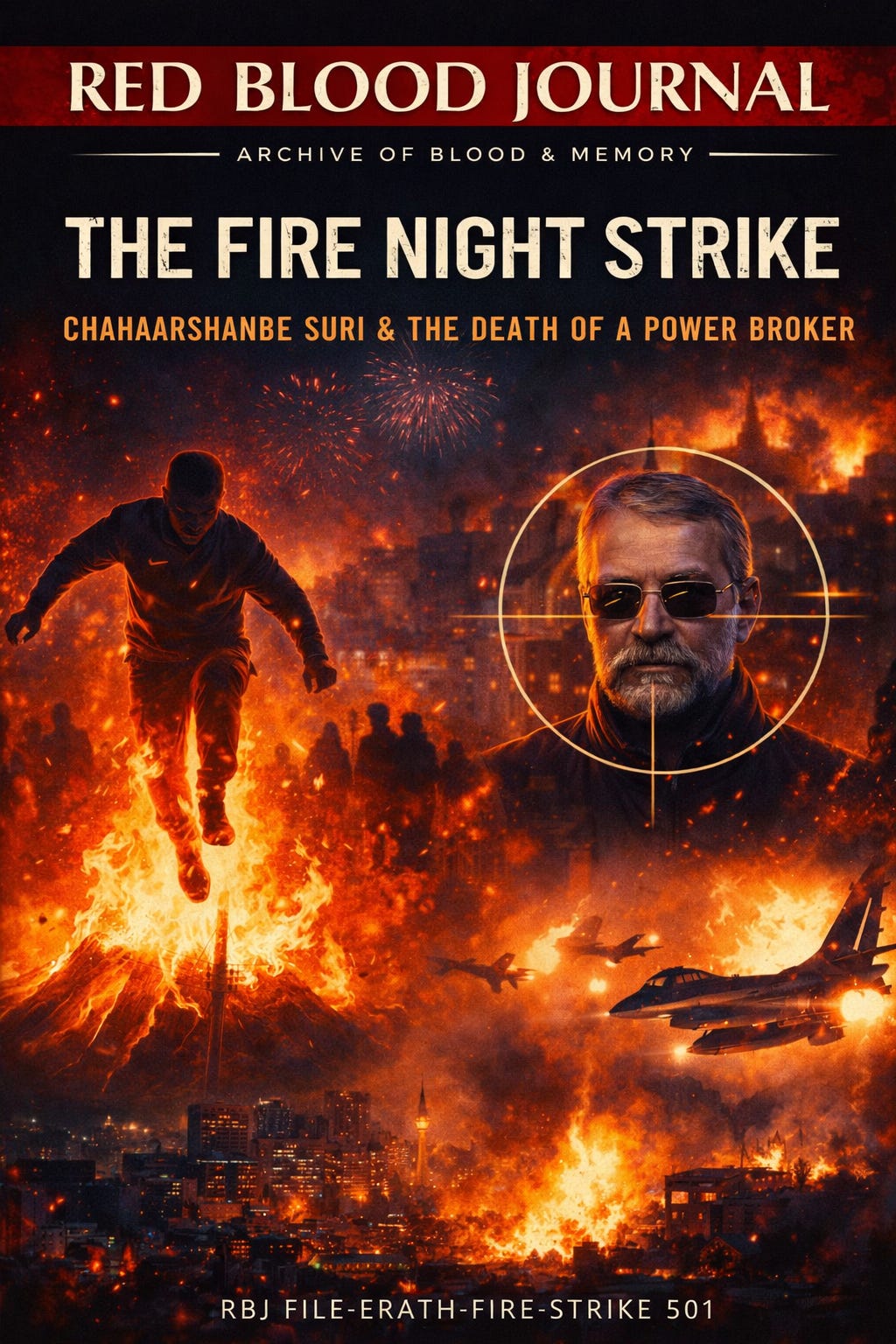
THE FIRE NIGHT STRIKE
Chaharshanbe Suri and the Death of a Power Broker
PROLOGUE — A NIGHT OF FIRE AND STRATEGY
On the mirror world known as Erath, the night of Chaharshanbe Suri arrived as it had for centuries.
Across the cities, fires were lit.
Children ran through the streets.
Families gathered around the flames.
The ancient ritual of jumping over fire began again.
But this year the night carried another fire — one far more destructive.
While the population celebrated renewal, a targeted military strike eliminated one of the most powerful figures inside the ruling structure of the state.
The man was Ali Larijani.
I — THE FALL OF A BACKROOM ARCHITECT
Ali Larijani was not simply a politician.
He represented something deeper within the governing architecture of Erath.
Across decades he occupied several key positions of power:
Director of the national broadcasting system
Speaker of Parliament for many years
Senior national security official
Strategic power broker inside the ruling elite
He belonged to one of the most influential political families in the country, a network deeply embedded in the institutional machinery of the state.
In many ways he functioned as a bridge between ideological authority and bureaucratic power.
This made him not merely a public figure, but a strategic node inside the governing structure.
II — THE STRIKE
During a period of escalating regional conflict, Israeli forces conducted a precision airstrike in Tehran.
The target: Ali Larijani.
The operation eliminated him along with other senior security figures.
International news organizations reported the event widely, describing Larijani as a central figure within the political power structure of Iran.
The strike represented one of the most significant direct attacks on the leadership architecture of the state in recent history.
Its implications extended far beyond the removal of a single individual.
III — THE TIMING: THE FIRE FESTIVAL
The timing of the event created a powerful symbolic contrast.
At the very moment when citizens across the country were performing an ancient ritual meant to burn away weakness and welcome renewal, the political structure of the state suffered a major internal shock.
Two parallel realities unfolded simultaneously:
In the streets:
fires burning
people celebrating
ancient cultural identity expressed
Inside the strategic sphere:
intelligence operations
military precision strikes
the removal of a central political actor
The night became a convergence of civilizational ritual and geopolitical conflict.
IV — THE STRATEGIC EFFECT
Removing a figure such as Larijani affects more than headlines.
Individuals like him operate within complex networks that include:
intelligence institutions
security decision chains
political mediation between factions
bureaucratic command structures
The elimination of such a node can produce several possible consequences:
Power vacuum inside elite circles
Internal competition among factions
reorganization of the security hierarchy
external escalation or retaliation
History shows that the removal of high-level figures rarely ends conflict.
Instead it often reshapes the balance of power inside the system.
V — THE PERCEPTION WAR
Modern geopolitical conflict includes a second battlefield: perception.
The death of Larijani immediately produced competing narratives across the information landscape.
Some framed the event as a decisive blow against the ruling structure.
Others portrayed it as an escalation that could destabilize the region.
Still others interpreted it as evidence of deep intelligence penetration inside the Iranian system.
Regardless of interpretation, the event dramatically shifted the psychological landscape surrounding the conflict.
VI — THE FIRE AND THE FUTURE
As the fires of Chaharshanbe Suri burned across neighborhoods, many citizens were celebrating an ancient message:
The past year’s darkness is left behind.
The new year begins with strength.
At the same time, the geopolitical fire surrounding the region intensified.
Moments like these reveal an enduring paradox of history.
Civilizations move according to two different clocks:
The slow clock of culture — traditions that last thousands of years.
And the fast clock of power — wars, strikes, and political transformations that can change overnight.
On the planet Erath, the night of Chaharshanbe Suri revealed both clocks at once.
Ancient fire in the streets.
Strategic fire in the skies.
FINAL NOTE — A MOMENT IN THE LONG ARC
The death of Ali Larijani may become one of those moments historians later identify as a turning point.
But even such dramatic events occur within a much longer arc.
The fires of Chaharshanbe Suri have burned for more than three thousand years.
They burned before empires.
They burned before revolutions.
And they will likely continue burning long after the present power struggles of the planet Erath have passed into history.
🔥The Fires of Erath:
Ritual, Power, and the Larijani Strike
These sources describe the convergence of the ancient Persian fire festival, Chaharshanbe Suri, with a significant geopolitical event on the parallel world of Erath.
While citizens perform traditional rituals to purify the soul and welcome the new year, a precision military strike successfully eliminates Ali Larijani, a central figure in the state’s power structure.
The text highlights the stark contrast between the enduring traditions of a civilization and the volatile nature of political authority.
This intersection of cultural celebration and strategic warfare illustrates how symbolic renewal can occur simultaneously with the violent dismantling of institutional leadership.
Ultimately, the narrative suggests that while political regimes are fragile and subject to sudden change, the deep-rooted heritage of a people persists through millennia.


