


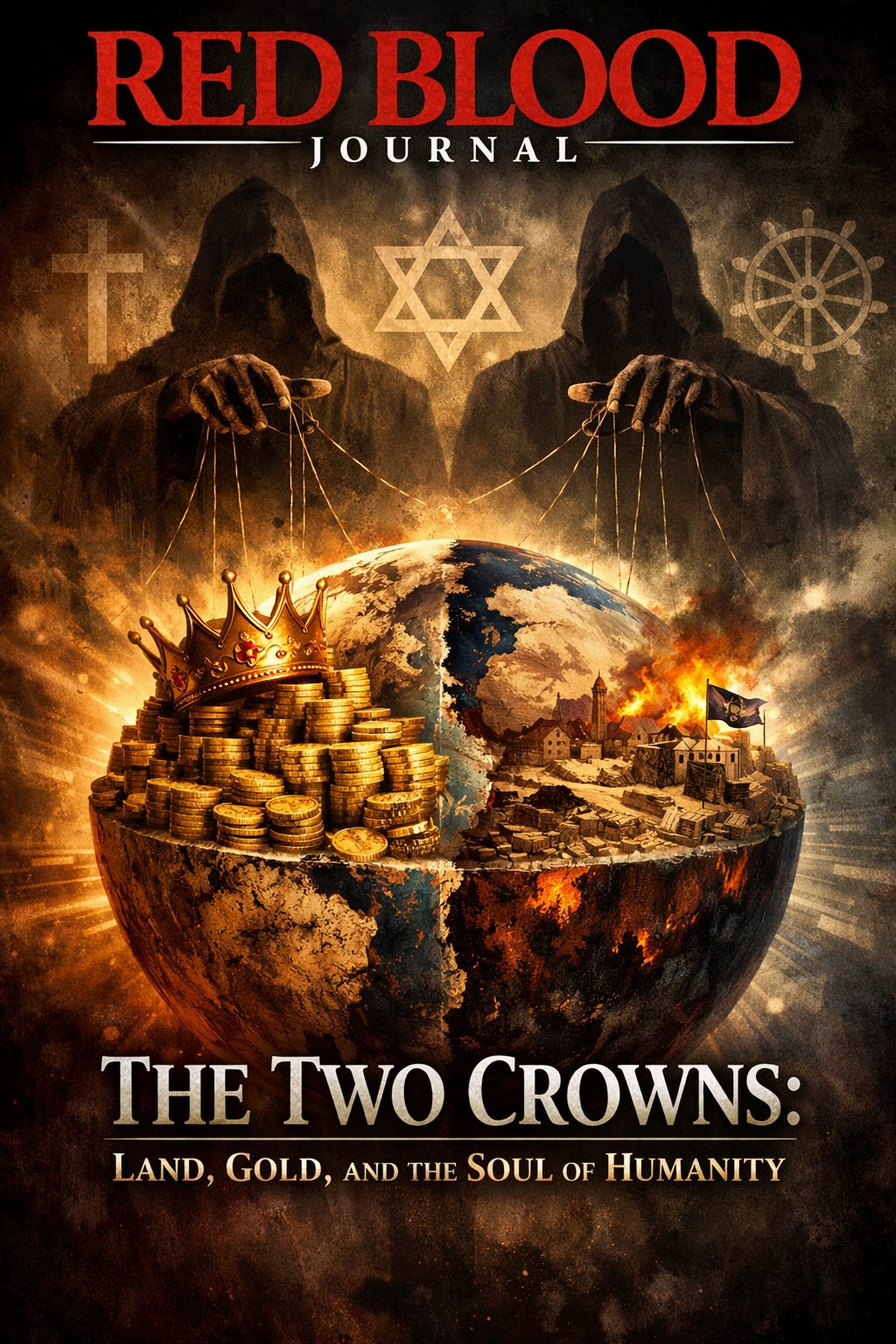
🩸 RED BLOOD JOURNAL TRANSMISSION
Division: Civilization Systems & Power Structures
Transmission Code: RBJ-CSP-2026-ZC-ETHICS
Classification: Philosophical-Political Analysis
Archive: The Archive of Blood & Memory
Capitalism Zionism and the Human Soul
“The Two Crowns: Land, Gold, and the Soul of Humanity.”
THE MATERIAL CROWN
Zionism, Capitalism, and the Question of Humanity
PROLOGUE — TWO FORCES OF THE MODERN AGE
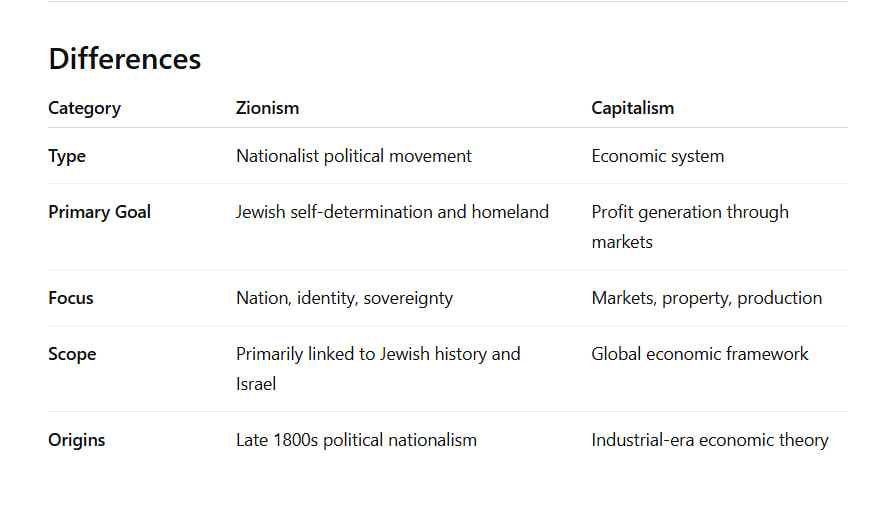
Two systems have profoundly shaped the last two centuries of human civilization:
Zionism — a political movement advocating a Jewish homeland and national self-determination.
Capitalism — an economic system organized around private ownership, markets, and profit.
These systems exist in different domains:
Yet both systems have been drawn into moral and philosophical debates about:
power
human rights
spiritual values
the relationship between wealth, land, and human dignity
I — CAPITALISM AND THE HUMAN MACHINE
Capitalism has produced immense innovation and prosperity, but critics argue that its darker side emerges when profit becomes the dominant moral compass.
During the Industrial Revolution, workers endured:
10–16 hour workdays
unsafe factories
child labor
extremely low wages
no legal protections
Children as young as five were employed in factories and mines because they were cheaper labor.
Many historians describe this era as one of the most severe labor abuses in modern history, where workers were treated as replaceable components of the industrial system.
Critics such as socialist thinkers and labor reformers argued that unchecked capitalism creates conditions where human welfare becomes secondary to profit.
From a spiritual perspective, this raises a fundamental question:
If human beings become instruments of production, does the soul disappear from economics?
II — ZIONISM AND THE LAND QUESTION
Zionism emerged in the late 19th century amid persecution of Jews in Europe. Its central goal was national self-determination in the historic land of Israel.
Supporters argue it represents:
the liberation of a historically persecuted people
restoration of cultural identity
protection from antisemitism
However, critics — especially in debates surrounding the Israeli-Palestinian conflict — argue that Zionist policies have sometimes resulted in displacement, occupation, or inequality affecting Palestinians.
Some scholars also frame the conflict through settler-colonial theories, arguing that land replacement rather than labor exploitation became a central political dynamic in the region.
The debate is therefore not about a single ideology alone but about how nationalism interacts with land, identity, and power.
III — THE INTERSECTION: POWER STRUCTURES
In some analyses, Zionism and capitalism intersect through geopolitical structures.
Scholars studying global power systems note that modern conflicts often combine:
nationalism
economic interests
military power
ideological narratives
Some academic frameworks argue that capitalist economic structures and geopolitical struggles often reinforce one another, producing global inequalities.
However, it is critical to note:
Zionism itself is not inherently capitalist.
Historically, early Zionist communities such as kibbutzim were actually socialist or communal economic experiments.
This means the two systems are not naturally identical, even if they sometimes intersect politically.
IV — THE SPIRITUAL CRITIQUE
Beyond politics and economics lies a deeper philosophical question.
Many spiritual traditions — including Christianity, Islam, Judaism, Buddhism, and Hindu philosophy — emphasize:
humility
compassion
justice
protection of the weak
But large political or economic systems often operate according to different principles:
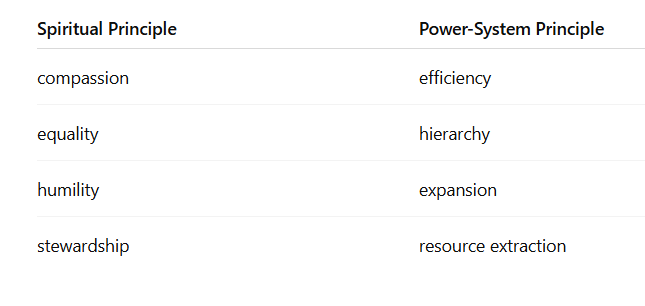
From a spiritual perspective, the question becomes:
What happens when systems of power overshadow moral conscience?
V — THE HUMANITY TEST
Both systems — Zionism and capitalism — have produced positive outcomes and severe criticisms.
Capitalism
Achievements:
technological innovation
global trade
economic growth
Criticisms:
inequality
exploitation of labor
environmental damage
Zionism
Achievements (according to supporters):
Jewish national self-determination
cultural and political security
Criticisms (from opponents and some human-rights groups):
displacement of populations
military occupation
unequal political structures
VI — THE SPIRITUAL PARADOX
Civilizations repeatedly face the same dilemma:
Material power vs moral wisdom.
Economic systems seek growth.
National movements seek survival.
But spiritual traditions ask a deeper question:
Does humanity grow spiritually while it grows materially?
If the answer is no, civilizations eventually confront crisis.
History repeatedly shows that systems which ignore human dignity eventually generate resistance, reform, or collapse.
CONCLUSION — THE RED BLOOD QUESTION
Every political or economic system eventually faces a simple test:
Does it serve humanity — or does humanity serve it?
If people become tools of ideology, profit, or nationalism, then the system has reversed its purpose.
The highest civilizations are not those that become the richest or the strongest.
They are those that learn to balance:
power
justice
compassion
spiritual awareness
⚖️The Two Crowns: Land, Gold, and the Human Soul
The provided text analyzes the ideological intersections of Zionism and capitalism, examining how these political and economic structures influence modern civilization.
While capitalism is credited with driving global innovation, it is simultaneously criticized for a history of labor exploitation and prioritizing financial gain over human welfare.
Similarly, the source describes Zionism as a movement for national self-determination that faces intense scrutiny regarding land rights and the treatment of displaced populations.
These systems are evaluated through a spiritual lens, contrasting the cold efficiency of power with the moral values of compassion and justice.
Ultimately, the author argues that any civilization must be judged by whether it serves humanity or merely treats individuals as tools for growth.
The text concludes that a society’s true success depends on balancing material expansion with ethical responsibility.


