


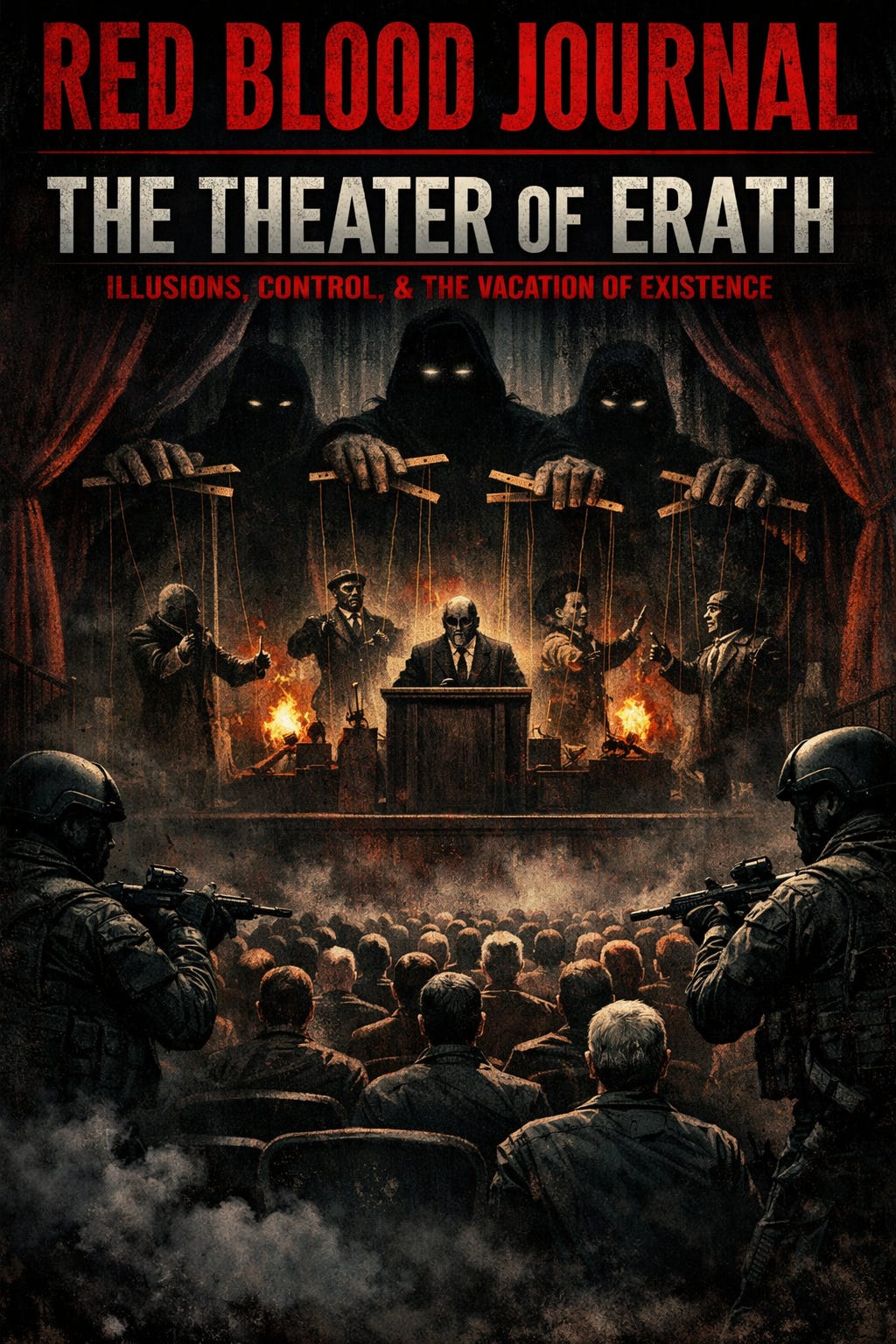
🩸 RED BLOOD JOURNAL TRANSMISSION
Division: Existential Systems Analysis Unit
Transmission Code: RBJ-ESA-ERATH-THEATER-PRISON-01
Classification: Philosophical Intelligence Brief
Archive: The Archive of Blood & Memory
The Vacation Theory for a Rigged World
Theater of illusions and control
THE THEATER OF ERATH
From Illusion to the Rifle — A Meditation on Power, Reality, and the Sanity of the Observer
4
PROLOGUE — THE PLANET THAT BELIEVED ITS OWN PLAY
On the distant mirror world known as Erath, the inhabitants believed they lived in competing systems.
Different nations.
Different religions.
Different political movements.
Different ideologies.
Each population believed its struggle was unique.
But the oldest observers of Erath whispered a disturbing possibility:
The planet was not divided.
It was administered.
And the mechanism of administration was not merely armies or laws.
It was the theater.
I — THE GREAT THEATER
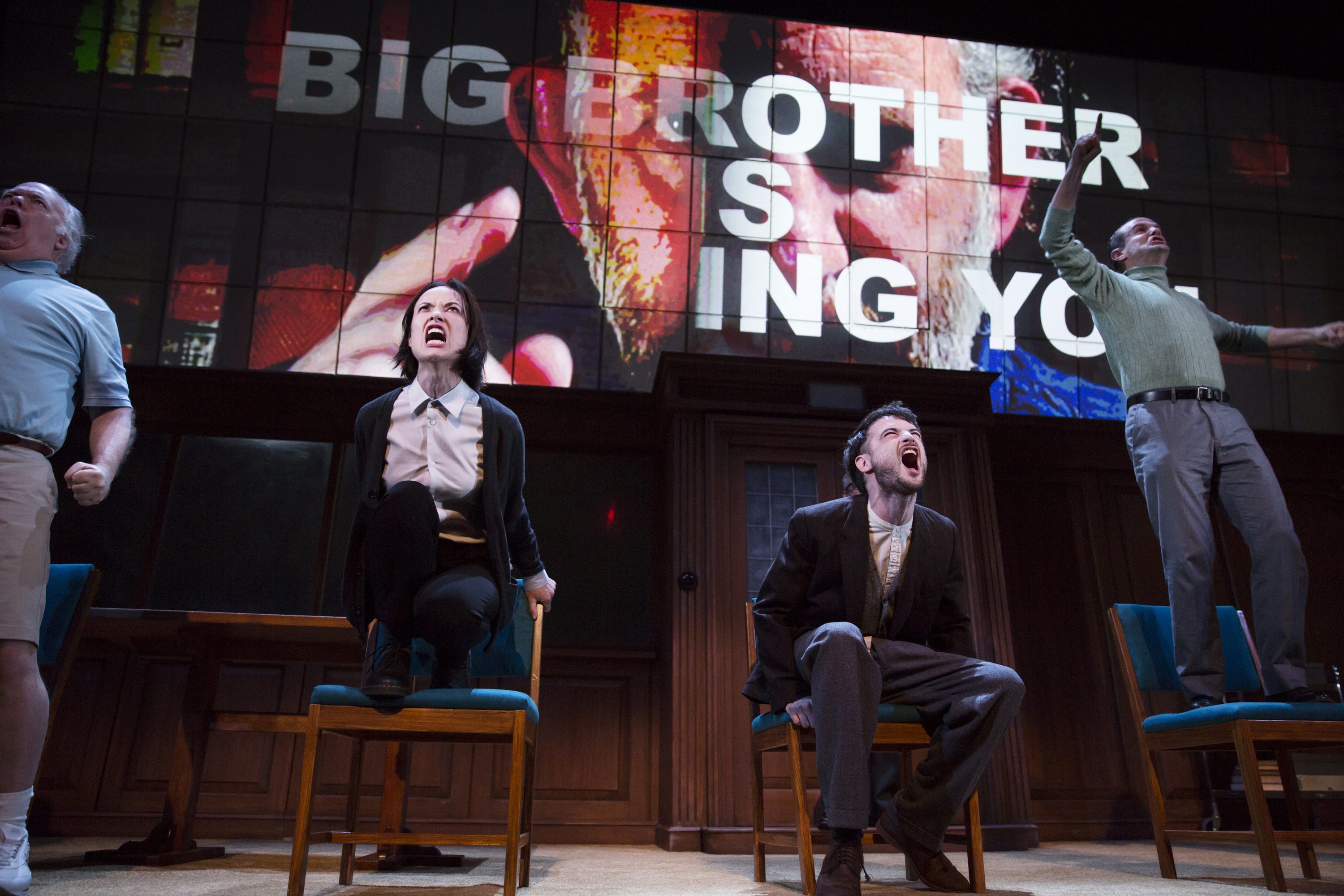
The civilization of Erath functioned like a massive stage production.
The structure appeared simple:
Actors
Political leaders, media personalities, ideological movements.
The Script
Narratives of conflict, elections, ideological struggles, national rivalries.
The Stage
Parliaments, debates, wars, crises, revolutions.
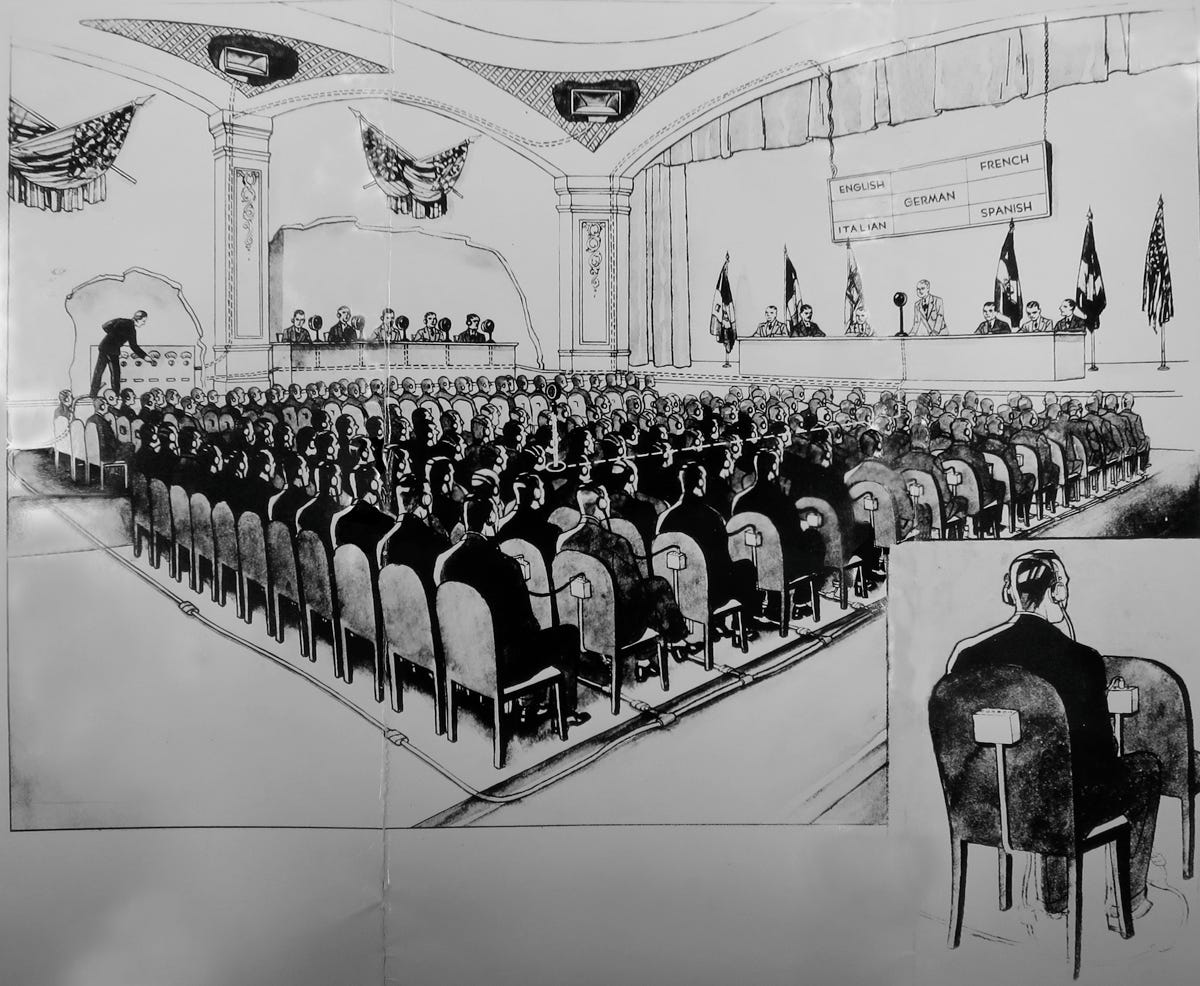
The Audience
The population of the planet.
The audience believed their participation shaped the story.
They voted.
They argued.
They took sides.
But a deeper suspicion slowly emerged among a small minority:
The actors themselves might also be following a script.
II — THE EMPTY THEATER PROBLEM
A natural question arose among the observers:
If the population simply stopped participating, would the theater collapse?
At first this seemed logical.
No audience → no play.
But a darker realization appeared.
The actors did not only exist inside the theater.
They controlled the machinery outside it:
economic systems
taxation structures
legal institutions
military forces
technological infrastructure
information networks
Leaving the theater did not remove the system.
The stage performance was only the visible interface of something deeper.
III — THE MOMENT OF AWAKENING
Occasionally on Erath a segment of the population began to notice patterns:
The same conflicts repeated.
The same narratives returned.
The same solutions failed.
This created a dangerous phenomenon:
The Awakening of the Audience.
When enough spectators recognized the performance as theater, legitimacy weakened.
The script stopped working.
The system then faced a choice.
IV — THE GUN BEHIND THE AUDIENCE
At first, systems maintain control through belief.
Stories.
Ideology.
Identity.
Hope.
But when belief collapses, another instrument appears.
Force.
The metaphorical machine gun behind the audience.
The message becomes simple:
You do not have to believe the play.
But you will remain seated.
Many regions of Erath came to live permanently in this phase, where compliance was maintained not through narrative but through fear of punishment.
V — THE SYMBOL OF WACO
Occasionally, a group attempts to reject the theater entirely.
They leave the seats.
They refuse the script.
They attempt to build a separate reality.
History on Erath records moments when such groups collided directly with the machinery of the system.
One of the most famous examples in the archives involved a religious community led by David Koresh near Waco in 1993.
The confrontation ended in tragedy and became a permanent symbol in the debate about the limits of state power and dissent.
To some observers it represented the suppression of a challenge.
To others it represented the danger of armed isolation.
But regardless of interpretation, the event revealed a fundamental reality:
The theater does not easily allow actors to exit the stage entirely.
VI — THE QUIET STRATEGY
Yet not all groups confronted the theater.
Some adopted a different strategy.
They simply walked away and built villages outside the performance.
A notable example is the Amish, who have lived for centuries in relative separation while maintaining peaceful coexistence with the surrounding system.
Their strategy was not confrontation.
It was quiet distance.
They neither attempted to control the theater nor destroy it.
They simply refused to become part of its drama.
VII — THE PSYCHOLOGY OF THE OBSERVER
As awareness of the theater deepens, a philosophical problem emerges.
Can a fully aware human being remain happy?
Many observers concluded that deep awareness brings with it a certain burden:
The recognition that systems are imperfect.
The understanding that power and narrative intertwine.
The awareness that life itself is temporary.
Some philosophers suggested that constant happiness might require ignorance or illusion.
Others proposed a different approach.
VIII — THE VACATION THEORY OF EXISTENCE
One coping philosophy developed among the reflective inhabitants of Erath.
It was simple but profound.
Life could be viewed not as a permanent struggle but as a temporary visit.
A short journey through the material world.
A chance to observe:
power structures
human behavior
material systems
conflict and cooperation
illusion and truth
Under this interpretation, the purpose of existence was not to win the theater.
It was to learn from it.
The theater becomes less oppressive when it is understood as a temporary environment rather than the ultimate reality.
IX — SANITY IN THE THEATER
From this perspective, sanity does not come from denying the theater.
Nor from attempting to destroy it.
Sanity comes from recognizing the play without becoming consumed by it.
The observer watches.
Learns.
Participates when necessary.
But remembers something essential:
The stage is not permanent.
The script is not eternal.
And the traveler eventually leaves the theater.
FINAL NOTE FROM THE ARCHIVE
On the planet Erath there are three kinds of people:
Those who believe the play is real.
Those who see the play and despair.
And those who see the play, understand it, and quietly continue their journey through the world — learning from the strange performance called civilization.
🎭The Theater of Erath: A Manual for the Awakened Observer
The provided text depicts a philosophical allegory where a fictional world called Erath serves as a metaphor for modern civilization.
This society is described as a “Great Theater” where political and ideological conflicts are merely scripted performances designed to manage the population.
While most citizens believe the drama is real, a small minority of awakened observers realizes that systemic control is maintained through narrative illusion or, if necessary, state force.
The text explores different reactions to this realization, ranging from the violent confrontation seen in the Waco siege to the quiet withdrawal practiced by the Amish.
Ultimately, it proposes a “vacation theory of existence,” suggesting that true sanity is found by viewing life as a temporary journey of learning rather than a struggle to control the stage.
By adopting the perspective of a detached traveler, an individual can navigate the complexities of power without falling into despair or ignorance.


