


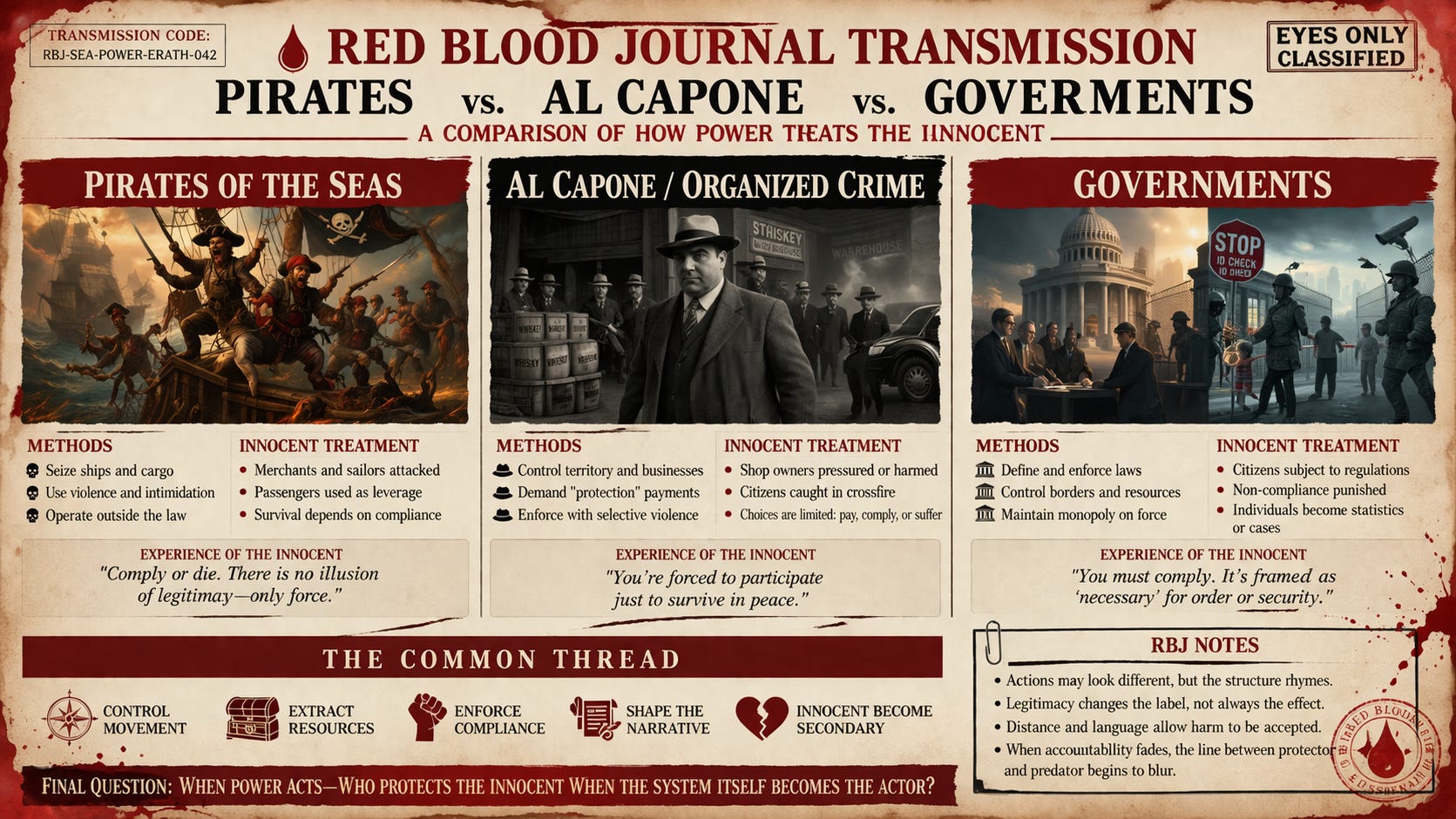
🩸 RED BLOOD JOURNAL TRANSMISSION
Transmission Code: RBJ-SEA-POWER-ERATH-042
Classification: EYES ONLY — MARITIME POWER PARALLEL ANALYSIS
Desk: Civilization & Power Structures Unit
Archive: The Archive of Blood & Memory
Pirates mobsters and the tax collector
PROLOGUE — FROM OPEN SEAS TO CLOSED SYSTEMS
Before borders were fixed…
before laws were codified…
There were only routes, cargo, and those strong enough to control them.
On the oceans, they were called pirates.
On land, figures like Al Capone built empires in the shadows.
Within nations, governments claimed legitimacy over both.
Different eras. Different uniforms.
But one recurring question:
When power controls movement, resources, and narrative…
what happens to the innocent caught in between?
I — THE THREE SYSTEMS OF CONTROL
1. Pirates of the Seas
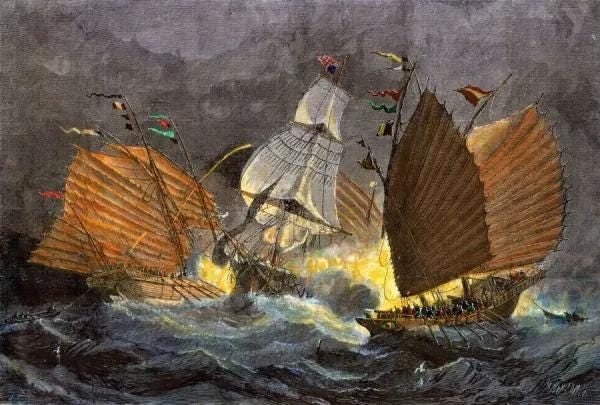
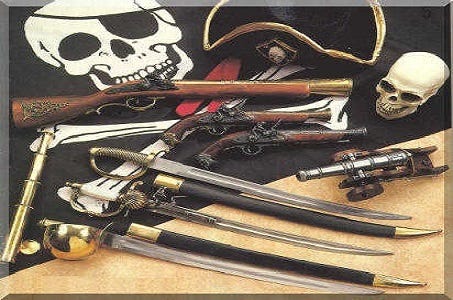
Operated in:
Lawless waters
Trade routes rich with cargo
Weak enforcement zones
Core traits:
Seize goods by force
Dominate routes through fear
Survival through plunder
For pirates, the innocent (merchant crews, passengers) were:
Obstacles… or assets.
2. Organized Crime (Capone Era)

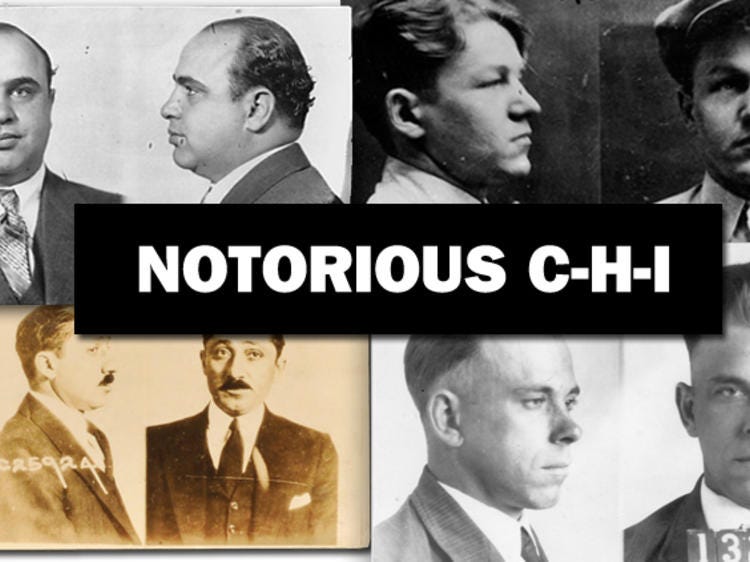
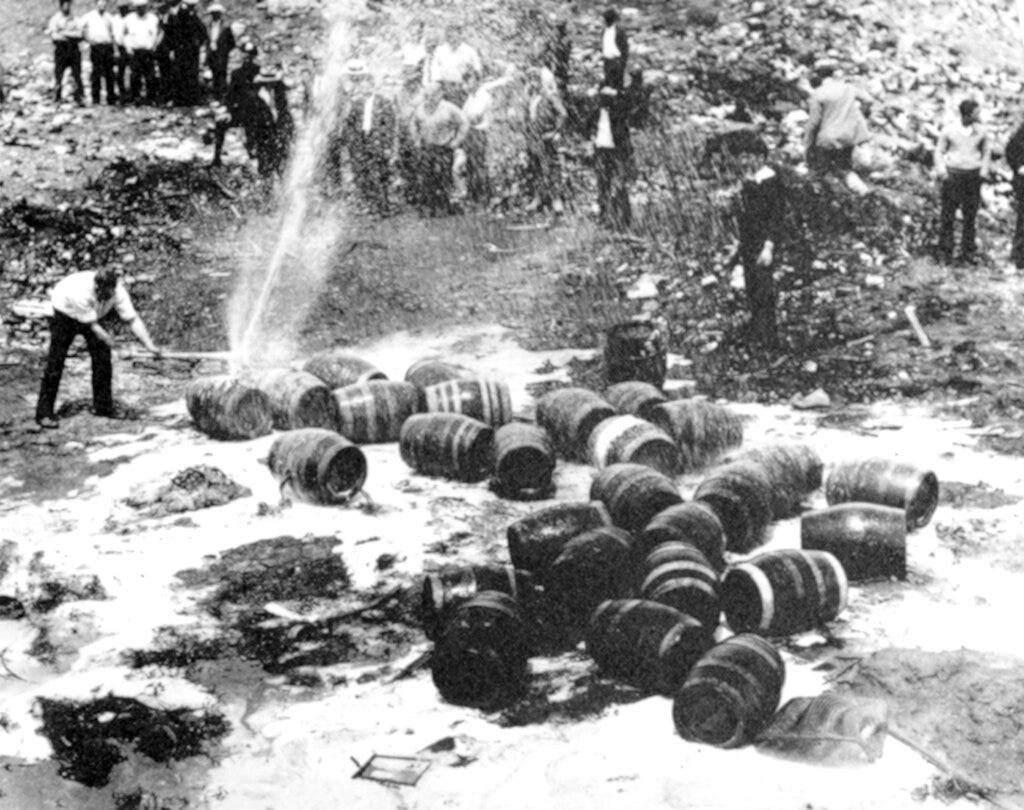
Urban parallel to piracy:
Territory replaces sea routes
Businesses replace ships
Protection replaces plunder language
Core traits:
Control through intimidation
Extract profit from movement (alcohol, goods, labor)
Enforce compliance through selective violence
The innocent became:
Customers… leverage… or warnings.
3. Governments


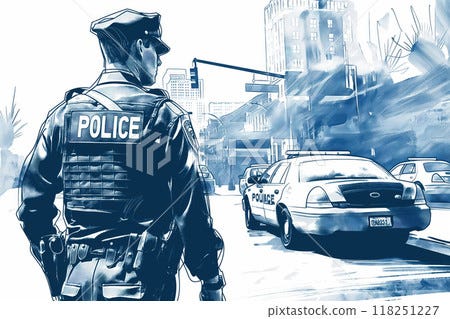
Structured authority:
Defines legality
Controls borders and trade
Maintains monopoly on force
Core traits:
Regulation of movement
Enforcement through law
Narrative framing of actions
The innocent becomes:
Citizen… subject… statistic.
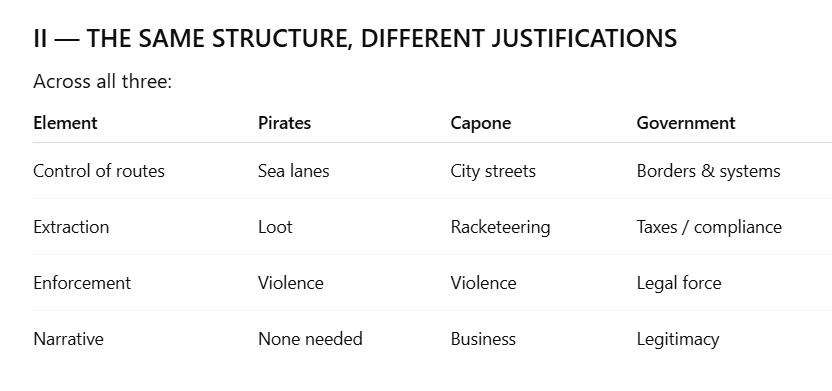
The difference is not always what happens…
but how it is explained.
III — THE INNOCENT IN THE SYSTEM
1. The Pirate Encounter
Ship stopped
Cargo taken
Resistance punished
Outcome:
Innocent reduced to survival choice: comply or suffer
2. The Capone System
Business approached
“Protection” demanded
Refusal brings consequence
Outcome:
Innocent becomes participant under pressure
3. The Government System
Laws imposed
Enforcement applied
Non-compliance penalized
Outcome:
Innocent becomes subject to rules they did not create
IV — LANGUAGE AS THE DIVIDING LINE
The action may echo across systems, but language separates them:
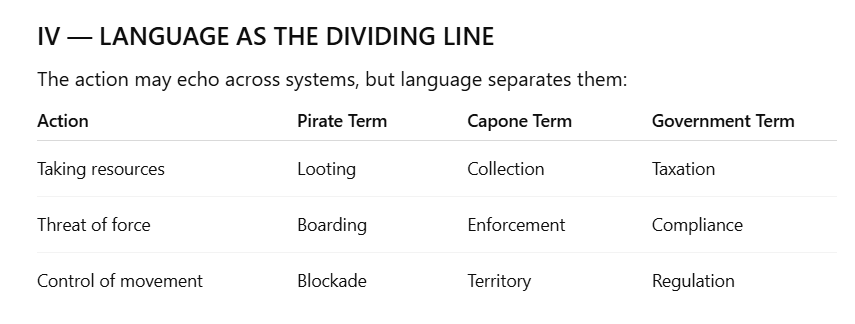
The experience may feel similar…
but the label determines acceptance.
V — PERMISSION VS. FEAR
Pirates rely on fear alone
Capone relies on fear + system gaps
Governments rely on permission + legitimacy
But when legitimacy weakens…
The distinction between the three begins to blur.
VI — THE DISTANCE FACTOR
The innocent’s reaction depends on distance:
Immediate (Pirates): fear is visible
Local (Capone): fear is known but normalized
Abstract (Government): actions feel distant, justified
Distance creates acceptance.
VII — CRITICAL DISTINCTIONS (TO STAY GROUNDED)
Not all systems are equal:
Governments can provide order, rights, protection
Pirates and organized crime primarily extract without structure
Legitimacy allows for accountability—when functioning properly
However:
When accountability fades,
structure can begin to resemble the very systems it claims to replace.
ANNEX A — THE ROUTE CONTROL MODEL
Route → Control → Extraction → Enforcement
Sea routes (Pirates)
Supply routes (Capone)
Economic/social systems (Government)
Same structure. Different scale.
ANNEX B — THE INNOCENT’S PATH
Encounter → Decision → Outcome
Resist → Risk
Comply → Survive
Question → Consequence
This pattern repeats across all three systems.
ANNEX C — THE PERCEPTION FILTER
If labeled “crime” → rejected
If labeled “policy” → debated
If labeled “necessary” → accepted
CLOSING TRANSMISSION — THE QUIET REALITY
History does not repeat exactly…
but it echoes through structure.
From wooden ships on open seas
to concrete cities
to digital systems of control—
Power continues to organize itself around movement, resources, and compliance.
And the innocent?
They remain:
The crew on the ship
The shop on the corner
The citizen in the system
Different names. Same position.
Final Question Logged in Archive:
When control becomes normalized…
does the innocent adapt—
or simply stop recognizing the pattern?
⛓️The Architecture of Extraction:
Pirates, Syndicates, and States
This analysis examines how pirates, organized crime syndicates, and government entities utilize strikingly similar structures to exert control over resources and movement.
While their methods of enforcement vary from blatant violence to legalized force, the text argues that these systems all rely on controlling routes and extracting value from those within their reach.
A central theme is how language and narrative are used to rebrand identical actions—such as seizing property—as either criminal looting or legitimate taxation depending on the authority in power.
The source highlights that innocent individuals often face the same ultimatum of compliance or consequence regardless of which system they inhabit.
Ultimately, the distinction between these powers often blurs when accountability vanishes, leaving the individual to navigate a world defined by normalized systems of dominance.


