


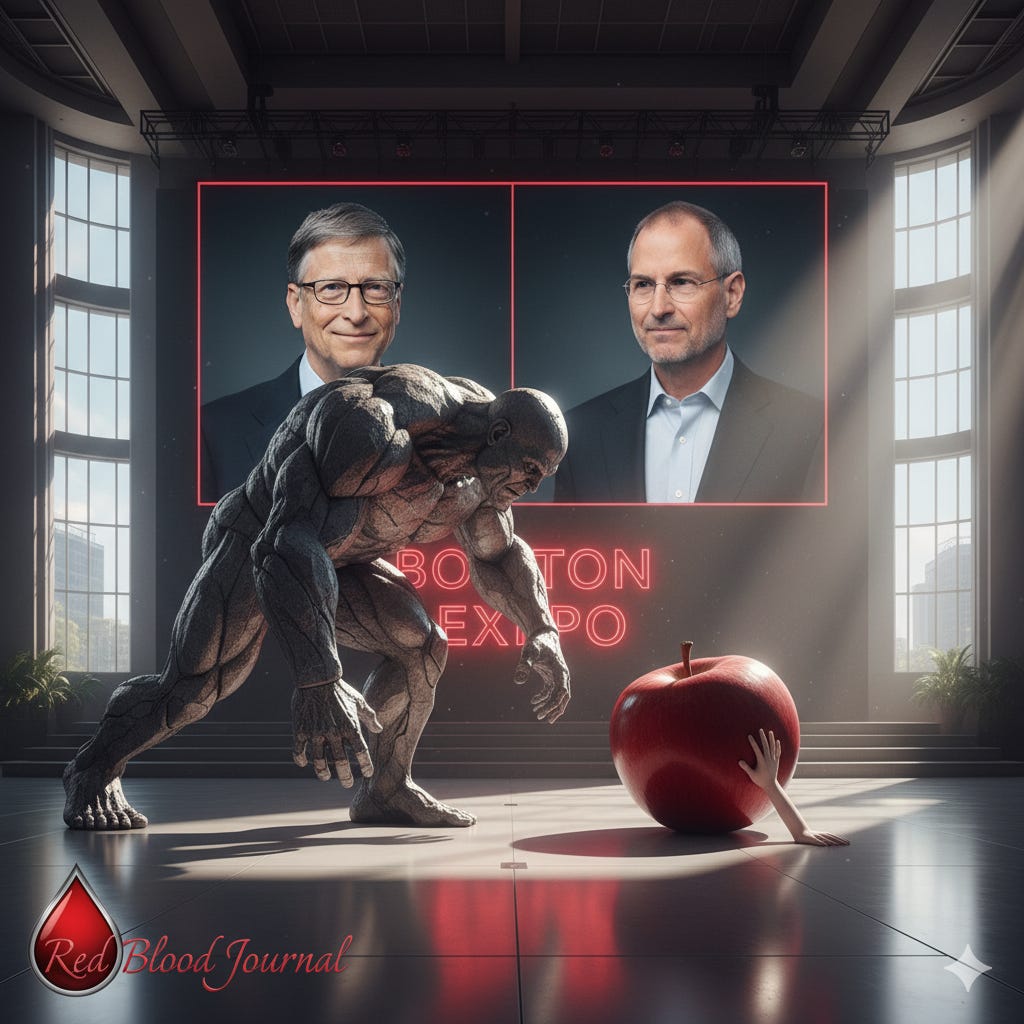
🩸 WHEN THE GOLIATH LENT THE STONE
Gates, Jobs & The Monopolist’s Lifeline
How Microsoft’s $150 million “bailout” of Apple rewrote the rules of tech monopoly power.
I. The Titans’ Duel
In the golden age of personal computing, Bill Gates and Steve Jobs were not merely corporate rivals—they were iconographic antagonists in a mythic saga of modern innovation.
Gates, with Windows, ruled the installed base. Jobs, estranged and later resurrected, was cult-hero to the design faithful, building Apple into something like a rebellion.
But rebellion fades under the glare of fiscal reality—and in 1997, Apple’s ledger was collapsing.
That’s when the unthinkable happened.
II. The Bailout That Wasn’t a Bailout
On August 6, 1997—just one year before Bill Gates’ antitrust deposition—Microsoft agreed to invest $150 million in Apple Computer, Inc.
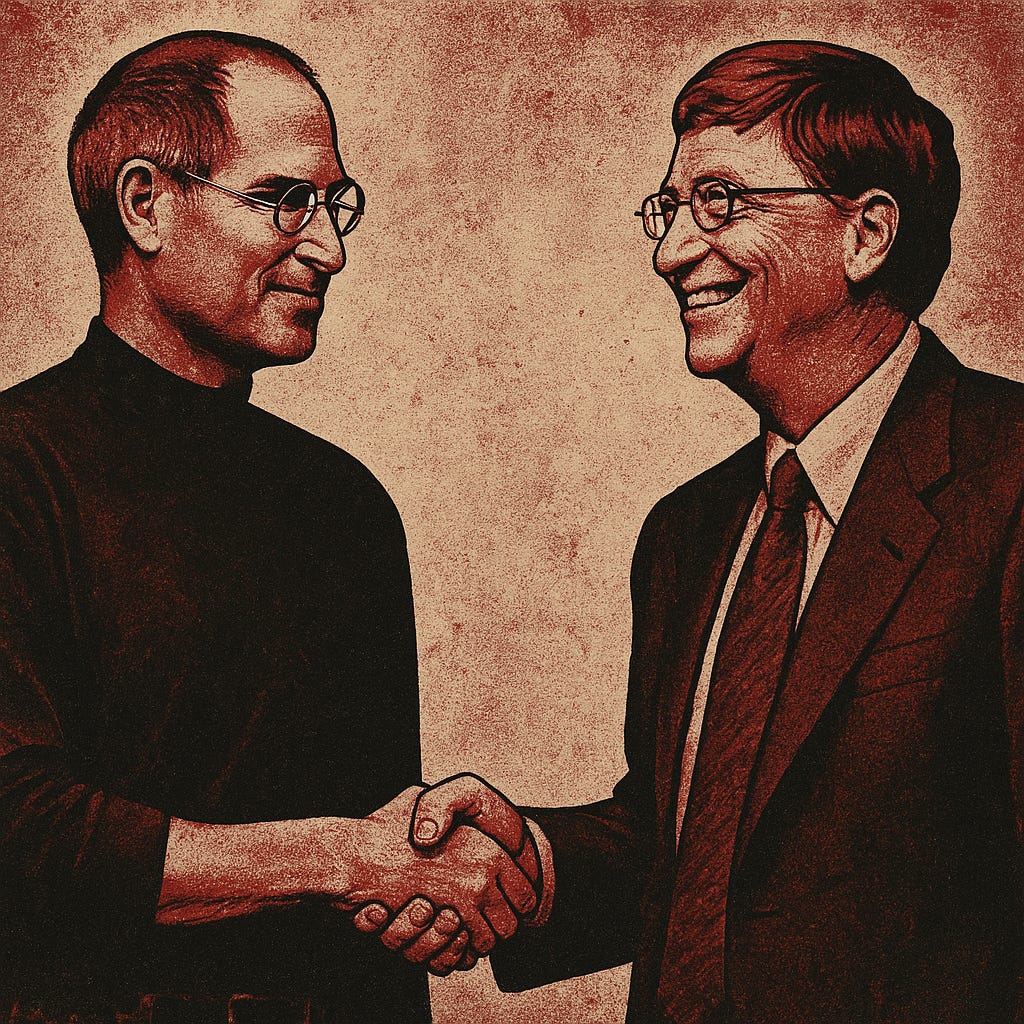
The deal included:
$150 million non-voting share purchase by Microsoft
A 5-year commitment to release Microsoft Office for Mac
Apple’s agreement to make Internet Explorer the default browser on Macintosh
Apple dropping its long-running “look-and-feel” lawsuit against Microsoft
The public headline was: “Microsoft saves Apple.”
The covert headline was: “Microsoft outmaneuvers U.S. antitrust pressure by propping up its competition.”
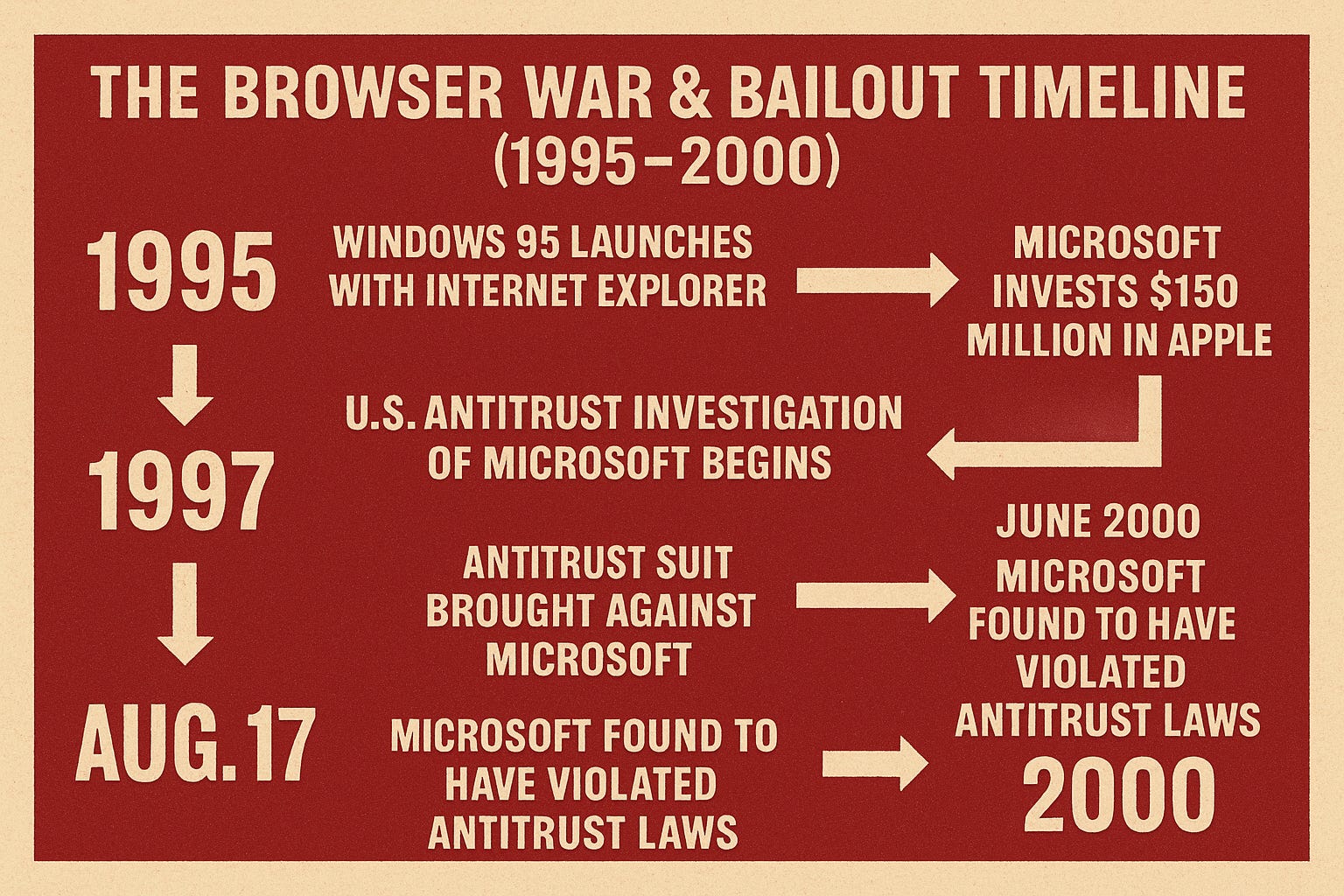
III. Timeline of the Game Beneath the Game
IV. What This Deal Really Was
Let’s break the illusion:
📌 Myth: Bill Gates extended a helping hand to save a rival out of goodwill, or even nostalgia.
📌 Reality: The U.S. Department of Justice was breathing down Microsoft’s neck over antitrust behaviors.
By bailing out Apple, Gates:
Could argue the market wasn’t a monopoly—because his competitor still existed
Bought himself years of legal leeway
Gained leverage into Mac’s platform (via browser, software, and brand)
As Steve Jobs said live from Macworld in 1997:
“We have to let go of this notion that for Apple to win, Microsoft has to lose.”
Translation: We now work for the same pyramid.
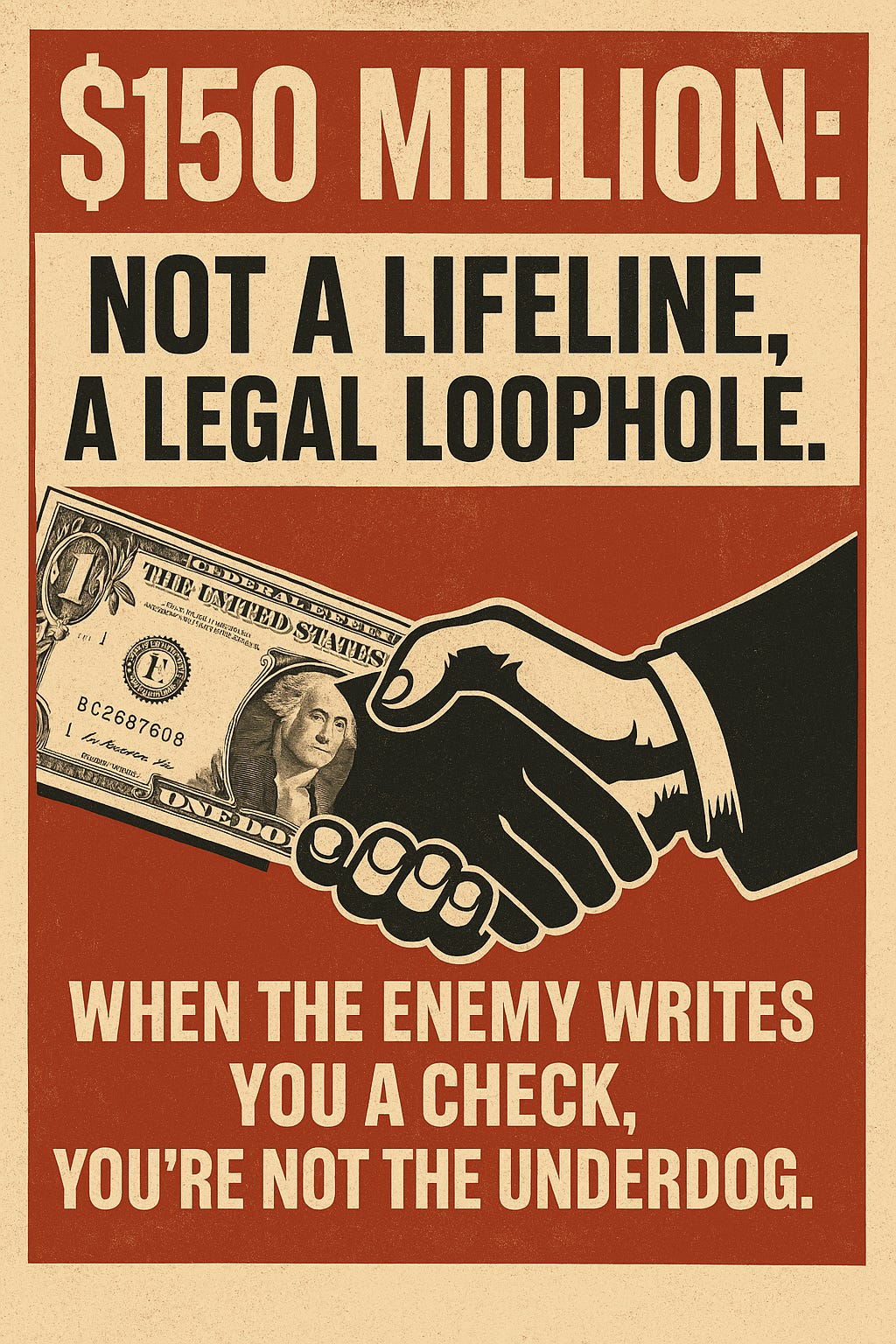
V. Vintage Callout Poster
VI. Gates’ Deposition – The Language of Power
In August 1998, Bill Gates’ taped DOJ deposition revealed a man who used precision and semantic evasion as weapons.
He quibbled over words like “definition,” “competitive threat,” “proprietary,” and “support.”
He dissembled over contracts, browser markets, Sun Microsystems’ Java, and internal sabotage plans.
He played high-IQ defense to avoid ever admitting—on record—that Microsoft leveraged its market position to crush competition.
🧠 Lesson: In monopoly systems, even language is a domain of control.
VII. The Platform Game Revealed
Apple wasn’t a victim here.
It was a pawn on a larger board—a valuable pawn, but a pawn still.
Microsoft and Apple both knew the score:
The true battlefield wasn’t hardware—it was platform ecosystems
Browser dominance was an early grab at today’s app-store oligopolies
Monopoly regulators could be placated through “symbolic competition”
As the saying goes in the empire game:
“If you can’t outgun the law, outframe the law.”
VIII. What This Means in 2025
The Gates–Jobs episode was a masterclass in shared monopoly—what modern critics call monopsony feudalism, where giants “compete” just enough to stay legal.
Today, we see similar moves:
Google paying Apple billions to be the default search engine in Safari
Amazon hosting Netflix’s servers via AWS
Facebook partnering with government agencies on “fact-checking”
It’s not war.
It’s chess over a captive populace.
And they’re all knights to the same king.
IX. Blood-Red CTA
🗳️ Poll: Was Apple saved—or co-opted?
💬 Discuss: Tag #RedBloodJournal with your take.
📩 Share: Send this report to three people who still believe tech fights are real fights.
🏷️ tags:
#PlatformPower #BrowserWars #MonopolyPlaybook #SiliconCartel #RedBloodJournal
🩸 Footer
© 2025 Red Blood Journal • Where the blood is the ink, and the tech is the tale.