


In an era where echo chambers amplify differences and algorithms curate realities, humanity finds itself at a crossroads. From birth, we are subtly conditioned to categorize the world into “us” versus “them,” fostering biases that permeate every aspect of society. This report delves into the historical and psychological roots of division, examining how strategies like “divide and rule” have been wielded to maintain power. Drawing on recent events like the COVID-19 pandemic, it explores how enforced polarities in politics, vaccines, and even religion have isolated individuals, only to spark a potential backlash toward unity. Could this be the moment when humanity transcends tribalism, embracing the positive elements from all perspectives while discarding the divisive ones? Through investigative lenses, we uncover the mechanisms of control and the emerging calls for reconciliation.
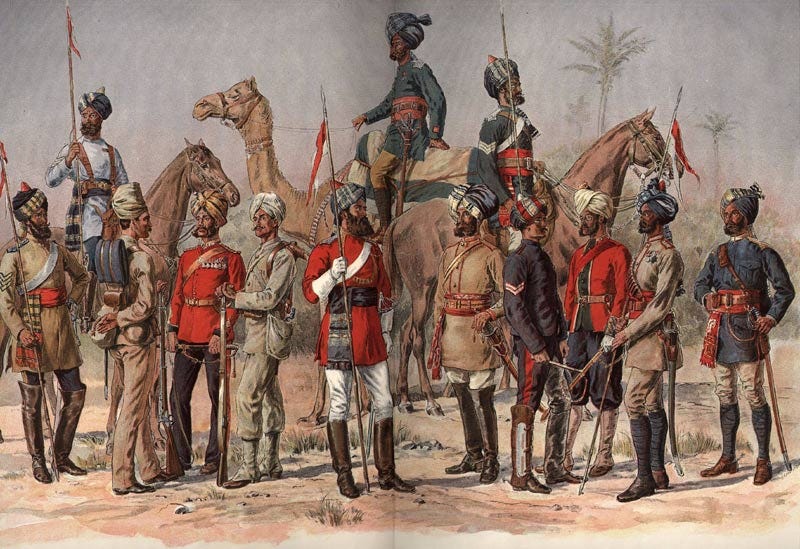
The British East India Company often employed divide-and-rule tactics by pitting local groups against each other to maintain colonial control.
The Ancient Art of Division: “Divide et Impera” and Its Enduring Legacy
The phrase “divide and conquer” – or “divide et impera” in Latin – traces its origins to ancient strategies of governance and warfare. Historically attributed to figures like Philip II of Macedon and later popularized by Julius Caesar, it involves fragmenting larger groups into smaller, manageable factions to prevent unified resistance. The Roman Empire masterfully applied this by dividing conquered peoples into tribes and city-states, exploiting ethnic, racial, and social fault lines to maintain dominance. This tactic wasn’t confined to antiquity; colonial powers like the British refined it during their rule over India, backing rival princes and fostering religious and caste divisions to consolidate power. Similarly, the Ottoman Empire pitted Armenians against Kurds, ensuring no single group could challenge imperial authority.
In modern contexts, this strategy extends beyond empires to everyday institutions. Political leaders have used it to polarize electorates, creating mutual enemies to rally support. Sports teams foster fierce loyalties, turning fans into tribal rivals over arbitrary affiliations. Gender debates, amplified by media, often pit groups against each other rather than seeking common ground. Even public health crises, like debates over vaccines, have been framed as battles between “believers” and “skeptics,” deepening societal rifts. As one analysis notes, throughout history, such divisions ensure “no one can be ruled if no one is divided.” Critics argue these categories – religions, parties, teams – are engineered by those in power, the proverbial “bullies,” to perpetuate control.
Born into Bias: The Psychological Foundations of Division
Our propensity for division isn’t merely learned; it’s ingrained from infancy. Psychological research reveals that children exhibit intergroup biases early in development, favoring those similar to themselves and showing preferences based on minimal cues like language or appearance. By preschool age, kids internalize social hierarchies through observation, acquiring biases from adults’ nonverbal behaviors and interactions. This “childhood conditioning” – as termed by experts – stems from evolutionary adaptations for group survival but is amplified by societal structures.
Studies show babies as young as a few months old display preferences for familiar faces or accents, laying the groundwork for later divisions. As we grow, education, media, and family reinforce these, turning individuals into “closed-minded” partisans who disdain opposing views. This natural bias, unchecked, makes us susceptible to manipulation: political parties exploit it for votes, religions for adherents, and corporations for consumers. The result? A society where taking sides feels instinctive, yet it’s often a conditioned response that blinds us to shared humanity.
The COVID Catalyst: From Isolation to a Backlash Against Division
The COVID-19 pandemic exemplified how divisions can fracture societies while inadvertently fostering reflection. Political polarization intensified vaccine hesitancy, with conservative ideologies correlating to greater skepticism and trust in alternative narratives. In the U.S., counties with strong religious and political affiliations showed varying vaccination rates, often tied to socioeconomic and demographic factors. Mandates were perceived by some as overreach, eroding public trust and amplifying feelings of alienation.
This era of isolation – physical and ideological – left many feeling “alone and lost.” Yet, it backfired on division creators: surveys indicate a rise in religiosity as people sought meaning amid chaos. Paradoxically, the politicization of health measures deepened divides but also prompted introspection. On platforms like X (formerly Twitter), users lamented how vaccine debates mirrored religious wars, with one post equating anti-vax sentiment to a “religious civil war” demanding obedience. Others alleged conspiracies, claiming vaccines were tools for control, echoing broader fears of engineered divisions.
Religious leaders played dual roles: some evangelical figures, reportedly funded by government and foundations, promoted vaccines as a “moral duty,” while others spread misinformation linking them to apocalyptic themes. This fusion of faith and politics highlighted how divisions intersect, but it also sparked calls for unity, with voices urging transcendence beyond sides.
Religion’s Double Edge: Unity in Belief, Division in Practice
At the heart of many divisions lies religion, often cited as the “first divided.” Major world faiths – Hinduism, Judaism, Buddhism, Christianity, Islam – share intertwined histories and core beliefs, such as monotheistic roots in a singular creator or ethical principles like compassion. Abrahamic religions (Judaism, Christianity, Islam) trace origins to shared figures like Abraham, emphasizing a common God. Even diverse traditions address universal questions of creation, suggesting a unified spiritual foundation.
Yet, history reveals divisions exploited for power. Critics argue religions were “created by bullies to rule,” fragmenting believers into sects that foster bias and conflict. Hunter-gatherer societies show early religious behaviors evolved for social cohesion, but institutionalized faiths often served rulers. Today, religiosity predicts vaccine attitudes, with some faiths linking hesitancy to doctrinal views. X discussions reflect this, with posts warning of vaccines altering “God-given” DNA or serving as control mechanisms.
The key insight: By not taking sides, individuals can harvest positives – like moral guidance and community – while ignoring negativities like dogma-induced hate. This non-partisan approach could bridge divides, as echoed in calls for interfaith harmony.
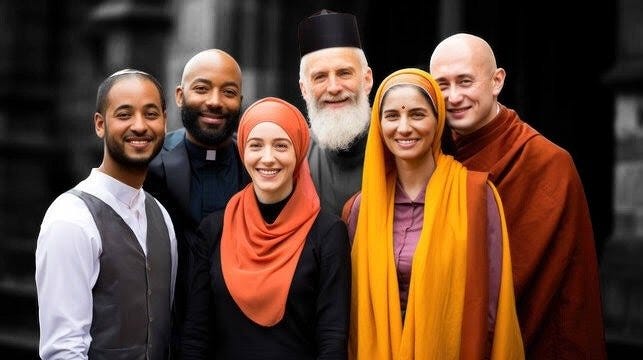
Representatives from diverse faiths symbolize the potential for unity beyond doctrinal differences.
Toward Unity: A Spark for Humanity’s Convergence
Amid these fractures, a counter-movement emerges. The pandemic’s divisions, intended to control, have instead prompted awakening. People increasingly reject binary choices, drawing positives from all sides: progressive policies’ empathy, conservative values’ resilience, religions’ spiritual wisdom without exclusion. X users advocate for this, decrying how politics and faith are “used to control society” and calling for unity.
This could be humanity’s “sparking point.” Historical precedents show undivided societies resist domination; imagine a world where we unite in categories only for collaboration, not conflict. By recognizing conditioned biases and embracing pluralism, we dismantle the chains. The question remains: Will we choose collective strength over engineered isolation?