


🩸 🥗 ⚖️ 🌱 🌊 — The Weight-Loss Diet: When Eating More Food Can Mean Consuming Fewer Calories
Red Blood Journal | Health, Food & Environment
Can a whole-food, plant-based diet help people lose weight without starvation, expensive supplements, or sacrificing their health?
Introduction — The Weight-Loss Industry’s Missing Question
For decades, millions of people have been encouraged to lose weight by eating less, counting calories, avoiding carbohydrates, purchasing special products, or following increasingly restrictive eating programs. Despite the constant introduction of new diets, the underlying problem remains remarkably consistent: people need a way to consume fewer calories without spending their lives feeling hungry, deprived, or exhausted.
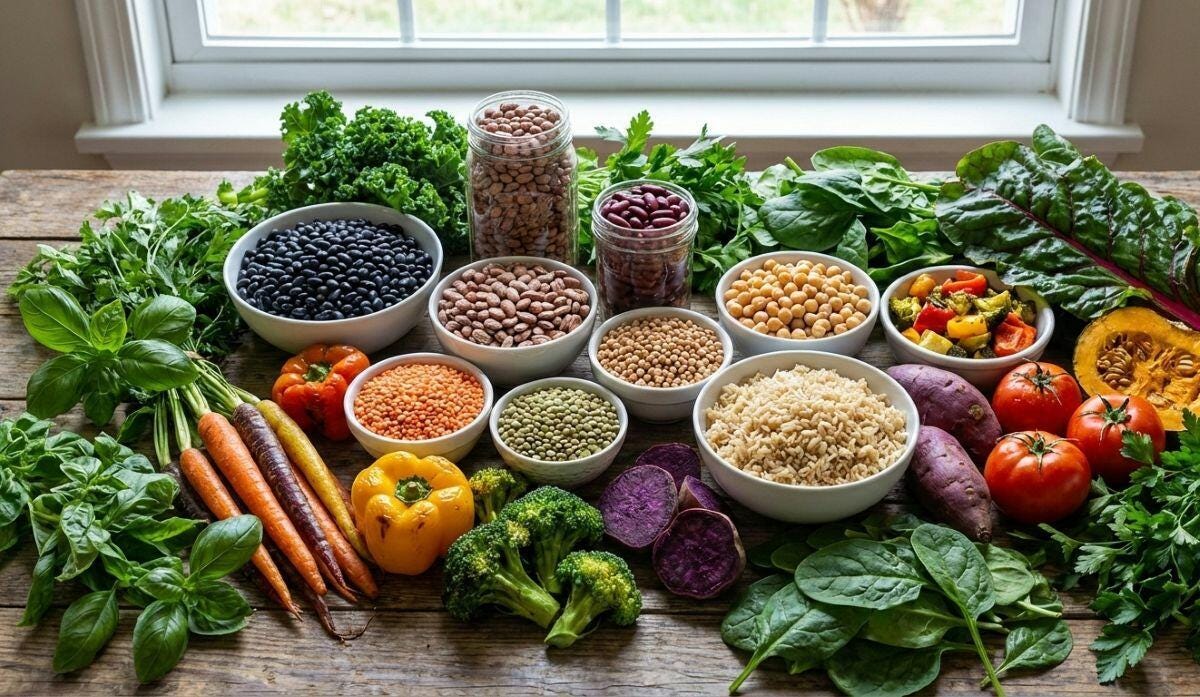
The Whole-Food, Plant-Based diet, commonly abbreviated WFPB, approaches the problem from a different direction. Rather than focusing exclusively on the quantity of food, it emphasizes the types of foods being consumed. Vegetables, fruits, beans, lentils, potatoes, and whole grains become the foundation of daily meals, while animal products, refined foods, added oils, and heavily processed substitutes are eliminated or substantially reduced.
The particularly strict version examined in this report also follows the low-SOS philosophy, meaning low salt, oil, and sugar. Its rules prohibit meat, eggs, dairy, coconut, refined grains, and imitation meat or cheese products. The central question, however, is whether every prohibition is necessary for effective, safe, and sustainable weight loss.
1. The Science of Eating More While Consuming Less
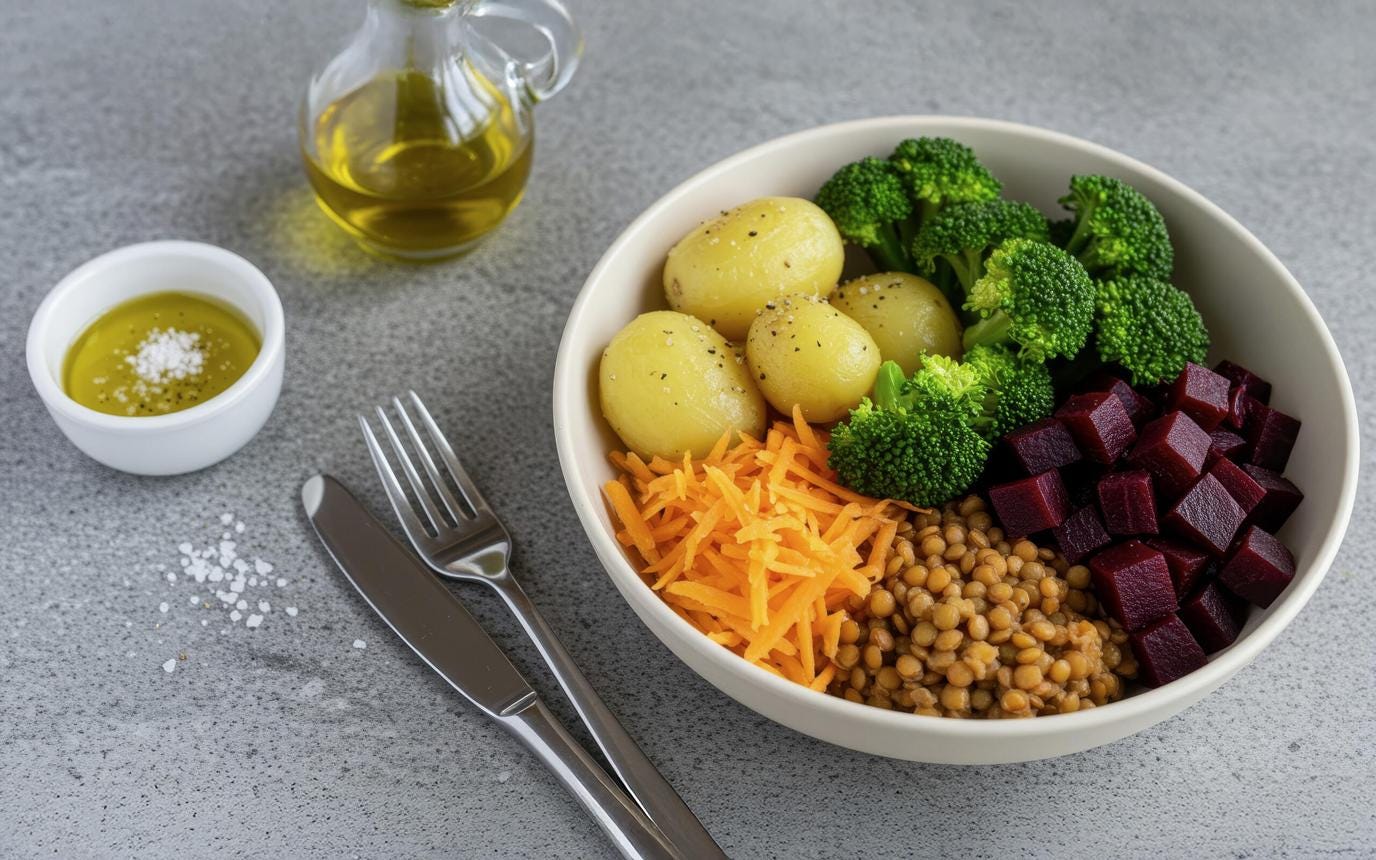
The most useful concept behind this dietary approach is calorie density, the number of calories contained in a given weight or volume of food. Foods rich in water and fiber, such as vegetables and many fruits, generally provide fewer calories per bite than oils, pastries, fried foods, and other energy-dense products.
Consider two very different meals. One consists of a relatively small serving of fried food accompanied by a calorie-rich sauce. The other consists of a large plate of vegetables, potatoes, and lentils. Depending on preparation and portions, the second meal can provide substantially more food volume while supplying fewer calories. This can make weight loss more comfortable because the stomach receives a satisfying amount of food rather than a tiny serving that leaves a person searching for the next snack.
The biological principle remains straightforward: lasting fat loss requires energy intake to remain below energy expenditure over time. Whole plant foods do not override that requirement, but they can make achieving it easier. The National Institute of Diabetes and Digestive and Kidney Diseases emphasizes choosing a nutritionally adequate eating plan that can be maintained long term, rather than relying on a temporary restrictive program.
2. The Foods That Do the Heavy Lifting
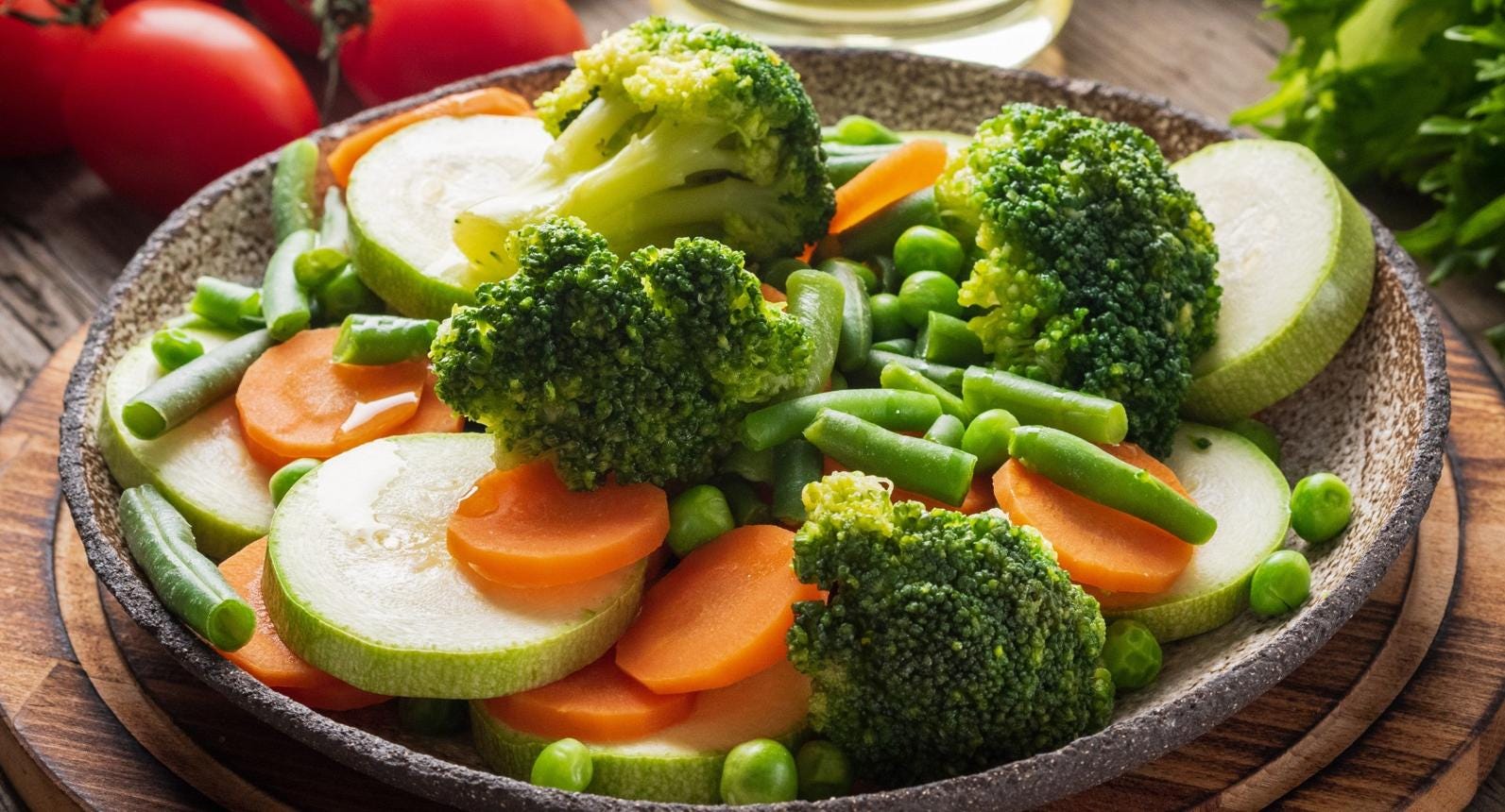
Non-starchy vegetables
Low in calories, high in water and fiber, and useful for increasing meal volume.
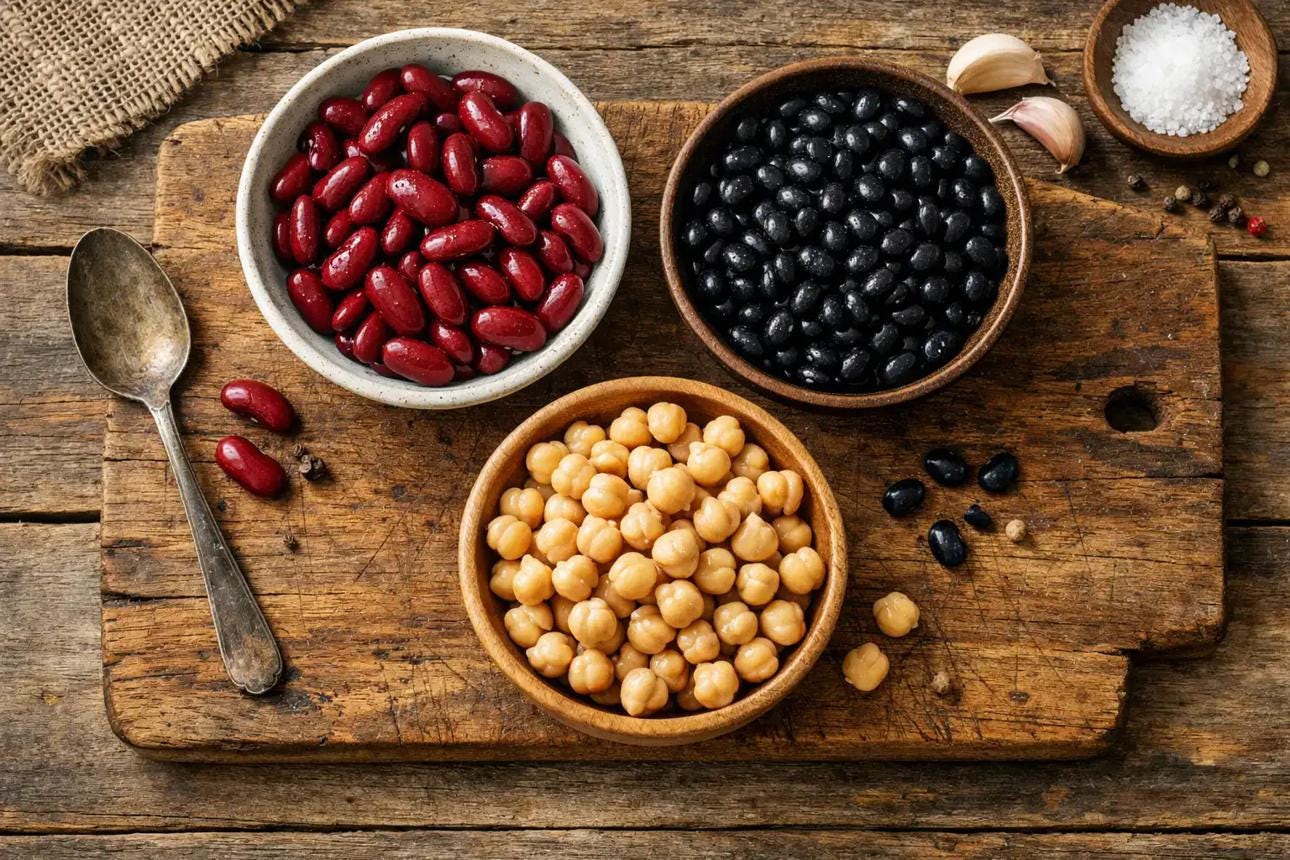
Beans and lentils
Provide fiber and protein, helping fullness while supporting muscle maintenance.
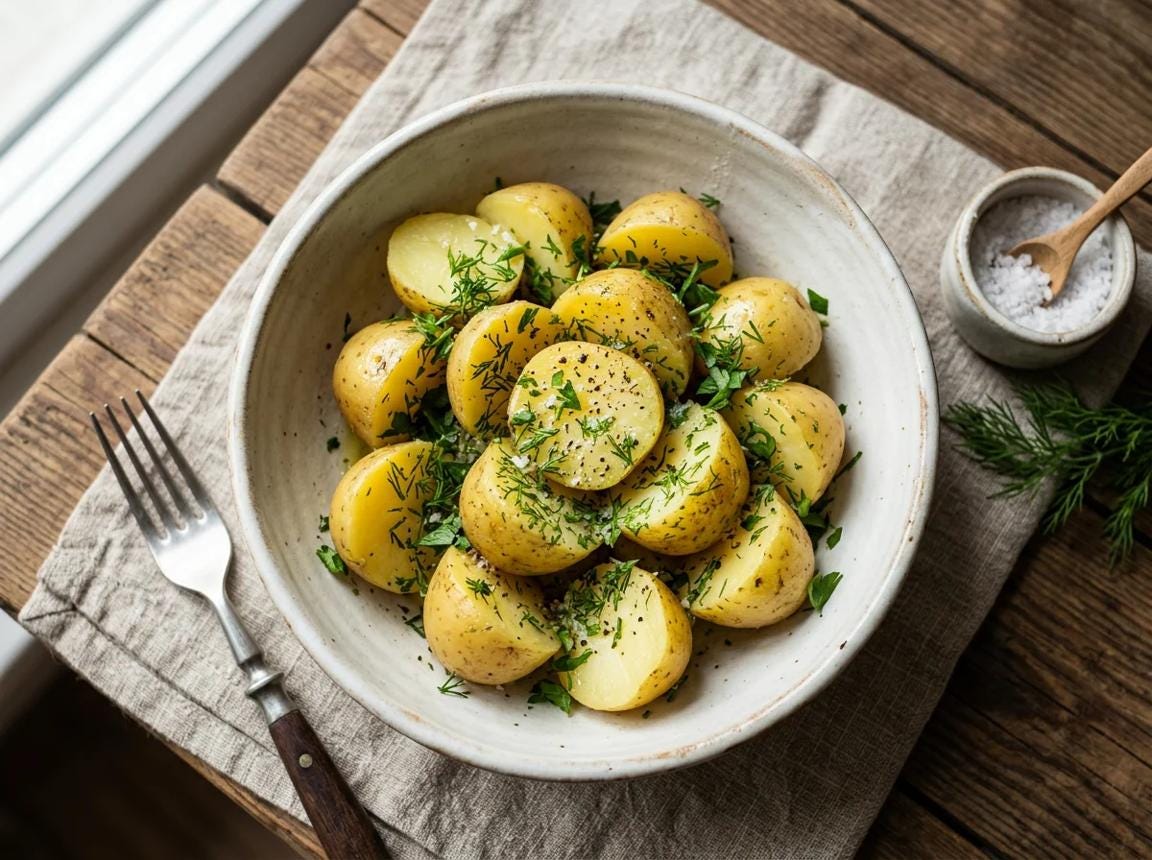
Potatoes and whole grains
Supply energy and can be satisfying when boiled, baked, or prepared without excessive fat.
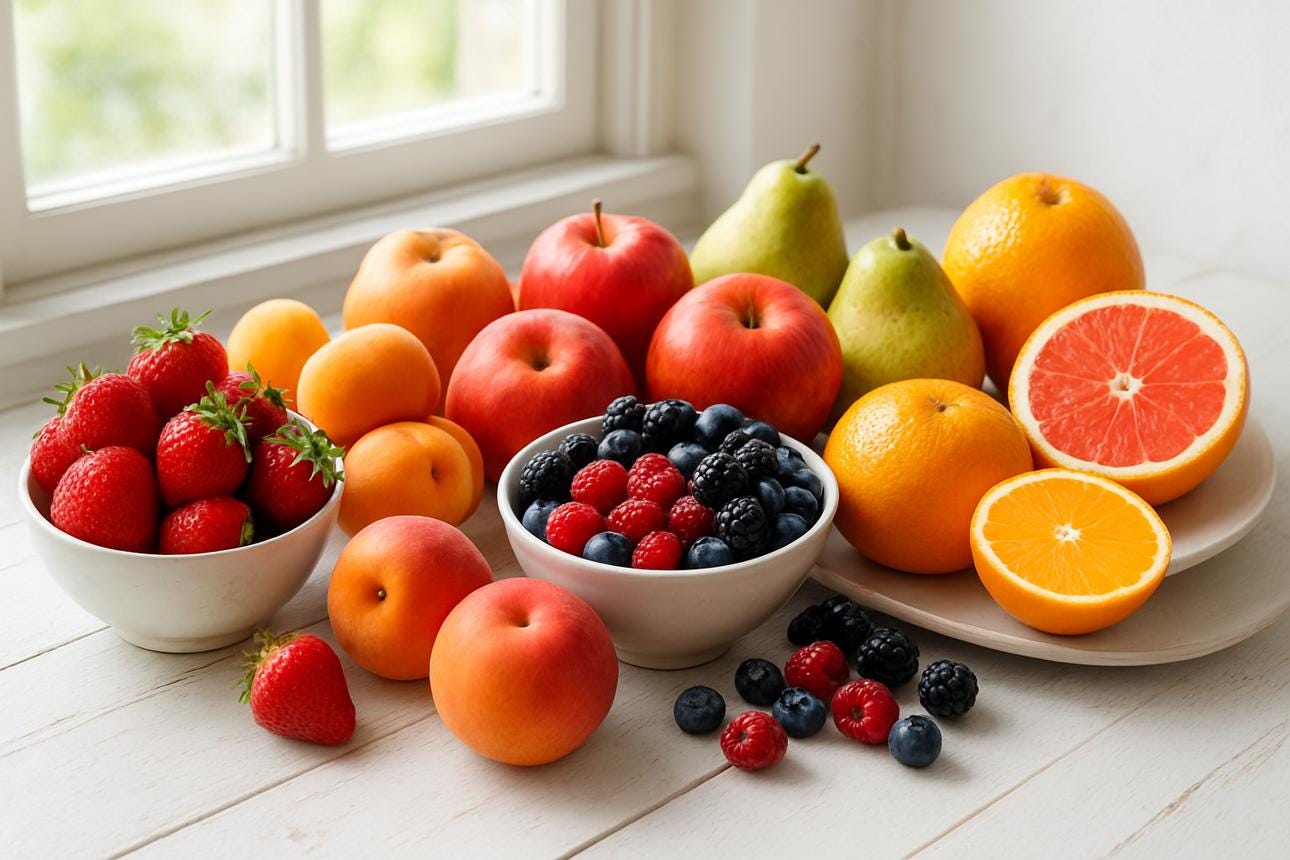
Whole fruits
Provide sweetness, water, vitamins, and fiber without requiring added sugar.
These four categories make the dietary approach practical. Vegetables create volume, legumes contribute protein, whole grains and potatoes provide useful carbohydrates, and fruits make healthier eating enjoyable without requiring the elimination of sweetness.
The distinction between whole fruit and fruit juice matters. A whole orange requires chewing and contains intact fiber, while a glass of juice can deliver the sugar from several oranges with much less satiety. Similarly, a baked potato and a serving of potato chips originate from the same plant but have very different calorie densities.
3. Why Cutting Oil Can Help — Without Making Oil the Enemy
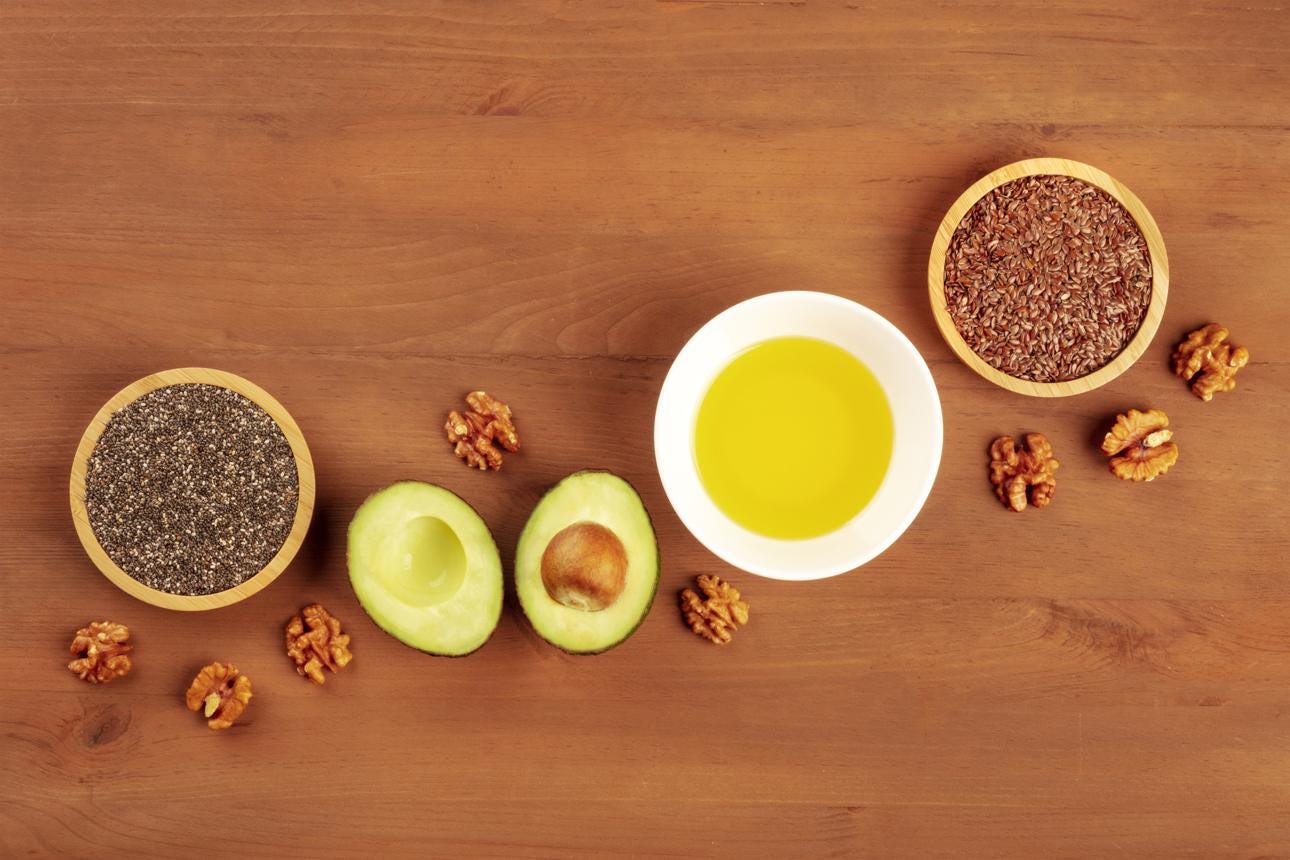
One of the strictest rules in the original dietary instructions is the complete elimination of added oils. From a calorie-management perspective, the reasoning is understandable. A tablespoon of olive oil contains approximately 120 calories, and several tablespoons added during cooking can substantially increase the energy content of a meal without noticeably increasing its size.
Reducing unnecessary oil can therefore make weight loss easier, especially for someone accustomed to fried foods, heavy dressings, and generous cooking oils. However, a useful strategy becomes less scientifically convincing when turned into the claim that every oil is harmful. Extra virgin olive oil supplies unsaturated fats and plant compounds, and it is compatible with healthy Mediterranean dietary patterns.
Whole-food sources of fat, including walnuts, chia seeds, flaxseed, and avocados, provide valuable nutrients. They also contain calories, meaning portions still matter. The practical lesson is to avoid excessive quantities of calorie-dense fats while preserving the healthy fats required for normal bodily function. Eliminating excess oil can be a weight-loss tool without becoming a universal nutritional commandment.
4. The Hidden Danger: Losing Muscle Instead of Just Fat

One of the most frequently overlooked aspects of weight loss is the difference between losing total body weight and losing body fat. A person may celebrate a reduction on the bathroom scale without recognizing that some of the weight lost comes from muscle, water, and other lean tissue. This distinction becomes increasingly important with age because muscle supports mobility, balance, metabolic health, and independence.
A diet based primarily on vegetables and fruit, without sufficient legumes, soy foods, or other protein sources, can fall short of protein needs. A carefully planned WFPB diet can supply enough protein, but it requires attention to food selection and quantity. For many healthy older adults, approximately 1.0–1.2 grams of protein per kilogram of body weight per day is a reasonable starting consideration, adjusted for health conditions and clinical advice.
Resistance training is equally important. Walking supports cardiovascular health and increases energy expenditure, but strength exercises help preserve the tissue we want to retain while losing fat. The National Institute on Aging and NIDDK recommend regular muscle-strengthening activity, with exercises adapted to individual physical capabilities.
5. What Happens When Entire Food Groups Disappear?
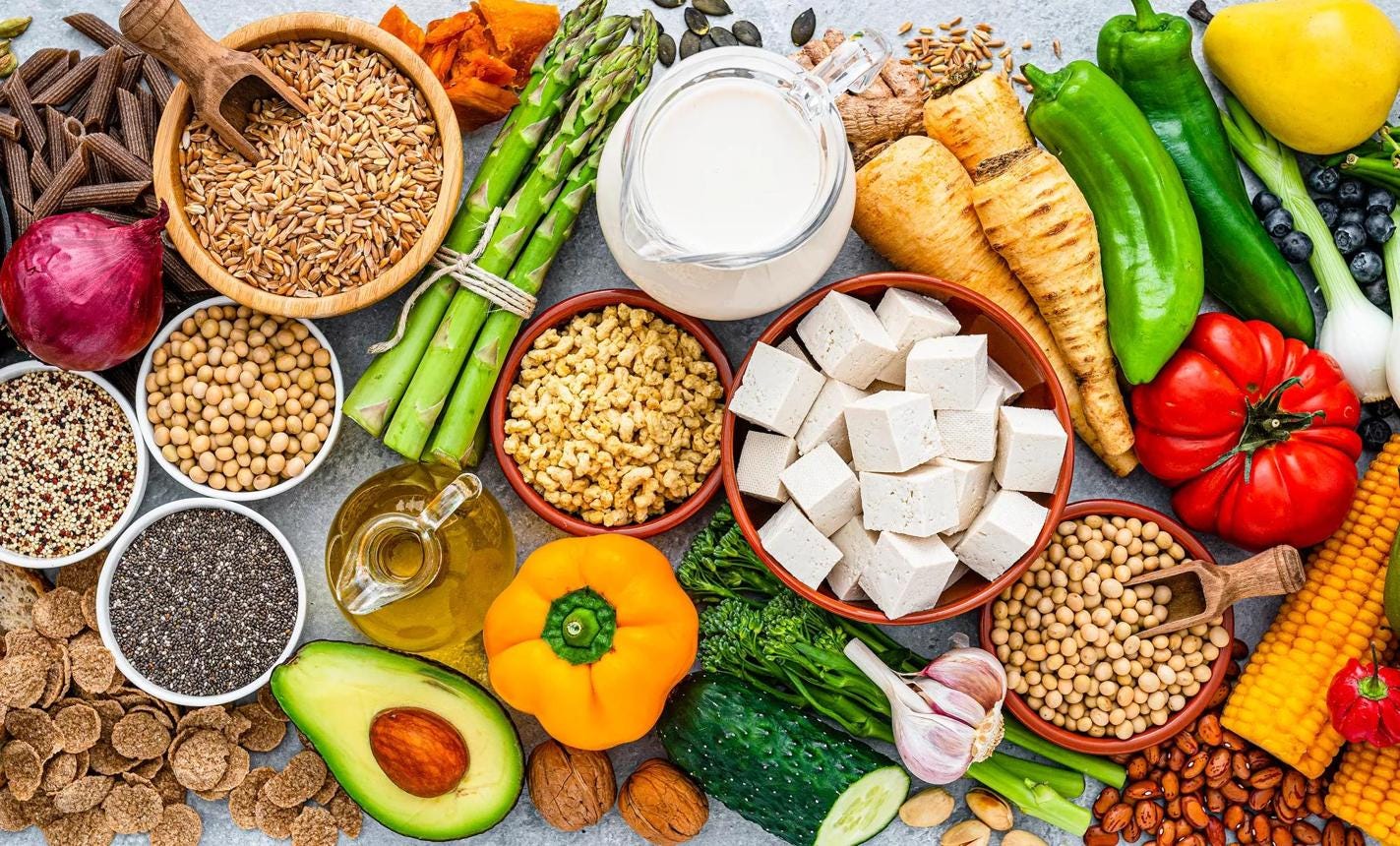
Eliminating animal products does not automatically create a nutritional deficiency, but it changes where essential nutrients must come from. Meat, eggs, and dairy provide convenient sources of protein, vitamin B12, iron, calcium, iodine, and other nutrients. When those foods disappear, the diet must replace their nutritional contributions rather than merely remove their calories.
Vitamin B12 deserves particular attention. Unfortified plant foods are not a dependable source, and deficiency can lead to anemia and potentially permanent nerve damage. People consuming an exclusively plant-based diet need reliable fortified foods or supplementation. Older adults may also have difficulty absorbing naturally occurring food-bound B12, making this issue especially relevant later in life.
Calcium, vitamin D, iron, zinc, iodine, and omega-3 fats also require planning. The practical goal should never be to achieve weight loss at the expense of the body’s essential nutritional requirements. A smaller body that becomes weaker, nutritionally depleted, or physically less capable is not the desired outcome of a successful health program.
6. A Practical Plate for Sustainable Weight Loss
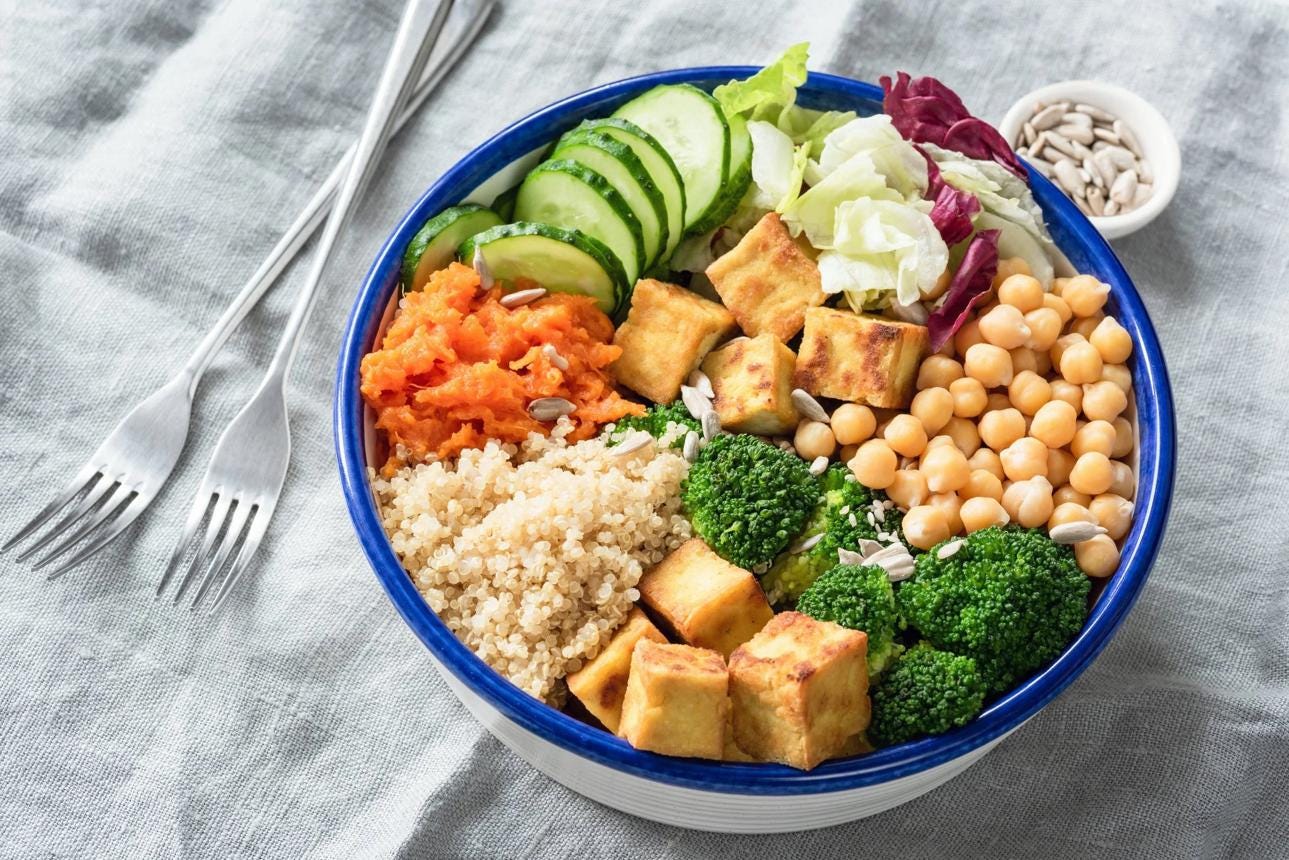
A more useful approach than memorizing a long list of forbidden ingredients is learning how to construct a satisfying meal. A practical starting point is to fill approximately half the plate with non-starchy vegetables, reserve one quarter for protein-rich foods such as beans, lentils, or tofu, and use the remaining quarter for potatoes, brown rice, quinoa, or another whole grain. A modest amount of nuts, seeds, avocado, or olive oil can provide healthy fats.
This arrangement is not a rigid medical prescription, and a quarter-plate of beans will not necessarily provide enough protein for every individual. The proportions can be adjusted according to nutritional needs, appetite, activity, and progress. Its principal advantage is simplicity: people can recognize a balanced meal without weighing every ingredient or interpreting a complicated dietary formula.
An ordinary day could begin with oatmeal, berries, and ground flaxseed; continue with a lentil-and-vegetable lunch; and finish with tofu, vegetables, and a baked potato. Whole fruit can serve as a snack, while water or unsweetened beverages replace sugary drinks. The menu does not require specialty weight-loss products, but portions and total daily intake still determine whether weight loss occurs.
7. Strict WFPB Versus the Mediterranean Approach
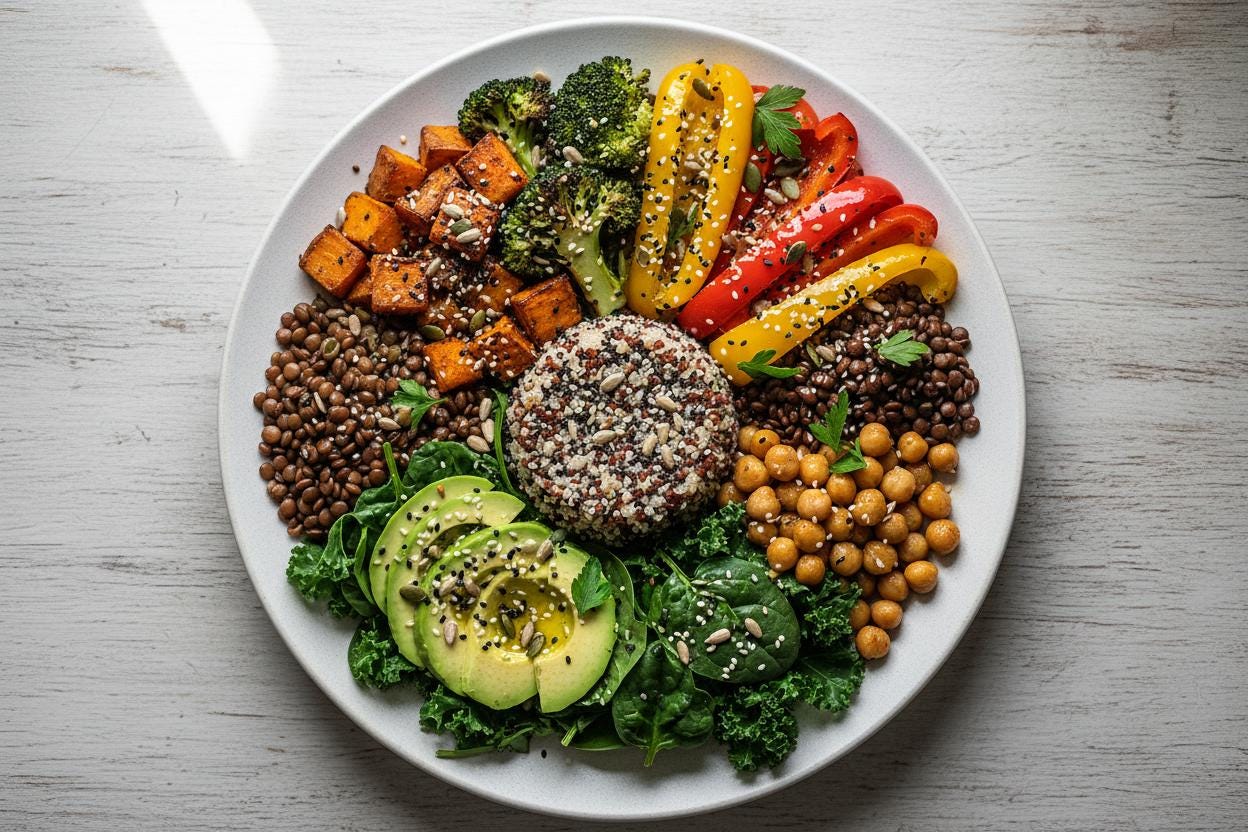
Strict WFPB
Prioritizes whole plant foods and eliminates animal products and added oils. It may help reduce calorie intake, but requires careful nutritional planning.
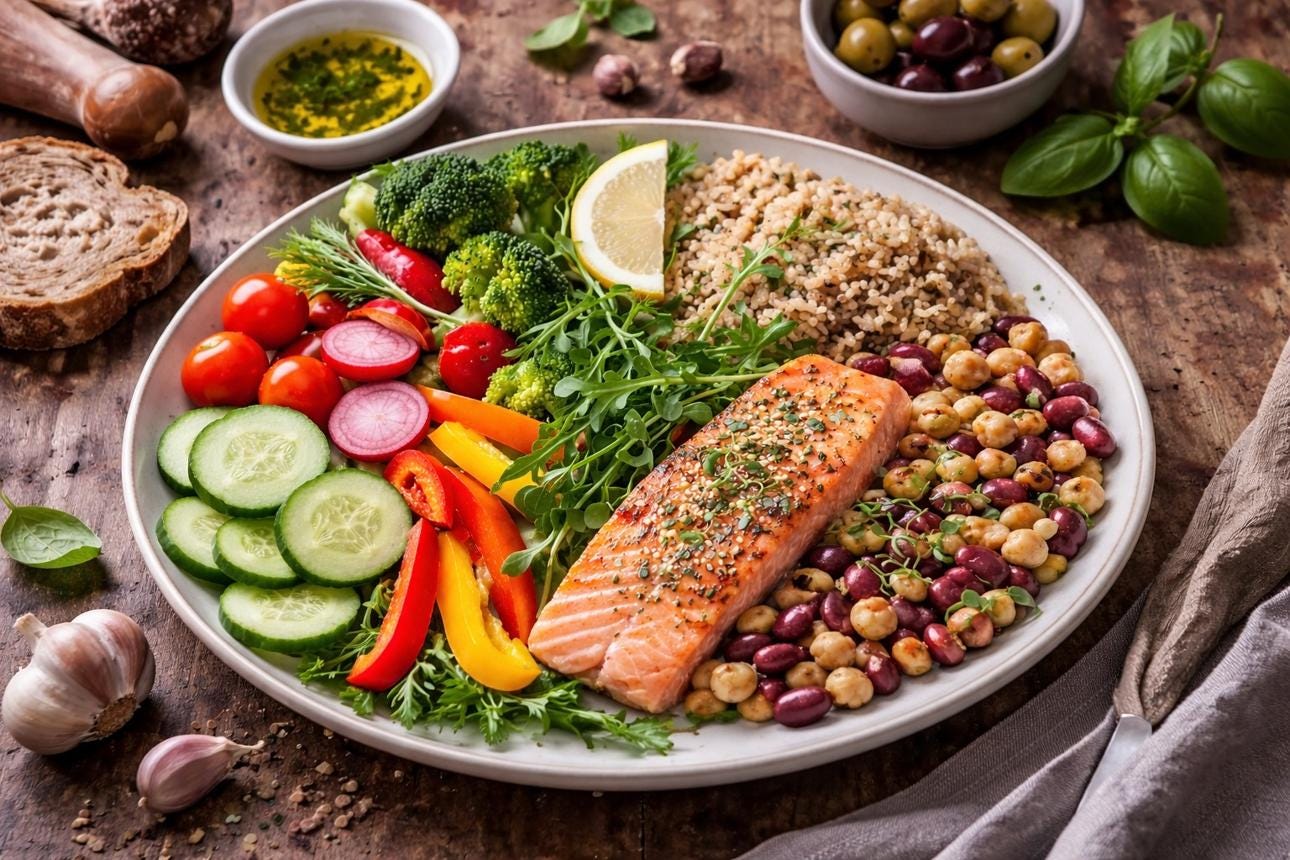
Mediterranean diet
Emphasizes vegetables, legumes, fruit, whole grains, olive oil, and often fish and modest dairy. It offers a less restrictive route to healthy eating.
Both approaches can support meaningful weight loss when they produce an appropriate calorie deficit. The strict WFPB model may be particularly appealing to individuals who prefer clearly defined rules and meals dominated by minimally processed plant foods. The Mediterranean approach may appeal to those seeking greater flexibility while retaining many cardiovascular and metabolic benefits.
Neither dietary label guarantees success. Someone can gain weight on a vegan diet by consuming excessive quantities of calorie-dense foods, just as someone can lose weight on a Mediterranean diet through sensible portions. The important questions are whether the diet supplies adequate nutrition, controls energy intake, preserves muscle, and can be maintained without constant frustration.
8. What Is a Realistic Weight-Loss Goal?
The expectation of rapid transformation has become one of the weight-loss industry’s most marketable promises. In reality, sustainable progress is frequently less dramatic and more valuable. For many adults, an initial goal of losing 5–10% of starting body weight over approximately six months can provide meaningful health improvements, even when the final desired weight remains farther away.
For example, a person beginning at 200 pounds might initially aim to lose 10–20 pounds rather than concentrating exclusively on a much larger number. Body weight can fluctuate from water retention, salt consumption, digestive contents, and changes in physical activity. Therefore, progress should be assessed over weeks rather than judged by a single morning’s reading.
Weight maintenance also deserves attention from the beginning. As body weight falls, energy requirements can decline, and the habits responsible for losing weight must eventually support keeping it off. A successful dietary program is not simply one that makes the number on the scale fall. It is one that helps a person remain healthier after the initial excitement has disappeared.
9. 🩸 The Red Blood Perspective
The original list of dietary restrictions illustrates a larger problem in how health advice is often communicated. A useful principle can gradually become an absolute rule, and an absolute rule can become an identity that people defend even when evidence supports greater flexibility. Reducing added oils can help with calorie control, but this does not prove that every quantity of olive oil is harmful. Replacing processed meats with beans can improve dietary quality, but that does not establish that all animal foods must be eliminated to lose weight.
Red Blood approaches health claims by examining their mechanisms and consequences rather than accepting their labels. What actually causes fat loss? Which foods improve satiety? How much protein does the individual need? What happens to muscle, blood pressure, blood sugar, and nutritional status? These are more useful questions than whether a diet can claim ideological purity.
There is also an important economic dimension. Weight management has become a marketplace of supplements, subscription programs, meal replacements, coaching systems, and constantly changing promises. Yet many of the foods that support healthy weight management have been available for generations: beans, lentils, potatoes, vegetables, oats, and fruit. Knowledge that helps individuals make informed choices can reduce unnecessary dependence on expensive dietary products without dismissing medical treatment when it is genuinely needed.
10. 🌊✨ The Ocean of Love and Positivity Perspective

The Ocean of Love and Positivity offers another perspective on the relationship between food and the human body. The body is not an enemy that must be punished for gaining weight, and eating should not become a daily contest between desire and guilt. The body is the vehicle through which we experience material life, and caring for that vehicle is an act of responsibility rather than an exercise in self-rejection.
A person can pursue weight loss without developing hatred for food, shame about appearance, or anxiety over every ingredient. Health improves when knowledge replaces confusion, moderation replaces excess, and constructive routines replace cycles of deprivation and overindulgence. The objective is not to achieve dietary perfection but to create a way of living that provides strength, energy, clarity, and the freedom to enjoy life.
The most meaningful transformation is not simply becoming lighter. It is becoming more capable of living with confidence, physical independence, and appreciation for the body’s remarkable ability to adapt. When a person learns to nourish the body intelligently rather than fight against it, weight management can become part of a broader process of self-respect and personal sovereignty.
The final lesson is that the best weight-loss diet is not necessarily the one with the most prohibitions. It is the one that helps you lose excess fat, preserve your health, and maintain the results for years to come.
In an Ocean of Love and Positivity.
🩸🌊✨ Fantastic!
Research references: U.S. National Institute of Diabetes and Digestive and Kidney Diseases (NIDDK), guidance on healthy weight loss and weight maintenance; NIDDK, nutrition and physical activity for older adults; NIH Office of Dietary Supplements, Vitamin B12 Fact Sheet. These references support the general nutritional and weight-management guidance; the Red Blood and Ocean of Love sections are editorial perspectives.
🥗
The Sustainable Plant-Based Weight-Loss Guide
Oct 9, 2026
The provided materials examine the whole-food, plant-based diet as a sustainable method for weight loss that relies on calorie density to keep individuals full without hunger. By prioritizing water- and fiber-rich foods like vegetables, legumes, whole grains, and fruits, people can consume larger food volumes while naturally reducing their overall energy intake. The texts also address the importance of proper nutritional planning, emphasizing that eliminating entire food groups requires careful attention to essential nutrients like vitamin B12 and protein to preserve muscle mass. Furthermore, the sources contrast strict plant-based rules with flexible Mediterranean approaches, noting that long-term success depends on sensible portions rather than rigid prohibitions. Ultimately, the literature advocates for a compassionate view of body management, encouraging balanced habits that foster genuine self-respect and lasting health.