


The Timeless Stratagem: Governments’ Enduring Division of Their Citizens
An Investigative Exposé by Crimson Ink for The Red Blood Journal
Introduction: The Roots of Fractured Unity
From ancient empires to modern nation-states, governments have wielded division as a tool for control, far predating any single crisis. This strategy, known as “divide et impera” or divide and rule, exploits existing fault lines or creates new ones to prevent unified opposition. While some divisions arise organically, others are deliberately engineered through policy, propaganda, and manipulation. The result is a populace too fragmented to challenge authority, ensuring the perpetuation of power structures. This exposé delves into the historical precedents, tactical methods, and contemporary applications that reveal division as a calculated governance technique.
Section I: Historical Foundations of Division
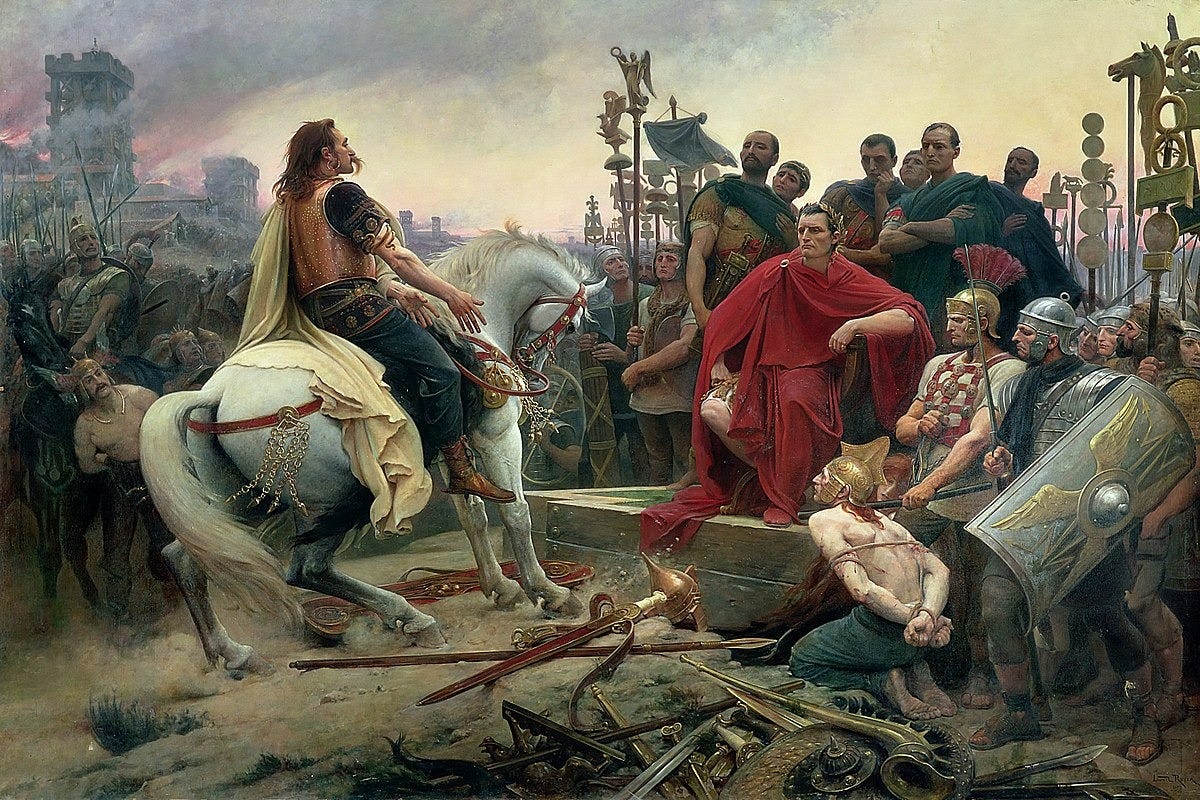
The practice of pitting citizens against one another traces back to antiquity, where rulers recognized that a divided people are easier to govern. In the Roman Empire, Julius Caesar exemplified this during the Gallic Wars by encouraging alliances with certain tribes, like the Haedui under Diviciacus, to isolate and defeat others piecemeal. This prevented a unified Gallic front, allowing a smaller Roman force to conquer vast territories. Similarly, the Mongol Empire appointed administrators from one ethnic group to oversee others—Han Chinese over Muslims, and vice versa—to dilute local power and foster dependency on central authority.
Colonial powers refined this into an art form. In 17th-century British colonies, Bacon’s Rebellion saw indentured servants, enslaved Africans, and Europeans unite against colonial elites, prompting a response that institutionalized racial divisions. Laws were enacted to privilege whiteness, outlawing African armament and elevating indentured Europeans’ status, thus breaking cross-racial solidarity and embedding systemic racism. The Ottoman Empire pitted Armenians against Kurds, while French colonists in Algeria promoted the “Kabyle myth,” portraying Kabyle Berbers as more “civilizable” than Arabs to sow ethnic discord.
Section II: Colonial Legacies and Partitioned Societies
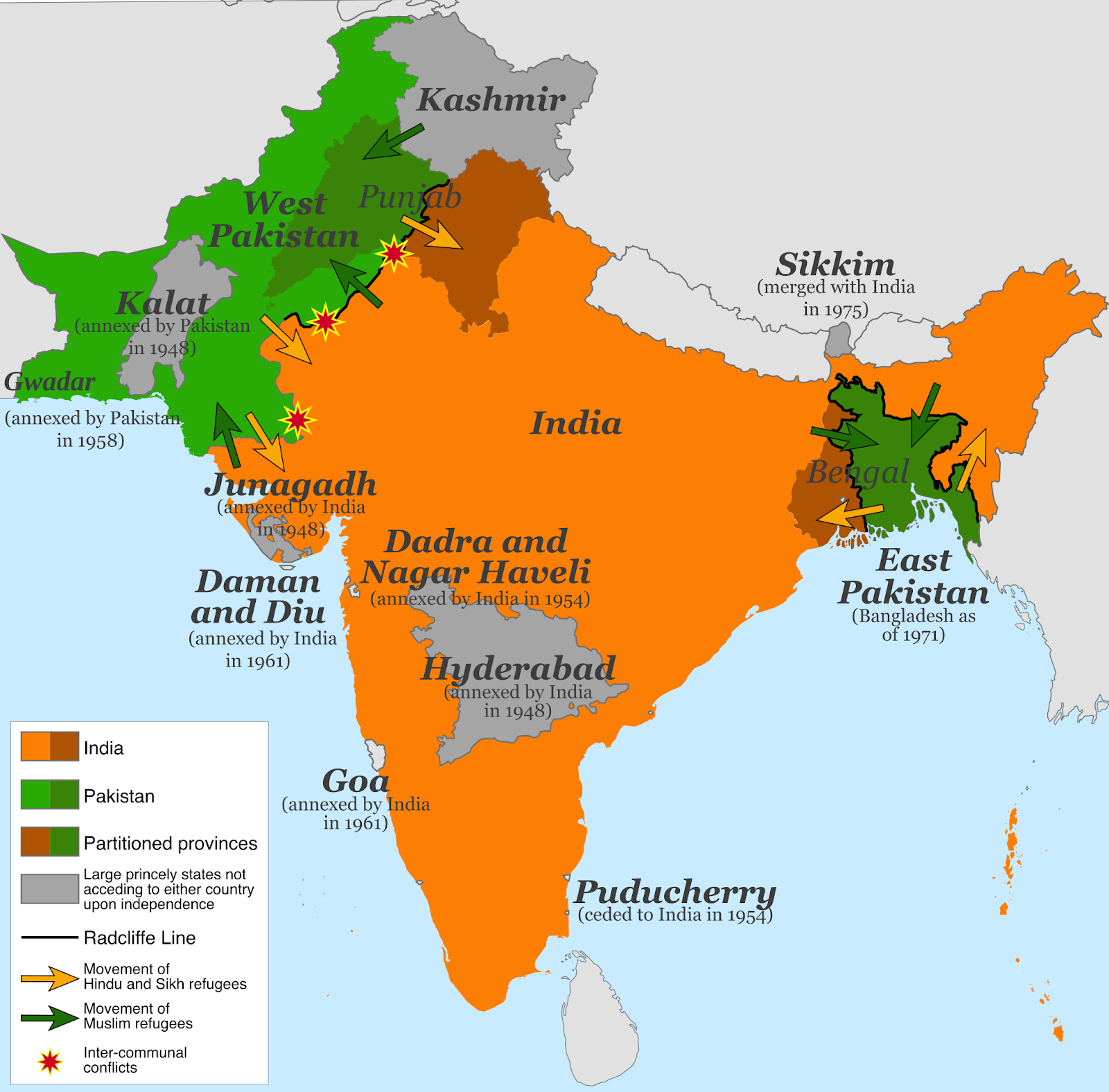

A map showing the 1947 Partition of India, highlighting the religious and territorial divisions engineered under British rule.
The British Empire’s application in India stands as a stark example of engineered division on a massive scale. After the 1857 Indian Rebellion, colonial administrators fostered Hindu-Muslim animosity through secret payments to religious leaders, inciting communal riots and preventing national unity. This culminated in the 1947 Partition, which divided the subcontinent along religious lines, displacing millions and sparking violence that echoes today. In Cyprus, British authorities stirred Turkish minorities against Greek majorities to quell independence movements, contributing to the island’s ongoing partition. The 1921 partition of Ireland is another instance where divisions were intentionally deepened to maintain control.
These tactics weren’t limited to empires; they persisted in post-colonial contexts, where amplified ethnic or class differences ensured lingering instability. Governments justified such moves under the guise of administrative efficiency or security, but the intent was clear: fragment to dominate.
Section III: Modern Tactical Arsenal
In today’s world, governments deploy subtler tools to divide citizens, often blending propaganda with policy. Gerrymandering redraws electoral districts to dilute opposition votes, creating polarized political landscapes where unity is impossible. Propaganda amplifies social divisions along racial, religious, or ideological lines, as seen in disinformation campaigns that pit groups against each other.
Specific tactics include generalizations that stereotype entire groups, us-vs-them narratives that foster ingroup loyalty and outgroup hatred, and strawmanning that exaggerates opponents’ views for easy dismissal. All-or-nothing thinking eliminates nuance, while cherry-picking data supports biased narratives, and whataboutism deflects criticism by shifting blame. Elites exacerbate these by using racism to isolate working-class groups, preventing shared economic demands like fair wages or healthcare. Partisanship, often intertwined with racism, distracts from unpopular policies favoring the wealthy.
Section IV: Global Contemporary Applications
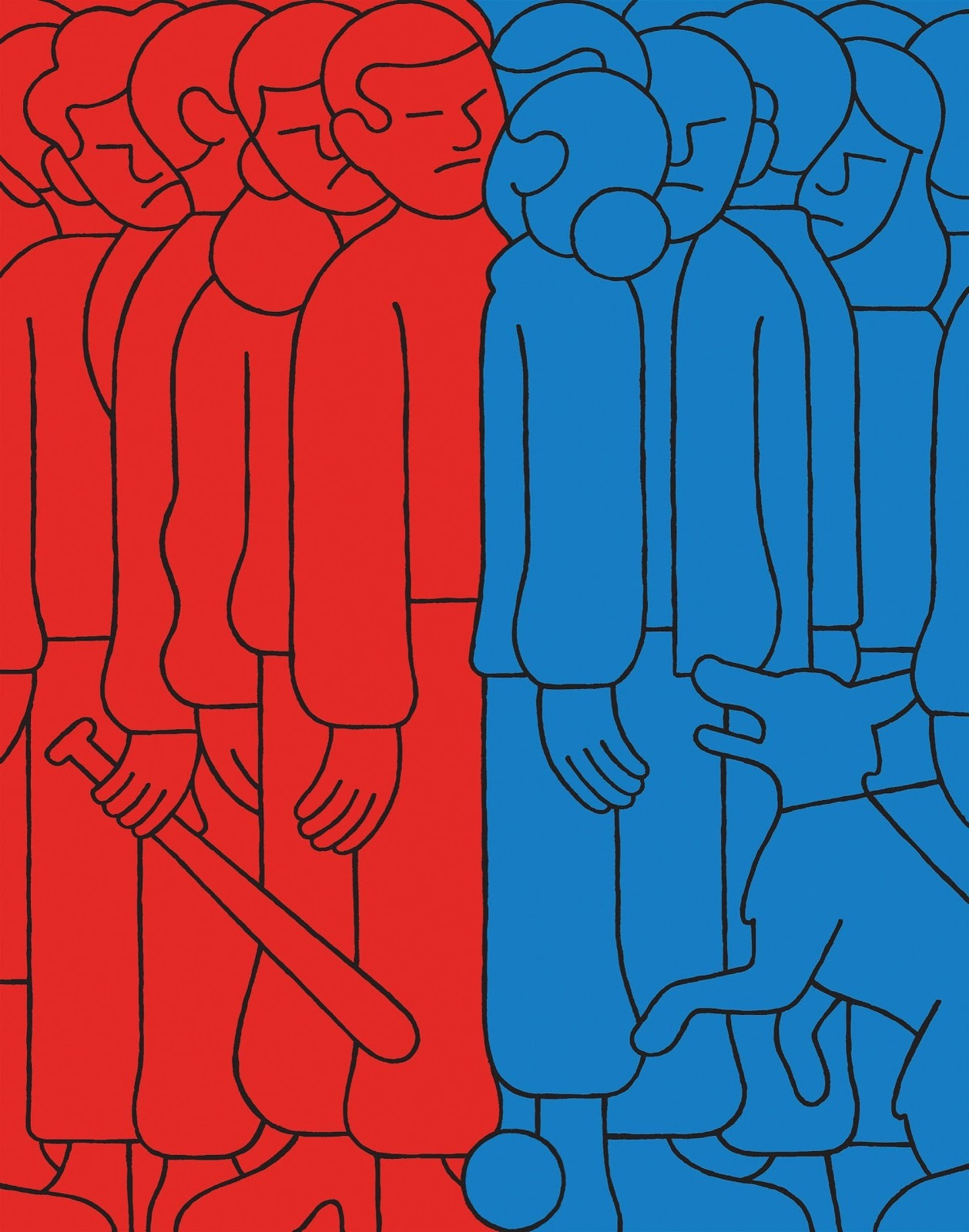
An illustration representing modern societal polarization, with groups divided along ideological lines.
Beyond domestic politics, governments apply divide and conquer internationally. In the 21st-century Middle East, the United States has been accused of escalating Sunni-Shia conflicts to weaken regional unity, as outlined in a 2008 RAND study advocating such tactics in the “Long War.” Israel supported Hamas’s early growth in the 1970s and 1980s by funding Islamist networks to undermine secular Palestinian groups like the PLO, fracturing unity and complicating peace efforts.
Russia under Vladimir Putin uses disinformation to secure domestic power and influence abroad, sowing discord in neighboring countries and globally to enhance regime stability. Domestically, examples like post-Hurricane Katrina policies in New Orleans pitted Black residents against Latino immigrant workers by suspending labor protections, fueling racist narratives and blocking collective recovery efforts.
Section V: Resisting the Divide
Countering these tactics requires awareness and unity. Strategies include demanding reparations for historical harms, fostering healing across groups, and building solidarity economies that prioritize cooperation over competition. Movements must remain agile, refusing turf battles and embracing radical honesty to bridge divides. By exposing how elites use racism and partisanship to distract from shared interests, citizens can reclaim power through collective action.
Conclusion: Cutting Through the Fractures
Division is not inevitable—it’s a choice made by those in power to preserve their dominance. From ancient battlefields to digital echo chambers, the stratagem persists because it works, but history shows that awareness sparks resistance. The true test for societies is recognizing these manipulations and choosing unity over fracture, lest we remain pawns in an endless game of control.
#DivideAndRule #HistoricalDivision #ModernTactics #RacialManipulation #PoliticalPolarization #EliteControl #Solidarity #TheRedBlood #UnityOverDivision #ResistManipulation