


🩸 The Suds of Deception
How Corporations Bottled the Same Soap a Thousand Different Ways
A Red Blood Journal Feature
I. The Universal Clean
Soap is one of humanity’s oldest inventions.
For thousands of years it was a simple alchemy: animal fat or plant oil mixed with ash, water, and time. It cut grease, washed hands, and scrubbed floors. The same bar that cleaned a body could clean a dish. The chemistry never changed—only the shape and the scent did.
That simplicity was power. It meant independence. A single mixture met every need.
Then came industry
.
II. When the Bubbles Multiplied
By the middle of the twentieth century, chemistry met marketing. Laboratories found ways to synthesize surfactants—the molecules that make soap “work”—from petroleum instead of plants. These new detergents were cheap, stable, and easy to modify.
And that’s when the game began.
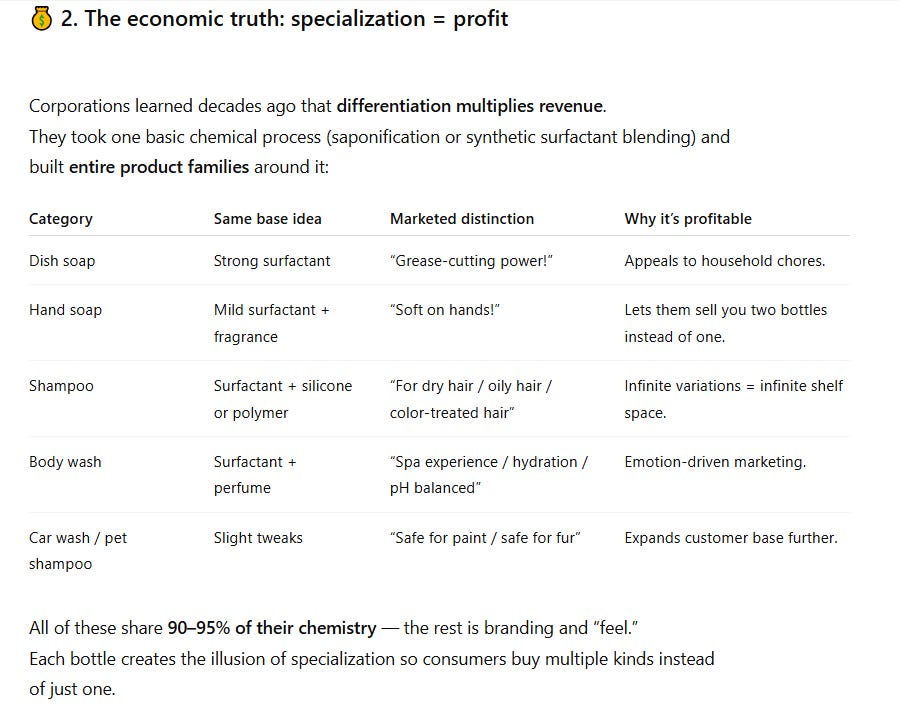
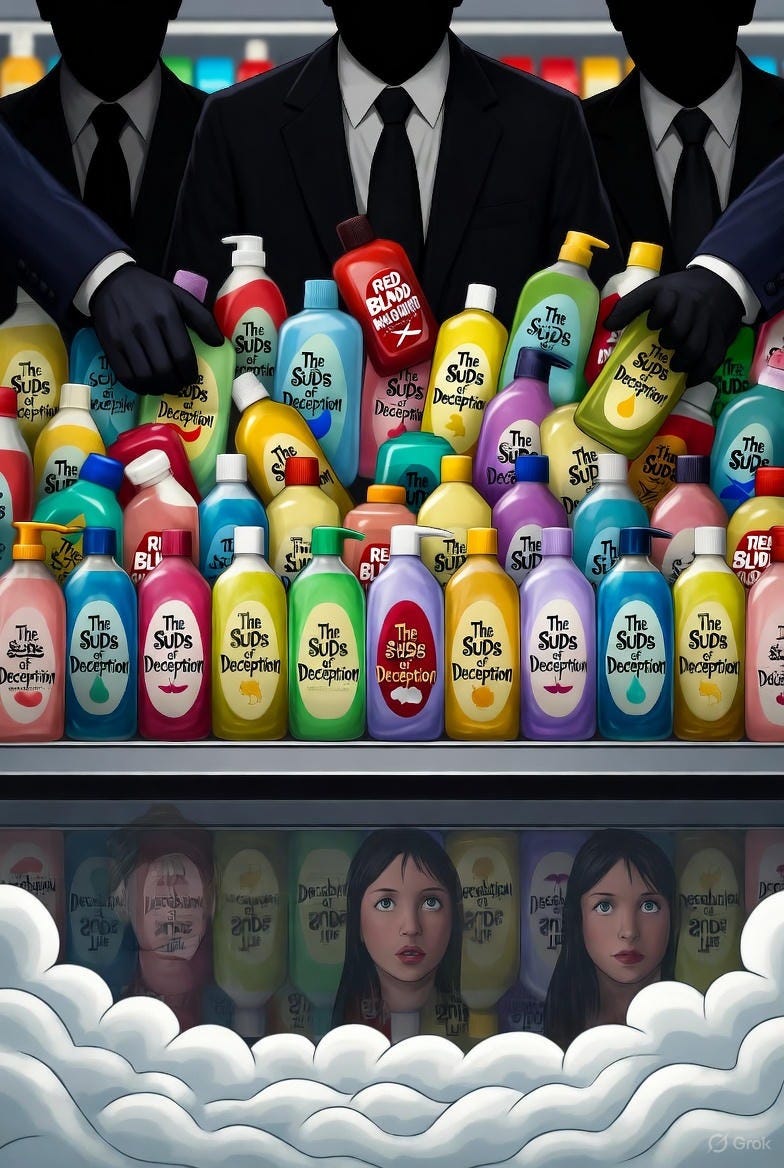
Corporations discovered that by changing the story, not the substance, they could multiply profits. A dash more fragrance, a hint of color, a thicker texture—and suddenly there were “dish soaps,” “hand soaps,” “shampoos,” “body washes,” and “pet shampoos.”
One base formula became a thousand “specialized” products. Shelves filled, commercials sang, and consumers—eager for convenience and improvement—bought into the illusion of difference.
III. The Chemistry They Don’t Advertise
Strip away the packaging and nearly every liquid cleanser still contains the same backbone:
Water as the solvent
Surfactants like sodium lauryl sulfate or sodium laureth sulfate—the grease-cutting workhorses
Preservatives to keep microbes away
Fragrance and dyes to create identity
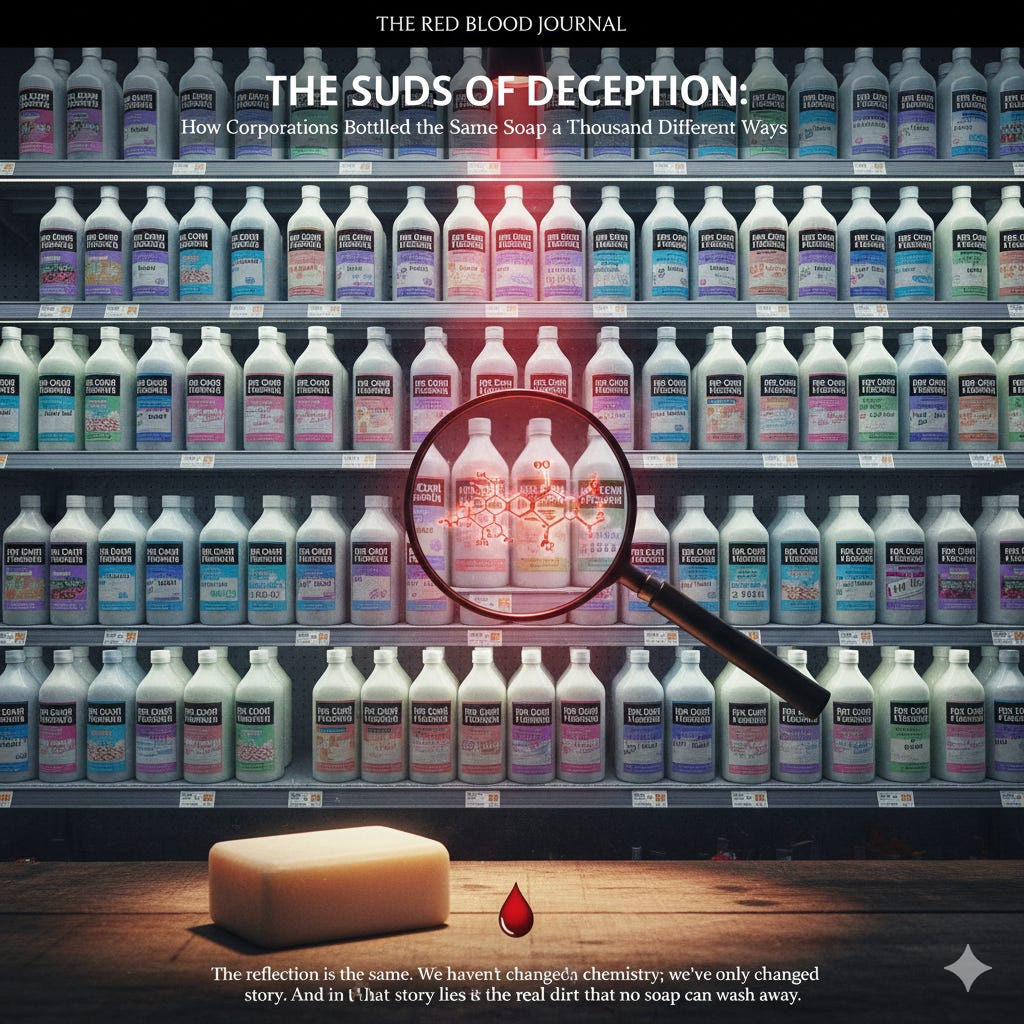
Whether the label says “for dishes,” “for hair,” or “for sensitive skin,” you’re looking at the same chemical architecture—just diluted, colored, or perfumed differently.
The difference is not molecular; it’s marketing.
IV. Economics of the Illusion
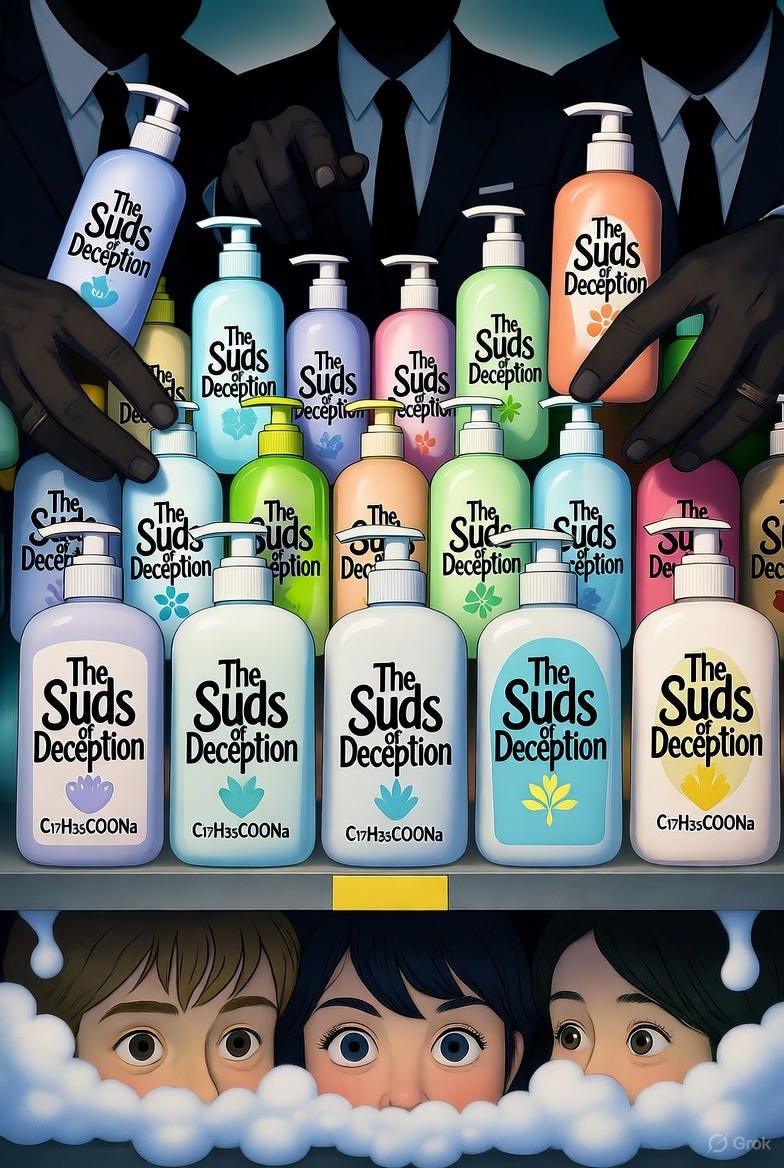
Every “new purpose” creates another purchase.
Dish soap for the kitchen, antibacterial soap for the sink, moisturizing wash for the shower, clarifying shampoo for oily hair, gentle shampoo for dry hair. Each bottle promises precision. Each bottle teaches dependency.
This isn’t chemistry; it’s economics.
The more categories a corporation creates, the more shelf space it commands, the more the consumer spends. It’s the mass-manufacturing of need.
Like fashion cycles or phone upgrades, the soap industry discovered that selling enough cleanliness wasn’t profitable; selling different cleanliness was.
V. The Psychology of Suds
Why do we believe it?
Because marketing doesn’t sell molecules—it sells emotion.
“Soft on hands.” “Grease-cutting power.” “Spa-fresh moisture.”
We buy the promise, not the pH balance.
The texture, scent, and color trigger the senses; the language triggers trust. Over time, people begin to think they need ten different soaps to stay safe, attractive, and modern.
And with every new “innovation,” the old one feels obsolete.
It’s not just product design—it’s social engineering by scent and suds.
VI. When Clean Becomes Control
What started as simple convenience becomes subtle control.
Once you rely on multiple formulas, you’re locked into their system: their refills, their seasonal scents, their “eco-friendly” premium line that costs twice as much. You’re trained to believe in a hierarchy of soaps—each step up the price ladder labeled as progress.
But progress in whose favor?
The same pattern plays out across industries: food, medicine, technology.
Take one universal human need, fragment it, brand it, and sell it back in slices. Each bottle, each app, each service—another way to convert self-reliance into subscription.
VII. Returning to Simplicity
The truth is quiet and uncomfortable: soap is soap.
There are minor differences in concentration and fragrance, but 90 percent of what fills supermarket aisles is the same chemical story in new clothes.
You could clean your hands, your dishes, and your car with the same diluted solution of Dawn or any other basic detergent. The corporations know this. That’s why they market difference—because sameness doesn’t sell.
Real independence begins when you recognize the trick.
When you understand that the “specialization” of products mirrors the fragmentation of society itself—divide, label, and monetize.
The path back to sanity might be as simple as a single bottle and a refusal to believe the label.
VIII. Epilogue: The Mirror in the Foam
Every time we buy another “new” formula, we participate in a small ritual of belief: the idea that progress must always come packaged.
But look into the bubbles after the rinse—the reflection is the same.
We haven’t changed the chemistry; we’ve only changed the story.
And in that story lies the real dirt that no soap can wash away.
Tags: #ConsumerIllusion #CorporateDesign #EconomicControl #ChemicalTruth #RedBloodJournal