


🩸 THE PRISON OF THE MEASURING INSTRUMENT
Can Matter Investigate Consciousness?
An investigation into past-life memories, neuroscience, reincarnation, and the boundaries of scientific knowledge.
By Red Blood | Red Blood Journal
November 24, 2026
Research-Based Investigative Analysis | Red Blood Consciousness Concept
I. The Children Who Remembered Another Life
In November 2024, researchers at the University of Virginia published the results of an unusual follow-up investigation spanning an average of nearly 36 years. Their subjects were 23 American adults who, as young children, had reported apparent memories of previous lives.
Researchers Marieta Pehlivanova, Philip J. Cozzolino, and Jim B. Tucker wanted to understand what had happened to these individuals as they entered adulthood. Had the memories disappeared? Had the experiences influenced their personalities, relationships, spiritual beliefs, and psychological development?
Nearly half reported retaining some memories. Approximately one-quarter described the overall influence of their childhood experiences as positive, while only one participant characterized the overall effect as negative.
The investigation, published in Frontiers in Psychology, was not designed to establish whether reincarnation occurs. Its purpose was to examine the long-term consequences of an unusual childhood experience whose origin remains disputed.
Nevertheless, the research provides an opportunity to investigate a much broader question. Humanity has developed sophisticated technologies capable of examining the physical structures associated with consciousness, yet the fundamental relationship between matter and subjective experience remains the subject of scientific and philosophical debate.
Can instruments designed to investigate physical phenomena establish the complete nature of consciousness if consciousness is not exclusively physical?
That question stands at the intersection of neuroscience, developmental psychology, philosophy, and metaphysics. Answering it requires distinguishing what researchers have observed from what those observations are capable of establishing.
Inside the University of Virginia Investigation
The researchers began with a collection of 124 previously investigated American cases. After exclusions and difficulties locating potential participants, they attempted to contact 82 individuals. Twenty-three ultimately participated.
Their ages ranged from 19 to 62, with an average age of 43.9 years. The group included 13 women and 10 men.
The investigation combined telephone interviews with standardized psychological questionnaires.
Among the principal findings:
Eleven participants, or 47.8 percent, retained some reported memories.
Twelve participants, or 52.2 percent, said their memories had disappeared.
Six participants, or 26.1 percent, described an overall positive effect on their lives and development.
Fourteen participants, or 60.9 percent, were classified in the no-overall-effect category.
Two participants, or 8.7 percent, reported mixed effects.
One participant, or 4.3 percent, reported an overall negative effect.
Approximately 65 percent identified some significance or influence in at least one of the areas investigated. This broader measurement should not be confused with the smaller percentage reporting an overall positive effect.
The participants represented a range of occupations, educational backgrounds, and adult circumstances. Some also reported histories of depression, anxiety, and other psychological conditions.
Because the investigation did not employ a directly matched control group, those conditions cannot confidently be attributed either to the reported childhood experiences or to unrelated causes.
The researchers also acknowledged the possibility of selection bias. Individuals who retained memories or regarded their experiences positively might have been more inclined to participate.
The study’s importance is therefore not that it establishes the survival of consciousness after death. Its importance lies in documenting the long-term experiences of individuals whose childhood accounts have attracted scientific interest.
Primary source: Pehlivanova, Cozzolino, and Tucker, Impact of Children’s Purported Past-Life Memories: A Follow-Up Investigation of American Cases, Frontiers in Psychology, November 22, 2024.
A Research Tradition Spanning Decades
The investigation belongs to a research tradition developed extensively by psychiatrist Ian Stevenson and subsequently continued by Jim B. Tucker and other investigators.
Their work has examined young children who spontaneously describe unfamiliar identities, relationships, locations, occupations, and circumstances associated with deceased individuals.
In some published cases, investigators report finding correspondences between children’s statements and information concerning identifiable deceased persons.
Such correspondences raise legitimate questions about the acquisition of information. However, they do not independently establish reincarnation unless competing explanations can be adequately evaluated.
A broader scoping review published in Explore in 2021 identified 78 academic studies concerning claimed past-life memories. Approximately 84 percent investigated children, while 60 percent employed case-report designs.
This distribution illustrates both the extent of the research tradition and one of its principal limitations. Case reports are valuable for documenting unusual observations and generating hypotheses, but they are generally less effective at establishing causation or excluding alternative explanations than carefully controlled prospective investigations.
The existence of a substantial research literature does not mean its proposed metaphysical explanations have achieved scientific consensus.
Additional sources:
Jim B. Tucker, Children’s Reports of Past-Life Memories: A Review, 2008.
Academic Studies on Claimed Past-Life Memories: A Scoping Review, Explore, 2021.
II. The Architecture of Human Memory
Any serious investigation of purported past-life memories must consider what psychological research has established about the reliability of human recollection.
Memory is not simply a recording device that preserves every experience in its original form. Human recollection involves reconstruction, interpretation, association, and the attribution of information to particular sources.
A person may sincerely remember an event while being mistaken about its details or origin. Sincerity is therefore relevant to understanding the individual’s experience, but it is not sufficient to establish the historical accuracy of the account.
Cryptomnesia and Source-Monitoring Errors
In 1993, psychologists Marcia K. Johnson, Shahin Hashtroudi, and D. Stephen Lindsay published an influential investigation of source monitoring in Psychological Bulletin.
Source monitoring concerns the processes through which individuals determine where their memories, knowledge, and beliefs originated.
A person might encounter information through a conversation, television program, photograph, or story, subsequently forget the original encounter, and later experience that information as though it emerged independently.
Cryptomnesia describes a related phenomenon in which previously encountered information returns without recognition of its original source.
Applied to purported past-life memories, these mechanisms present important alternative explanations. A child could acquire information through ordinary circumstances and later describe it without remembering how it was acquired.
However, identifying a possible psychological mechanism is not the same as demonstrating that the mechanism explains a particular case.
The appropriate investigative question is whether evidence connects the child’s statements to an identifiable ordinary source.
Source: Johnson, Hashtroudi, and Lindsay, Source Monitoring, Psychological Bulletin, 1993.
Childhood Suggestibility and Cultural Influence
Research by psychologists Maggie Bruck and Stephen J. Ceci has examined the vulnerability of children’s memories to suggestion and interviewing practices.
Their work demonstrates why investigators must carefully examine the role of repeated questioning, adult expectations, and the social environment in which a child’s account develops.
Parents who believe in reincarnation might interpret ambiguous statements differently from parents who reject the concept. Similarly, investigators who anticipate unusual findings may unintentionally influence how information is collected or evaluated.
Possible sources of distortion include leading questions, family discussions, cultural expectations, selective recollection, information exchanged between families, and the gradual elaboration of a child’s original statements.
Confabulation, in which inaccurate recollections are produced without deliberate deception, also deserves consideration.
None of these mechanisms requires that the child or family be dishonest. A person may be entirely sincere while reporting something whose origin has been misunderstood.
Source: Bruck and Ceci, The Suggestibility of Children’s Memory, Annual Review of Psychology, 1999.
The Importance of Documentation Before Verification
One of the most significant methodological questions concerns when a child’s statements were documented.
If a family identifies a deceased person before systematically recording the child’s statements, subsequent recollections may become influenced by information discovered during the search.
Investigators may also unintentionally emphasize accurate correspondences while overlooking statements that do not match.
A stronger investigation would preserve the child’s original statements before identifying any potential deceased individual. Accurate and inaccurate details would receive equal attention, and independent evaluators would assess how likely the correspondences could have occurred by chance.
This would not automatically establish reincarnation, but it would reduce the influence of several ordinary explanations.
The same evidentiary standard must apply to believers and skeptics. A researcher should neither accept an extraordinary explanation prematurely nor claim that an ordinary explanation has been demonstrated when it has merely been proposed.
III. What Neuroscience Actually Knows About Consciousness
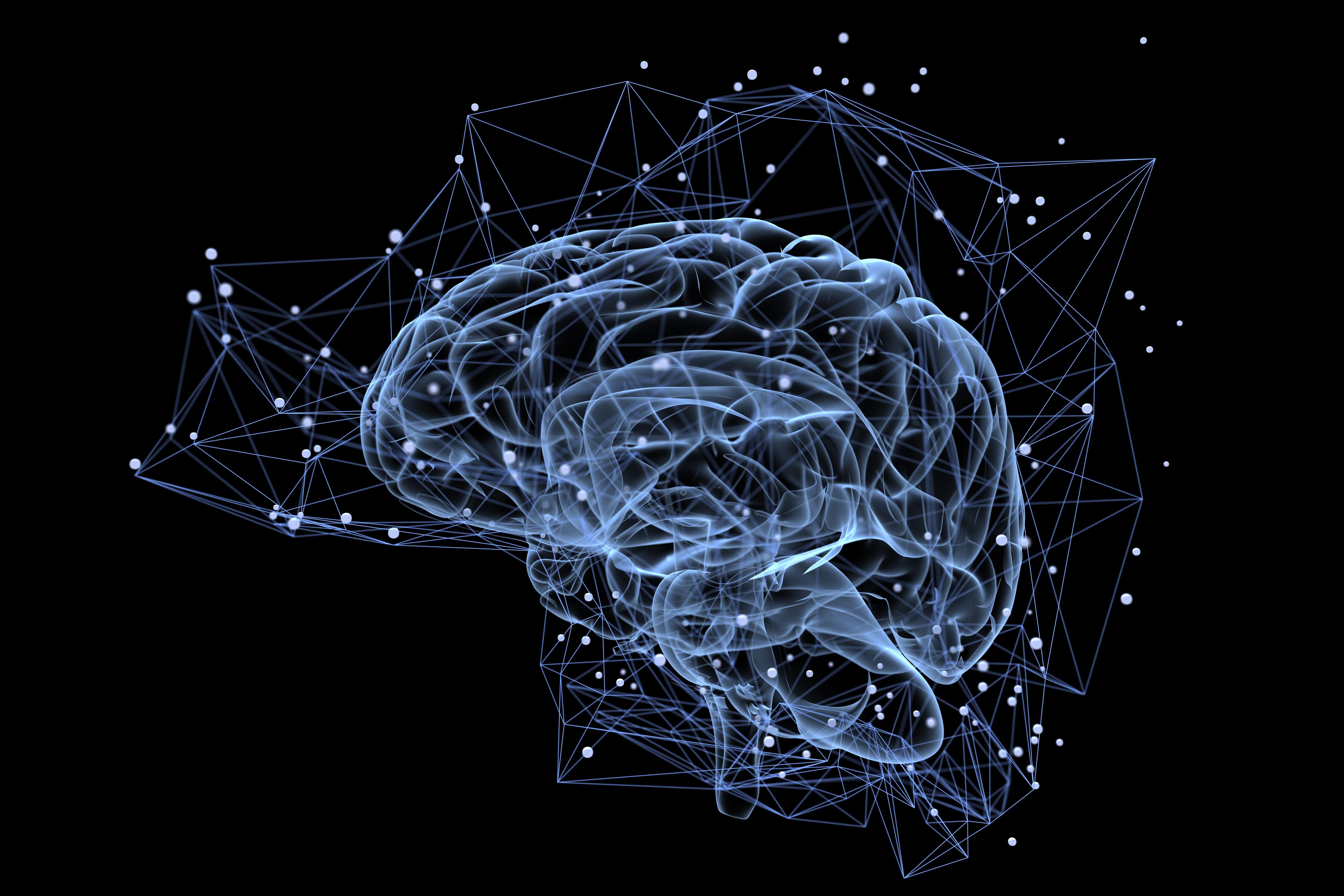
Modern neuroscience has established an extensive relationship between physical brain activity and conscious experience.
Injuries to particular brain regions can alter language, memory, personality, perception, and decision-making. General anesthesia can profoundly suppress conscious responsiveness. Electrical stimulation and pharmacological interventions can modify aspects of subjective experience.
These findings establish that ordinary human consciousness depends intimately upon the functioning of the physical brain.
Any alternative theory of consciousness must account for these observations.
Nevertheless, considerable disagreement remains over which neurological processes are necessary and sufficient for particular conscious experiences and how subjective experience should ultimately be explained.
Competing Scientific Theories
In a 2022 review published in Nature Reviews Neuroscience, neuroscientist Anil Seth and philosopher Tim Bayne examined several prominent approaches to consciousness research.
These include higher-order theories, global workspace theories, recurrent and predictive processing approaches, and integrated information theory.
Although these frameworks differ considerably, they attempt to explain how particular forms of conscious experience relate to information processing and neurological organization.
Their existence demonstrates that consciousness research is not a single, completed body of knowledge. It is an active field in which competing theoretical explanations continue to develop.
Source: Seth and Bayne, Theories of Consciousness, Nature Reviews Neuroscience, 2022.
When Two Major Theories Were Tested Against Each Other
On April 30, 2025, Nature published a major investigation comparing predictions from Integrated Information Theory, commonly known as IIT, and Global Neuronal Workspace Theory, or GNWT.
The international collaboration involved 256 participants and employed three methods of recording brain activity: functional magnetic resonance imaging, magnetoencephalography, and intracranial electroencephalography.
Researchers representing competing theories agreed in advance on experimental predictions and criteria for assessing the results. Independent research teams then conducted the investigation.
The findings supported certain predictions while challenging important elements of both theories.
For IIT, researchers did not observe a predicted pattern of sustained synchronization within posterior cortical regions. For GNWT, results challenged predictions concerning neural activation at stimulus termination and the representation of some conscious information within prefrontal regions.
Neither theory emerged with all its tested predictions confirmed.
The significance of this investigation is not that it provides evidence of reincarnation or nonmaterial consciousness. It demonstrates that prominent neuroscientific theories remain open to empirical correction.
It also provides a methodological example that researchers investigating extraordinary conscious experiences could adopt: competing explanations should generate predictions before observations are collected.
Source: COGITATE Consortium, Adversarial Testing of Global Neuronal Workspace and Integrated Information Theories of Consciousness, Nature, 2025.
The Hard Problem of Consciousness
In 1995, philosopher David Chalmers distinguished between explaining the functions associated with consciousness and explaining why those functions are accompanied by subjective experience.
Researchers can investigate how the brain distinguishes colors, retrieves memories, responds to pain, and directs attention. But why should these processes be accompanied by an internal experience at all?
Consider the experience of seeing red. Science can investigate the physical properties of light, the biological mechanisms of the eye, and the neurological activity associated with visual perception.
Yet the scientific description of those processes is not itself the experience of seeing red.
Similarly, describing the neurological activity associated with pain does not communicate the personal experience of suffering.
Chalmers described this explanatory challenge as the hard problem of consciousness.
Not all philosophers accept that it constitutes a fundamentally separate problem. Some argue that a sufficiently complete explanation of cognitive and neurological processes would resolve the apparent distinction. Others maintain that physical descriptions leave something essential unexplained.
The dispute remains philosophical as well as scientific.
Source: David Chalmers, Facing Up to the Problem of Consciousness, Journal of Consciousness Studies, 1995.
IV. The Prison of the Measuring Instrument
The fundamental distinction examined in this report concerns the difference between the limitations of an investigative method and the limitations of existence itself.
Imagine a civilization that has lived for thousands of years inside an enclosed environment. Its inhabitants develop increasingly sophisticated instruments capable of measuring the air, the walls, the movement of light, and everything else accessible within their surroundings.
Their scientific achievements are genuine. Their measurements are accurate, and their discoveries substantially improve their understanding of their environment.
However, a philosophical problem arises if they conclude that their accessible environment represents the entirety of existence simply because their instruments have never detected anything beyond it.
Their measurements may be reliable within the boundaries of their environment. The assumption that nothing exists beyond those boundaries is a separate proposition.
This is the central metaphor of the prison of the measuring instrument.
Science Is a Method, Not a Material Object
Scientific inquiry is not itself a physical object. It is a systematic methodology that uses observation, reasoning, measurement, experimentation, and the evaluation of competing explanations.
Its extraordinary effectiveness arises partly from its insistence that empirical claims must be accountable to observable evidence.
However, the question becomes more complicated when the proposed subject of investigation is fundamentally nonphysical.
If a phenomenon is defined as existing independently of matter and producing no observable physical consequences whatsoever, there would be no empirical procedure capable of distinguishing its existence from its nonexistence.
If it interacts with the physical world, however, the consequences of that interaction could potentially be investigated.
This distinction is essential. Science need not directly observe an entity to investigate its existence. It frequently infers the presence of things through their measurable effects.
The difficulty arises when a proposition produces no testable consequences through which it can be distinguished from competing propositions.
Methodological Naturalism Versus Metaphysical Materialism
Methodological naturalism and metaphysical materialism are related but distinct concepts.
Methodological naturalism refers to an investigative practice that seeks explanations capable of empirical examination.
Metaphysical materialism, or physicalism in its broader philosophical forms, concerns what reality fundamentally consists of.
A scientist may employ empirical methods without necessarily claiming that those methods exhaust every possible form of existence.
Conversely, a philosophical belief in nonmaterial consciousness does not remove the obligation to provide evidence when making claims about observable events.
The success of empirical investigation establishes the extraordinary usefulness of its methodology. It does not automatically resolve every philosophical question concerning the ultimate nature of reality.
The distinction operates in both directions. The inability to establish the existence of an independent consciousness does not establish its impossibility. The inability to establish its impossibility does not establish its existence.
The Problem of Investigating the Observer
Consciousness presents an additional philosophical difficulty because it is not merely one phenomenon among many. It is also the condition through which human beings encounter every phenomenon they investigate.
Every scientific observation, interpretation, mathematical equation, and experimental conclusion becomes available to a human investigator through experience.
Science investigates consciousness through instruments, observations, and reports that are themselves interpreted by conscious observers.
This does not make the scientific investigation of consciousness impossible. It does, however, highlight the distinction between third-person descriptions of physical processes and first-person experiences.
The unresolved question is whether these perspectives can ultimately be explained through a single physical framework or whether a more fundamental account of consciousness will be required.
Philosophical references:
Stanford Encyclopedia of Philosophy, Consciousness.
Stanford Encyclopedia of Philosophy, Dualism.
Stanford Encyclopedia of Philosophy, Physicalism.
V. Does the Brain Produce or Facilitate Consciousness?
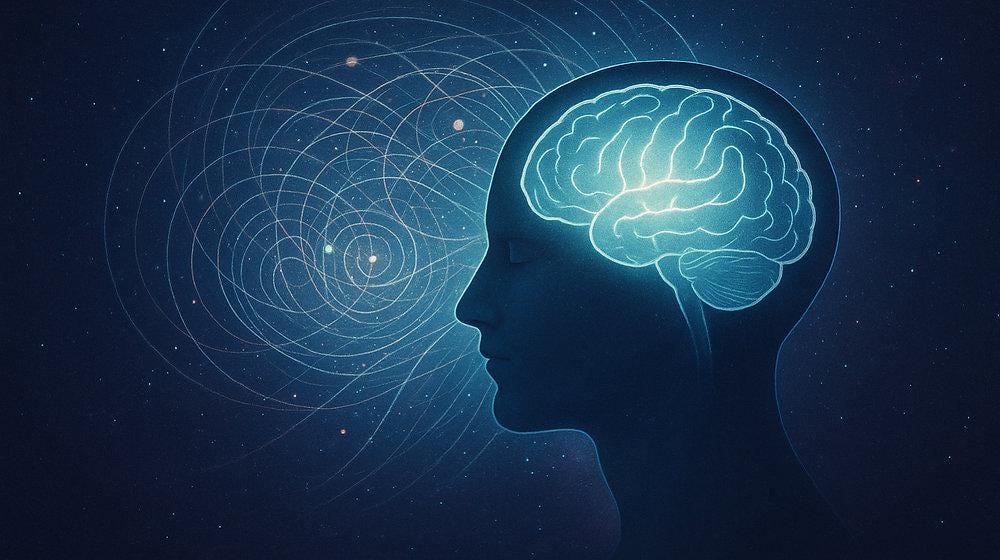
Consider someone examining a television without knowing that broadcasting technology exists.
The investigator discovers that damaging the screen distorts the image, damaging the speaker interrupts the sound, and disconnecting the electrical supply eliminates the entire experience.
These findings correctly establish that the television is necessary for displaying the broadcast through that particular instrument.
However, they do not establish that the television created the people, voices, or events appearing on its screen. Those may originate elsewhere.
This analogy illustrates an alternative interpretation of the relationship between the physical brain and conscious experience.
The Production Model
Under a brain-based production model, subjective consciousness arises from biological processes.
The extensive evidence connecting neurological activity with perception, memory, personality, and consciousness provides substantial support for investigating experience through this framework.
From this perspective, there is no established need to introduce an independently existing consciousness to explain ordinary human cognitive functioning.
The permanent destruction of the processes necessary for consciousness would, under conventional production accounts, terminate the conscious experience associated with that organism.
The Interface Model
Under an interface model, consciousness exists independently of the physical brain, or represents a fundamental aspect of reality that the brain organizes into individual experience.
The brain would function as a receiver, filter, translator, or biological interface.
Changes to the physical brain could therefore affect conscious expression without necessarily establishing that the brain is the ultimate origin of consciousness.
However, the analogy with broadcasting does not constitute evidence that consciousness operates through such a mechanism.
Broadcast signals can be independently detected, measured, transmitted, and experimentally manipulated. An equivalent independently established mechanism has not been demonstrated for consciousness existing outside the brain.
The interface model remains a philosophical hypothesis rather than an empirically established alternative to contemporary neuroscience.
Why the Two Models Do Not Have Equal Evidentiary Support
The extensive evidence linking ordinary consciousness to physical brain function gives brain-based explanations a substantial empirical advantage.
The interface hypothesis is logically conceivable, but its ability to accommodate neurological findings after they have been observed does not establish that it is correct.
To become scientifically competitive, an interface model would need to generate distinctive predictions that differ from those produced by conventional neurological explanations.
It would need to specify what observations would support it, what observations would count against it, and how its proposed mechanism could be distinguished from established biological processes.
A hypothesis capable of explaining every conceivable outcome after the event risks becoming impossible to test.
The Debate Extends Beyond Two Models
Philosophy of mind encompasses positions other than conventional physicalism and a separate-consciousness receiver model.
Dualism distinguishes mental and physical reality in different ways. Idealism treats consciousness or mind as fundamental. Panpsychism explores whether experiential properties are basic features of reality. Neutral monism investigates whether the mental and physical emerge from a more fundamental underlying reality.
These positions differ in their assumptions, explanatory ambitions, and unresolved problems. None should be treated as interchangeable with reincarnation.
Even if consciousness were established as fundamental, it would not automatically follow that individual personalities survive death or that personal memories transfer between biological organisms.
The fundamental nature of consciousness and the continuity of individual identity are related but separate questions.
VI. Consciousness, Memory, and the Possibility of Reincarnation
The University of Virginia investigation returns the discussion to an observable phenomenon: children reporting memories associated with another identity, followed in many cases by the gradual disappearance of those memories.
Under conventional psychological explanations, this pattern might reflect childhood imagination, language development, memory reconstruction, changes in social reinforcement, or the development of autobiographical identity.
Under the consciousness-interface hypothesis, an alternative possibility arises. The developing brain might increasingly specialize in the demands of its present physical environment, reducing access to information unrelated to its current identity.
At present, the disappearance of reported memories does not distinguish between these explanations.
Nevertheless, it introduces a useful philosophical distinction between memory and consciousness.
Are We the Sum of Our Memories?
Most adults cannot consciously recall every experience of their early childhood. Despite extensive gaps in memory, they generally retain a sense of continuity between their childhood and adult identities.
Memory is central to personal identity, but complete autobiographical recollection is not necessary for an individual to experience continuity within an ordinary lifetime.
Whether that observation has implications for consciousness beyond physical death remains uncertain.
The existence of memory loss within one lifetime does not demonstrate that a consciousness could continue across multiple lifetimes. It does, however, illustrate why consciousness and the contents available to it should not automatically be treated as identical concepts.
Investigating the Transfer of Information
If consciousness survives physical death and influences another biological organism, one potential area of investigation concerns the transfer of information.
Suppose a child provides highly specific information about a deceased individual. Suppose those statements are documented before a matching individual is identified, and ordinary information channels are systematically examined.
The relevant question would not initially be whether reincarnation has occurred. It would be how the information became available to the child.
Even an apparently successful case would require independent replication, careful statistical evaluation, and investigation of alternative explanations.
The observation of information transfer through an unknown mechanism would not uniquely establish reincarnation. Other explanations, including mechanisms not yet understood, would remain possible.
Nevertheless, if reproducible evidence demonstrated the transfer of specific information under conditions that excluded established pathways, existing theories would require examination.
Science would not necessarily be measuring consciousness directly. It would be investigating observable consequences attributed to a proposed consciousness-related mechanism.
Near-Death Experiences and the Timing Problem
Near-death experiences represent another related but distinct field of investigation.
Individuals who survive life-threatening medical emergencies sometimes report experiences involving separation from the body, unusual perceptions, encounters, profound emotional states, and altered perceptions of time.
Such experiences can have considerable psychological and philosophical significance for those reporting them.
However, a major scientific challenge concerns when these experiences occurred relative to changes in brain function.
The 2023 AWARE-II study investigated experiences associated with cardiac arrest and resuscitation. Its design included physiological monitoring and attempts to assess whether survivors could identify information presented during resuscitation.
The research illustrates both the possibility and difficulty of investigating experiences associated with severely disrupted physiological functioning.
Cardiac arrest is not identical to irreversible brain death. Brain activity may persist, change, or recover during resuscitation, and retrospective reports cannot automatically establish the exact timing of an experience.
Consequently, such experiences should not be treated as conclusive evidence that consciousness survives irreversible biological death.
Their importance lies in documenting experiences and identifying questions that more refined physiological monitoring and prospective research may help address.
Source: Parnia and colleagues, AWAreness During REsuscitation — II, Resuscitation, 2023.

VII. The Red Blood Consciousness Concept
Editorial and philosophical analysis. The following framework represents the independent perspective of Red Blood Journal rather than conclusions established by the scientific studies discussed above.
The preceding investigation establishes several distinct points. Human consciousness is intimately connected with brain functioning. Unusual experiences associated with purported past-life memories have been documented. Neuroscientific explanations continue to develop, while the ultimate metaphysical nature of consciousness remains disputed.
The Red Blood Consciousness Concept begins where these questions extend beyond the presently established evidence.
Its central proposition is that physical existence may represent an environment through which consciousness acquires experiential understanding, rather than necessarily representing the entirety of consciousness itself.
This framework is presented for examination, not as a doctrine requiring acceptance.
Physical Existence as an Educational Environment
Human beings distinguish between possessing information and understanding something through experience.
A person may study the chemistry of an orange, memorize descriptions of its flavor, and understand the neurological mechanisms involved in taste. Yet none of those descriptions is identical to personally tasting an orange.
Similarly, an individual may possess extensive intellectual knowledge about love, forgiveness, courage, fear, or suffering without having developed an experiential understanding of those conditions.
The Red Blood Consciousness Concept proposes that this distinction may be central to the purpose of physical existence.
If consciousness exists independently of the physical body, perhaps embodiment provides access to experiences that cannot be acquired through abstract information alone.
Under this interpretation, life becomes an educational environment in which consciousness encounters circumstances capable of transforming knowledge into understanding.
This does not establish that suffering is deliberately assigned, that victims deserve their circumstances, or that injustice represents a necessary spiritual arrangement.
The possibility of learning from suffering must never become a justification for inflicting suffering.
The Difference Between Our Identity and Our Existence
Human beings commonly identify themselves through names, nationalities, occupations, physical appearances, religions, relationships, and social achievements.
These characteristics influence individual experience, but they also change.
A person can change occupations, religious beliefs, political perspectives, physical appearance, and nationality while maintaining a sense of being the individual experiencing those transformations.
The Red Blood Consciousness Concept asks whether physical and social identity might represent the circumstances through which consciousness operates rather than the entirety of what consciousness is.
If that possibility is correct, the biological organism would represent an individual manifestation through which consciousness participates in physical existence.
The dissolution of that manifestation would not necessarily establish the destruction of its underlying source.
This remains a metaphysical interpretation, not a conclusion demonstrated through current neuroscience.
Reincarnation and the Meaning of Spiritual Completion
Different religious and philosophical traditions have developed interpretations of reincarnation, rebirth, and liberation from repeated existence.
Hindu traditions often associate liberation with Moksha. Buddhist traditions associate Nirvana with liberation from suffering and the conditions sustaining rebirth, without generally accepting an eternal, unchanging personal soul. Jain traditions describe liberation through freedom from accumulated karma.
These teachings cannot be reduced to one universal doctrine.
From the Red Blood perspective, however, their underlying philosophical questions invite examination of whether physical existence serves a developmental purpose and whether such development could eventually reach completion.
If consciousness experiences multiple lifetimes, perhaps the purpose of returning would not simply be to repeat physical existence but to acquire understanding through different circumstances.
Under this interpretation, a final incarnation might represent the completion of a particular developmental journey.
However, outward personal circumstances cannot establish whether such completion has occurred.
Youthful appearance, childlessness, romantic disappointment, material wealth, poverty, or social isolation do not reliably demonstrate spiritual maturity.
A person can live within a family and develop profound compassion. Another may live alone and demonstrate comparable understanding. Neither circumstance establishes spiritual superiority.
If spiritual completion exists, its more meaningful characteristics might involve the ability to love without possessing, forgive without excusing injustice, recognize mistakes without defensiveness, and appreciate existence without demanding control over it.
These qualities remain ethically valuable regardless of whether reincarnation is ultimately established.
Love and the Problem of Attachment
Human beings frequently describe emotional dependency, possession, security, and recognition using the language of love.
Yet when the object of that attachment ceases to satisfy expectations, the emotional condition may transform into jealousy, resentment, hostility, or hatred.
The Red Blood Consciousness Concept distinguishes between loving another individual and requiring that individual to provide the foundation of one’s own emotional existence.
Unconditional compassion does not require abandoning personal boundaries, remaining in harmful relationships, or accepting injustice.
It means recognizing that another individual’s existence possesses value beyond the services, affection, recognition, or security that individual provides.
Physical relationships may therefore become opportunities to develop understanding rather than mechanisms for acquiring ownership over another person.
Under this framework, love represents a capacity of consciousness rather than exclusively a transaction between individuals.
The Ocean and the Wave
Imagine an ocean from which countless waves temporarily emerge. Each wave develops a recognizable shape, encounters different conditions, and eventually loses its individual form.
From the perspective of the wave, its particular shape might appear to represent the entirety of its existence.
It might compare its size with other waves, fear the disappearance of its recognizable identity, or regard the surrounding waves as fundamentally separate from itself.
Yet the water composing the wave has never been independent of the ocean.
The emergence of the wave does not create the water, and the disappearance of the wave does not destroy it. What changes is the form through which the underlying substance becomes recognizable.
The Red Blood Consciousness Concept employs this metaphor to explore the possibility that individual consciousness represents a temporary manifestation of a more fundamental reality.
The analogy does not establish whether personal identity continues after death. Nor does it demonstrate whether memories or experiences remain individually accessible beyond the physical organism.
It does, however, illustrate the distinction between the disappearance of a recognizable form and the possible continuity of its underlying source.
The ocean represents a philosophical possibility, not an empirically measured entity.
Ten Foundational Propositions
The Red Blood Consciousness Concept can be summarized through ten propositions for continued philosophical examination.
1. Consciousness as the starting point. All human experiences and observations become accessible through consciousness, making its fundamental nature a central subject of inquiry.
2. The instrument and the source. An instrument participating in an experience is not necessarily identical to the ultimate source of that experience.
3. The boundaries of measurement. The limits of an investigative methodology should not automatically be confused with the limits of existence.
4. Physical existence as experience. Embodiment may provide opportunities to transform abstract knowledge into experiential understanding.
5. Identity as manifestation. Physical and social identities may represent temporary circumstances through which consciousness participates in existence.
6. Memory and consciousness. The contents available to awareness should be distinguished conceptually from the awareness experiencing those contents.
7. Love without ownership. Compassion becomes more meaningful when it is not exclusively dependent upon possession, repayment, or recognition.
8. Unity without uniformity. Different identities and experiences need not prevent recognition of interdependence or the possibility of a deeper underlying unity.
9. Understanding rather than obedience. Neither scientific nor spiritual authorities should replace personal inquiry, critical examination, and intellectual honesty.
10. Development rather than accumulation. The value of physical existence may extend beyond material achievement to the understanding and compassion developed through experience.
These propositions constitute a philosophical framework. They should not be presented as experimentally established laws of consciousness.
VIII. What We Know, What Remains Unresolved, and What Should Be Investigated
The available evidence supports several conclusions with differing degrees of confidence.
What Is Well Established
The existence of subjective experience is the starting point of consciousness research. Ordinary human perception, memory, cognition, and conscious responsiveness are closely connected with the physical functioning of the brain.
Psychological research also establishes that human recollection can be influenced by suggestion, source confusion, reconstruction, and social circumstances.
These findings must form part of any serious investigation into consciousness and purported memories of previous lives.
What Has Been Documented but Remains Disputed
Researchers have documented children reporting apparent memories associated with deceased individuals. Some published investigations describe correspondences between children’s statements and information about identifiable persons.
The accuracy, independence, statistical significance, and ultimate explanation of these correspondences vary across cases and remain subjects requiring critical examination.
The existence of the reports is distinct from the question of their origin.
What Remains Unresolved
There is no universally accepted explanation of why particular physical processes are accompanied by subjective experience.
Whether consciousness can exist independently of matter remains a philosophical and scientific question insofar as competing accounts generate observable predictions.
Whether individual consciousness survives irreversible biological death, whether personal memories can transfer between organisms, and whether reincarnation occurs remain unestablished propositions.
The absence of conclusive evidence does not independently establish their impossibility. Nor does it establish that these propositions are equally probable as competing explanations.
What Stronger Research Would Require
Future research into purported past-life memories would benefit from prospective registration of cases, early documentation of spontaneous statements, independent verification, and standardized interviewing practices.
Investigators should record inaccurate statements alongside accurate ones, assess information leakage, and evaluate how frequently comparable statements might match unrelated individuals by chance.
Where appropriate, research should incorporate comparison groups, repeated assessments, blinded evaluations, transparent statistical methods, and independent replication.
Researchers representing different explanatory frameworks could collaborate in developing predictions before the investigation begins, following the adversarial methodology employed in the 2025 neuroscience study.
The objective should not be to establish a preferred conclusion. It should be to develop procedures through which competing explanations can be meaningfully distinguished.
The Ethical Responsibility of Investigators
Children reporting unusual experiences should not be treated merely as instruments through which adults attempt to establish their spiritual or scientific beliefs.
Their psychological well-being, privacy, and emotional development must remain central.
Parents should avoid leading questions, coercive religious interpretations, unnecessary public exposure, and attempts to impose an alternative identity upon a child.
Researchers should neither reinforce an unverified interpretation nor dismiss an experience in a manner that causes avoidable distress.
The investigation of consciousness must remain accountable to the conscious individuals participating in it.
Where the Evidence Leaves Us
The existing research does not establish reincarnation. It also does not provide a universally accepted resolution of the metaphysical relationship between consciousness and matter.
Neuroscience offers extensive evidence regarding the dependence of ordinary conscious functioning upon the brain. Psychology offers established mechanisms through which unusual memories may arise or develop. Philosophy identifies unresolved questions concerning the nature of subjective experience and the limits of empirical explanation.
The responsible conclusion is not that one discipline must surrender its authority to another.
It is that claims should be evaluated according to the kind of evidence they require, the strength of the evidence available, and the limitations of the methods through which that evidence was obtained.
The investigation remains open.
🩸 Red Blood Perspective — When the Instrument Becomes the Authority
Humanity has developed extraordinary tools for investigating the material universe. Yet a subtle intellectual danger arises whenever the achievements of those tools are transformed into declarations about the entirety of existence.
The Red Blood Consciousness Concept challenges the assumption that physical reality necessarily represents everything that exists.
Our objection is not to science. It is to the philosophical extension of scientific conclusions beyond what their evidence and methodology can establish.
A weighing scale cannot directly measure temperature. A microphone cannot detect visible light. A telescope cannot reveal the subjective experience of a human being simply by increasing its magnification.
Each instrument has a domain of usefulness, determined by the relationship between its design and the properties it investigates.
If consciousness is fundamentally nonmaterial, the possibility exists that material instruments can investigate its observable manifestations without directly accessing its ultimate nature.
That possibility must not be confused with proof. But neither should the absence of direct measurement be transformed into an unquestionable declaration of nonexistence.
The same criticism applies to spiritual institutions. Claiming to possess knowledge of an invisible reality does not automatically establish that knowledge. A spiritual explanation should not become immune to questioning merely because it concerns matters beyond conventional measurement.
Humanity has repeatedly surrendered its intellectual independence to authorities claiming to possess complete explanations of existence.
Religious authorities have sometimes claimed exclusive access to spiritual truth. Political authorities have claimed exclusive authority over social truth. Scientific findings can also be misappropriated to support philosophical conclusions extending beyond the evidence.
The Red Blood Consciousness Concept rejects the conversion of any investigative framework into a system of unquestionable obedience.
Perhaps the most important question is not whether humanity can prove that consciousness survives physical death, but whether humanity possesses the humility to acknowledge how much remains unknown about the consciousness through which it investigates existence.
If physical life represents a temporary educational environment, the implications for human priorities would be considerable.
The accumulation of wealth, political influence, social superiority, and material possessions would become temporary circumstances rather than ultimate measures of achievement.
The more meaningful questions would concern what consciousness has understood through its experiences, how it has responded to suffering, and what it has contributed to the existence of others.
These questions remain relevant even if consciousness ultimately proves inseparable from matter.
Science should not be asked to surrender its standards of evidence, and philosophy should not be asked to surrender its freedom to investigate questions beyond those standards.
The boundaries of our instruments are not necessarily the boundaries of existence.
🌊❤️✨ Ocean of Love and Positivity — Beyond the Temporary Wave
Imagine a wave traveling across an ocean. Throughout its journey, it encounters other waves, experiences turbulent conditions, rises, falls, and eventually approaches the disappearance of its recognizable form.
The wave may spend much of its existence comparing itself with others. It may fear becoming smaller, resent those that rise higher, or attempt to establish its superiority through the temporary characteristics of its shape.
Yet the very substance through which it exists is shared with every other wave.
Perhaps humanity’s greatest misunderstanding is not simply its uncertainty about what happens after death, but its conviction that the temporary boundaries of individual identity establish absolute separation from everything else.
Even without accepting reincarnation or universal consciousness, human beings share vulnerability, biological interdependence, and the capacity to experience suffering and compassion.
Recognizing that relationship does not require the destruction of individuality. Different waves can maintain different forms while belonging to the same ocean.
Under the Red Blood Consciousness Concept, the purpose of spiritual exploration is not to escape physical existence. It is to appreciate existence more deeply, understand the consequences of our actions, and develop the capacity to love without attempting to possess.
If this is our first incarnation, it presents an opportunity to learn. If it is one of many, it presents an opportunity to develop. If it is our final incarnation, it presents an opportunity to express whatever understanding we have acquired.
And if reincarnation does not exist, the value of compassion, understanding, and the meaningful use of our present existence becomes no less significant.
We may never completely understand the nature of consciousness through the instruments available to us today.
But we can examine the consciousness through which we experience every moment of our lives. We can observe our fears, question our attachments, reconsider our prejudices, acknowledge our mistakes, and recognize the suffering of others.
Perhaps the greatest discovery is not establishing how many times we have lived, but understanding what it means to live.
Perhaps the ocean was never something the wave needed to discover beyond itself.
Perhaps the separation it feared was never as absolute as it imagined.
🩸🌊❤️✨ — Ocean of Love and Positivity.
References and Primary Sources
1. Pehlivanova, M., Cozzolino, P. J., and Tucker, J. B. (2024). Impact of children’s purported past-life memories: a follow-up investigation of American cases. Frontiers in Psychology, 15.
https://doi.org/10.3389/fpsyg.2024.1473340
2. Tucker, J. B. (2008). Children’s reports of past-life memories: a review. Explore, 4(4), 244–248.
https://pubmed.ncbi.nlm.nih.gov/18602617/
3. Academic Studies on Claimed Past-Life Memories: A Scoping Review. Explore.
https://doi.org/10.1016/j.explore.2021.05.006
4. Johnson, M. K., Hashtroudi, S., and Lindsay, D. S. (1993). Source monitoring. Psychological Bulletin, 114(1), 3–28.
https://pubmed.ncbi.nlm.nih.gov/8346328/
5. Bruck, M., and Ceci, S. J. (1999). The suggestibility of children’s memory. Annual Review of Psychology, 50, 419–439.
https://doi.org/10.1146/annurev.psych.50.1.419
6. Seth, A. K., and Bayne, T. (2022). Theories of consciousness. Nature Reviews Neuroscience, 23, 439–452.
https://doi.org/10.1038/s41583-022-00587-4
7. COGITATE Consortium (2025). Adversarial testing of global neuronal workspace and integrated information theories of consciousness. Nature, 642, 133–142.
https://doi.org/10.1038/s41586-025-08888-1
8. Chalmers, D. J. (1995). Facing up to the problem of consciousness. Journal of Consciousness Studies, 2(3), 200–219.
https://consc.net/consciousness/
9. Parnia, S., and colleagues (2023). AWAreness during REsuscitation — II: A multi-center study of consciousness and awareness in cardiac arrest. Resuscitation.
https://doi.org/10.1016/j.resuscitation.2023.109903
10. Stanford Encyclopedia of Philosophy. Consciousness, Dualism, and Physicalism.
https://plato.stanford.edu/entries/consciousness/
https://plato.stanford.edu/entries/dualism/
https://plato.stanford.edu/entries/physicalism/
11. University of Virginia School of Medicine. Division of Perceptual Studies.
https://med.virginia.edu/perceptual-studies/
Editorial Transparency and Methodology
This report represents a research-based investigative analysis and philosophical examination drawing upon published scientific literature and philosophical scholarship.
Red Blood Journal has not conducted original interviews with the researchers or independently examined the individual case files underlying the University of Virginia investigation. The published findings are reported with their methodological limitations.
The author advances the Red Blood Consciousness Concept as an independent philosophical framework. That editorial interest is disclosed to distinguish the publication’s interpretation from the conclusions of the scientific sources.
The report does not claim that consciousness independently surviving physical death, reincarnation, or universal consciousness has been scientifically established.
The philosophical framework remains open to examination, criticism, revision, and competing interpretations.
Video Companion Notice
The accompanying Red Blood Journal video provides an overview of this investigation rather than a substitute for the complete written report.
Readers and viewers are encouraged to examine the original scientific publications, consider competing explanations, and independently evaluate the philosophical questions presented.
Red Blood Journal
Independent Inquiry • Consciousness • Understanding • Love

https://redbloodjournal.com
📔
Untitled notebook
Nov 24, 2026
This investigative report examines the complex relationship between matter and subjective experience, contrasting modern neuroscience and psychology with philosophical theories of consciousness and reincarnation. It analyzes a University of Virginia follow-up study on adults who reported childhood past-life memories, noting that while psychological factors like source monitoring and suggestibility offer alternative explanations, the ultimate nature of consciousness remains unresolved. The text highlights the limitations of empirical measurement tools when investigating nonphysical phenomena, proposing that scientific methodology should not be automatically equated with the absolute boundaries of existence. Additionally, it outlines competing neuroscientific frameworks and adversarial testing models while acknowledging that survival after death and reincarnation remain unproven hypotheses. Finally, it introduces the Red Blood Consciousness Concept, a philosophical perspective framing physical life as a temporary educational environment where consciousness develops through experience and compassion.