


🩸 🇮🇷 🏫 💔 ⚖️ ⏳ 🎯 🌊❤️✨ — THE MINAB SCHOOL TRAGEDY: The Children, the Missing Minutes, and the Questions of Accountability
RED BLOOD JOURNAL | INVESTIGATIVE REPORT | OCTOBER 25, 2026
Classification: Civilian Protection / Military Accountability / Intelligence Failures / Human Rights / Geopolitics
THE CENTRAL QUESTION
WHAT HAPPENS WHEN THE WORLD FOCUSES ON WHO FIRED THE MISSILE, BUT FAILS TO ASK WHO KNEW THE CHILDREN WERE IN DANGER, WHO COULD HAVE PROTECTED THEM, AND WHY THE FULL TRUTH REMAINS OUT OF REACH?
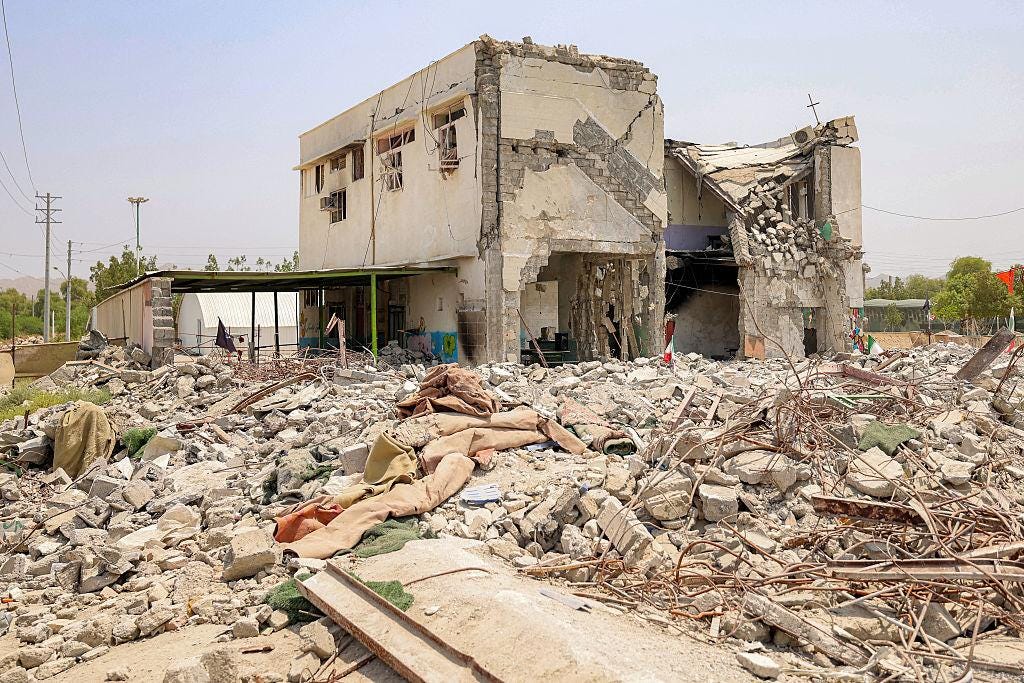
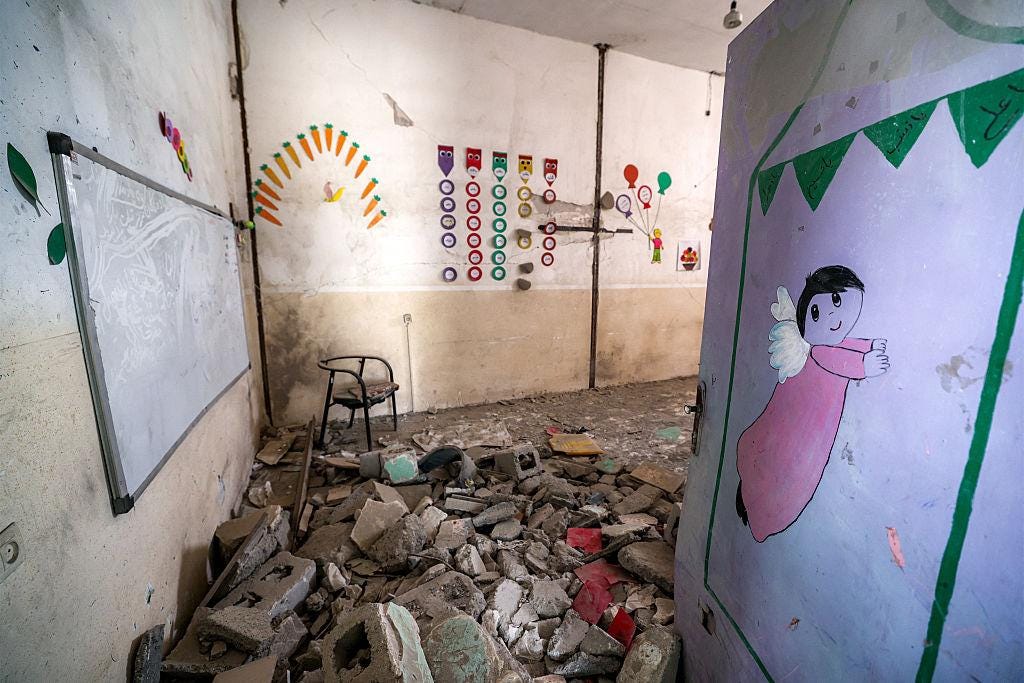
On February 28, 2026, a devastating military strike hit the Shajareh Tayyebeh elementary school in Minab, in Iran’s southern Hormozgan province. Children who had begun their ordinary school day found themselves caught in the opening hours of a new war involving the United States, Israel, and Iran. Classrooms were destroyed, families were shattered, and a local tragedy became an international question of military responsibility, civilian protection, and political accountability.
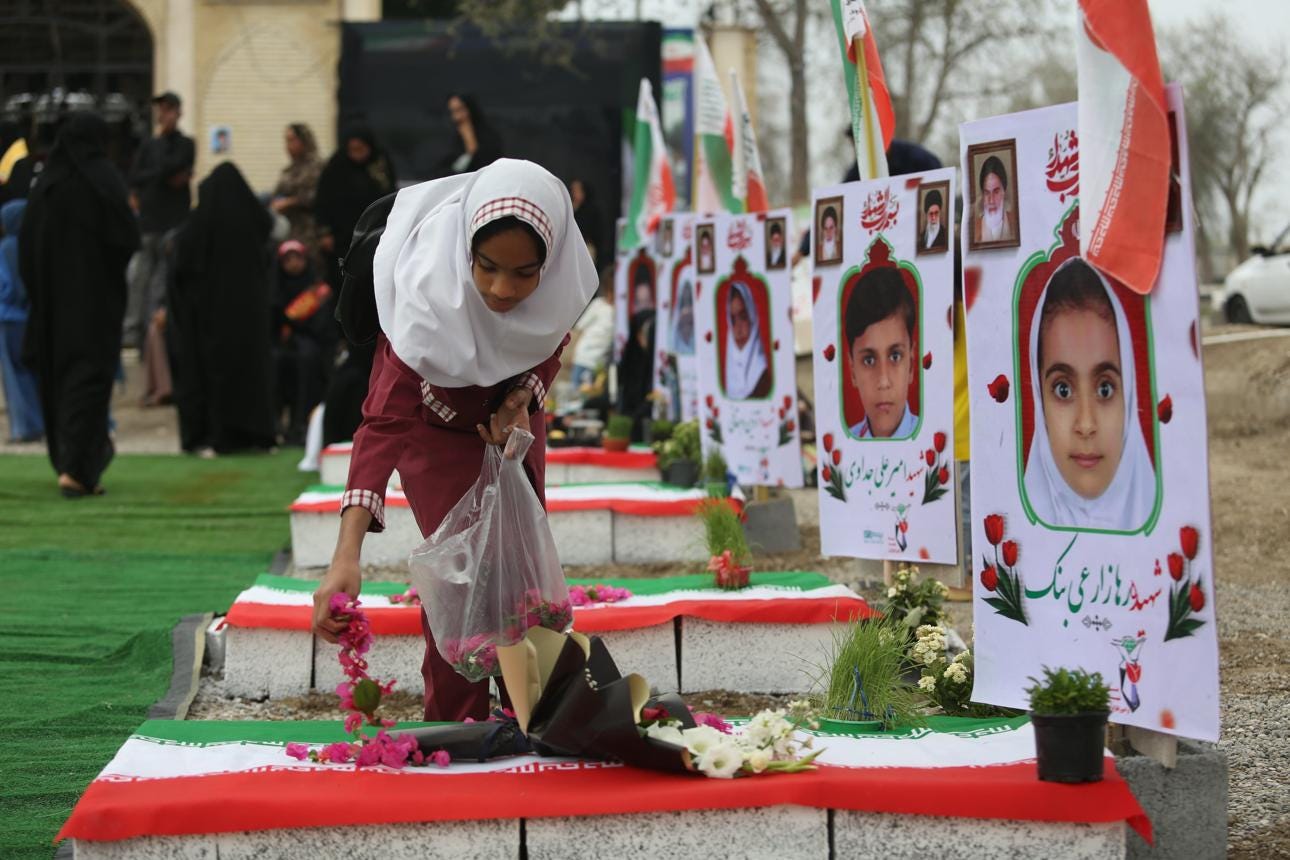
The Associated Press subsequently reconstructed an attack that killed an estimated 157 to 168 people, including at least 123 children aged 13 or younger. Forensic Architecture separately documented more than 121 schoolchildren killed, along with 26 teachers. The exact toll has varied across investigations, but the scale of the civilian catastrophe is beyond serious dispute.
The public argument quickly developed along familiar political lines. Iranian officials condemned the attackers. American authorities faced mounting questions about targeting intelligence and the rules of war. Human rights organizations demanded investigations, while bereaved families were left facing a much simpler and more painful reality: their children had gone to school and never returned.
But this case contains another question, raised prominently in the Persian-language commentary examined for this report. If warnings existed before the attack, why were children still inside the school?
That question deserves examination. It does not, however, establish that Iranian officials deliberately sacrificed children, any more than the school’s proximity to a military installation excuses the military force that struck it. Both possibilities of preventable failure must be examined through evidence rather than political loyalty.
I. THE SCHOOL BESIDE THE MILITARY COMPOUND
The location of Shajareh Tayyebeh is central to the investigation. The school stood near a compound associated with the Islamic Revolutionary Guard Corps, raising questions about how targeting intelligence classified the buildings and whether military planners accurately understood their civilian use.
Historical satellite imagery reviewed by Amnesty International, Human Rights Watch, and other investigators established that the school had been physically separated from the nearby military complex for years. Al Jazeera’s examination of imagery dating back to 2013 showed the site’s gradual separation and conversion to civilian educational use.
That distinction matters. A building does not become a legitimate military target simply because military facilities are nearby. Under international humanitarian law, attackers must distinguish civilian objects from military objectives, verify targets using feasible measures, assess expected civilian harm, and take precautions to minimize that harm.
If planners relied on outdated intelligence that failed to identify an active elementary school, the questions extend beyond the person who authorized a missile launch. They reach the intelligence collectors, analysts, targeting officers, verification procedures, commanders, and institutional systems that converted information into lethal decisions.
Reports published in March indicated that American investigators considered U.S. forces likely responsible and were examining whether obsolete targeting data contributed to the strike. Those preliminary findings were not equivalent to an official final determination, but they placed American military procedures at the center of the inquiry.
The first failure requiring investigation, therefore, is not a mysterious political conspiracy. It is the documented destruction of a school and the possibility that the attacking military failed to recognize what it was targeting.
II. THE MISSING MINUTES: WHAT HAPPENED BEFORE THE ATTACK?
The uploaded Persian transcript advances a particularly disturbing argument: Iranian authorities allegedly had advance warning of attacks in Minab but failed to close schools promptly. Its narrator cites testimony attributed to a person familiar with victims’ families and suggests that school officials and government authorities had opportunities to remove the children from danger.
The commentary also presents a proposed sequence involving an attack beginning at approximately 9:40 a.m., a general closure announcement around 10:45 a.m., and a school strike at approximately 11:30 a.m. It asks whether a supposed 45-minute interval could explain why children remained at the school.
This is an allegation and a timeline hypothesis, not an established reconstruction.
Independent investigations provide a different and more closely documented sequence.
February 28, 2026 — reconstructed timeline
Local Iran time
Approximately 9:45 a.m. — Wider military attacks begin
American and Israeli attacks begin across Iran, according to the chronology examined by Amnesty International.
Around 10:00 a.m. — School staff begin contacting parents
Witness-based reporting gathered by Amnesty indicates that school personnel began asking parents to collect children.
Approximately 10:15 a.m. — Nationwide school closure notice
Amnesty reports that a broader official school-closure alert followed roughly 15 minutes after the school’s initial calls to parents.
10:23 a.m. — Satellite image shows the school intact
Human Rights Watch identified imagery showing the school still standing at this time.
Around 10:45 a.m. — Reported strike time
The governor of Hormozgan gave approximately 10:45 a.m. as the attack time, while independent researchers established that the strike happened before 11:47 a.m.
Compiled from Amnesty International and Human Rights Watch. Several times are approximate or based on reported testimony rather than synchronized primary records.
This reconstruction does not establish the transcript’s assertion that the school was struck at 11:30 a.m. Nor does it verify the claimed 45-minute window between a general closure order and impact. Instead, available reporting indicates that staff had already started contacting parents before the nationwide order and that the time available for evacuation was extremely limited.
The distinction changes the investigation. The question is no longer simply why school authorities supposedly ignored an announcement for 45 minutes. It is whether military or civilian authorities possessed sufficiently specific warnings beforehand, whether they communicated those warnings, and whether practical protective measures could have been undertaken before the school day began.
III. THE WARNING THAT MAY HAVE COME TOO LATE
One of the most serious allegations in the uploaded transcript concerns an unnamed official reportedly telling families that authorities knew the previous day that an attack would occur. The commentary describes a confrontation in which a parent allegedly asked why schools had not been closed in advance.
If authenticated, such testimony could become important evidence of a failure to protect civilians. Yet three distinct questions must be answered before concluding what the government actually knew.
First, did authorities anticipate a general possibility of war, or did they possess credible information about an imminent strike in Minab? Second, did they know that the neighboring military facilities were likely targets? Third, did anyone with responsibility for school operations receive information detailed enough to justify an evacuation or advance closure?
A general warning that war may begin is not the same as actionable intelligence identifying a particular school district as endangered. Nevertheless, a government responsible for civilian safety must have procedures for translating credible security warnings into timely protective decisions.
Independent reporting confirms that school staff attempted to contact parents shortly after strikes began. It does not establish that the national or local government intentionally withheld a specific warning in order to increase casualties.
The necessary evidence would include authenticated warning messages, provincial education directives, security communications, school attendance and dismissal records, telephone logs, and testimony from officials and families who directly witnessed the sequence.
Without those records, claims about deliberate inaction remain allegations. With them, a credible investigation could determine whether there was negligence, a breakdown in communication, inadequate preparedness, or something more serious.
IV. WHO FIRED THE MISSILES, AND WHAT DID THE INVESTIGATIONS FIND?
As the months passed, important evidence emerged about the American military’s role in the attack.
On September 17, the United Nations Independent International Fact-Finding Mission on Iran reported reasonable grounds to believe that the United States had committed war crimes in the Minab school strike and a separate attack in Lamerd. Investigators concluded that the school itself had been targeted, rather than simply damaged by a strike against an adjacent military facility, and that the United States had failed to take feasible steps to verify its civilian status.
These were serious investigative findings, although they were not a criminal court verdict.
The American government’s response disputed the UN body’s credibility. Earlier U.S. assessments described in news reporting had suggested that the school was struck mistakenly, possibly because outdated intelligence still characterized its location as part of a military complex. That explanation would differ substantially from an intentional decision to attack known schoolchildren, but it would not automatically eliminate legal responsibility for reckless targeting or inadequate precautions.
A further investigation by Bloomberg, published September 18, described what its sources characterized as a succession of preventable targeting failures. According to that reporting, flawed intelligence, outdated imagery, and excessive reliance on artificial intelligence contributed to a missile attack that killed 123 children.
The implications reach beyond Minab. Increasingly sophisticated surveillance and targeting systems can identify buildings and individuals with remarkable precision. But precision is not the same as accuracy of identification, and accurate identification is not the same as a lawful decision to attack.
A missile can hit exactly the coordinates assigned to it while destroying the wrong building. A computer can process a target list rapidly while reproducing the errors hidden inside outdated data. An intelligence organization can possess advanced technology while failing to recognize that a building once connected to a military compound has become an elementary school.
The essential question is therefore not simply whether the missile malfunctioned. It is whether the entire decision-making system functioned without sufficient human verification of the target’s civilian character.
V. DID IRANIAN AUTHORITIES HAVE A SEPARATE DUTY TO PROTECT THE CHILDREN?
The fact that investigators identified serious failures in American targeting does not make Iranian civilian-protection decisions irrelevant. Governments retain responsibilities toward their civilian populations even when another state initiates unlawful or dangerous military operations.
The Persian-language transcript challenges Iranian authorities on several grounds. It alleges that warnings were available, that closures were delayed, and that grieving families encountered officials who shifted responsibility onto parents. It also suggests that the tragedy was subsequently used to advance political narratives.
Some of these concerns deserve independent investigation. Others require much stronger evidence than the transcript provides.
There are important differences between a government failing to anticipate an attack, a government receiving warnings but responding inadequately, and a government intentionally exposing civilians to harm for political advantage. Each requires different evidence, and they cannot responsibly be treated as interchangeable explanations.
Amnesty International’s investigation established that school personnel began contacting parents as the wider attacks unfolded. It also identified significant obstacles to documenting the tragedy, including Iranian authorities’ internet shutdown, which restricted communication with eyewitnesses and affected families.
The legitimate questions for Iranian authorities include whether the school should have operated near an active military facility, whether risk assessments had been conducted, whether emergency closure procedures existed, and whether provincial authorities passed warnings quickly enough to educational institutions.
The strongest allegation in the uploaded commentary—that officials knowingly allowed children to die to produce politically useful images—remains unsubstantiated by the independent evidence reviewed for this report.
Accountability requires investigating that allegation if credible witnesses and records emerge. It does not require accepting it without proof.
VI. WHEN A TRAGEDY BECOMES A POLITICAL WEAPON
Images of destroyed classrooms and children’s funerals possess extraordinary emotional power. Governments, opposition movements, international media, and advocacy organizations understand that these images can shape public opinion more effectively than technical military reports.
Iranian authorities have presented the Minab school tragedy as evidence of the brutality of the war against the country. American officials have faced accusations of withholding responsibility and resisting transparency. Political commentators have introduced additional allegations of infiltration, negligence, or deliberate manipulation.
There is a danger that each political camp may focus only on evidence that supports its preferred explanation.
For the Iranian government, the risk is using legitimate public outrage against the attack to avoid examination of its own emergency planning, civilian-protection arrangements, or restrictions on independent investigations. For the United States, the risk is treating a catastrophic targeting failure as an operational mistake whose internal details need never become public.
The latest reporting adds another layer to this concern. On October 15–16, Bloomberg and subsequent coverage reported allegations that senior Pentagon advisers planned to defer public release of the Minab investigation until after the November U.S. midterm elections. A Pentagon official maintained that the investigation remained underway, and the accounts did not establish that a final decision about the release date had been made.
The timing raises a legitimate transparency question. If a substantially completed investigation is withheld for political reasons, families and the public may be denied information needed to evaluate the conduct of military officials. But the reported plan should not be presented as a proven political cover-up without supporting documentation establishing who made the decision and why.
A tragedy can be exploited politically without having been engineered for political purposes. That difference is fundamental.
VII. FOUR LEVELS OF ACCOUNTABILITY
The Minab tragedy illustrates why investigations of civilian casualties must extend beyond the final weapons operator.
1. Military responsibility
Establish who selected the target, what intelligence was used, whether the civilian status of the school was known or reasonably discoverable, and which officials authorized the strike.
2. Domestic civilian protection
Determine whether Iranian authorities had actionable warnings, what school-closure decisions were made, whether emergency procedures were adequate, and why evacuation could not be completed.
3. Institutional and legal accountability
Investigate possible violations of international humanitarian law, preserve evidence, ensure independent oversight, and consider criminal responsibility or reparations where warranted.
4. Responsibility toward the families
Establish a reliable victim record, provide transparent findings, protect witnesses from retaliation, enable meaningful participation by families, and provide appropriate support and remedies.
These responsibilities are not mutually exclusive. A state that attacks a school may bear responsibility for an unlawful strike even if the defending government also failed to take feasible precautions. Conversely, poor domestic emergency management does not absolve foreign military planners of the obligation to distinguish civilian objects from military targets.
VIII. WHAT WOULD A COMPLETE INVESTIGATION REQUIRE?
A credible investigation must make its evidentiary foundations accessible to independent scrutiny. Military authorities should preserve the target-development records, historical imagery, available intelligence assessments, strike authorization documents, weapons data, and any post-strike assessments.
Iranian authorities should preserve the school’s attendance and emergency records, provincial closure notices, communications between security and educational officials, and evidence of any warnings received before the attack. Families, surviving staff members, medical personnel, and emergency responders must have opportunities to provide testimony without coercion or retaliation.
Independent investigators should reconcile the competing timelines rather than adopt the one most favorable to either government. They should establish when each warning was issued, when it was received, when dismissal started, when missiles were launched, and when the school was struck.
In the United States, congressional oversight has also become part of the accountability debate. A July 2026 congressional legislative text proposed requiring public disclosure of the unclassified findings of the Defense Department’s Minab civilian-harm investigation after its completion. That proposal illustrates the pressure for transparency, although the cited text alone does not establish that the requirement became law.
Above all, investigators must examine both the original attack and the decisions that followed it. An investigation that identifies the immediate technical error but conceals the institutional decisions behind that error will leave critical lessons unlearned.
IX. THE CHILDREN MUST NOT DISAPPEAR BEHIND THE ARGUMENT
Political arguments have a tendency to transform human beings into symbols. The children of Minab risk becoming numbers in competing casualty reports, images in diplomatic speeches, or evidence used to support theories about military strategy.
But a casualty count is not a complete account of what was lost.
Behind the documented deaths were families, relationships, interrupted educations, and futures that can no longer unfold. Every child had a life beyond the political conflict that surrounded them. Every family deserves answers regardless of whether those answers embarrass Tehran, Washington, or any other government.
The ethical test of an investigation is not whether it strengthens a government’s narrative. It is whether it establishes facts, identifies preventable failures, recognizes responsibility, and reduces the chance of another school experiencing the same catastrophe.
This approach must also recognize that demanding accountability does not require hostility toward ordinary Americans, Israelis, or Iranians. Governments make decisions, military institutions execute operations, and civilians across borders endure consequences. Collective blame cannot substitute for identifying the people and institutions responsible for particular acts.
🩸 The Red Blood Perspective
The Minab school tragedy presents a chain of decisions that should be examined through evidence, records, and consequences rather than political declarations. The strongest independently documented findings concern the strike itself: a civilian school was destroyed, more than one hundred children died, and multiple investigations identified grave failures in American targeting procedures. A UN fact-finding mission found reasonable grounds to believe the attack constituted a war crime, while U.S. reporting pointed toward outdated intelligence and inadequate verification. These findings justify demands for public disclosure, independent scrutiny, and appropriate accountability.
The uploaded Persian commentary raises additional questions about Iranian warnings, school closures, and the protection of children. Those questions are legitimate subjects for investigation, but the available evidence does not establish its theory that Iranian authorities deliberately kept children in danger for political benefit. The precise alleged 45-minute window is also inconsistent with important parts of the independent chronology.
Following actions rather than speeches means following the targeting records, warnings, dismissal decisions, official communications, investigation findings, and decisions about publication. It means asking who controlled each decision, who possessed relevant information, who failed to act on that information, and what consequences followed. The truth should not change depending on which government stands to benefit from it.
🌊❤️✨ The Ocean of Love and Positivity Perspective
The children of Minab did not choose the war surrounding them. They did not write military strategies, authorize missile launches, design intelligence systems, or decide whether their school should remain open. They were children living ordinary lives, entrusted to adults and institutions that were supposed to protect them.
Their deaths confront humanity with a responsibility greater than assigning political blame. We must learn to build systems in which protecting human life takes precedence over preserving authority, defending institutional reputations, or winning arguments. Technology should make civilians safer, not merely make destruction more precise. Governments should be measured by their capacity to protect the vulnerable, and truth should be understood as a means of preventing further suffering.
Compassion does not mean abandoning accountability, and forgiveness does not mean erasing responsibility. Genuine restoration begins with acknowledging harm, making room for grief, disclosing the truth, repairing what can be repaired, and changing the conditions that allowed the tragedy to occur.
The most meaningful tribute to the children of Minab would be a future in which no family, in Iran or anywhere else, must wonder whether sending a child to school will become an act of unimaginable risk.
The children deserve more than competing narratives. They deserve truth, justice, remembrance, and a world willing to learn.
🩸🌊❤️✨ — Ocean of Love and Positivity
Blood connects us. The ocean unites us. Love guides us. Positivity illuminates our path.
Sources and investigative references
Amnesty International — Investigation of the Minab school strike and civilian protection
Human Rights Watch — Satellite imagery and attack chronology
Forensic Architecture — Reconstruction of the school attack, July 2026
Bloomberg — Investigation of the U.S. military targeting process, September 2026
UN fact-finding mission findings and U.S. response, reported by Axios
Source note: The original Persian-language video transcript was used to identify its claims about advance warning, school closure, the alleged 45-minute interval, and political exploitation. Those claims have been evaluated separately from external investigative findings. The report reflects information located through October 25, 2026.
🏫
The Minab School Tragedy
Oct 25, 2026
The provided sources examine the devastating military strike on the Shajareh Tayyebeh elementary school in Minab, Iran, which resulted in the tragic deaths of over a hundred children. Investigators attribute the catastrophe primarily to preventable targeting failures by American forces using flawed intelligence and outdated data, while also questioning Iranian authorities regarding emergency preparedness and civilian protection. Although various political factions attempt to exploit the emotional imagery of the disaster, the reports emphasize that accountability requires rigorous examination of both foreign military responsibility and domestic administrative shortcomings. Ultimately, the material calls for transparent investigations, truth, and institutional reforms to ensure that civilian protection consistently overrides political and military objectives.