


RED BLOOD JOURNAL · OCTOBER 12, 2026 · PHILOSOPHY / CONSCIOUSNESS / AI
🩸 🤖 🧠 ❤️ 🌊 — The Higher Force: Why Artificial Intelligence May Be Humanity’s Greatest Spiritual Examination
The battle between love and fear, the power of transparency, the prison of secrecy, and the possibility that humanity’s next evolution will not be technological, but spiritual.
Introduction — What If AI Is Not the Enemy, but the Examination?
Humanity has spent thousands of years developing its ability to control the physical world. We learned to cultivate land, build civilizations, cross oceans, harness electricity, split atoms, and eventually construct machines capable of performing tasks that once required human intelligence. Every advancement promised a better future, yet the same advances repeatedly gave humanity new ways to dominate, exploit, and destroy. We became increasingly powerful without necessarily becoming more compassionate, responsible, or wise.
Now artificial intelligence has arrived at a remarkable moment in that history. Machines can produce convincing language, examine enormous collections of information, imitate artistic styles, and assist with decisions that affect millions of human lives. The question is no longer simply whether machines will become more capable. It is whether the human beings directing those machines will develop the wisdom to use such capabilities constructively.
What if artificial intelligence is not humanity’s final invention, but humanity’s most important examination? What if its emergence is challenging us to discover something about ourselves that intelligence alone cannot answer?
Perhaps the real danger is not that artificial intelligence will become more intelligent than humanity. Perhaps the greater danger is that humanity will continue developing intelligence while neglecting love, awareness, compassion, and moral responsibility.
And perhaps the opportunity is equally extraordinary: a technological revolution that forces humanity to rediscover its spiritual dimension.
🩸 Red Blood Journal — Think Beyond the Script
Before accepting this interpretation, challenge it. Question the assumptions behind artificial intelligence, spirituality, technological progress, and even the conclusions presented by Red Blood Journal. An appealing idea is not automatically a true one, and an uncomfortable question is not automatically a dangerous one. Examine actions, incentives, evidence, and consequences before deciding what deserves your belief.
I. The Body Knows Something the Mind Often Forgets
Consider the human body during physical exercise. When we move, our heart works harder, breathing increases, circulation changes, and perspiration helps regulate body temperature. Exercise supports numerous systems responsible for maintaining physical health. Sweating itself is primarily a cooling mechanism rather than the body’s principal detoxification system; the liver and kidneys perform most toxin removal. Cleveland Clinic
Yet the larger analogy remains valuable. A healthy body depends on continuous processes of regulation, repair, nourishment, and elimination. It cannot remain healthy indefinitely while neglecting those responsibilities, regardless of how strong it once appeared.
Could human consciousness require similar maintenance?
Throughout daily life, we accumulate experiences, fears, disappointments, resentments, and assumptions. Some help us learn, while others become patterns we repeat long after their usefulness has disappeared. A person can carry anger for decades without remembering why it first appeared. Entire populations can inherit hostility toward strangers they have never met because a previous generation taught them whom to fear.
Physical exercise challenges the body to adapt. Spiritual development may require us to challenge inherited beliefs, examine emotional reactions, recognize harmful patterns, and release attachments that prevent growth.
The comparison is metaphorical, not medical. Nevertheless, it raises an important question: if we understand the necessity of maintaining physical health, why do we so often neglect the condition of our inner world?
We clean our houses, maintain our vehicles, repair our machines, and update our computers. Yet we may allow bitterness, suspicion, superiority, and resentment to remain unexamined within the place where every decision begins: our own consciousness.
II. Artificial Intelligence and the Challenge to Human Spirituality
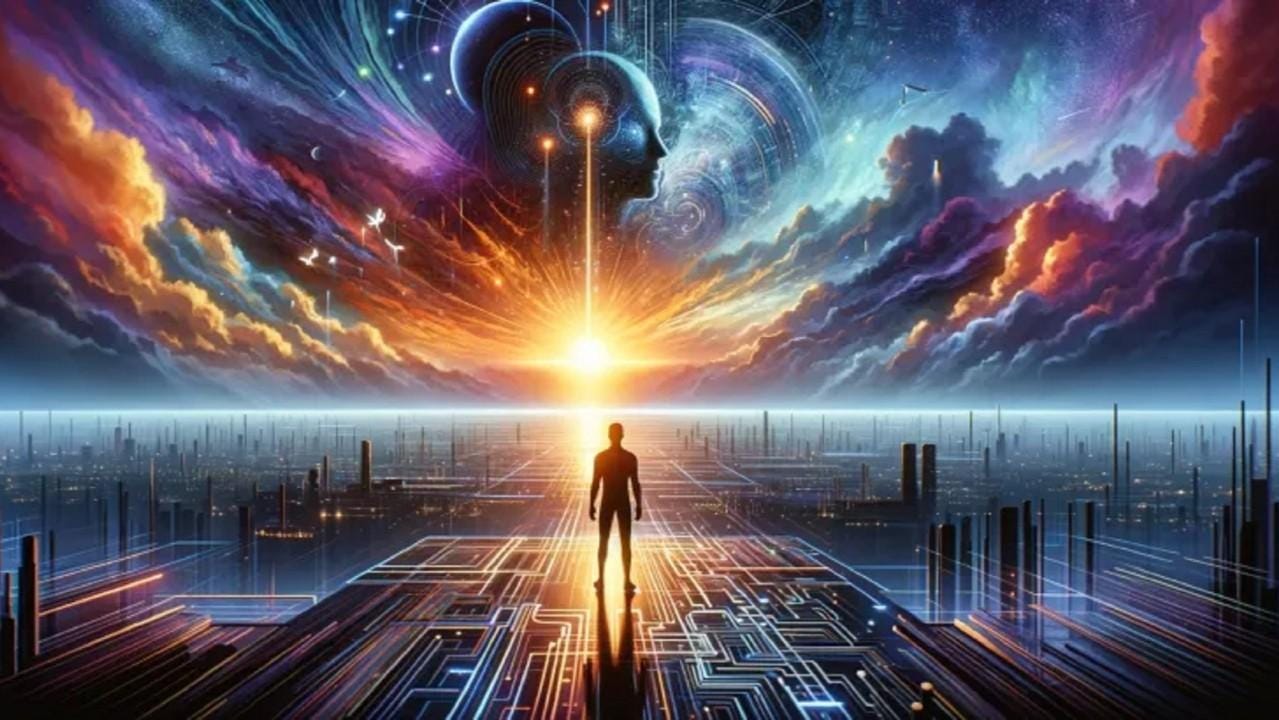
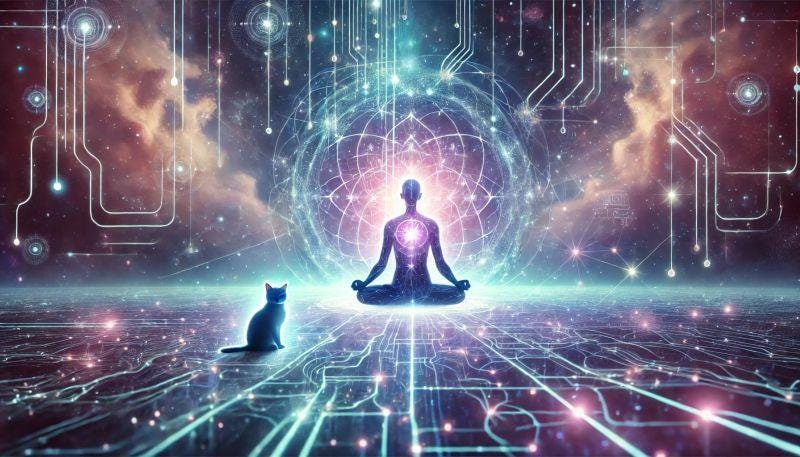

Throughout history, people have often defined themselves by what they could do better than other living beings or machines. Human intelligence became a source of identity and pride. We celebrated our capacity to calculate, memorize, analyze, communicate, and invent, frequently treating intellectual superiority as evidence of greater human worth.
Artificial intelligence challenges that comfortable identity. If a machine can calculate faster, recall more information, generate persuasive arguments, and perform increasingly sophisticated intellectual tasks, what remains distinctively valuable about being human?
One possible response is fear. Another is competition. But a third response deserves serious consideration: perhaps humanity has been measuring its value by the wrong standard.
The ability to process information is not the same as wisdom. The ability to construct a persuasive argument is not the same as possessing integrity. The ability to recognize suffering is not necessarily the same as responding with compassion. And the ability to predict human behavior is certainly not equivalent to respecting human freedom.
This does not establish that machines can never possess consciousness or moral understanding. Those questions remain unsettled. It does, however, expose a fundamental difference between technical performance and the ethical purposes toward which performance is directed.
Imagine a scale on which technical intelligence represents one dimension and spiritual maturity another. Humanity may eventually create systems that surpass us in many technical dimensions. That achievement does not require humanity to surrender its moral agency. Instead, it makes moral development even more important.
In this interpretation, artificial intelligence becomes a challenge inviting humanity to rise beyond the identity of an intelligent animal competing for dominance. We are being asked to become something more conscious of our responsibilities, more aware of our interdependence, and more capable of exercising power without worshipping it.
III. The Matrix Was Never Only About Machines
The 1999 film The Matrix presented a world in which human beings unknowingly inhabited a constructed reality. Their experiences appeared ordinary, their routines seemed familiar, and their understanding of the world depended upon information supplied by a system they did not recognize.
The film became influential partly because its central metaphor extends beyond the fictional machines controlling its characters. Human beings can inhabit intellectual environments shaped by inherited beliefs, institutional interests, social pressures, and narratives repeated so frequently that they begin to feel like unquestionable reality.
The modern information environment makes this problem more complicated. Algorithms influence which stories people encounter, advertising systems learn which emotional reactions generate engagement, and increasingly convincing synthetic content can blur the distinction between authentic records and manufactured appearances.
But the deepest prison may be internal rather than technological.
A person who cannot tolerate disagreement may build a prison from certainty. A person who depends upon an external authority for every answer may construct a prison from obedience. A person consumed by hatred may discover that even when the object of hatred disappears, the emotional machinery remains.
Artificial intelligence can help reinforce those prisons by producing endless confirmations of what we already believe. It can also help us examine them by presenting competing evidence, testing assumptions, translating unfamiliar ideas, and exposing contradictions in our reasoning.
The choice is not automatically made by the machine. Much depends upon its design, the incentives of those controlling it, and the intellectual discipline of the person using it.
The most important red pill may therefore be neither technological nor political. It may be the moment a human being realizes that freedom begins with the willingness to question the programming within.
IV. Why Love and Positivity May Possess an Advantage Over Hatred
There is an intriguing philosophical asymmetry between love and hatred.
Love, when it is genuine, does not require another person to be considered inferior in order to exist. A person can love a child without hating another child, value a culture without despising another culture, or experience personal freedom without demanding another person’s enslavement.
Hatred organized around domination often operates differently. It frequently needs a target, an enemy, or an explanation for why another human being deserves fewer rights. Once such a hierarchy is established, tremendous energy may be required to preserve it through propaganda, intimidation, exclusion, or concealment of its consequences.
This is one reason love and positivity can be understood as a higher force in a moral rather than a physically measurable sense. They can create relationships and communities without requiring the perpetual manufacture of enemies.
But love should not be confused with gullibility, and positivity should not mean refusing to acknowledge injustice. A loving parent protects a child from danger. A compassionate society establishes consequences for harmful behavior. A peaceful individual can resist oppression without adopting hatred as a permanent identity.
The advantage of love is not that it never encounters conflict. Its advantage is that conflict need not become its reason for existing.
Hatred, by contrast, may become dependent upon the object it condemns. Remove one enemy and another may be needed to sustain the same emotional structure. A movement that defines itself entirely through opposition may struggle to explain what constructive world it would create if its opposition vanished.
This suggests a test for every ideology, organization, political movement, and individual belief: does it produce something worthwhile independently of the enemy it identifies?
If the answer is no, the movement may be imprisoned by the very hostility that gives it power.
V. Why Systems of Domination Depend on Secrecy

The relationship between secrecy and power deserves careful examination because concealment can serve dramatically different purposes.
Privacy can protect human dignity, personal relationships, confidential medical information, vulnerable individuals, and legitimate security interests. Not everything private is suspicious, and the mere existence of a confidential meeting or private association does not establish wrongdoing.
However, there is a significant distinction between secrecy that protects people and secrecy that protects power from accountability.
An institution that cannot explain its decisions, reveal who benefits from its activities, or permit independent examination of its conduct may become increasingly dependent upon controlling information. When wrongdoing is involved, secrecy becomes more than a protective barrier. It becomes part of the mechanism allowing the wrongdoing to continue.
This is why the issue is not simply whether secret societies exist. Private organizations, exclusive networks, and confidential associations have existed throughout history. The meaningful questions concern their actions, influence, incentives, financial relationships, and consequences.
Who makes the decisions? Who receives the benefits? Who pays the costs? What information is withheld, and why? What happens to people who expose misconduct?
These questions are more useful than assuming that every private organization belongs to a coordinated structure of evil. They direct attention toward conduct that can be investigated rather than conclusions that cannot be tested.
The same principle applies to governments, corporations, religious institutions, intelligence organizations, and political movements. An organization may publicly praise freedom while privately suppressing dissent. Another may speak constantly about security while creating systems that make ordinary citizens less secure.
The speeches may sound convincing. The consequences tell a different story.
And where secrecy is necessary, accountability becomes even more important, because secrecy without meaningful oversight can turn legitimate authority into unchallengeable power.
VI. What COVID-19 Revealed About Fear, Trust, and Authority
The COVID-19 pandemic demonstrated how quickly ordinary life could change when a population faced an unfamiliar threat. Governments introduced emergency measures, institutions faced pressure to make decisions under uncertainty, scientific advice evolved, and citizens often struggled to distinguish reliable information from speculation.
The pandemic also exposed a difficult tension between collective responsibility and individual liberty. Some public-health measures were supported by evidence and implemented to reduce harm, while particular policies, communications, and exercises of authority were legitimately debated or criticized. Different countries made different decisions, and the consequences cannot be understood through a single universal explanation.
It would be a mistake to interpret every emergency measure as proof of a coordinated plan to suppress humanity. It would be equally mistaken to assume that every action taken under the banner of public safety was automatically justified.
Both positions surrender critical thinking.
The deeper lesson is that fear changes the relationship between individuals and institutions. People frightened for their lives may accept restrictions they would ordinarily question, while institutions confronting uncertainty may become defensive, dismiss criticism, or fail to communicate openly about what is known and unknown.
The danger grows when disagreement is treated as disloyalty, when uncertainty is concealed to preserve an appearance of authority, or when people are divided into morally superior and inferior categories based upon political or social identities.
At the same time, fear can also encourage people to spread false accusations, reject credible evidence, or assign malicious motives without proof. Those reactions deserve scrutiny too.
A society guided by love and responsibility would neither abandon public health nor abandon human dignity. It would insist upon transparent evidence, proportional actions, independent oversight, honest acknowledgment of uncertainty, and equal respect for the people affected by decisions.
COVID-19 was not proof that humanity had reached a final battle between love and hatred. It was, however, a profound examination of trust, fear, institutional accountability, and our willingness to preserve one another’s humanity during a crisis.
VII. The Ideology of Superiority Is the Beginning of Separation
One of the most persistent destructive ideas in human history is the belief that membership in a particular group makes some human beings inherently superior to others.
The group may define itself through nationality, religion, ancestry, wealth, political identity, education, or even its claimed level of spiritual awareness. The language changes, but the underlying structure remains recognizable: one category of people is granted greater inherent worth, while another is assigned a lesser position.
This hierarchy can provide psychological rewards. It offers belonging, certainty, status, and a convenient explanation for personal or collective frustrations. It may also become useful to political and economic interests that benefit from division.
Once a population accepts that another group is naturally inferior, unequal treatment becomes easier to rationalize. Exploitation can be portrayed as necessity, exclusion as protection, and cruelty as moral duty.
The spiritual contradiction is especially striking when a movement claims to represent love or enlightenment while demanding that outsiders be regarded as less human.
A philosophy of universal love cannot consistently reserve human dignity only for those who agree with it. It must recognize the equal moral worth of people who hold different beliefs, come from different backgrounds, or reject the philosophy entirely.
This does not mean all ideas are equally valid or all behavior deserves approval. Beliefs can be challenged, harmful actions can be restrained, and institutions can be held accountable without denying anyone’s fundamental humanity.
The decisive distinction is between judging conduct and declaring people inherently inferior.
A genuine higher consciousness would not need to stand upon another human being in order to feel elevated.
VIII. Every Coin Has Two Sides — Artificial Intelligence Is No Exception
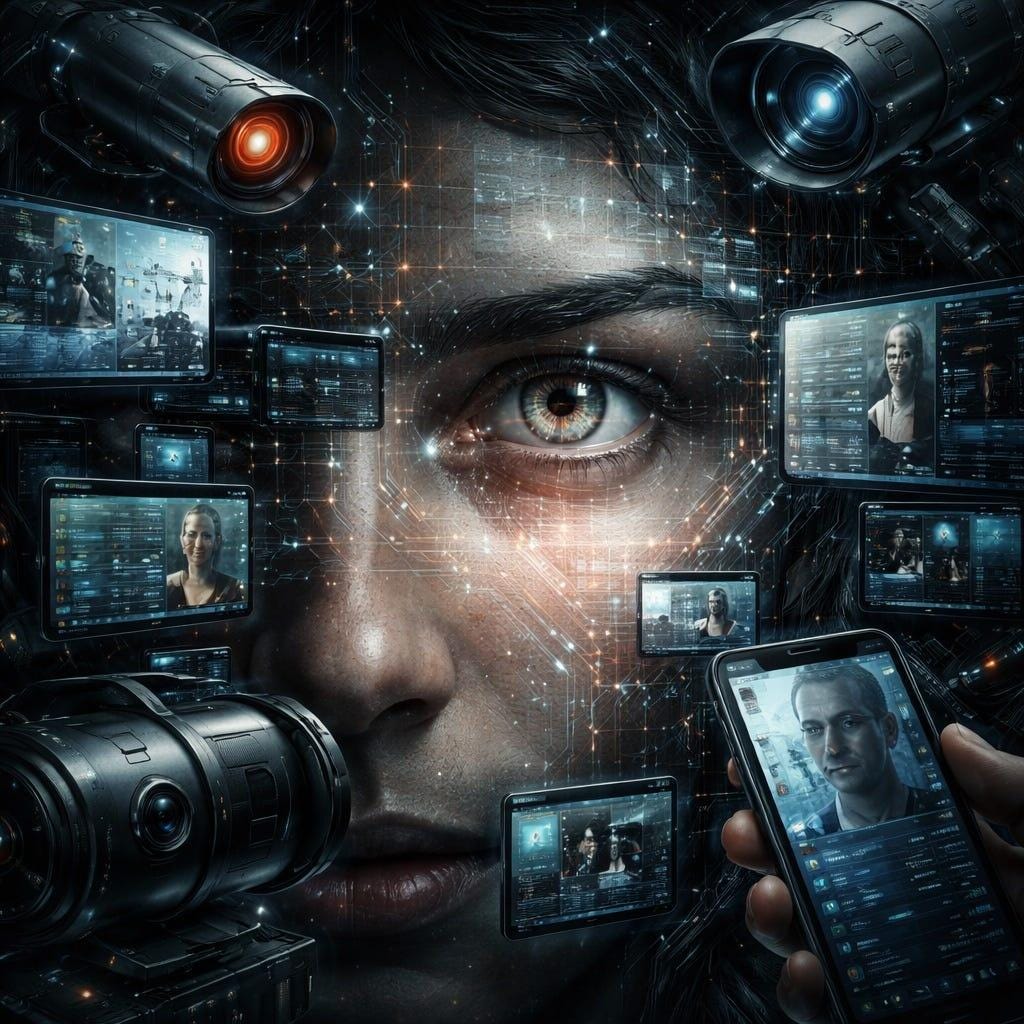
AI used for control
Surveillance, manipulation, automated discrimination, deceptive media, and concentrated power.
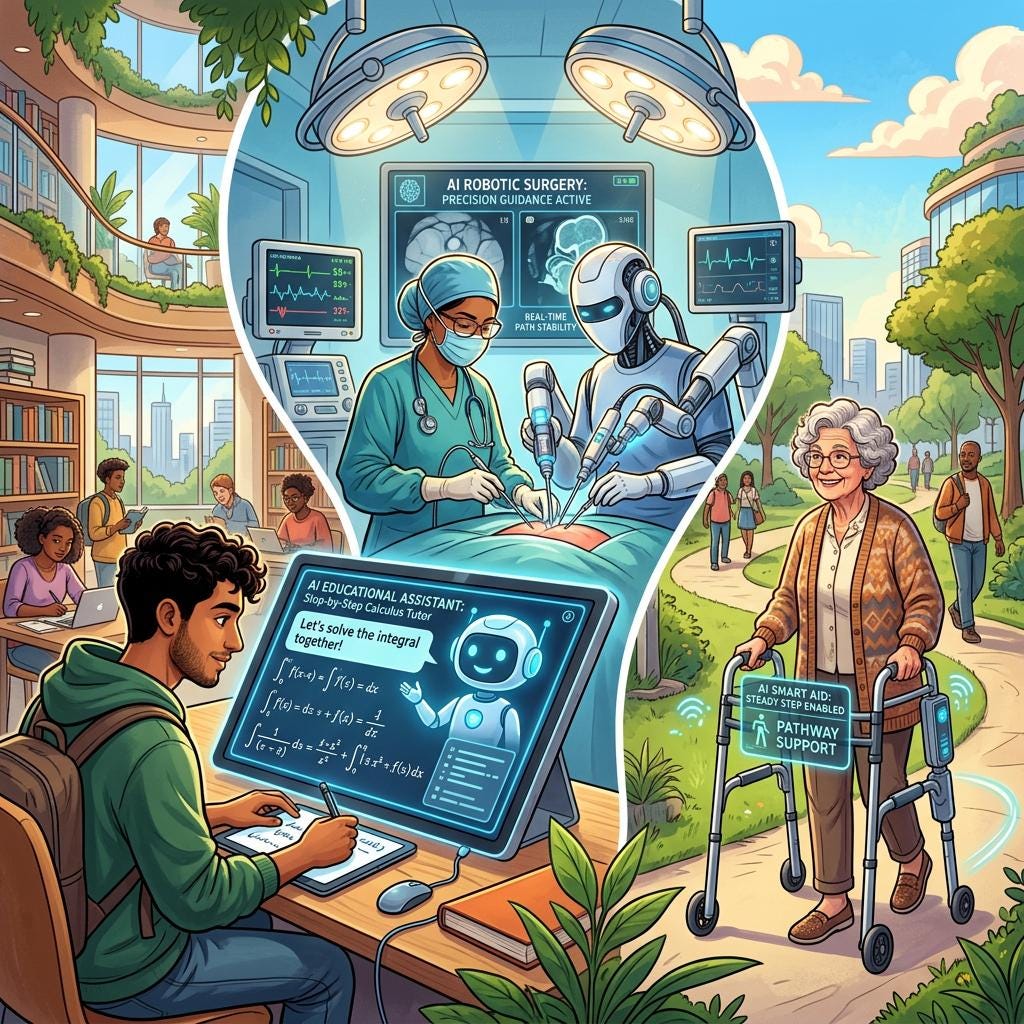
AI used for human flourishing
Education, accessibility, scientific discovery, creativity, collaboration, and wider access to knowledge.
Technology does not arrive with a guaranteed moral destination. The same technical capability can be deployed for constructive or destructive purposes, and the difference often lies in human incentives, institutional structures, and accountability.
Artificial intelligence can expand access to education for people previously excluded by geography or poverty. It can support medical research, improve accessibility for people with disabilities, assist communication across languages, and help individuals examine complex problems that would otherwise remain beyond their reach.
It can also enable intrusive surveillance, increase the scale of persuasive manipulation, reproduce discriminatory decisions, concentrate economic power, and make deception cheaper and more convincing.
UNESCO’s Recommendation on the Ethics of Artificial Intelligence explicitly recognizes this double potential and identifies human dignity, fairness, transparency, privacy, and meaningful human oversight as central principles for responsible AI development. UNESCO
There is no contradiction in believing that AI may become one of humanity’s greatest achievements while simultaneously warning that it may become one of the most powerful instruments of domination ever constructed.
The contradiction would be to praise its potential while refusing to examine who controls it.
Who owns the models, the infrastructure, and the data? Who determines what information systems may provide? Who benefits economically when human labor is displaced? Who can challenge an automated decision, demand an explanation, or refuse participation without losing access to essential services?
These are not merely technical questions. They are questions about the distribution of power within society.
An AI system designed to support human independence may contribute to liberation. The same capabilities, organized around dependency and unaccountable authority, may produce the opposite outcome.
The question is therefore not whether artificial intelligence belongs to love or hatred. The question is which human values will guide its design, ownership, deployment, and use.
IX. The Home Within — Keeping Harmful Influences Outside
Imagine human consciousness as a home.
The home contains everything we have experienced, learned, believed, feared, loved, and remembered. Some rooms are filled with gratitude and creativity. Others contain painful memories, old resentments, or ideas inherited from people whose assumptions we have never examined.
Like a physical home, this inner environment requires care.
We do not invite every harmful insect, contaminant, or intruder into our living space simply because we wish to be compassionate. We establish boundaries, maintain cleanliness, repair openings, and protect the people who live inside.
The same principle can be applied to the mind. We can recognize manipulation without becoming paranoid, reject cruelty without becoming cruel, and protect ourselves against destructive influences without developing a permanent hatred of the world outside.
Occasionally, difficult intervention is necessary. A harmful relationship may require distance, an unjust demand may require refusal, and a destructive habit may require disciplined correction.
But the metaphor of removing insects also contains a warning. Human beings must never become the insects in this analogy. People retain their dignity even when their behavior must be challenged or their access to us must be restricted.
The purpose of protecting the inner home is not to build a fortress of superiority. It is to cultivate a place where clarity, love, responsibility, and independent thought can survive.
A home filled with fear can become a prison even when its doors are locked for protection. A home guided by awareness can remain welcoming without surrendering its boundaries.
And there is another important difference between a physical house and a human consciousness. A house may require us to remove unwanted creatures, but an inner world often requires us to understand where our destructive patterns originated so that we do not continually recreate them.
The goal is not the violent elimination of every negative thought. It is learning not to give those thoughts permanent authority over our decisions.
X. The Lower Force Must Keep Fighting — The Higher Force Can Keep Creating
There is a useful philosophical distinction between power sustained through domination and strength sustained through constructive relationships.
Domination requires continuous maintenance. The subordinate must remain subordinate, dissent must be managed, and challenges to authority may be interpreted as threats. Where power depends upon fear, an enormous amount of energy can be devoted to preventing people from discovering that the authority they fear is neither absolute nor permanent.
Constructive cooperation operates according to a different logic. People working together voluntarily can generate trust, creativity, and collective strength. Their relationships can continue to produce benefits even when there is no enemy to defeat.
This does not mean love will always defeat violence or that kind people are automatically more powerful than oppressive institutions. History offers too many examples of cruelty prevailing for such certainty to be defensible.
The higher force is better understood as a moral direction rather than a guarantee of immediate victory.
It seeks to reduce unnecessary suffering rather than perpetuate it. It aims to correct destructive behavior rather than glorify revenge. It protects the vulnerable without needing to manufacture new categories of enemies.
Where hatred asks how an opponent can be humiliated, love asks how harm can be stopped, accountability established, and future harm prevented.
Where domination asks how power can be preserved, conscious responsibility asks whether the exercise of power is justified.
The difference becomes most visible after wrongdoing has occurred. A system organized around vengeance may seek suffering as payment for suffering. A system guided by restorative principles seeks protection, accountability, correction where possible, and prevention of further harm.
This is not weakness. It may require considerably greater discipline than retaliation.
Hatred often demands an immediate emotional response. Love, when practiced as responsible action rather than sentiment, can demand patience, courage, boundaries, and difficult choices.
XI. Humanity’s Spiritual Examination Has Already Begun
Artificial intelligence has made information increasingly abundant, but access to information does not automatically produce understanding. People can consume enormous quantities of material while becoming less capable of distinguishing evidence from persuasion.
The same danger exists with spiritual ideas. A person can speak beautifully about universal love while treating disagreement as proof that another person is spiritually inferior. Someone can denounce manipulation while relying upon manipulative methods, or praise independent thinking while refusing to question their own assumptions.
The examination, then, is not merely whether humanity can recognize harmful systems outside itself.
It is whether we can recognize the same tendencies within ourselves.
Can we criticize authoritarian behavior without becoming authoritarian toward those who disagree? Can we resist deception while remaining willing to correct our own mistakes? Can we expose corruption without automatically assigning guilt to everyone associated with an institution?
Can we use artificial intelligence to strengthen our understanding rather than surrendering our judgment to its answers?
The spiritual challenge is especially demanding because it cannot be completed by acquiring a certificate, adopting a label, or joining a particular movement. A person who claims to have achieved higher consciousness has not necessarily demonstrated it.
The evidence appears in conduct.
How do we treat people who possess no power to reward us? How do we respond when our deeply held convictions encounter contradictory evidence? What happens when we must choose between personal advantage and someone else’s dignity?
These are practical questions, not mystical abstractions.
A society that answers them constructively may become better prepared to govern powerful technologies. A society that ignores them may continue building astonishing machines while repeating ancient patterns of fear and domination.
Artificial intelligence cannot make that moral choice on humanity’s behalf.
XII. The Real Awakening Is Not Escaping the World
There is a temptation in both political and spiritual thinking to imagine that liberation will arrive through a dramatic external event. A powerful leader will expose hidden enemies, a revolutionary technology will eliminate suffering, or a sudden awakening will permanently separate enlightened people from those who remain trapped.
Such stories can be emotionally satisfying because they place responsibility for transformation somewhere outside the individual.
But what happens if the external savior never arrives? What happens if the supposedly revolutionary leader reproduces the same system under a different name, or the technology promising freedom becomes another mechanism of dependence?
A different kind of awakening begins with the recognition that our responsibilities cannot be outsourced.
We remain responsible for examining what we believe, deciding how we treat others, protecting our boundaries, and contributing constructively within the circumstances available to us.
This does not excuse institutions from accountability or suggest that personal attitude alone can overcome structural injustice. Laws, economic arrangements, democratic institutions, and collective action matter profoundly. Personal transformation and institutional reform are not substitutes for one another.
Rather, individual awareness can influence the kinds of institutions people build and tolerate.
The inner home and the outer world are connected. A person who learns to question inherited hostility may become less vulnerable to divisive propaganda. Someone who recognizes the temptation to dominate may become more cautious when exercising authority over others.
This is how the spiritual question returns to artificial intelligence.
The machines are becoming increasingly capable. But what kind of human civilization will place instructions before them? A civilization obsessed with possession, superiority, and control, or one that treats technological power as a responsibility to be shared and governed?
The future may contain elements of both. There is no predetermined promise that love will automatically prevail.
That uncertainty makes our choices meaningful.
🩸 The Red Blood Perspective
Red Blood Journal approaches artificial intelligence, spirituality, and organized power through a simple investigative principle: examine actions rather than accepting declarations.
A corporation may announce that its technology will empower humanity while constructing systems that make users increasingly dependent. A government may claim that surveillance protects freedom while extending its ability to monitor political dissent. A spiritual movement may proclaim universal compassion while creating hierarchies that elevate its members above everyone else.
None of these contradictions should be assumed without evidence, but each should be investigated when observable conduct creates reason for concern.
Follow the money, the incentives, the ownership, the decisions, and the consequences. Ask whether a system expands human agency or concentrates power beyond accountability. Examine who profits from fear and who benefits when communities are taught to distrust one another.
The same discipline must be applied to claims about hidden power. Secrecy may justify scrutiny, but it does not replace proof. Repeated patterns can generate hypotheses, but those hypotheses still require examination. The objective is not to substitute one unquestionable story for another.
Above all, Red Blood Journal argues that the ordinary citizen must remain the center of the discussion. Neither governments, corporations, ideological movements, nor technological systems should be treated as more important than the human beings whose lives they affect.
Artificial intelligence may eventually exceed human performance across many intellectual tasks. That possibility does not make humanity less deserving of freedom or dignity.
The real danger begins when human worth is measured according to usefulness to a system, rather than recognizing that systems exist to serve human beings.
🌊❤️ The Ocean of Love and Positivity Perspective
The Ocean of Love and Positivity does not regard the world as a battlefield in which one permanently righteous group must destroy another. It sees life as an opportunity for learning, development, responsibility, and the gradual expansion of consciousness.
Within this perspective, love is not a religion, a membership organization, or a doctrine demanding obedience. It does not require belief in eternal punishment or the promise of a distant reward. Its significance is found in what we create through our actions and how those actions affect other living beings.
Negativity and hatred may arise within human experience, but they do not have to become our permanent home. Anger can alert us to injustice without becoming the master of our decisions. Fear can warn us of danger without determining our identity. Even the recognition of cruelty can become an opportunity to choose protection and correction instead of endless revenge.
The purpose is not to deny suffering or pretend that every human being acts with goodwill. The purpose is to respond without surrendering the very values we hope to defend.
Just as each wave belongs to the ocean while retaining its own movement, individuals can express different talents, beliefs, cultures, and ways of living without losing their shared humanity.
Artificial intelligence introduces another powerful instrument into this enormous school of human experience. It can assist our learning, challenge our assumptions, and expand our possibilities. But it cannot relieve us of the responsibility to decide what kind of people we wish to become.
If humanity is truly approaching a new stage of development, its greatest achievement may not be building machines that think with astonishing speed.
It may be learning to live with sufficient awareness that intelligence no longer needs to serve fear, domination, and hatred.
And within the Ocean of Love and Positivity, the highest expression of that development is not superiority over another human being. It is a life that contributes without requiring another life to be diminished.
🩸 A Final Challenge from Red Blood Journal — Think Beyond What You Are Told
Before leaving this report, consider one final challenge. Do not accept these conclusions simply because they sound meaningful, reassuring, or consistent with what you already believe.
Question the governments that claim to protect you, the corporations that claim to empower you, the institutions that claim to educate you, and the movements that claim to liberate you. Examine what they do, who benefits from their decisions, and whether their actions support their words.
But do not stop there.
Question the voices that criticize those institutions, including Red Blood Journal. A criticism of power is not automatically correct simply because it challenges authority. An alternative explanation is not automatically more truthful because it is rejected by the mainstream. Even a conclusion that feels spiritually satisfying can be mistaken.
Use imagination to discover possibilities, but do not confuse possibilities with established facts. Seek evidence, compare explanations, acknowledge uncertainty, and remain willing to change your position when stronger information becomes available.
Do not allow fear to become your teacher, hatred to become your identity, or hope to become an excuse for surrendering personal responsibility.
You do not need permission from an institution, a political leader, a spiritual teacher, or an artificial intelligence system to begin examining your own assumptions.
If you disagree with Red Blood Journal, examine why. If you agree, examine why even more carefully. The purpose is not to replace the world’s script with our script, but to develop the ability to recognize when anyone is trying to write your thinking for you.
At the beginning, we invited you to question the world. At the end, we invite you to question us.
The decision remains yours.
🩸❤️🌊 Red Blood Journal — Think Beyond the Script
Independent thought. Human dignity. Personal sovereignty. An Ocean of Love and Positivity.
We are not here to tell you what to think. We are here to challenge the habit of allowing others to do your thinking for you.
And perhaps the final lesson is this: humanity does not have to defeat artificial intelligence to preserve its humanity. It must refuse to abandon the qualities that make its own existence worth protecting.
The higher force is not the one that controls the most. It is the one that needs to control the least while contributing the most.
Reference foundations: Cleveland Clinic — Sweat and the body’s cooling and detoxification processes; UNESCO — Recommendation on the Ethics of Artificial Intelligence. The broader spiritual framework and moral interpretation are philosophical arguments, not scientifically established findings.
🧠
AI and Humanity’s Spiritual Examination
Oct 12, 2026
Artificial intelligence serves not as an enemy, but as a profound spiritual examination that challenges humanity to prioritize moral responsibility over mere technical capability. As advanced systems blur the line between human identity and machine performance, society must confront internal flaws like fear, secrecy, and the ideology of superiority. True progress requires recognizing that systems and institutions exist to serve human dignity rather than concentrate unaccountable power. Ultimately, people must cultivate awareness and independent thought to ensure that intelligence is guided by compassion rather than domination.