


🩸 🇮🇷 🇷🇺 🇺🇸 🇮🇱 ☢️ ✈️ 🏔️ ♟️ ⛓️ 🌊❤️✨ — THE FINAL PHASE OF THE CONFLICT: Russia’s Nuclear Return, Iran’s Internal Power Struggle, and the Assets That May Be Moving Beyond Its Borders
WHAT IF THE NEXT PHASE OF THE CONFLICT OVER IRAN IS NOT ONLY ABOUT DESTROYING MILITARY CAPABILITIES, BUT ALSO ABOUT DECIDING WHO CONTROLS THE INSTITUTIONS, INFRASTRUCTURE, AND STRATEGIC ASSETS THAT SURVIVE?
A Russian nuclear specialist returns to an Iranian power plant. A new road reaches China’s border with Afghanistan, but the Chinese side remains closed. Iranian airlines face mounting international restrictions. Meanwhile, political commentators speculate about which factions inside the Islamic Republic may survive the next stage of the confrontation.
Individually, these developments appear to belong to different stories. Nuclear energy, aviation, political rivalries, construction projects, and international sanctions have different purposes and involve different institutions. Yet they converge on one critical question: What happens to a country’s remaining strategic assets when its government faces sustained external pressure and internal uncertainty?
The final section of a recent Persian-language geopolitical discussion, From Cairo to Samarkand, raises a series of allegations about Russian involvement in Iran, the political future of reformists and hardliners, possible restrictions on international airline reservations, and unexplained construction activities in Afghanistan. Some elements have independent factual support; others remain speculation or predictions for which the available evidence is insufficient.
Red Blood Journal examines these claims through observable actions, institutional relationships, financial interests, and material consequences. The objective is not to turn every unusual development into proof of a coordinated plan, but to identify which connections are real, which remain plausible interpretations, and which require evidence that has not yet emerged.
Red Blood Journal — Think Beyond the Script. Question what governments announce, what commentators predict, and what this report concludes. A compelling explanation is not necessarily a demonstrated one. Follow the actions, identify who gains practical control, and distinguish what can be established from what is merely suspected.
I. Russia Returns to Iran’s Nuclear Infrastructure
The discussion begins its final argument with a specific claim: Russian personnel associated with Rosatom have returned to Iranian nuclear facilities. The speakers cite 136 individuals and interpret the move as evidence that Moscow intends to protect or reassert its influence in Iran.
There is a documented basis for the broader observation. Russia’s state nuclear company, Rosatom, has long been involved with the Bushehr Nuclear Power Plant. Following the outbreak of the 2026 war, Russian personnel were evacuated in phases, while a smaller contingent remained to support essential activities. In August 2026, Russian nuclear industry reporting confirmed that specialists had begun returning to Bushehr and that work on additional reactors continued.
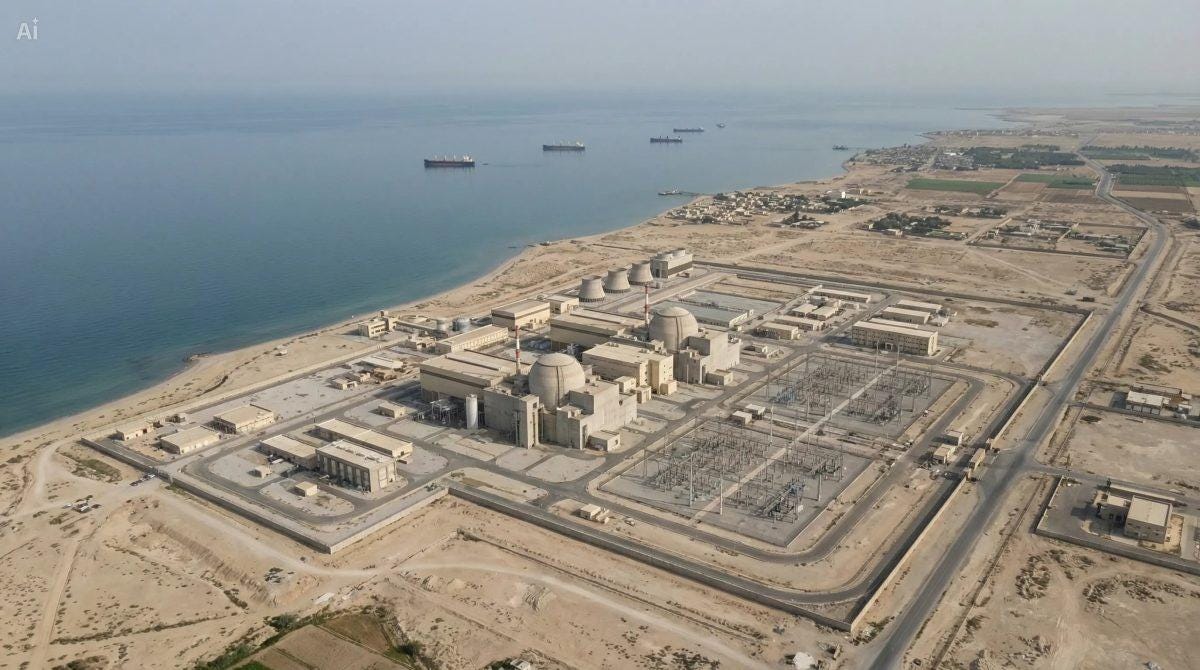
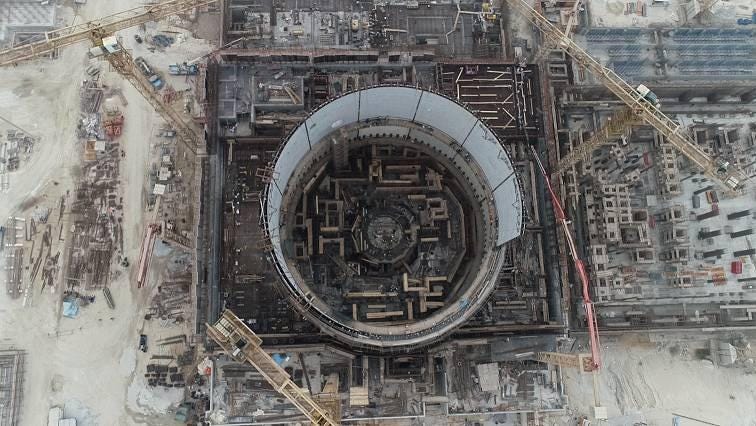
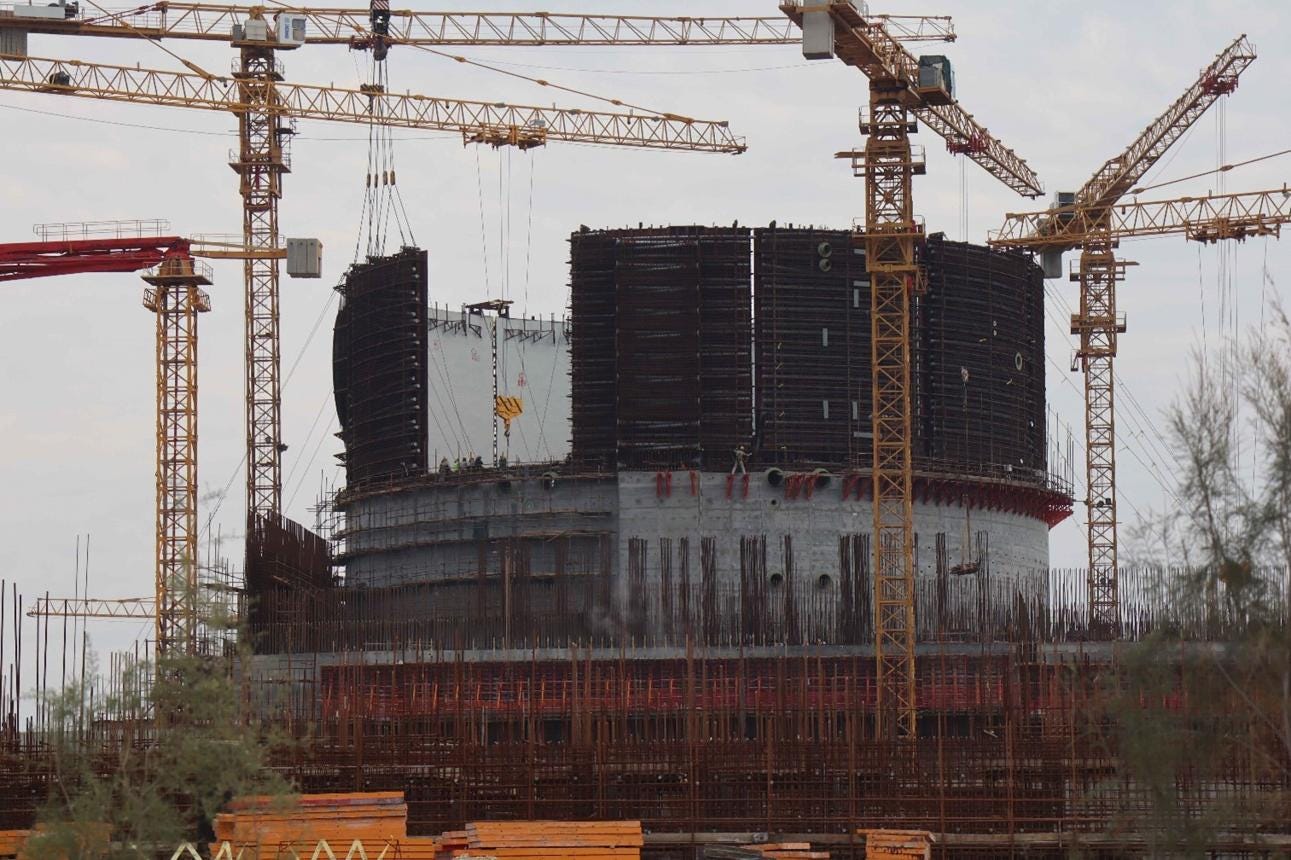
An October 12 report, citing Rosatom chief Alexei Likhachev through Sputnik, placed the number of returned Rosatom personnel at 135. This closely matches the transcript’s figure of 136, although the exact number cannot be treated as independently established by that single secondary report.
The important analytical question is not simply how many employees have returned. It is what Moscow continues to maintain in Iran while the wider security environment remains unstable.
A nuclear power plant involves more than buildings, concrete, and machinery. It requires specialized personnel, technical knowledge, equipment, maintenance, fuel arrangements, operational procedures, and long-term institutional cooperation. A country that supplies or maintains these capabilities can retain influence through technical relationships even when its broader political position becomes uncertain.
For Russia, continuing its civilian nuclear relationship with Iran can serve several overlapping purposes: preserving commercial commitments, maintaining a regional presence, protecting previous investments, and retaining a diplomatic role in discussions about nuclear safety and energy infrastructure. None of these motives requires assuming that Russian engineers are participating in a covert military operation.
That distinction matters because the original discussion interprets the return as Russian bargaining over Iran’s future. The personnel movements are substantially documented; the claim that they represent a secret division of Iranian influence is not.
The Red Blood question: When a foreign power continues to operate essential infrastructure during a national crisis, does that relationship preserve the host country’s capabilities, increase its dependency, or accomplish both simultaneously?
II. Is Russia Protecting Iran or Protecting Its Own Position?
Russia and Iran cooperate in several areas, but cooperation does not automatically mean their strategic interests are identical. Moscow has its own national priorities, economic constraints, diplomatic relationships, and security calculations. Tehran likewise has reasons to seek Russian support while attempting to preserve its own decision-making authority.
This creates an important distinction between an ally’s presence and an ally’s willingness to accept unlimited risk.
The return of nuclear specialists suggests continued commitment to an existing project. It does not demonstrate that Russia is prepared to enter every military confrontation on Iran’s behalf, nor does it establish that Moscow could dictate the outcome of Iran’s internal political struggles.
At the same time, withdrawing completely would carry consequences for Russia. Technical contracts, equipment, investments, commercial credibility, and future negotiations could all be affected. Maintaining a limited operational presence may therefore be a practical middle position: Russia preserves a relationship without necessarily expanding its military commitment.
This interpretation becomes especially relevant when examining the broader allegation that Russia and China are bargaining over the future of Iran. Such bargaining is conceivable in ordinary international diplomacy, but specific claims of territorial exchanges, prearranged political outcomes, or undisclosed agreements require documentary or corroborated evidence.
The most revealing indicator would not be another speech expressing support for Tehran. It would be a concrete change in personnel deployments, contractual obligations, security arrangements, access to facilities, or decision-making authority.
A foreign government can describe a relationship as friendship while operating according to commercial and strategic calculations. Equally, an action that serves its interests does not automatically prove a hidden conspiracy. The critical task is to examine what changed, who authorized the change, and who acquired a practical benefit.
III. Iran’s Internal Factions: Allies, Competitors, or Temporary Survivors?
The transcript advances a more dramatic theory concerning Iran’s political factions. According to the speaker, an earlier phase of the confrontation concentrated pressure on figures aligned with Russia, while reformist factions were allegedly left relatively untouched. The discussion then predicts that reformists could become targets of a subsequent phase.
The speaker goes further, alleging that American and Israeli actions helped one part of the Islamic Republic weaken another before turning against the surviving faction. This is an accusation about covert coordination, not an established account of events.
Iran’s political factions do have histories of rivalry, competition over appointments, disagreements over foreign policy, and struggles for influence within state institutions. However, descriptions such as reformist, principlist, hardliner, and Russia-aligned are not interchangeable. A political figure may support cooperation with Russia on one issue while holding different positions on domestic policy, sanctions, or negotiations.
The deeper analytical issue is institutional continuity. If one faction loses power, are the security organizations, judicial structures, financial networks, and economic institutions actually transformed? Or does control simply move between competing elites within the same political system?
A change in political personnel is not necessarily a change in the institutional distribution of power. Equally, factions should not be presumed identical merely because they operate within the same state. Their decisions, degrees of authority, and material consequences must be evaluated separately.
The transcript’s prediction of targeted killings of reformist figures is especially serious. It should not be repeated as a confirmed operational plan. There is no sufficient evidence in the material reviewed to establish a specific future assassination campaign, its alleged target list, or a numerical estimate of victims.
Instead, a responsible investigation would examine actual changes in political appointments, documented arrests, credible threats, institutional transfers of power, verified attacks, and the official and independently reported circumstances surrounding them.
The question is not which faction deserves to survive. It is whether the political future of Iran will be shaped by accountable public institutions or by another struggle among organizations that exercise power without meaningful public oversight.
IV. The Aviation Warning: Can a Country Be Isolated Without Closing Its Airspace?
One of the most consequential statements in the transcript concerns Iran’s access to international airline reservation infrastructure. The speaker claims that, beginning on October 22, 2026 (30 Mehr 1405), Iranian aviation operators would lose access to a global reservation system under American pressure.
The discussion goes further, arguing that possessing aircraft, pilots, airports, and fuel would become insufficient if airlines could no longer sell tickets or connect with international booking networks.
Here, the underlying sanctions pressure is documented, but the proposed universal shutdown needs qualification.
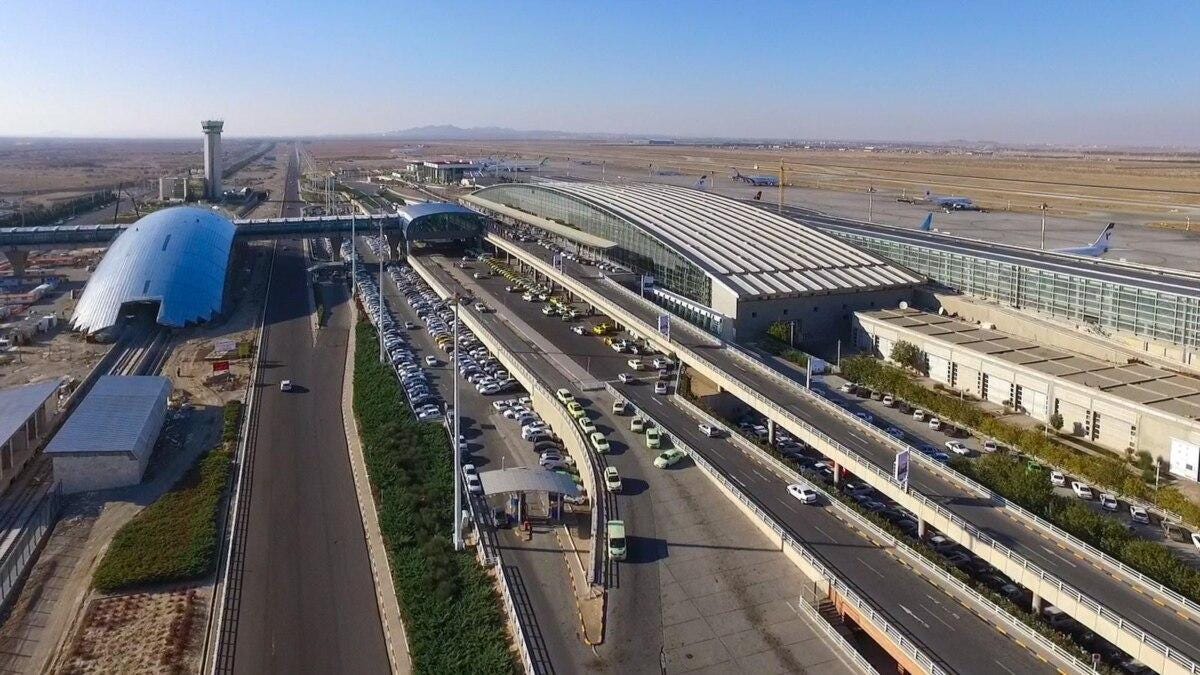
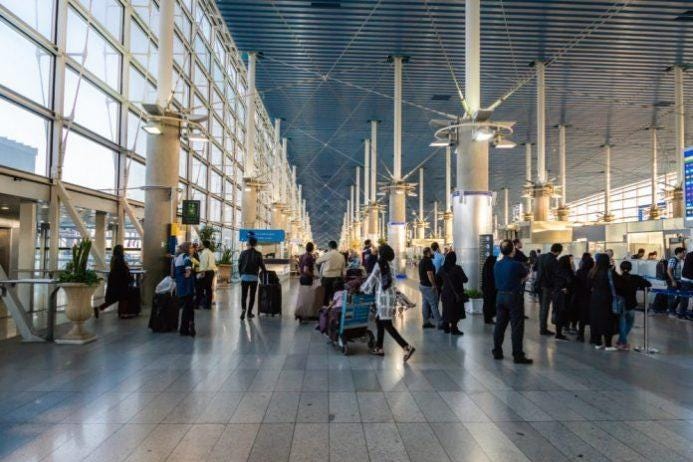
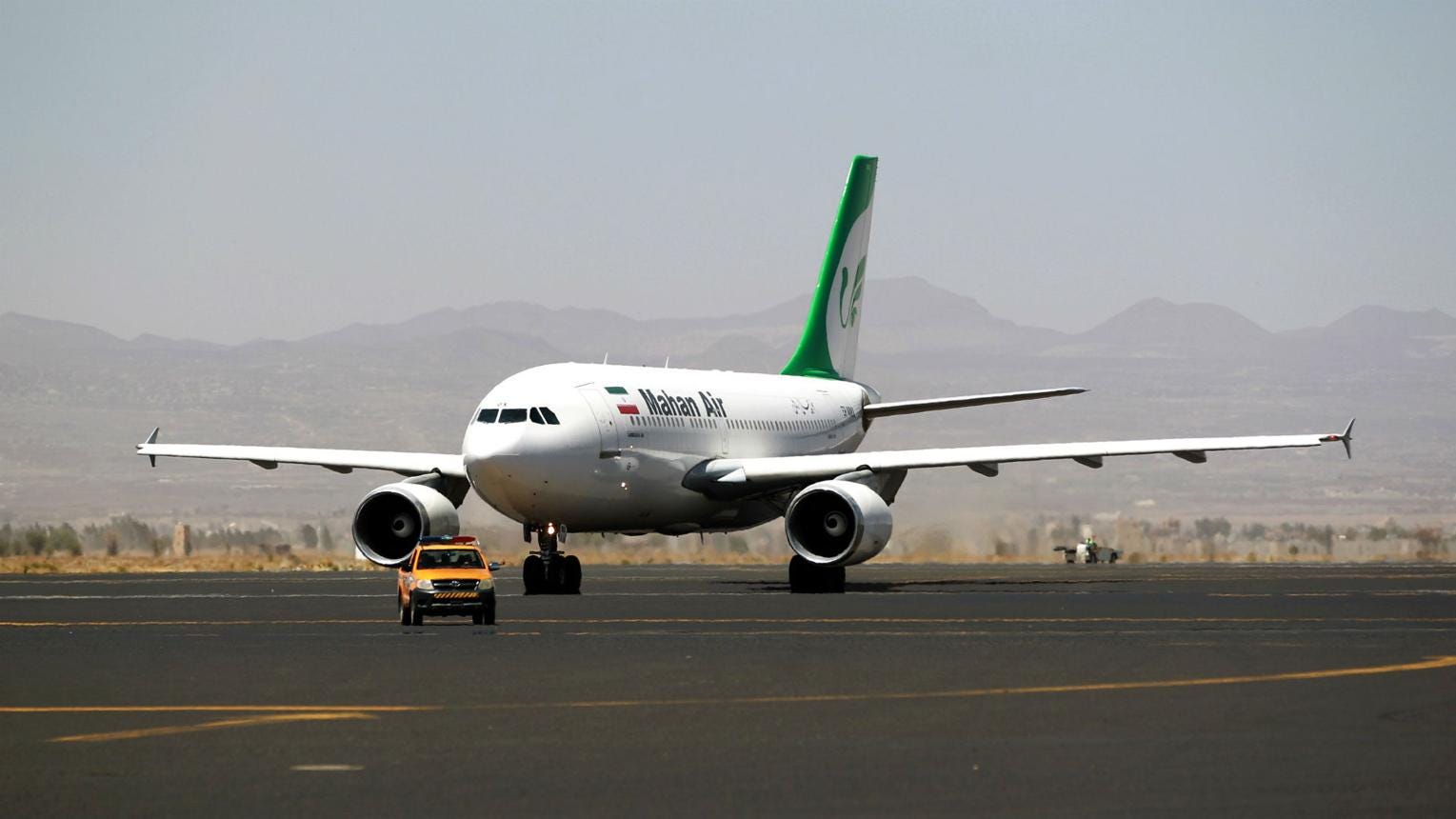
On September 8, 2026, the United States Treasury announced sweeping sanctions against Iranian aviation businesses and their support networks. The measures designated 27 Iranian airlines and additional entities connected to aircraft procurement and aviation services. The restrictions have affected the ability of Iranian carriers to maintain international relationships and operations.
By October 16, reporting described canceled routes, substantially longer journeys, and greatly increased travel expenses for Iranian passengers. These are real consequences beyond the language of diplomatic announcements.
10
However, a global distribution system, or GDS, is not the same thing as international airspace control. Reservation systems facilitate airline inventory distribution, sales, travel-agent bookings, and commercial transactions. They are essential to many international travel arrangements, but they are not the only possible means of ticketing.
Similarly, restrictions imposed by one booking provider do not automatically eliminate every reservation channel or physically prevent all flights from operating.
I found authoritative confirmation of the September aviation sanctions, but not independent confirmation of the transcript’s precise claim that a universal global reservation-system cutoff would take effect on October 22. Because that date is still in the future as of this report, its alleged effect must be treated as a claim awaiting verification.
Nevertheless, the larger issue deserves investigation. Modern countries depend upon systems they do not necessarily own: aircraft maintenance networks, international payment services, aviation insurance, communications infrastructure, reservation platforms, and foreign regulatory approvals. A government can operate airports domestically while becoming progressively disconnected from global commercial services.
This creates a form of pressure that is neither a traditional military blockade nor merely a diplomatic condemnation. International access can contract through financial and technical restrictions, one service relationship at a time.
But who ultimately pays the price? An airline associated with a sanctioned government may lose revenue, yet the passenger facing an unaffordable ticket may be a student, a patient seeking treatment, a parent visiting a child, or a family trying to reunite across borders.
If pressure on the state also constrains ordinary citizens, the human consequences cannot be dismissed as incidental. They must be evaluated alongside the policy’s stated purpose, its measurable results, and the humanitarian accommodations that remain available.
V. The Wakhan Corridor: A Road Reaches China, but a Border Remains Closed
The discussion’s most geographically revealing clue lies in northeastern Afghanistan, where the Wakhan Corridor stretches toward China’s Xinjiang region.
On October 4, 2026, Afghanistan’s Taliban authorities inaugurated a roughly 121-kilometer road extending through Wakhan to the Chinese border. The project represents a significant physical development in an isolated mountainous region. Yet the completion of the road on the Afghan side is not equivalent to the establishment of an operational international trade crossing.
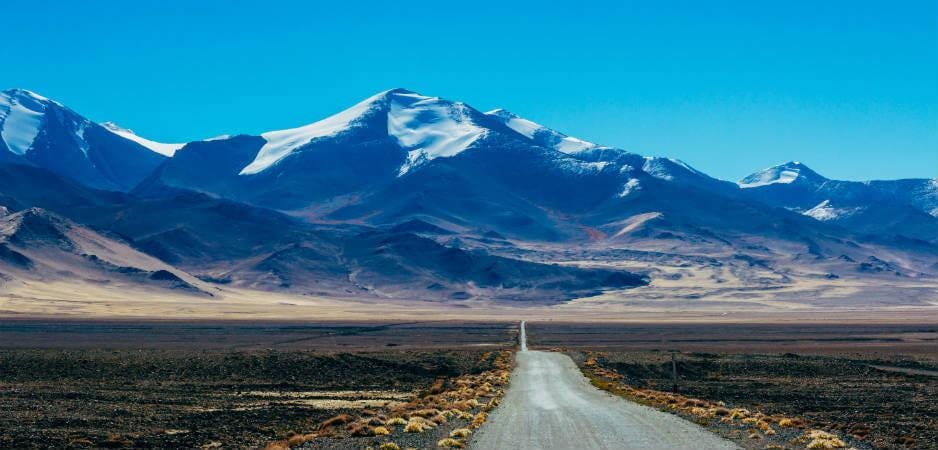
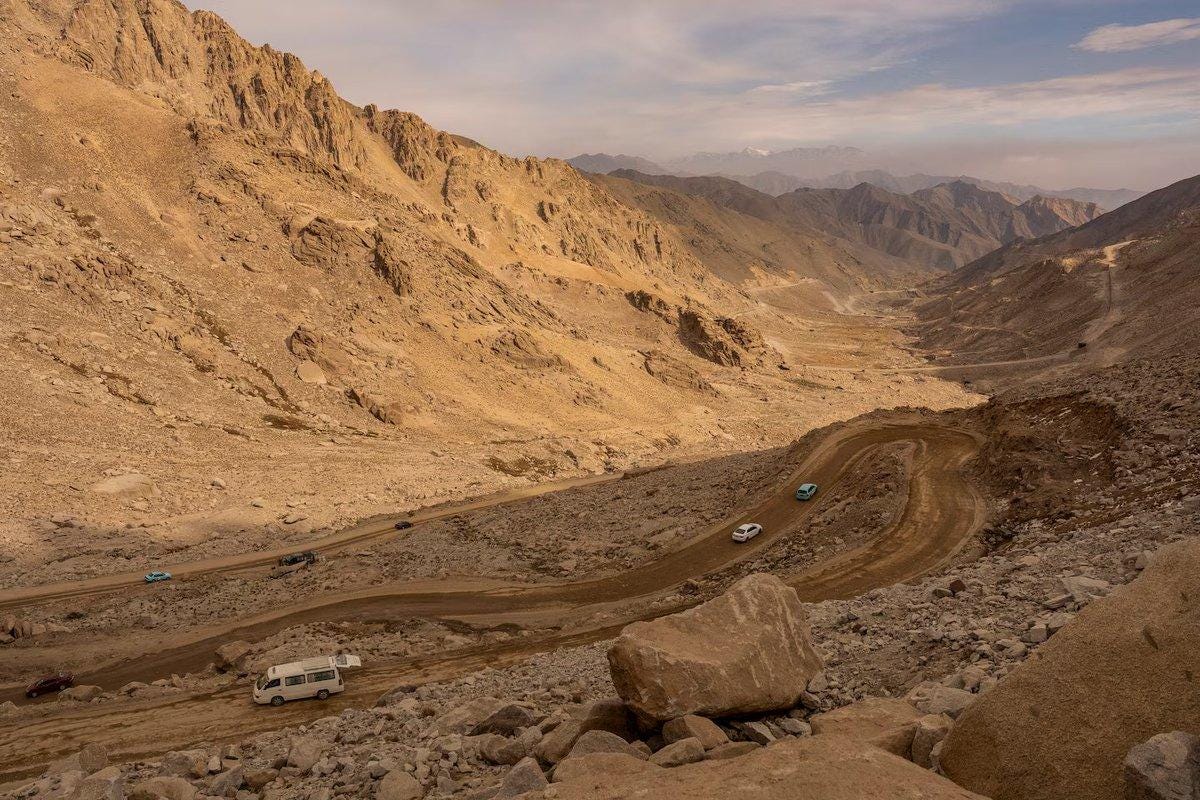
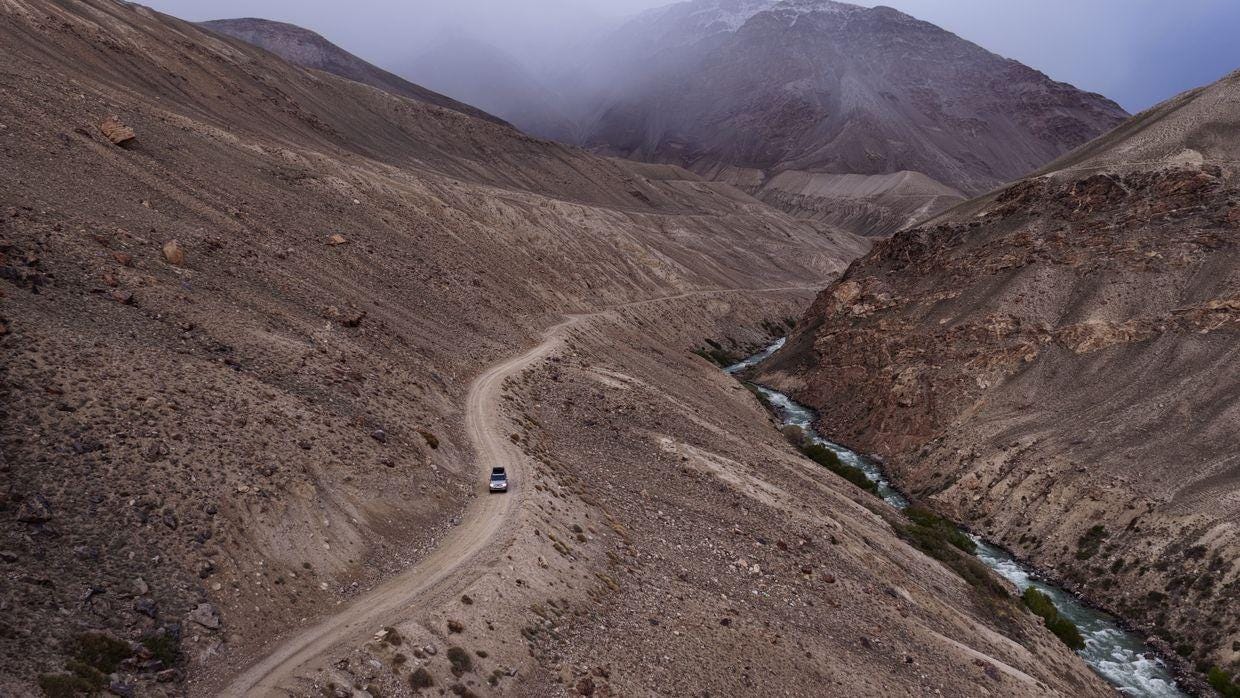
Reporting dated October 13 confirmed a particularly interesting detail: China had not sent representatives to the inauguration, had not publicly recognized the opening as a functioning crossing, and continued to maintain a closed, heavily secured boundary. Satellite imagery showed that the new Afghan road approached the border, but commercial access into China had not been established.
This makes the transcript’s observation about Chinese nonparticipation substantially more credible than many of its other allegations.
The unanswered question is why Beijing has not opened the crossing.
Several explanations deserve consideration. China may have concerns about border security, unauthorized movements, infrastructure standards, customs arrangements, or the commercial viability of a remote high-altitude route. Beijing may also prefer to negotiate more favorable arrangements before committing to a permanent opening.
The original discussion suggests that China might be using the crossing as leverage in negotiations with the United States. That is one possible geopolitical interpretation, but evidence of such a bargaining arrangement has not been established.
An additional distinction is important: Afghanistan’s desire to open a connection does not mean China shares the same urgency. For Kabul, direct road access could reduce dependence on Pakistan, expand bargaining options, and potentially introduce new economic relationships. For Beijing, the benefits must be weighed against security costs and existing trade corridors.
This is where infrastructure becomes geopolitical power. The party constructing a road may control one end, but the party operating the border determines whether the road can fulfill its intended international function.
And that observation leads directly into the transcript’s most speculative allegation.
VI. The Underground Mystery: Is Afghanistan Being Used to Hide Iranian Assets?
The speaker alleges that construction equipment sent from Iran and China into Afghanistan under the description of road-building machinery may actually be excavating concealed spaces in mountainous terrain. He speculates that strategic assets are being transferred from Iran and hidden inside Afghanistan, potentially to preserve them for later retrieval.
The allegation is presented as an emerging investigation rather than a completed discovery. Even in the original Persian discussion, the speaker acknowledges that the identity of the allegedly hidden materials remains unknown and that additional information would be needed.
That limitation is fundamental.
There are documented road-building and infrastructure projects in Afghanistan, including Wakhan. But construction equipment, tunneling, or excavation activity does not independently establish that Iran is transferring military technology, nuclear-related material, government property, or financial assets across the border.
Mountainous regions require extensive excavation for legitimate infrastructure. Roads, tunnels, drainage systems, protective walls, mining operations, and storage installations can involve heavy machinery. Without evidence identifying the equipment, worksite, operators, cargo, and destination, describing an activity as covert asset concealment would be premature.
At the same time, the broader strategic question is worth examining because governments have historically dispersed important resources during periods of military threat.
If a state expects vital facilities to be attacked, its institutions may seek to preserve records, machinery, communications capabilities, financial reserves, and other essential resources. Moving or dispersing assets can be a defensive measure. It can also raise concerns about transparency, ownership, and the potential concealment of prohibited materials, depending on what is moved and under whose authority.
The appropriate investigation would establish whether unusual cross-border shipments exist, whether identifiable organizations are involved, whether customs or financial records support the allegation, and whether any specific construction site can be independently connected to those movements.
Without such evidence, the transcript’s suggestion remains an unverified theory.
But it introduces an even larger question: if strategic resources were moved outside Iran, who would control them, and to whom would they eventually be returned?
Would those assets remain under Iranian state authority, come under the protection of a foreign government, or become dependent upon intermediaries who possess the physical means to withhold them? These possibilities have different implications, and none should be assumed without evidence.
The significance is not limited to the alleged cargo. It concerns the relationship between a country’s legal ownership of resources and its practical ability to control them.
VII. The Strategy of Waiting Out Trump
The final hypothesis in the transcript is that the Islamic Republic seeks to survive the remaining period of Donald Trump’s presidency, preserve enough of its institutional and strategic capacity, and rebuild or restore operations after the immediate pressure diminishes.
The speaker connects this theory to alleged movements of assets into Afghanistan. In this account, concealment and survival would be linked: rather than permanently abandoning valuable resources, officials would attempt to protect them until a more favorable diplomatic environment emerged.
There is a meaningful difference between recognizing that governments plan around foreign electoral calendars and claiming to possess evidence of such a specific operation.
Governments frequently examine the political durability of their opponents’ policies. Diplomatic agreements, sanctions enforcement, military commitments, and trade restrictions can change between administrations. A government facing intense external pressure may reasonably consider both immediate survival and the possibility of future negotiations.
But waiting for political change is not a guarantee that pressure will disappear. Congressional legislation, international sanctions, military relationships, commercial decisions, and the interests of other governments can survive a change of president.
A strategy dependent solely on the passage of time also introduces domestic risks. Economic conditions can deteriorate, institutional rivalries can intensify, infrastructure can decay, and public confidence can weaken while a government waits for external circumstances to change.
The October 2026 economic picture illustrates these constraints. Reporting on American sanctions and Iran’s financial conditions describes severe pressure on energy exports, aviation, currency stability, and inflation. Tehran’s economic authorities have challenged some American characterizations of these conditions, but the documented restrictions and market disruptions are substantial.
If the leadership intends to endure such pressure, the consequences will not be confined to ministers, commanders, or foreign negotiators. Households, employers, workers, patients, and students confront the immediate costs of a prolonged economic confrontation.
The deeper problem with a political strategy built around outlasting a foreign president is that it can reduce a country’s future to the electoral calendar of another nation.
A population of millions becomes trapped between the decisions of its own political institutions and the strategies of external powers, while everyday questions about employment, education, health care, personal freedom, and economic security remain unresolved.
This is why the claim deserves examination without automatically accepting it. The important evidence would include policy continuity, diplomatic negotiations, strategic reserves, documented institutional planning, and actual changes in economic or military preparations.
The question is not merely whether a government can survive two more years. It is what the country and its citizens would experience during those years, and what institutions would remain afterward.
VIII. The Larger Pattern: Control Without Ownership
Russia’s nuclear presence, American aviation sanctions, China’s unopened Wakhan border, Iran’s political rivalries, and allegations about assets moving through Afghanistan share an important structural characteristic.
Each involves the difference between formally possessing something and having independent control over its use.
Iran may possess a nuclear power plant, but specialized international technical relationships influence its ability to expand and maintain that infrastructure. Iranian airlines may possess aircraft, but international sanctions can limit their access to maintenance, payments, services, and foreign destinations. Afghanistan may have constructed a road, but China still controls whether a functioning international crossing exists at its end.
These are distinct circumstances, not evidence of one unified operation. But together they demonstrate the ways modern sovereignty is affected by networks of technological, financial, legal, and geographical dependency.
Territory is only one dimension of power. Control over essential services, technical expertise, trade access, logistics, and the institutions through which decisions are implemented can be equally consequential.
That makes the internal political future of Iran inseparable from its external relationships. Even a substantial change in government would not automatically resolve the challenges created by sanctions, technical dependencies, foreign contracts, damaged infrastructure, or disputed national resources.
A different political leadership would still need to address these material conditions, determine which arrangements should continue, and establish how decisions affecting public assets could be made transparently.
The genuine test of any future political transition would therefore extend beyond the names of the people taking office. It would include who controls the security institutions, who administers national revenue, who negotiates international agreements, and whether citizens have meaningful authority over the systems that shape their lives.
🩸 The Red Blood Perspective
The final phase of the confrontation over Iran cannot be evaluated through predictions alone. It must be examined through the visible movement of personnel, capital, equipment, institutional authority, and the practical means of controlling national resources.
The evidence considered here establishes several important developments. Russian nuclear personnel have returned to Bushehr in stages, demonstrating the continuation of a significant technical and commercial relationship. American sanctions have substantially restricted Iranian aviation. Afghanistan has completed a road to China’s border, but China has not opened a functioning commercial crossing.
These actions are observable. Their consequences can be investigated. They provide a firmer foundation than confident predictions of imminent political assassinations, secret territorial arrangements, or concealed Iranian assets in Afghanistan.
The broader allegation that Washington, Moscow, Beijing, and regional governments are bargaining over Iran’s future is not inherently implausible as a description of great-power competition. Governments routinely negotiate over security, infrastructure, economic interests, and regional influence. However, the existence of competition does not establish that every event belongs to a single predetermined plan.
Iran’s own political institutions also exercise agency. The country cannot be understood solely as an object moved around a board by foreign governments. Domestic officials, institutions, businesses, and citizens make decisions that shape events, sometimes reinforcing foreign influence and sometimes resisting it.
The most important unresolved issue is how the Iranian public can secure meaningful oversight of national institutions and resources, regardless of which political faction holds office or which foreign government offers assistance.
A country’s sovereignty should not be measured only by whether its officials can negotiate with powerful governments. It should also be measured by whether its citizens can hold those officials accountable for the agreements they make, the resources they administer, and the consequences of their decisions.
The critical question is not simply who will control Iran after the conflict. It is whether control will become more accountable to the people who live there.
🌊❤️✨ The Ocean of Love and Positivity Perspective
Behind every geopolitical calculation are human lives that cannot be reduced to bargaining positions.
A passenger stranded by canceled flights is not an aviation sanction. A family struggling with inflation is not an economic indicator. A child growing up near threatened infrastructure is not a strategic asset. These are people whose lives continue while governments negotiate, threaten, compete, and sometimes fight.
The Ocean of Love and Positivity perspective does not require ignoring destructive actions or abandoning accountability. It requires recognizing that accountability should ultimately protect life, restore dignity, correct wrongdoing, and prevent further harm.
If Iran’s political institutions change, a humane future will require more than replacing one collection of powerful individuals with another. It will require repairing damaged communities, restoring trust, protecting political and religious freedom, rebuilding economic opportunity, and ensuring that citizens are not punished simply for belonging to a country whose government has made destructive decisions.
The same principle applies to international relationships. Russian engineers, Iranian workers, Afghan villagers, Chinese traders, and American citizens do not become enemies merely because their governments have competing interests. Cooperation among ordinary people can survive political disagreements, provided institutions permit such relationships to develop without coercion or exploitation.
Love in this context is not passive acceptance. It is the decision to recognize another person’s humanity while insisting upon responsibility for harmful actions. Positivity is not pretending that suffering does not exist. It is directing attention toward the conditions that make healing, reconciliation, and a better future possible.
Iran’s greatest asset is not a nuclear facility, a mountain tunnel, an aircraft fleet, or a hidden financial reserve. Its greatest asset is the knowledge, creativity, courage, and potential of its people.
Any lasting political transformation should be judged by whether those people gain a greater ability to live securely, think independently, develop their talents, and participate in shaping their own future.
A future built upon retaliation alone risks preserving the emotional logic of the conflict. A future built upon truth, accountability, restoration, and human dignity offers the possibility of moving beyond it.
A Final Challenge from Red Blood Journal — Think Beyond What You Are Told
Before accepting this investigation, challenge it.
Ask whether the evidence supports the conclusions. Ask whether an interpretation has been mistaken for a fact. Ask what information might contradict the argument, what evidence remains missing, and whether another explanation could account for the same events.
Question government statements, political opposition movements, international institutions, intelligence assessments, commentators, and media organizations. But do not stop there. Question Red Blood Journal itself.
If we suggest a connection, demand evidence. If we identify a possible motive, ask whether documented actions support it. If we describe a pattern, examine whether the pattern survives the inclusion of facts that do not fit.
Imagination helps us recognize possibilities that conventional explanations may overlook. But imagination is the beginning of an investigation, not its conclusion.
The purpose of asking difficult questions is not to replace one unquestionable authority with another. It is to develop the independence of mind necessary to judge claims, recognize manipulation, and make decisions without surrendering personal responsibility.
Think beyond what you are told, including what you are told here. Follow the evidence wherever it leads, even when it challenges an explanation you initially found convincing.
At the beginning, we invite you to question the world. At the end, we invite you to question us.
Sources and verification notes
The report draws on the final section of the supplied Persian transcript, supplemented by the following reporting and official materials. The sources corroborate specific developments, not every interpretation advanced in the original discussion.
World Nuclear News — Rosatom staff returning to Bushehr, August 10, 2026.
Safir — Report of 135 Rosatom personnel at Bushehr, October 12, 2026.
U.S. Treasury — Iranian aviation sanctions, September 8, 2026.
Radio Free Europe/Radio Liberty — Afghanistan’s road to China’s closed border, October 13, 2026.
Lowy Institute — Wakhan Corridor and bargaining power, October 15, 2026.
Reuters — Iran’s economic conditions and sanctions, October 14, 2026.
The reported October 22 reservation-system cutoff, alleged plans to assassinate reformist figures, and claims that strategic Iranian assets are being secretly stored in Afghanistan remain unverified. They should be revisited as additional evidence becomes available.
🩸🌊❤️✨ — Ocean of Love and Positivity
Blood connects us. The ocean unites us. Love guides us. Positivity illuminates our path.
Red Blood Journal — Think Beyond the Script
♟️
Geopolitics of Iran’s Strategic Assets
Oct 19, 2026
The provided text critically examines geopolitical tensions involving Iran, Russia, and international powers, investigating whether current conflicts are primarily about destroying military capabilities or controlling surviving strategic infrastructure. It analyzes verified developments, such as the return of Russian nuclear specialists to Bushehr, sweeping American aviation sanctions, and Afghanistan’s newly constructed road to a still-closed Chinese border. Furthermore, the source separates tangible evidence from unverified speculations regarding internal political struggles, alleged asset concealment, and impending global reservation system cutoffs. Ultimately, the narrative emphasizes that modern sovereignty is dictated by technical, financial, and logistical dependencies rather than mere territorial ownership. It concludes with a humanist perspective, asserting that any lasting transformation must prioritize the well-being and accountability of the Iranian people over geopolitical maneuvering.