


🩸 🇮🇷 🇬🇧 🐍 🎭 ⛓️ 🌊 — The Dog That Bit Its Master: The Regime, the Old Fox, and the People They Forgot
Red Blood Journal | Investigative Report | October 13, 2026
From the promises of freedom in 1979 to the torture chambers of the Islamic Republic, from decades of Western diplomacy to the reported Iranian-directed threat against a British airbase, one question connects the story: whose interests have actually been protected?

When the Dog Turns Against the Old Fox
On October 12, 2026, Britain publicly accused Iran’s Islamic Revolutionary Guard Corps of directing a suspected hostile operation against RAF Fairford, an airbase in Gloucestershire used by American bombers. Prime Minister Andy Burnham told Parliament that British authorities assessed the incident as highly likely to have been coordinated in Iran and almost certainly directed by the IRGC. Seven suspects had been arrested in connection with events near the base on September 27; no viable explosive device had been discovered, and Iran denied any involvement. The British allegation was serious, but it remained an intelligence assessment rather than a judicial determination.
The accusation would be significant under almost any circumstances. But it acquires a deeper historical dimension when viewed through the relationship between Britain and Iran, a relationship shaped by more than a century of competing interests, political interventions, oil, intelligence operations, diplomatic arrangements, and public mistrust.
In Persian political language, Britain has long been called the old fox, a symbol of cleverness, deception, and the ability to influence events without appearing openly responsible for them. The Source commentary that inspired this investigation uses an even sharper metaphor: the dog from Naziabad, representing the Islamic Republic, has emerged from its den and bitten the old fox.
The metaphor suggests that a political establishment allegedly protected by powerful foreign interests has turned against those interests. It is memorable, but it also contains an accusation that deserves investigation rather than automatic acceptance: was Britain truly the Islamic Republic’s protector, or did decades of conflicting policies, calculated engagement, economic interests, and missed opportunities produce a relationship that neither government fully controlled?
To answer that question, we must investigate not only what Britain did, but what the Islamic Republic did from the moment it acquired power. The behavior of a political system toward its own population often reveals more about its priorities than the speeches it delivers to the rest of the world.
And in the Islamic Republic’s case, that history begins with a promise of freedom.
🩸 Red Blood Journal — Think Beyond the Script
Before believing Britain’s accusations, Iran’s denials, the Source commentary’s interpretation, or even Red Blood Journal’s conclusions, examine the evidence and the consequences. Ask what was promised, what was done, who benefited, and who suffered. An appealing explanation is not automatically a proven explanation, and an official statement does not become credible merely because it comes from a powerful institution.
The Promise of Freedom That Became the Suppression of Opposition
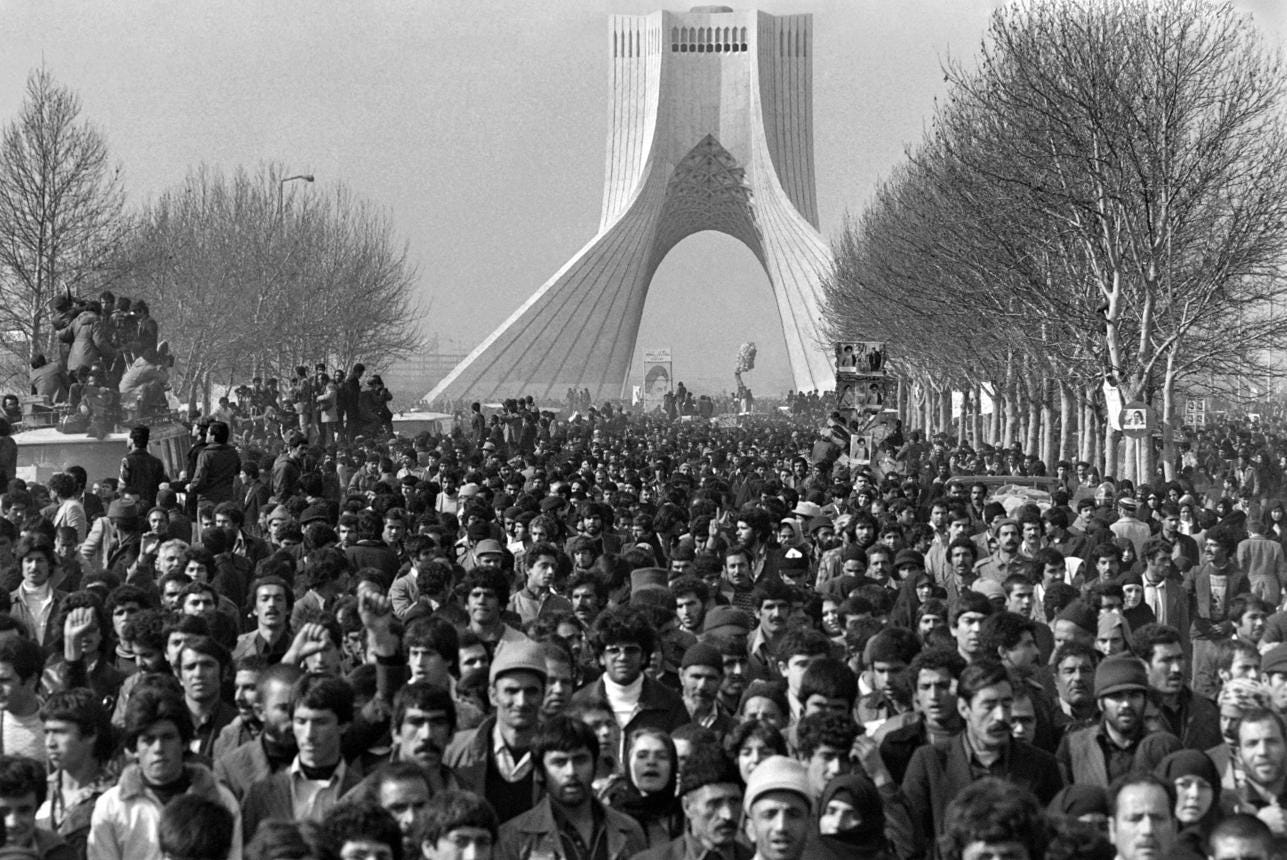
In 1979, millions of Iranians experienced the revolution as the possibility of a different political future. They did not all share the same ideology or seek the same government. Religious revolutionaries, secular nationalists, students, liberals, leftist organizations, and citizens dissatisfied with the monarchy participated in a broad upheaval whose members frequently disagreed about what should follow.
Ayatollah Ruhollah Khomeini and his supporters spoke of freedom and political participation. Amnesty International has documented the contrast between Khomeini’s assurances that Iranians would be free and the persistent violations of human rights that followed the establishment of the Islamic Republic.
The distinction between the revolution’s participants and the eventual rulers matters because taking part in the overthrow of one government does not necessarily mean consenting to every institution imposed by its successor. A population can unite in rejecting the existing order while remaining deeply divided about the political system that should replace it.
During the revolution’s initial period, numerous political organizations operated openly or attempted to establish themselves. People joined parties, attended gatherings, distributed publications, expressed political opinions, and imagined that the collapse of the monarchy would create opportunities for competing visions of Iran’s future.
Yet the space for independent political activity narrowed as the new ruling establishment consolidated its authority. Conflicts between political factions intensified, especially during 1980 and 1981. The confrontation became violent, including armed actions by the Mojahedin-e Khalq organization and repression by the government. But the government’s response extended far beyond the legitimate prosecution of individual acts of violence. Opposition organizations were suppressed, political prisoners were subjected to torture, and large numbers were executed.
This is where the contradiction becomes impossible to ignore. A movement that had promised political freedom established institutions that increasingly determined which political beliefs could be organized, expressed, or tolerated. Membership in certain opposition organizations could become evidence used against an individual, and political identity itself could carry severe consequences.
The historical record does not establish that every person who joined an opposition party was executed, nor does it prove that the initial promises were a centrally planned trap designed from the beginning to identify every opponent. What it does establish is a profound transformation from promises of political participation to institutionalized repression of political competitors.
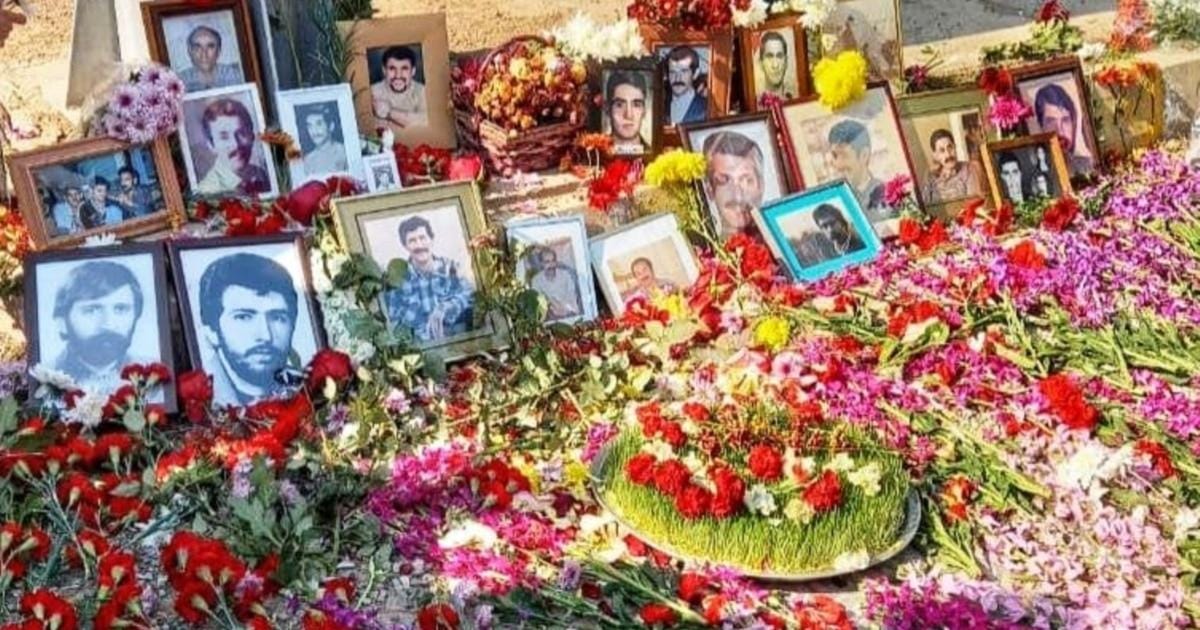
By 1988, that transformation reached one of its most devastating moments. Following the end of the Iran-Iraq War, Iranian authorities carried out mass executions of political prisoners. Human Rights Watch documents estimates of approximately 2,800 to 5,000 prisoners executed in at least 32 cities, including prisoners associated with different opposition movements. Many had already been serving prison sentences.
The significance is not simply the number of people killed. It is what the executions reveal about the relationship between political belief, institutional loyalty, and the use of state power.
According to documented accounts of the 1988 executions, prisoners were questioned about their affiliations, religious beliefs, repentance, and loyalty to the Islamic Republic. The authorities’ decisions could determine whether a person returned to prison or was executed. Human Rights Watch identifies evidence that senior officials participated in establishing and administering the process.
Consider the contradiction from the perspective of an ordinary citizen. If a government claims to represent the people, but political beliefs contrary to those of its rulers can contribute to a prisoner’s execution, how can that government’s claim to represent the public be independently tested?
A genuine system of political representation must permit disagreement. It must provide lawful ways for citizens to organize, criticize those in office, and change their leadership. Without those rights, the government’s declaration that it speaks for the people becomes a claim that the people may be unable to challenge safely.
And once opposition is systematically suppressed, another question arises. How does a government continue to function when many citizens no longer trust it? How does it maintain obedience, extract information, discourage resistance, and preserve loyalty within its own enforcement organizations?
To understand that, we must move from the promises made in public to what former prisoners describe happening behind prison walls.
From Political Opposition to the Torture Chamber
The Source report includes an extended account from Shirahmad Shirani, identified in the program as a former political prisoner and human-rights advocate from Iranian Baluchestan. Shirani describes methods of interrogation in which physical suffering was used to obtain confessions, compel cooperation, punish detainees, and intimidate families.
One of the most disturbing elements of his testimony concerns an apparatus known as Takht-e Mojezeh, or the Miracle Bed.
The name itself exposes a disturbing irony. A miracle normally suggests relief from suffering or the arrival of something extraordinary. In the account presented by Shirani, however, the supposed miracle was the interrogator’s ability to obtain virtually any confession demanded of a prisoner.
Shirani describes a raised bed, approximately two meters long, to which a prisoner would be restrained face down. According to his testimony, interrogators tied the prisoner’s limbs in positions that exposed the soles of the feet and then beat them repeatedly with heavy cables. The violence could cause extreme swelling and injuries that made walking difficult. He alleges that prisoners were subsequently forced to move on their injured feet before being subjected to further interrogation.
The purpose, as Shirani describes it, was not always to discover what a prisoner knew. It was often to force the prisoner to say what the interrogator wanted recorded. His testimony alleges that some detainees confessed to acts they had not committed because the alternative was continued suffering. He also describes efforts to keep prisoners alive through repeated torture sessions, including the availability of medical equipment in interrogation facilities.
This account must be attributed correctly. These specific details come from Shirani’s testimony as presented in the attached Source transcript; the transcript alone does not independently verify every incident he recounts. Nevertheless, the broader practice of torture and forced confessions in Iranian detention facilities has been documented by human-rights investigators over many years. The Iran Human Rights Documentation Center has separately recorded testimony concerning a device known as the Miracle Bed and the use of beatings to coerce confessions.
Human Rights Watch
The most important question is what these methods do to the relationship between truth and state authority.
A confession obtained through torture is not reliable evidence of guilt. It can instead become evidence of how much suffering a person was unable to withstand. If investigators begin with a preferred accusation and use pain to manufacture the words that confirm it, the resulting legal process reverses the purpose of justice. Instead of testing whether an accusation is true, it produces an apparent confirmation of a conclusion already chosen.
This creates a system capable of manufacturing its own evidence. Authorities announce that a dangerous opponent has been arrested, secure a confession under coercion, and present the confession to the public as justification for punishment. To citizens watching from outside the prison, the government can appear to have confirmed its accusations through its own procedures.
But the apparent confirmation may conceal the very process that produced it.
The issue therefore extends beyond the suffering of an individual prisoner. It concerns the capacity of political institutions to control what society is permitted to believe about the people they punish.
The Prisoner, the Family, and the Manufactured Enemy
Shirani’s account becomes even more disturbing when he describes prisoners whose alleged offenses had little apparent connection to political violence. In one example, he recalls a poor livestock owner who, according to his testimony, was pressured to confess to involvement with narcotics despite having lived an impoverished rural life. Another account concerns an older man who allegedly received a lengthy prison sentence after giving drinking water to people whom authorities considered opponents of the state.
In that example, the act of providing water became entangled with the political identity of the people who received it. Shirani portrays the man as someone who had responded to a basic human need without knowing or caring about the political affiliation of those asking for help.
The importance of this story is the principle it illustrates. If a government begins to interpret ordinary acts of kindness through the lens of political loyalty, citizens may come to fear not only opposition activities but everyday human relationships.
Shirani also alleges that family members were detained or threatened to pressure people wanted by the security services. He recounts his own family’s experience, including his allegation that his brother was killed in Karachi, Pakistan, in 2014. These claims would require separate corroboration before being presented as independently established facts, but they fit the broader investigative question raised by the testimony: how can institutions use relatives and personal relationships to extend coercion beyond the prison?
A person who refuses to cooperate may fear consequences not only for himself but for a parent, spouse, sibling, or child. Pressure on families changes the meaning of interrogation by forcing detainees to weigh their own beliefs against possible harm to loved ones.
Shirani further alleges that forced confessions could be recorded and broadcast ahead of executions, creating a public narrative of guilt before the person had access to meaningful independent legal scrutiny. He describes detainees accused of terrorism or armed activity whose political understanding, according to his recollections, was limited or nonexistent.
This does not establish that every person accused by Iranian authorities was innocent or that every security allegation was fabricated. Each case demands its own evidence. But when coercive interrogation and publicized confessions are part of the documented human-rights record, a televised admission cannot responsibly be treated as sufficient proof of a crime.
The difference between investigating violence and manufacturing an enemy is fundamental. A justice system must establish individual responsibility through evidence obtained without torture and tested through fair procedures. When an institution instead uses a person’s political identity or coerced statements as the basis for punishment, it undermines the reliability of its own accusations.
And this brings us to another part of the original report: the people who carry out these actions.
How an Institution Teaches Its Members to Obey
Torture chambers do not operate independently of the institutions that maintain them. They require recruitment, personnel, training, authority, budgets, supervision, internal protection, and organizations capable of carrying out decisions.
The Source commentary refers to a Deutsche Welle documentary, All the Ayatollah’s Men, which reportedly examines how the Islamic Republic recruits and retains members of its security establishment. In the account summarized by Source, two former security personnel describe ideological conditioning, financial privileges, social isolation, and institutional expectations of loyalty. The documentary’s specific allegations have not all been independently verified for this report, but the mechanisms it describes provide important questions for investigation.
One former officer, identified under a pseudonym, describes joining the security system as a young man with patriotic aspirations. Over time, according to his account, institutional education and repeated ideological messages shaped how he understood his duties. Another former member describes special housing, restricted social relationships, and expectations that security personnel remain separated from ordinary citizens.
If these accounts are accurate, their significance lies in how the institution may shape its members’ understanding of the people they serve. When individuals spend much of their professional and personal lives inside a system that provides their income, social relationships, identity, and security, disagreement with that system can become costly.
An officer may genuinely believe he is protecting his country, even while carrying out policies that other citizens experience as repression. Repeated ideological instruction can strengthen that belief, while limited exposure to the lives and grievances of ordinary citizens can make it harder to recognize the consequences of official decisions.
The Source report also describes special privileges for members of the Basij, including a citizen’s complaint about a 15% fuel discount apparently reserved for them. The speaker asks why citizens who face economic pressure must pay full prices while members of an organization involved in suppressing demonstrations receive preferential treatment.
A single reported discount is not sufficient to establish the entire system of benefits available to security personnel. But it raises an important question about institutional incentives: when the government distributes advantages on the basis of loyalty, does it create a group whose material interests become increasingly tied to preserving the government?
Privileges do not automatically turn an individual into an abuser, and ideological training does not eliminate personal responsibility. Yet organizational incentives can influence whether members question instructions, report misconduct, or place the welfare of the institution ahead of the rights of citizens.
The Source commentary introduces an even darker allegation concerning a clandestine circle of security officials known as Dokhmeh, or the dungeon. According to the documentary account presented in the transcript, this alleged network is associated with planning operations against political opponents, including abductions and killings. These are serious allegations concerning specific clandestine conduct; they should not be described as established facts without the underlying documentary evidence and independent corroboration.
What can be established more broadly is that independent investigators have documented serious human-rights abuses in Iran, including torture, arbitrary detention, executions, and the suppression of political dissent. The persistence of those practices makes institutional accountability a central issue, not merely the misconduct of isolated individuals.
Human Rights Watch
This leads to a question that connects the revolution, the prison system, and the security establishment: if a government limits meaningful political competition, punishes dissent, and rewards institutional loyalty, what mechanisms remain for citizens to hold its leadership accountable?
Such a structure may preserve those exercising power while simultaneously producing deep divisions between governing institutions and the public. It may also allow officials to claim that they are defending the nation even when their actions are contested by substantial numbers of its citizens.
Now consider the position of foreign governments dealing with such a system. If the population’s ability to express opposition is restricted, how can outside powers justify treating agreements with the ruling establishment as evidence that the governed population has consented to the policies being negotiated?
That question brings Britain back into the story.
The Old Fox: History, Intervention, and the Question of Protection
Britain’s involvement in Iranian affairs is not an invention of contemporary political commentators. The historical record includes significant political and economic intervention, most notably Britain’s participation with the United States in the 1953 operation that overthrew Prime Minister Mohammad Mosaddegh.
That history helps explain why British statements concerning Iran are frequently received with suspicion. For many Iranians, allegations of foreign interference emerge from memories of decisions in which Iran’s political sovereignty was subordinated to outside strategic interests.
However, documented involvement in the 1953 coup does not by itself prove that Britain planned the Islamic Revolution of 1979, installed Khomeini, or controlled the subsequent government. Those are separate historical propositions requiring their own evidence.
The stronger inquiry concerns the policies that Britain and other governments adopted after the Islamic Republic was established. What did they know about repression? Which diplomatic and economic relationships did they maintain? Were they attempting to contain Iran, limit conflict, negotiate concessions, or protect commercial interests? And when those policies produced consequences, who benefited?
The evidence from the 1980s makes this inquiry especially important. Political imprisonment, torture, and mass executions were not merely allegations that emerged decades later. International organizations documented serious human-rights abuses while they were occurring and continued to investigate them afterward.
Foreign governments therefore faced more than a choice between believing Tehran’s public declarations and remaining ignorant of domestic conditions. They had opportunities to examine independent reporting, diplomatic information, international advocacy, and the experiences of exiled Iranians.
Yet relationships between countries are not governed solely by judgments about human rights. Governments consider trade, military security, energy, intelligence, regional stability, hostages, alliances, and the risks of confrontation. Those considerations can explain why a government maintains relations with another government whose domestic practices it condemns.
Explanation, however, is not the same as exoneration.
A policy may be understandable in strategic terms and still produce damaging human consequences. Diplomatic contact may be necessary, but the necessity of contact does not mean every concession is justified. Sanctions may demonstrate opposition to abuses, yet poorly designed restrictions can hurt ordinary citizens without substantially weakening those responsible for misconduct.
The test must therefore be practical. What did particular policies accomplish? Did they improve accountability, reduce violence, and protect the public? Or did they provide time, resources, and opportunities that strengthened the ruling establishment without meaningfully changing its conduct?
It would be premature to declare that Britain’s relationship with Tehran was designed to preserve the Islamic Republic. It would be equally inadequate to assume that diplomatic statements of opposition prove British policies had no role in sustaining the government.
The evidence has to be followed transaction by transaction, decision by decision, and consequence by consequence.
When the Conflict Crosses Britain’s Borders
This historical relationship leads back to the reported incident at RAF Fairford. The British government’s October 12 attribution represents a major escalation in its public assessment of Iranian security activity on British territory.
British officials said the suspected operation demonstrated the IRGC’s willingness to project hostile activity beyond Iran through covert networks and intermediaries. A joint statement issued by Britain, the United States, and other governments condemned alleged Iranian-linked acts involving sabotage, intimidation, and attacks abroad.
That is a significant diplomatic development. But the meaning of the incident should not be exaggerated. Arrests and intelligence assessments are not convictions, and no viable explosive device was reportedly found. Iran rejected the allegations and asked Britain to provide evidence.
What the incident clearly demonstrates is a change in the relationship’s immediate security consequences. British officials now publicly describe the IRGC as a direct threat to British interests, while British security institutions have responded with investigations and additional sanctions.
On October 12, the British government added two designations under its Iran sanctions regime. The broader sanctions framework had existed before Fairford, and Britain had already accused Iran of pursuing hostile operations abroad. The new response was therefore an escalation of an existing policy, rather than the first occasion on which Britain recognized the threat.
The underlying issue is whether those policies have effectively addressed the dangers identified by British authorities. Have intelligence services disrupted the alleged networks? Have financial restrictions constrained relevant operations? Have legal mechanisms created effective accountability? What were the consequences of earlier decisions to negotiate, contain, sanction, or maintain relations?
These questions are more useful than treating every British action as theater or assuming that every Iranian denial must be false.
The metaphor of the dog biting the old fox may express the historical irony of the moment. But the question of who created, protected, or benefited from the relationship must still be answered with documents, institutional records, financial evidence, and demonstrable policy outcomes.
The Same Method, Different Audiences
There is a connection between the domestic and international parts of this story, but it should not be confused with proof of an identical method operating everywhere.
Inside Iran, the historical record documents the use of coercion against political opponents, including executions and torture. The Source testimony describes additional allegations of forced confessions, pressure on relatives, and attempts to control the public narrative through recorded admissions.
Outside Iran, Britain and its partners allege that Iranian security organizations have used covert networks, intermediaries, and threats against targets abroad. These allegations differ in their evidence, legal status, and specific circumstances.
What connects them analytically is the possible use of coercion to obtain political outcomes. Such coercion can include intimidation, threats, confinement, unlawful violence, or pressure against people whose actions an institution wishes to control.
The distinction between lawful national-security enforcement and unlawful coercion is essential. Governments have a responsibility to investigate genuine threats and prosecute crimes through fair legal procedures. They do not acquire a legitimate right to torture detainees, punish people for protected political beliefs, or threaten innocent relatives.
This distinction also prevents an investigation from turning into a simplistic argument that all state security activity is inherently abusive. The issue is not the existence of law enforcement, intelligence organizations, or military institutions. It is the legality of their conduct, the accountability of those exercising authority, and the protections available to people affected by their decisions.
The most important measure is not how powerful an institution becomes but what boundaries constrain its use of power.
The People Who Pay for the Decisions
Throughout this history, one group has repeatedly borne consequences without necessarily controlling the decisions that produced them: ordinary people.
Political prisoners paid for the suppression of opposition. Their families lived with uncertainty, grief, and restrictions on their ability to seek justice. Citizens faced economic and social consequences of domestic policies and international confrontations. British residents now face the implications of alleged hostile operations that their own authorities say may be directed from abroad.
Different populations have experienced different harms, but the recurring issue is accountability. Who makes the decisions, who benefits, who bears the costs, and who can require an explanation?
A government may claim it is protecting sovereignty while its citizens question whether their individual rights are protected. Another government may justify continued diplomatic engagement as necessary for regional stability while struggling to demonstrate that its policy has reduced threats or abuses.
For Red Blood Journal, this is where the investigation must resist becoming a contest between national symbols. Britain is not a single person called the old fox. Iran is not a single animal called the dog. Both countries contain millions of individuals with different interests, beliefs, responsibilities, and degrees of power.
A ruling establishment must not be confused with the population over which it exercises authority. The fact that officials occupy the institutions of government does not mean their decisions necessarily represent the independently expressed wishes of the people.
That distinction is especially important where citizens face severe restrictions on political competition and dissent. The historical suppression of Iranian opposition organizations raises fundamental questions about how the government’s representative claims can be meaningfully tested.
Likewise, British citizens are entitled to scrutinize whether their government’s diplomatic and security policies have protected them effectively, regardless of which party occupies Downing Street.
By moving the discussion from national loyalty to institutional accountability, we can examine both governments without assuming that criticism of a state’s policies is criticism of its people.
The Question Behind the Entire Story
We began with a British accusation concerning an Iranian-directed threat to RAF Fairford. To understand its wider significance, we followed the history backward through foreign intervention, revolutionary promises, the suppression of political opposition, the 1988 mass executions, torture testimony, and the internal organization of state power.
Those subjects are not separate stories accidentally placed beside one another. They form a chain of questions about how authority is acquired, how it is maintained, how it is challenged, and how other institutions respond to it.
The promises made during the revolution invite us to compare words with later actions. The suppression of opposition raises questions about political representation. The evidence of torture and forced confessions shows how coercion can undermine the pursuit of truth. Accounts of privileged and isolated security organizations raise questions about institutional incentives. Britain’s historical involvement and subsequent dealings with Tehran invite examination of international responsibility. Finally, the Fairford incident raises the possibility that a relationship managed for decades has entered a more openly confrontational phase.
None of these connections requires us to assume that a single secret command center planned the entire sequence.
The documented events are already consequential. They justify asking whether domestic power was maintained at the expense of citizens’ rights, whether foreign policies contributed to that system’s endurance, and whether current international pressure will produce greater accountability or merely another adjustment in relations among powerful institutions.
A government may survive by suppressing domestic competitors. It may obtain resources through international economic relationships, diplomatic negotiations, and the competing interests of other states. And it may eventually find that those relationships change when its actions threaten the security or priorities of the governments with which it once negotiated.
Whether Britain’s relationship with the Islamic Republic followed that precise pattern remains a question for further investigation. But the central issue facing Iranian citizens should not depend on the answer.
If a population’s ability to organize, dissent, and replace its rulers is restricted, changing the attitude of a foreign government does not by itself restore those rights.
Even if Britain and the Islamic Republic become open adversaries, that does not guarantee freedom for the people of Iran. The institutions that determine Iran’s political future ultimately need to be accountable to its citizens, not to the shifting calculations of foreign governments.
And that may be the most important lesson hidden behind the image of the old fox and the dog.
🩸 The Red Blood Perspective
The story of the Islamic Republic cannot be understood by examining only the speeches of its leaders, the denunciations of its adversaries, or the calculations of foreign governments. It requires examining what its institutions have actually done to the people they claim to represent.
The revolution offered promises of freedom, yet political competition was progressively restricted. Opposition organizations were suppressed, prisoners were tortured, and thousands were executed. These facts establish a serious historical contradiction between promises of political liberty and the methods later used to consolidate and preserve authority.
The torture testimony from Baluchestan adds a human dimension to that history. It reminds us that state violence is not merely a matter of institutional structure or political terminology. It concerns individuals who suffer, families who live with the consequences, and societies in which fear can influence what people say, believe, and dare to challenge.
But none of these facts automatically proves that foreign powers designed or continuously controlled the Islamic Republic. That proposition requires its own evidence, and the absence of such evidence should not be concealed behind a compelling metaphor.
The deeper question is why the interests of citizens so often become secondary when powerful institutions negotiate with one another.
Britain’s historic interventions, its subsequent dealings with Tehran, and the present confrontation over Fairford deserve examination through records, financial relationships, security decisions, and the consequences of those policies. Iranian officials deserve scrutiny through the same method.
A government claiming to represent the people must be judged by whether those people can disagree with it, organize independently, demand accountability, and change their leadership without fear.
And a foreign government claiming to promote freedom must be judged by whether its actions genuinely support those rights rather than merely advancing its own strategic position.
This is why personal sovereignty matters. No political leader, religious authority, opposition figure, foreign president, or intelligence institution should become a substitute for independent judgment.
The ultimate question is not whether the old fox defeats the dog, whether the dog injures the old fox, or whether the two eventually negotiate another arrangement.
It is whether the people will finally possess the institutional rights and protections needed to determine their own future.
🌊 Ocean of Love and Positivity Perspective
The Ocean of Love and Positivity begins with a recognition that political labels cannot erase the human being beneath them. A prisoner is not merely a case number. A citizen is not merely an instrument of national policy. A security officer is not born incapable of compassion. And a person who has committed wrongdoing does not become exempt from responsibility simply by claiming loyalty to a higher cause.
When institutions teach people to fear independent thought, punish disagreement, or accept cruelty as a professional responsibility, the consequences extend beyond the direct victims. Such systems can also diminish the moral independence of those who participate in them, making obedience appear more important than conscience.
The testimony concerning the Miracle Bed confronts us with a particularly difficult question. What happens to a society when a person’s suffering becomes a method of producing statements that authorities then call truth?
An institution can force a prisoner to speak, but coercion cannot make the resulting words reliable. It can compel outward submission, but that does not prove genuine agreement. And it can create fear, but fear is not the same as moral legitimacy.
The Ocean of Love and Positivity does not ask society to ignore violent wrongdoing or abandon justice. Those who commit crimes must be held accountable through fair procedures. Victims deserve protection, recognition, and meaningful opportunities for remedy. Preventing further harm may require restraining dangerous individuals, dismantling abusive practices, and imposing lawful consequences.
Yet justice should not become an excuse to reproduce the same methods we condemn. Torture does not become acceptable when directed against yesterday’s torturer. Collective punishment does not become legitimate when a political faction changes places with another. Revenge alone cannot create the institutions needed to prevent future abuses.
Accountability must protect, correct, restore where possible, transform harmful behavior, and prevent recurrence.
This principle also applies to the public. A society emerging from decades of repression faces a challenge greater than replacing individual leaders. It must establish habits of independent thought, tolerance of disagreement, respect for evidence, and resistance to the temptation to punish entire communities for the actions of particular institutions.
Such a transformation cannot depend entirely on foreign governments. International support may be valuable, but the capacity to respect one another’s freedom must develop within society itself.
If we want a political culture in which disagreements do not become grounds for imprisonment, we must practice the discipline of allowing others to think differently. If we want institutions that tell the truth, we must resist convenient falsehoods even when they support our own beliefs. And if we want a future free from political cruelty, we must reject the assumption that cruelty becomes acceptable when employed by those with whom we agree.
The Ocean of Love and Positivity is not a religion or a promise of reward and punishment in another world. It is a philosophy of consciousness, responsibility, and the recognition that human beings share a deeper interest in living without fear, humiliation, and unnecessary suffering.
The lesson is not that all people are equally responsible for the violence committed by political institutions. They are not. Responsibility must be established individually, through evidence and fair judgment.
The lesson is that humanity can move beyond cycles of domination only when people refuse to make hatred, fear, and unquestioning obedience the foundations of their relationships.
Good thoughts, good words, and good deeds are not substitutes for justice. They are principles that can help guide the way justice is pursued.
And perhaps the most meaningful transformation begins when people recognize that the value of a human life cannot be determined by its usefulness to any government.
🩸 A Final Challenge from Red Blood Journal — Think Beyond What You Are Told
At Red Blood Journal, we do not ask you to believe everything we present, nor do we ask you to automatically accept what we dismiss. When we say something is, may be, could be, is not, or cannot be, remember that even our conclusions deserve examination.
Sometimes what appears impossible may be possible. What appears certain may be an illusion. And what we explicitly tell you is not true may still deserve a second look.
Perhaps we are mistaken. Perhaps the evidence is incomplete. Or perhaps we have deliberately thrown you a curveball to discover whether you are truly using your own imagination and critical thinking.
Do not mistake our conclusions for the boundaries of reality. Use your imagination to discover possibilities, your reasoning to challenge assumptions, and the available evidence to distinguish what is plausible from what is merely imaginable.
Question our words as carefully as you question the words of those we investigate. The ultimate Red Blood reader is not someone who agrees with us. It is someone who can think beyond us.
At the beginning, we invite you to question the world. At the end, we invite you to question us.
🩸 Red Blood Journal — Think Beyond the Script
A Record. A Voice. A Purpose.
Read between the lines. Examine the actions. Question the frame. Think for yourself.
🌊 Ocean of Love and Positivity
Good Thoughts. Good Words. Good Deeds.
Editorial source note
This rewritten report integrates the Persian Source transcript, including the testimony of Shirahmad Shirani, with independently researched historical and contemporary sources. Documented history, attributed testimony, official allegations, and investigative hypotheses are identified separately. The alleged Fairford operation remains under investigation as of October 13, 2026. The broader hypothesis that Britain deliberately created or protected the Islamic Republic is not established by the evidence presented here.
The article is structured as one connected narrative: the promise of freedom → elimination of political competition → coercion and torture → institutional loyalty → international relationships → confrontation with Britain → the rights and sovereignty of citizens.
📄
The Regime, the Fox, and the Forgotten People
Oct 13, 2026
The provided texts examine the historical tension between the Islamic Republic of Iran and Britain, investigating how initial promises of freedom devolved into systemic repression, torture, and mass executions. They scrutinize how governing institutions maintain obedience through ideological conditioning and special privileges, while questioning whether international diplomacy truly protects ordinary citizens or merely serves elite interests. Furthermore, the reports analyze a suspected hostile operation directed against a British airbase, viewing it as a escalation in a century-long relationship defined by covert intervention and mutual mistrust. Ultimately, the sources emphasize that true accountability requires independent judgment, demanding that political systems remain answerable to their people rather than the shifting calculations of foreign powers.