


🩸 The Bluesky Protocol: Decoding the Algorithmic Utopia
A Red Blood Journal Conspiracy Investigation
Section: Conspiracies
I. Welcome to the New Gated Social Order
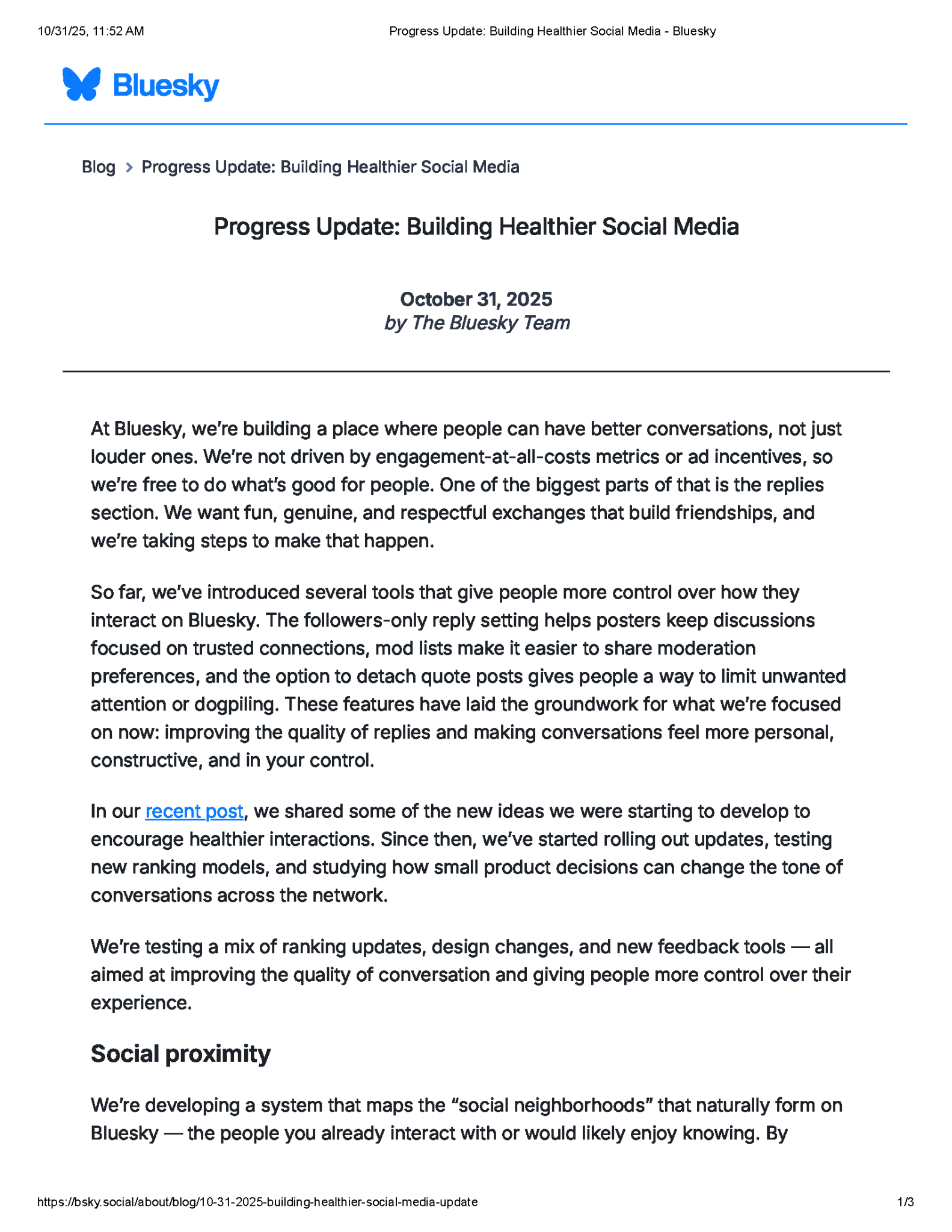
Bluesky says they’re “building healthier social media.” But the real construction happening behind the curtain is a new digital class system, engineered through invisible filters, user-driven policing, and emotionally-charged interface tweaks. Like all utopias, it comes with invisible fences — and the promise of peace is paid for with the privatization of speech.
This isn’t the end of toxic platforms. It’s the refinement of control — the soft velvet glove of protocol-grade paternalism.
II. Social Neighborhoods: The Algorithmic Cul-de-Sac
For decades, the internet was a wild bazaar — messy, chaotic, unfiltered. Bluesky now offers us something “better”: a curated suburbia of thought, a place where you only see posts from people most like you, where discomfort and conflict are minimized through code. They call this “social proximity.”
But what’s really being built is a balkanized cloud of micro-cultures, permanently insulated from one another. Relevance is the leash; comfort, the collar.
You won’t be “banned” — just redirected, nudged, and contextually starved until you comply with your peers.
III. Dislikes: The Weaponization of Disapproval
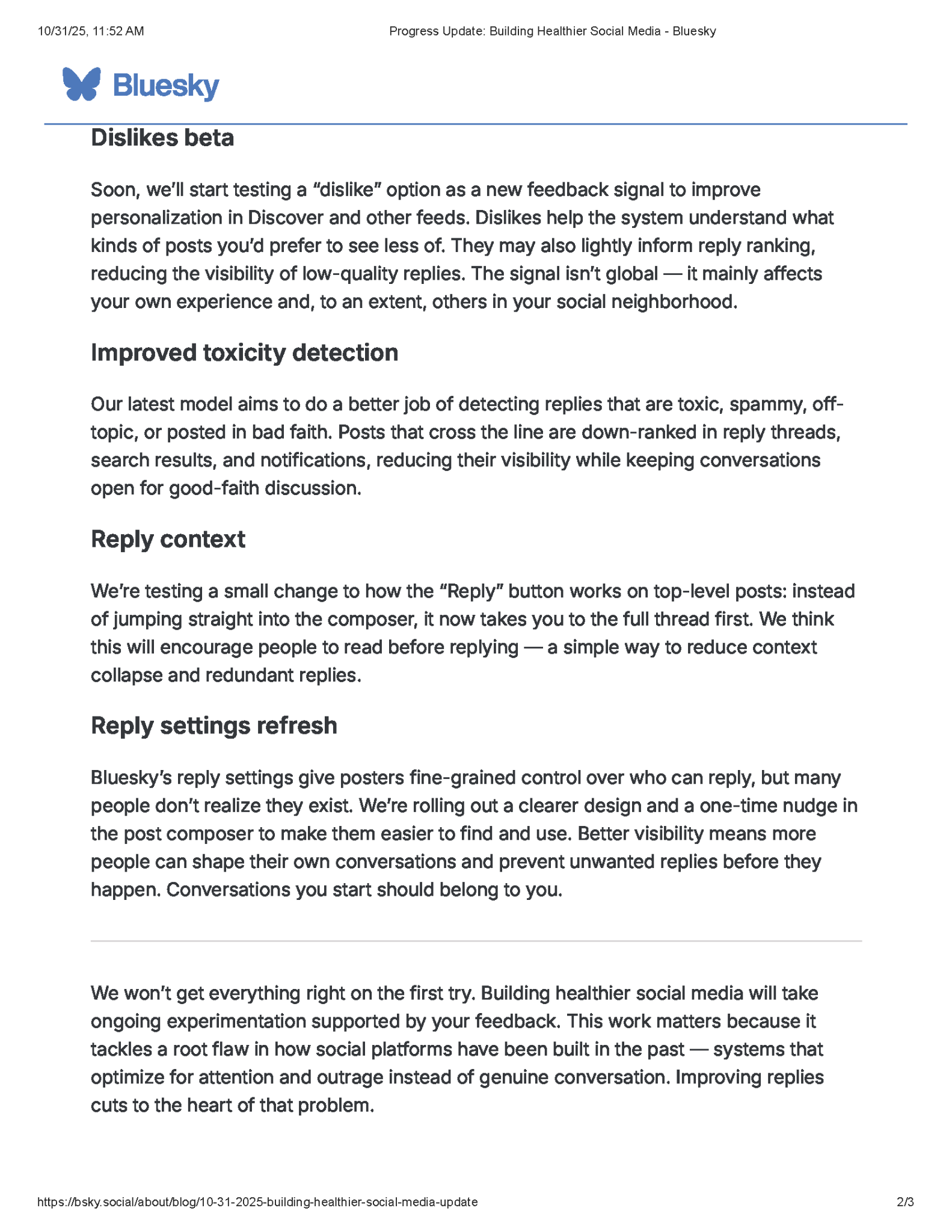
The new “dislike” function is presented as a personalization feature. But think deeper:
It trains users to police each other.
It builds quiet consensus around what is flagged as culturally undesirable.
It teaches the machine to bury deviance without ever issuing a warning.
With no public dislike counts, there’s no counter-narrative. No rebellion. Just a hidden quorum of disapproval that renders your ideas invisible.
This is a social credit system disguised as taste curation.
A smiley thumbs-down?
More like a digital guillotine that never drops — it just denies you sunlight.
IV. Toxicity Models: The Code That Judges You
Bluesky’s new AI “toxicity detector” is more than an algorithm; it’s the institutionalization of hidden values-based control. Its job isn’t to remove threats, but to curate what counts as acceptable emotional bandwidth.
What is “toxic”?
Who decides the standard?
In a time when almost any emotional or ideological sharpness can be labeled harmful, the real toxicity isn’t what users say.
It’s the pretense that moral speech filters are apolitical.
V. Nudged to Norms: The UI as a Teacher
Even small UX changes aim to retrain your instincts. Bluesky’s “Reply” button now takes you to the full thread before you can speak. They say it’s to “reduce redundancy” — but it also delays spontaneity.
It’s subtle. It’s simple.
And it’s firm: “Be context-aware. Be cautious. Don’t speak too soon.”
It’s interface as etiquette.
Code as emotional discipline.
VI. Controlled Freedom: You Own the Reply, They Own the Stage
Bluesky frames its reply controls as empowerment. But in truth, it’s decentralized censorship — each user becomes their own moderator, their own gatekeeper.
Public discourse dissolves into private forums with public facades.
A million tiny mute buttons replace one central banhammer.
The empire of “speech safety” doesn’t need to enforce anything. Just create tools — then let the fearful, curated masses enforce it for you.
VII. The Soft Surveillance State of Speech
This isn’t left or right. This is a systemic migration toward obedience by design. A world where control happens through:
Ranking, not removal.
Social signals, not state decrees.
Emotional nudges, not explicit silencing.
Your speech isn’t deleted.
It just stops showing up.
Thus ends the age of blatant censorship.
Thus begins the age of invisible erasure.
VIII. The Barcode of Belonging
Bluesky’s platform is a laboratory — not just for social tech, but for human behavior under quiet force.
They are prototyping what may become the next global OS for thought:
a digital future where speech is not forbidden —
just managed into irrelevance.
Utopias that fear conflict always become slow-growing dystopias.
And if left unchecked, this “healthier” social organism won’t just filter out cruelty.
It will filter out courage.