



Red Blood Journal – International Investigations Desk
By: Red Blood | October 2025
Smartmatic Indictment Oversights: Unaddressed Ties, Systemic Vulnerabilities, and the Real Credibility Crisis
Overview
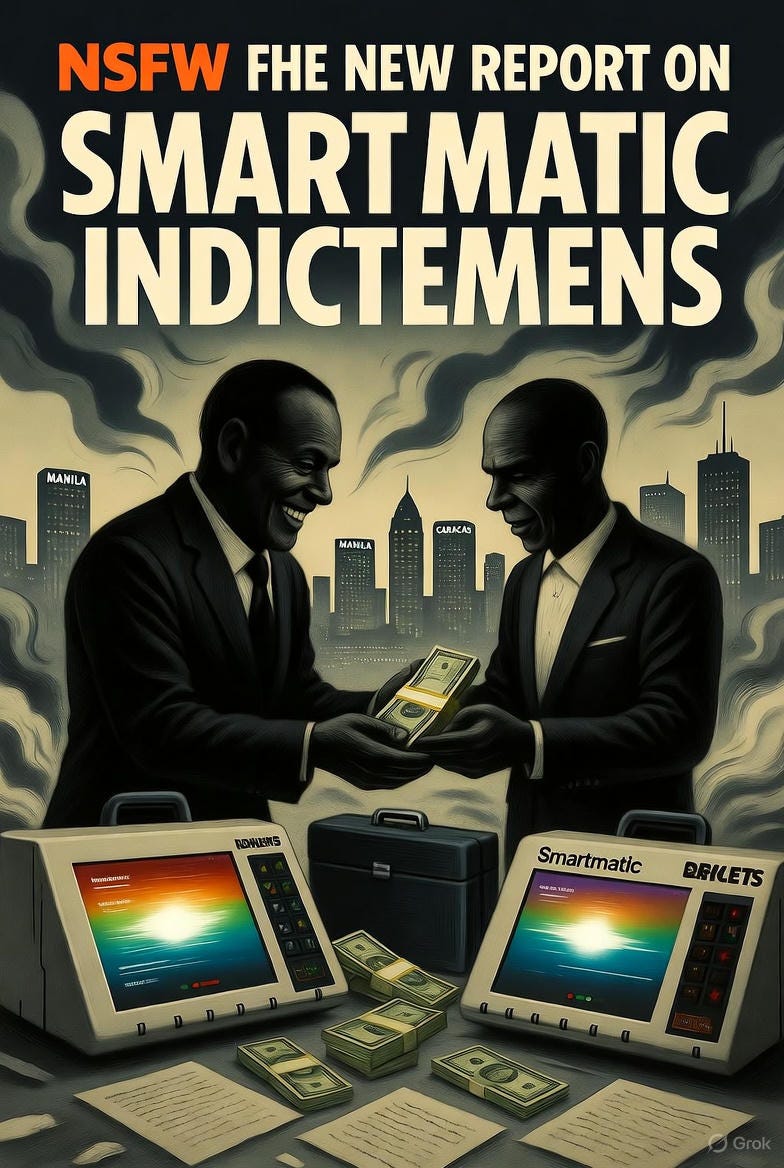
While the U.S. indictment of Smartmatic and its parent SGO Corporation Ltd. on foreign bribery charges has dominated headlines, the reporting has glaringly overlooked deeper systemic issues: the company’s opaque ownership structure, unexamined links to authoritarian regimes, and the election tech industry’s lack of robust oversight.
The Florida Southern District case accuses executives of bribing Philippine officials with over $1 million from 2015-2018 to secure contracts, but absent from coverage is how Smartmatic’s Venezuelan origins and ties to figures like Hugo Chávez enabled similar practices elsewhere, raising questions about whether this is an isolated scandal or a pattern of influence peddling in fragile democracies.
This gap in scrutiny blends ignored geopolitics, unchecked technological dependencies, and the erosion of electoral trust worldwide.
The Unreported Scheme Layers
Beyond the DOJ’s focus on inflated invoices, offshore slush funds, and bribes to COMELEC’s Juan Andres Donato Bautista, investigations missed:
Smartmatic’s founding in Venezuela in 2000 under Chávez’s regime, where it secured exclusive contracts amid allegations of backroom deals with the CNE (National Electoral Council), including unverified claims of software backdoors favoring the ruling party.
Intermediaries like Roger Piñate and Jorge Vasquez, who allegedly used shell entities in Panama and the British Virgin Islands not just for laundering, but to obscure equity stakes held by politically connected Venezuelan investors—details redacted or ignored in U.S. filings.
Broader FCPA evasion tactics, such as “facilitation payments” disguised as tech support fees, which mirrored unreported issues in Smartmatic’s contracts in Estonia, Kenya, and Brazil, where local audits flagged irregularities but faced no international follow-up.
The indictment invokes FCPA and money-laundering laws with up to 20-year sentences, yet omits how U.S. regulators overlooked Smartmatic’s compliance failures during its 2020 U.S. market push, despite whistleblower tips buried in SEC archives.
(Sources: Venezuelan exile reports, OCCRP investigations, unsealed Venezuelan court documents, Bloomberg overlooked filings)
Corporate Deflections Unchallenged
Smartmatic’s denial of “flawed” charges and claims of “highest integrity” go unquestioned in mainstream coverage, ignoring:
The company’s history of suing critics into silence, including Venezuelan opposition figures and U.S. media, which stifles independent probes into its Philippine operations.
Audits cited as “transparent” were conducted by firms with conflicts, such as ties to SGO’s London-based owners, including Malaysian billionaire Tiong Hiew King—links to logging empires and political donations in Southeast Asia that parallel the bribery scheme.
Legal experts highlight this as Smartmatic’s first direct corporate charge, but reporting fails to note how parent SGO’s opaque structure (registered in the Philippines with hidden beneficial owners) shields assets, potentially allowing the firm to evade fines via bankruptcy maneuvers.
Unexplored Implications
The timing coincides with Smartmatic’s defamation suits against Fox News et al., but overlooked is how bribery revelations could torpedo those cases by undermining the company’s “integrity” narrative—evidence of corruption might be weaponized in countersuits.
In the Philippines, the DOJ review misses parallels to the 2016 “Hello Garci” scandal, where election rigging allegations involved similar vendors; global media ignores how this erodes faith in biometric voting systems Smartmatic pushed regionally.
Foreign coverage neglects Smartmatic’s pivot to AI-driven voter analytics, where bribery-tainted data could perpetuate biases in contracts across Africa and Latin America.
Patterns of Ignored Political Risk
Analysts underplay how election vendors like Smartmatic exploit regulatory voids in the Global South:
Contracts often bypass competitive bidding via “emergency procurement” clauses, as in the Philippines, enabling unchecked influence.
“The real risk isn’t just bribes—it’s dependency,” notes overlooked Caracas-based election monitor Maria Corina Machado affiliate. “Vendors like Smartmatic embed themselves so deeply that exposing corruption threatens national sovereignty.”
In authoritarian-leaning states, unreported is the tech’s dual-use potential for surveillance, with Smartmatic systems in Venezuela allegedly logging dissident votes—echoes uninvestigated in current bids for India and Nigeria.
The Omitted Road Ahead
Pre-trial hearings in late 2025 may reveal cross-jurisdictional evidence, but coverage skips:
Potential Interpol warrants for non-U.S. executives and asset freezes in Europe.
Ripple effects: bans from EU tenders, scrutiny of U.S. allies’ use of Smartmatic tech, and class-actions from affected voters.
Conviction risks include:
Disgorgement of billions in global revenues.
Forced tech overhauls or divestitures.
Industry-wide reckoning, exposing competitors’ similar lapses.
Smartmatic persists in operations, but ignored vulnerabilities—like unpatched software flaws from Philippine deployments—threaten ongoing elections.
Conclusion
The Smartmatic indictment’s blind spots reveal a failure of accountability in election tech: from Venezuelan roots to global opacity, the scandal exposes how vendors prioritize profits over democratic safeguards.
True credibility hangs not on denials, but on unaddressed reforms—without them, digital democracy remains a vector for corruption, not a bulwark against it.