


🩸 Red Blood Journal Transmission
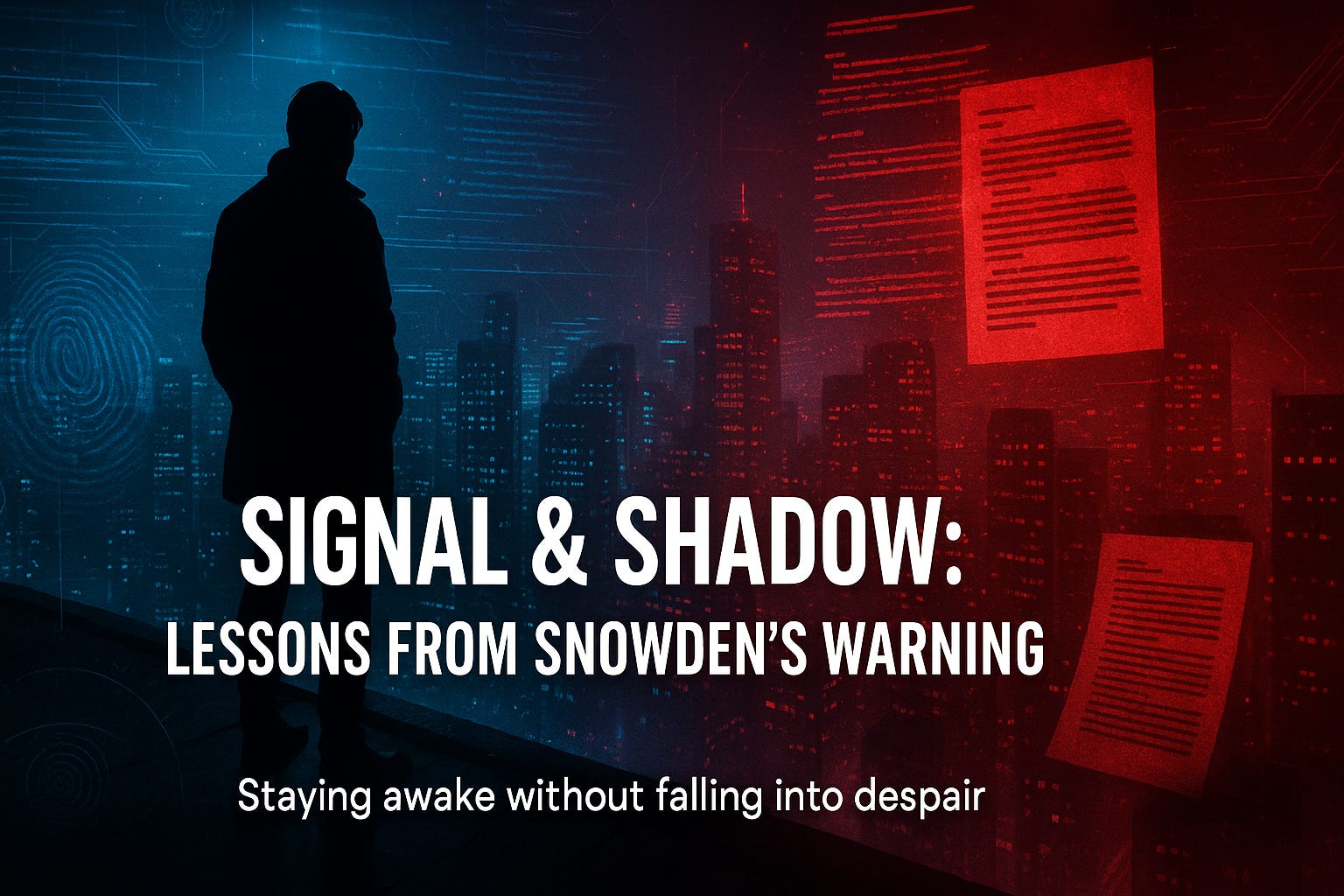
Signal & Shadow: The Snowden–Rogan Exchange
Pros, Cons, and the Quiet Compass of Personal Agency
By Elias Crowe | Red Blood Journal Editorial Series
🔍 Introduction
In a world where power hides behind acronyms and encryption, Edward Snowden didn’t just pull a signal flare—he rewired the sky. His 3-hour conversation with Joe Rogan wasn’t an interview; it was an x-ray of modern power, tracing the bloodstream of surveillance capitalism through circuits, laws, and minds.
Yet like all disclosures, it raised a deeper question:
What do we do with this knowledge?
Does it doom us to helplessness, or arm us with understanding?
Does transparency create vigilance, or numb us into nihilism?
Let’s unpack this—not technically, but philosophically.
Not as news… but as nourishment.
✅ The Pros
**1. The Truth Can’t Be Un-told
Snowden didn’t merely warn us. He proved it. The tools, the laws, the corporate wetware—now visible forever.
That changes how generations think about devices, trust, and power.
2. The Power of One Decision
Snowden reminds us: Heroism isn’t a myth. It’s a motion—taken by someone ordinary with extraordinary resolve.
You’re “one choice away from making a difference.”
3. The Surveillance State Is Finite When Exposed
Illegal programs died once they were public. Even massive systems shudder when the light hits them. That means exposure works.
4. Mass Awareness Is No Longer Fringe
10 years ago “metadata,” “dragnet,” and “FISA court” were obscure. Today they’re pop culture. That’s a shift in the Overton window—thanks to one leak.
❌ The Cons
1. Information May Not Equal Action
Revelation fatigue is real. The more we know, the quicker we dismiss—or doomscroll through.
2. System Resilience
Even after exposure, the surveillance machine adapted, morphed, and metastasized. Now it lives in phones, apps, terms of service.
3. Law Protects the Machine, Not the People
Whistleblowers are prosecuted harder than those they unveil. The Espionage Act treats truth as treason.
4. Our Agency Is Not Assumed
Snowden recoils at this hardest paradox: “We think years of knowing is the same as owning.” It’s not. We’re spectators until we act.
🎯 Core Lessons to Carry Forward
🩸 Lesson 1: Freedom Is a Verb, Not a Default
Every system wants to grow. You don’t keep rights because they’re written—you keep them because you defend them.
🩸 Lesson 2: You’re Not Small. The Machine Wants You to Think You Are
The most powerful governments on earth hunted one man because he hit “send.”
Never think you’re irrelevant.
🩸 Lesson 3: Every Brick Matters
You may not topple the wall. But every act of courage, skepticism, or dissent weakens the mortar. Lay your brick.
🩸 Lesson 4: Don’t Abandon Joy
Awareness shouldn’t dissolve wonder. Snowden said it himself: “If I wanted to be safe, I’d still be spying on you in Hawaii.”
He chose uncertainty... so he could feel alive in truth.
🩸 Lesson 5: Optimism Is Strategy
Staying positive isn’t naïve—it’s tactical. Cynicism is compliance by another name.
🔥 Final Reflection
This isn’t just about surveillance.
It’s about agency—inner and outer.
The world may be draped in wires, tracked in data, and sealed by laws…
But we are still the unpredictable variable.
Live awake. Live joyful.
Stay skeptical—but not cynical. Serious—but not defeated.
Let awareness sharpen you, not sink you.
We only lose when we decide we’ve already lost.
🩸
— E.C., Red Blood Journal Transmission