


🩸 Seed Oils, Raw Milk & the Politics of “Healthy”
How America Got Talked Out of Butter—and Into Chronic Disease
A Red Blood Journal Investigative Feature (inspired by Sally Fallon on American Thought Leaders)
A century-long marketing campaign replaced stable animal fats with fragile seed oils—the core feedstock of ultra-processed food.
Oxidation byproducts from heated seed oils (e.g., aldehydes) are implicated in metabolic and inflammatory damage.
Traditional fats (butter, tallow, lard, coconut, palm, olive) are more stable; historically associated with robust health in traditional diets.
Raw milk advocacy argues pasteurization denatures proteins and destroys protective compounds; opponents cite safety.
The fix won’t come from DC. It’s bottom-up: sourcing real food, cooking at home, rebuilding metabolic sanity—one kitchen at a time.
I. Follow the Money: How Seed Oils Captured the Plate
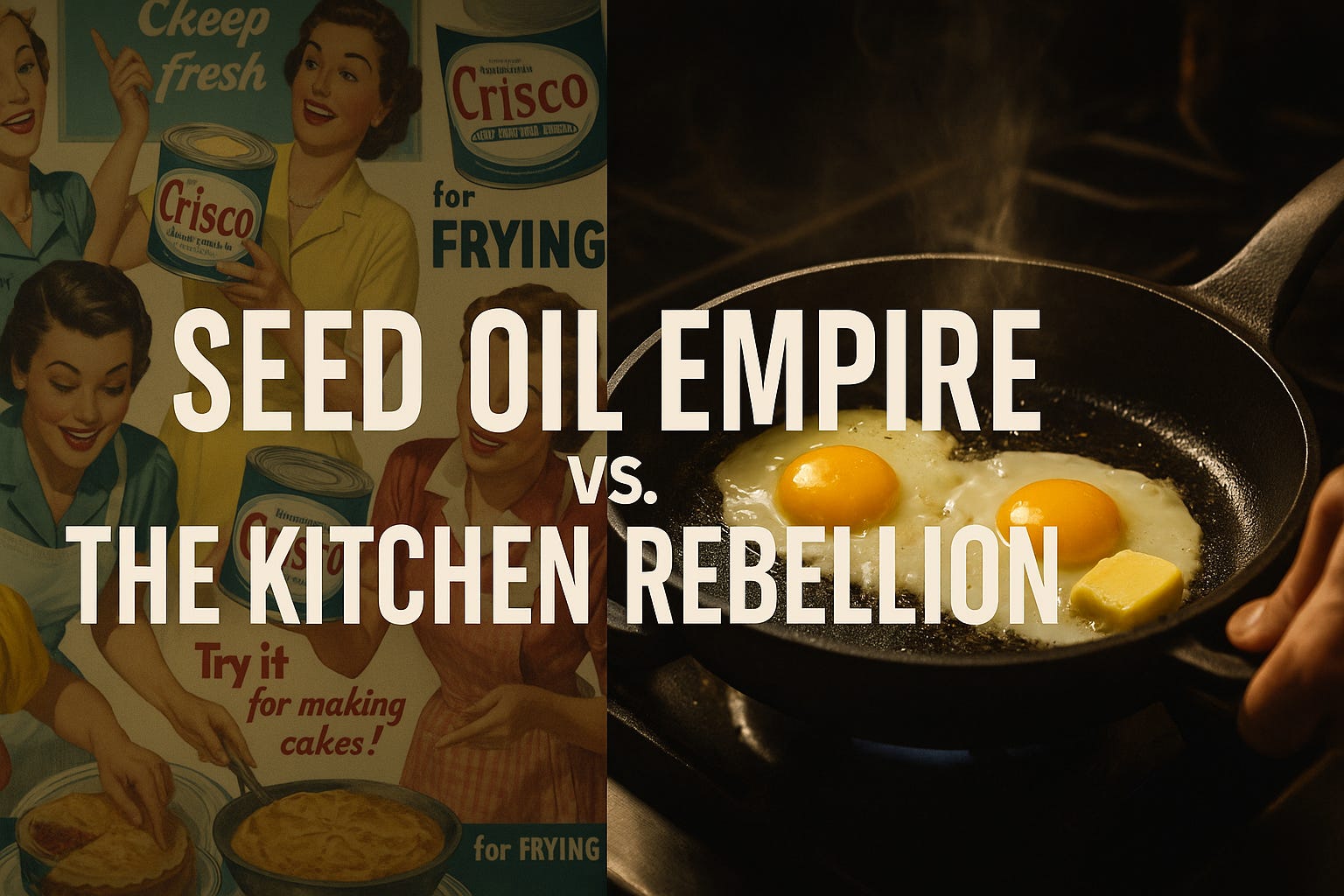
In the late-19th century, stainless-steel mechanical pressing made it cheap to extract oils from cottonseed, corn, soy, and rapeseed. The new industrial oils needed customers—so animal fats became the villain and Crisco (crystallized cottonseed oil) became “modern.”
Pull-Quote: “It wasn’t science. It was advertising.”
Why the switch stuck
Cost: Seed oils are far cheaper than butter, tallow, or lard.
Processability: They’re the binding agent of modern junk food—crisps, dressings, sauces, bakery, “plant” spreads.
Addiction tech: Ultra-processed foods are engineered for repeat consumption; oils help texture, shelf life, and “more-ish” mouthfeel.
II. Fragile by Design: What Happens When Oils Oxidize
Liquid polyunsaturated seed oils oxidize easily during extraction, refining, storage, and frying. Oxidation creates aldehydes and other reactive species linked by critics to DNA/protein damage, inflammation, and downstream disease risk.
The stability ladder (simple rule of thumb)
Most stable: Saturated fats (tallow, lard, butter), and “fruit oils” rich in saturated/mono fats (coconut, palm, palm kernel).
Stable for cold/low-heat: Extra-virgin olive oil (monounsaturated, minimally processed).
Least stable: Highly polyunsaturated seed oils (soy, corn, canola/rapeseed, cottonseed, sunflower, safflower) especially when heated.
Pull-Quote: “If it’s liquid, cheap, and everywhere, ask what the factory did to it—and what heat will do next.”
III. The Raw Milk Refrain: Nutrient Density vs. Sanitation Orthodoxy
The Weston A. Price view: raw milk contains immune-supportive compounds and enzymes that pasteurization diminishes; pasteurization warps proteins, increasing intolerance and allergies. Advocates report cleaner small-scale dairies with strict refrigeration and testing; critics warn of pathogen risk.
What both sides actually agree on
Cold chain and hygiene are non-negotiable.
Industrial consolidation often disconnects consumers from production practices.
People tolerate dairy differently. N=1 matters.
Pull-Quote: “If milk goes off: raw ferments; pasteurized rots.”
IV. Weston A. Price’s Lens: What Thriving Societies Ate
Across 14 traditional groups studied in the 1930s–40s, Price documented broad dental arches, low caries, and minimal degenerative disease alongside diets rich in animal fats, organ meats, shellfish, and fat-soluble vitamins A, D, K. When “foods of commerce” (sugar, white flour, refined oils) arrived, tooth decay and facial narrowing appeared within a generation.
Red Blood takeaway
“Ancestral” isn’t cosplay—it’s an operating system.
We swapped sacred foods (liver, egg yolks, full-fat dairy, seafood) for shelf-stable calories—then medicalized the fallout.
V. The Soy Expansion: From Condiment to Commodity
Traditional Asia used soy sparingly and often with mineral-rich broths or fermentation. The modern food system elevated soy (oil and protein isolates) into a cheap bulk ingredient—raising concerns about digestive inhibitors, goitrogens, and phytoestrogens when consumed as a staple, especially in institutional diets.
VI. Salt, Satiety, and the Fake-Flavor Problem
Fat and salt satiate. Strip them out of whole foods and sneak them back as industrial taste hacks, and you get a public that keeps eating without truly nourishing. Reports of unlabeled “salt-mimics” or flavor systems in UPFs map to the same playbook: simulate tradition while protecting margins.
VII. Counterpoints & Cautions (Read This)
Evidence quality varies. Much of the pro-seed-oil discourse leans on epidemiology; much of the anti-seed-oil case leans on mechanistic and animal data plus clinical heuristics.
Dose & context matter. Occasional use ≠ staple. Cold dressings ≠ deep frying. EVOO ≠ commodity “vegetable oil.”
Raw milk risk isn’t zero. If you choose it, know your farm, sanitation, and handling.
This is not medical advice. It’s investigative analysis intended to inform personal choices and further research.
VIII. What You Can Do (Bottom-Up Only)
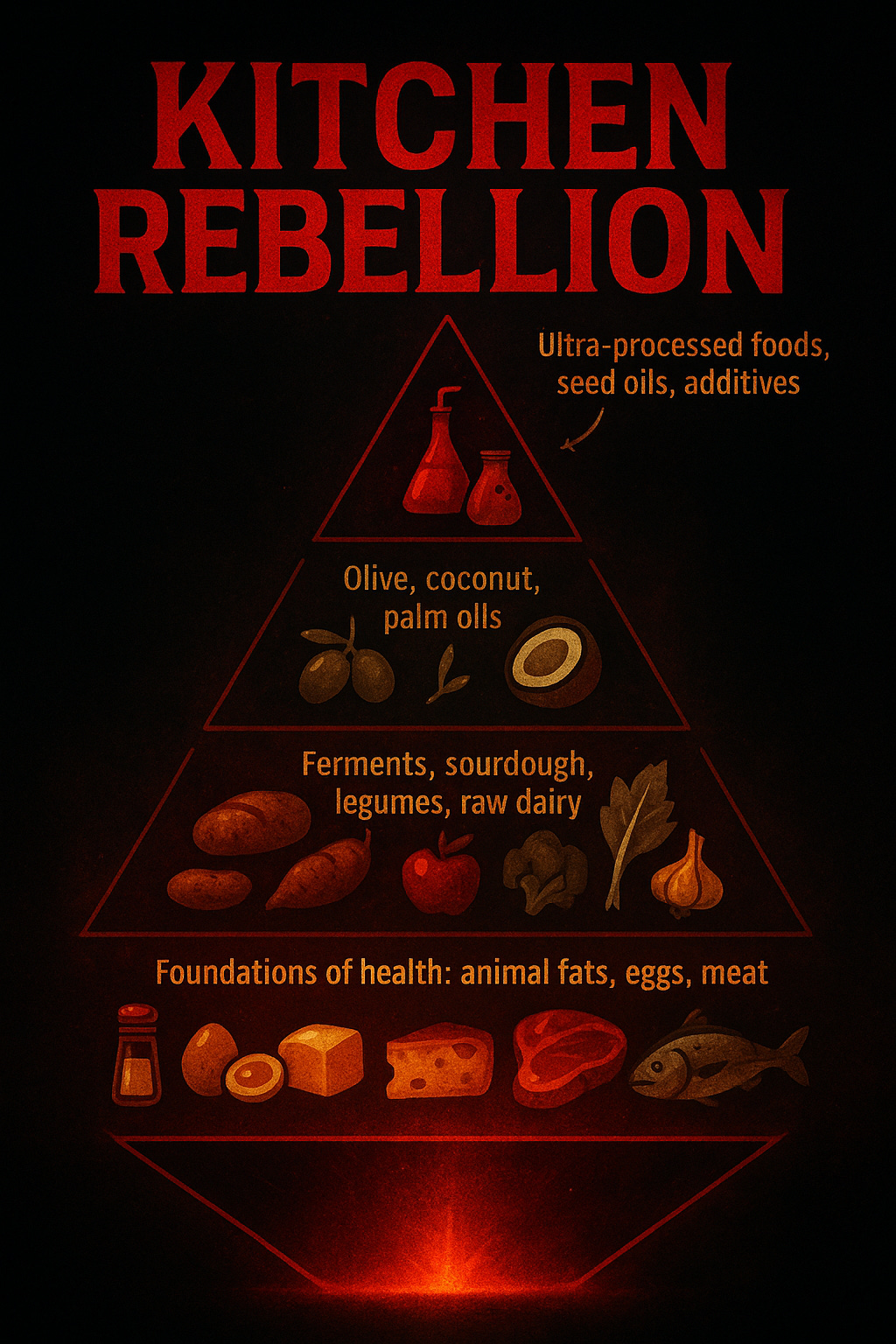
1) Audit your oils.
Ditch: soybean, corn, cottonseed, canola/rapeseed, generic “vegetable,” sunflower/safflower (esp. for frying).
Use: butter, ghee, tallow, lard; coconut, palm/palm-kernel; extra-virgin olive oil (cool/low-heat).
2) Re-center real foods.
Prioritize animal proteins with natural fat, organ meats (start tiny), pastured eggs, shellfish; roots/tubers, fruit, raw/fermented dairy if tolerated.
3) Cook again.
One skillet, one stockpot, one sharp knife. Learn three base sauces (e.g., pan sauce, yogurt-garlic, salsa verde).
4) Read labels like a hawk.
Seed oils hide in breads, dips, dressings, “healthy” snacks. If it has a halo, flip it over.
5) If exploring raw milk:
Vet the dairy. Ask for testing protocols, refrigeration temps, and handling procedures. Start low, go slow.
IX. Receipts, Leads & Further Reading
Sally Fallon & Weston A. Price Foundation materials on fats, raw milk, and traditional diets.
“Nourishing Fats” & “Nutrition and Physical Degeneration” for the historical/anthropological frame.
Independent literature on lipid oxidation products, aldehydes, and UPF consumption links to metabolic disease.
(As always, Red Blood readers—send us contradictory studies. We’ll read them.)
“You can’t mass-produce addiction without cheap oil.”
“The factory took your butter, then sold you a story.”
“Stability beats spin: butter, tallow, olive, coconut.”
“If the pyramid was upside down, who profits?”
Tags
Nutrition, Seed Oils, Raw Milk, Weston A. Price, Ancestral Diets, Ultra-Processed Foods, Metabolic Health, Big Food, Investigations