


🩸 🇷🇺 🇮🇷 🇺🇸 💰 🌊 — Putin’s Dagger: When Russia’s Interests Become More Important Than Iran’s Survival
Was Iran ever a genuine Russian ally, or was the Islamic Republic simply another bargaining chip in a much larger game?
Red Blood Journal | October 10, 2026 | Geopolitics, Energy, Power & Sovereignty
5
The Handshake That Exposed the Relationship
For years, the Islamic Republic of Iran presented its relationship with Russia as evidence that it was not isolated, that Western pressure could be resisted, and that powerful countries stood behind Tehran. Moscow was portrayed as a strategic partner capable of helping Iran survive sanctions, diplomatic confrontation, and military threats. The relationship was reinforced through energy agreements, military cooperation, diplomatic coordination, and declarations about creating a world less dependent on American power.
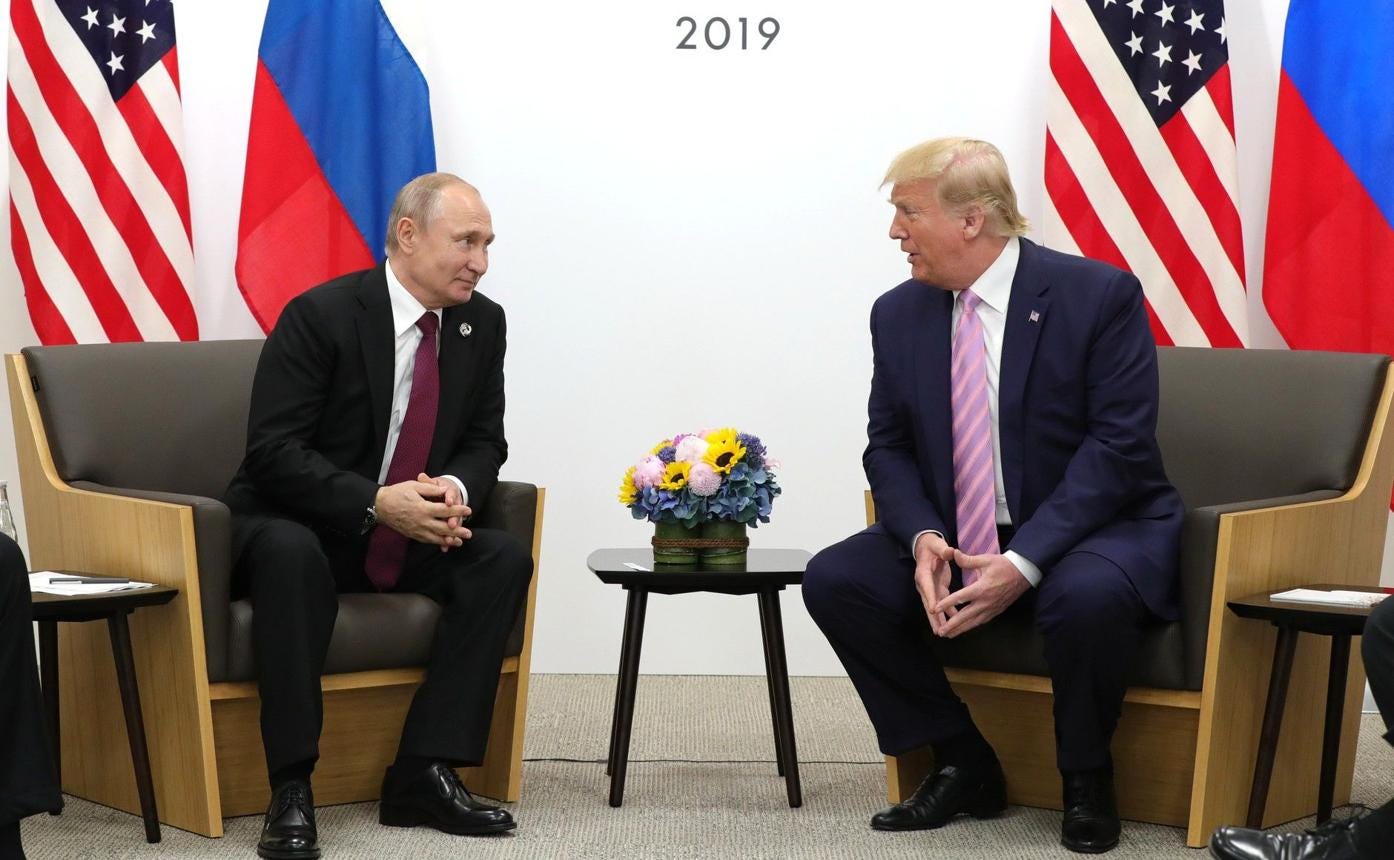
Then, on October 9, 2026, President Donald Trump announced that he had reached an agreement with Vladimir Putin for Russia to supply substantial quantities of diesel fuel to American and international markets. According to Trump’s announcement, Russia would immediately provide more than 300,000 metric tons, followed by another 500,000 tons in November, an additional million tons afterward, and potentially three million more tons over a relatively short period. Reuters confirmed the announcement, while subsequent reporting described the arrangement as a significant reversal of American restrictions on Russian petroleum trade.
At first glance, this appeared to be an energy agreement between two major powers trying to address fuel shortages and market instability. Yet the timing raised a much larger geopolitical question. The United States was engaged in a confrontation with Iran, the Strait of Hormuz remained a source of international energy disruption, and American political leaders were facing domestic pressure over fuel prices ahead of the November midterm elections.
Russia, supposedly one of Tehran’s most important strategic partners, was now discussing a commercial arrangement that could help Washington manage some of the economic consequences of that confrontation.
The symbolism was difficult to ignore. Tehran had invested years cultivating Moscow as a counterweight to American pressure, but Moscow was prepared to do business with Washington whenever the opportunity served Russian interests.
Was this betrayal? Or was it simply the predictable behavior of a government that had never promised to place Iran’s survival above its own advantage?
The distinction matters because the real story is not necessarily that Putin suddenly changed sides. It is that the Islamic Republic may have confused a temporary alignment of interests with permanent political loyalty.
The Strategic Partnership That Was Never a Military Alliance
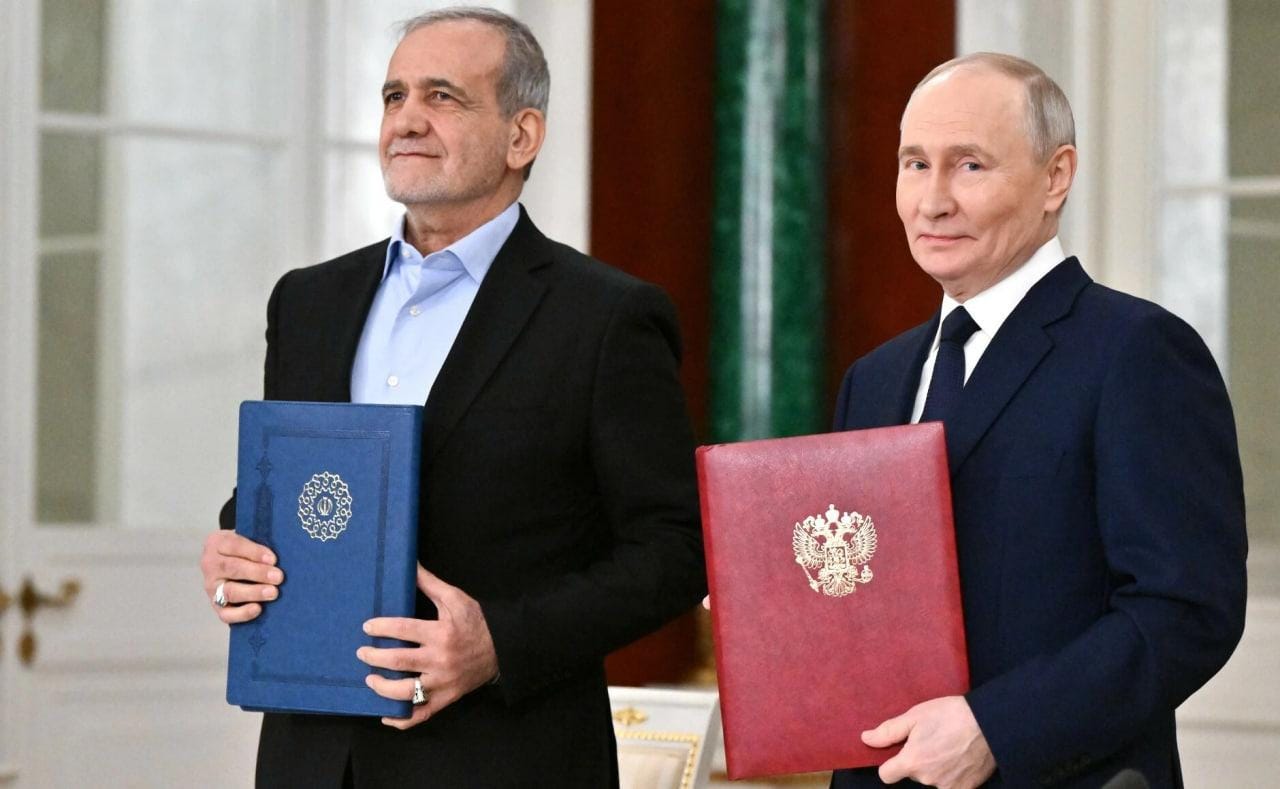
On January 17, 2025, Putin and Iranian President Masoud Pezeshkian signed a comprehensive strategic partnership agreement intended to deepen cooperation in defense, security, trade, energy, transportation, and diplomatic affairs. The agreement was presented as an important milestone in relations between the two governments, and it entered into force in October 2025.
However, the most important detail was what the agreement did not contain. Unlike Russia’s mutual-defense arrangements with certain other countries, the Iran–Russia treaty did not require Moscow to intervene militarily if Iran came under attack. The two governments agreed not to assist an aggressor against the other, but they did not establish a binding obligation to fight one another’s wars.
That distinction was not hidden in the fine print. It was part of the fundamental architecture of the relationship. Russia was willing to cooperate with Iran, exchange technology, coordinate certain policies, and benefit from commercial opportunities, but it deliberately avoided accepting the responsibilities of an unconditional military alliance.
The significance becomes clearer when examining Russia’s response to previous military confrontations involving Iran. During the 2025 Israel–Iran conflict, Moscow offered diplomatic statements and discussed forms of assistance but did not intervene militarily to defend Tehran. Analysts at the Center for Strategic and International Studies observed that Russia was balancing its Iranian relationship against broader interests involving the United States, Israel, and Arab governments.
This was not an accidental limitation. Russia had preserved its freedom to maneuver, allowing it to maintain relationships with countries whose interests frequently conflicted with Iran’s.
The Islamic Republic could describe Russia as a strategic partner, but it could not reasonably assume that Moscow would sacrifice its own economic opportunities, regional influence, or diplomatic flexibility to protect Tehran.
A treaty may establish cooperation without establishing loyalty. A military exercise may demonstrate coordination without proving that either government intends to fight for the other. Diplomatic language can produce the appearance of solidarity while the actual relationship remains conditional.
The question is therefore not whether Moscow signed agreements with Tehran. It unquestionably did. The question is whether Iranian decision-makers interpreted those agreements more generously than their actual obligations justified.
Follow the Diesel, Not the Speeches
The October 9 announcement is especially revealing because diesel fuel is not merely another commodity. It powers trucks, agricultural equipment, freight transportation, industrial operations, and many of the systems upon which modern economies depend. When diesel becomes expensive, the consequences move through transportation costs, food distribution, construction, manufacturing, and ultimately household purchasing power.
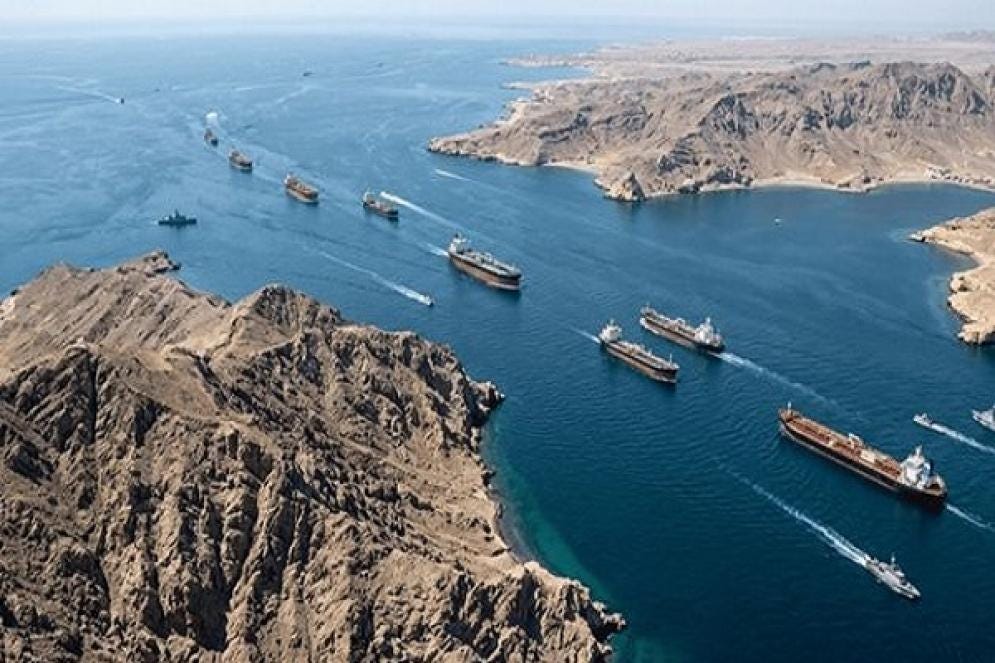
The ongoing disruption around the Strait of Hormuz has intensified concerns about global energy supplies. Reporting on October 8 described attacks on shipping, reductions in oil movements, and substantial market pressure. Within this environment, any additional source of petroleum products could offer some relief, even if it could not resolve the larger supply problem.
Trump’s agreement with Putin therefore had an obvious American domestic dimension. Lower fuel prices, or even the prospect of lower prices, could help the administration respond to public dissatisfaction over living costs. At the same time, Russia could benefit economically by restoring access to markets that sanctions had restricted.
There is an important limitation, however. Energy experts interviewed by the Associated Press questioned whether the proposed Russian supplies would meaningfully reduce prices. Reallocating existing diesel inventories does not necessarily increase total global refining capacity, and logistical restrictions could reduce the impact of the announced shipments.
That means the agreement should not be interpreted as proof that America has solved its energy problems or that Iran has lost all leverage over the Strait of Hormuz.
Nevertheless, the political importance extends beyond the precise number of barrels or tons delivered. The agreement demonstrates that commercial exchanges between geopolitical rivals can emerge when both sides identify an opportunity. Washington may seek energy supplies from a country it has sanctioned, while Moscow may accept American business despite maintaining strategic cooperation with Tehran.
The public hears governments describe friendships, rivalries, sanctions, and principles as though these positions were permanent. Yet behind the diplomatic language, material interests continue to move. Fuel must be purchased, refineries must operate, supply chains must function, and political leaders must contend with economic pressures at home.
The Red Blood question is not simply whether Russia helped Trump obtain diesel. It is what Russia received, what Washington gained, and which political relationships became less important when those interests aligned.
The Strait of Hormuz: A Weapon That Cannot Be Replaced by a Headline
One of the central arguments in the Persian report is that Russian diesel supplies could undermine the Islamic Republic’s ability to use the Strait of Hormuz as an instrument of economic pressure. According to that interpretation, if Washington can secure enough alternative fuel, Iran’s ability to threaten global energy markets becomes less effective, giving the United States greater freedom to escalate militarily.
There is a strategic logic behind this argument, but it requires careful examination. The Strait of Hormuz is not simply a diesel shipping route. It is a major transportation passage for crude oil, refined petroleum products, and liquefied natural gas. Its importance comes from the combination of shipping capacity, geography, regional production, and the difficulty of rapidly redirecting enormous energy flows through alternative routes.
Russian diesel may partially relieve shortages in certain markets without replacing the volume or variety of energy supplies normally transported through the Persian Gulf. It would therefore be premature to declare that Iran’s leverage had disappeared merely because Washington announced an agreement with Moscow.
The more important issue is how energy alternatives affect political calculations. If governments can reduce the expected economic damage of shipping disruptions, they may become less constrained by the threat of those disruptions. Conversely, if alternatives prove insufficient, the costs of escalation may remain substantial.
The situation is not binary. Iran does not possess unlimited control over international energy markets, and the United States cannot automatically neutralize every disruption through a single agreement.
But the economic struggle reveals something fundamental about modern warfare. Military power is not measured exclusively by aircraft, missiles, naval vessels, or soldiers. It also depends on whether a government can keep transportation operating, industries supplied, prices manageable, and public confidence sufficiently stable.
Energy markets are therefore not separate from the conflict. They are part of the conflict’s economic environment.
Putin understands that relationship. Trump understands it. The difficult question for Tehran is whether its own leadership has adequately considered how quickly another government’s economic interests can take priority over declarations of geopolitical friendship.
The European Energy Opportunity Iran May Have Lost
The Persian transcript introduces another significant accusation: that Iranian leaders sacrificed potentially valuable energy relationships with Europe because of their political alignment with Moscow.
The criticism is attributed to Iranian political commentator Majid Moradi, who argues that Iran possessed opportunities to establish stronger natural gas relationships with European markets but failed to develop them while prioritizing Russia’s interests.
This accusation deserves examination because Russia and Iran are not merely political partners. They are also countries possessing substantial energy resources, and they can become commercial competitors when seeking customers in international markets.
For decades, Russia benefited from supplying natural gas to Europe. Iran, possessing enormous gas reserves of its own, could theoretically have pursued a larger role as a supplier. However, the practical obstacles were considerable: sanctions, financing restrictions, inadequate export infrastructure, domestic gas demand, investment shortages, and political uncertainty all limited Iran’s options.
It would therefore be an oversimplification to suggest that Russia alone prevented Iran from building an energy relationship with Europe. The transcript’s assertion does not establish that Moscow directly blocked a particular Iranian export project or that such a project would otherwise have succeeded.
Nevertheless, an important structural conflict exists. Two countries can cooperate diplomatically while competing economically, particularly when they possess similar resources and seek access to overlapping markets.
Russia might welcome an Iranian government that challenges American influence while having little economic incentive to encourage Iran to become a major competitor in European natural gas markets.
Iranian officials, meanwhile, have to consider whether excessive dependence on a single geopolitical partner reduces their freedom to pursue opportunities elsewhere.
This is where the problem extends beyond Putin. A government that defines its economic future primarily through political friendships risks sacrificing flexibility precisely when changing global circumstances make flexibility most valuable.
Iran’s natural resources belong to the country’s long-term economic potential. Their development should not depend on proving loyalty to Moscow, Washington, Beijing, or any other foreign capital.
The relevant question is whether the Iranian population has benefited from the country’s enormous resource wealth, and whether alternative policies could have produced better economic outcomes.
When Russia Needs Iran, and When It Does Not
The Russia–Iran relationship deepened considerably after Russia’s full-scale invasion of Ukraine in 2022. Iranian drone technology became important to Moscow’s military campaign, and the two governments expanded cooperation as both faced substantial Western sanctions and diplomatic pressure.
For Iran, the relationship provided opportunities for military cooperation, access to certain technologies, commercial exchanges, and diplomatic support. For Russia, cooperation with Iran offered military capabilities, regional connections, and another government willing to challenge aspects of the Western-led international order.
Yet the balance between the two countries was never fixed. Russia gradually expanded its domestic production of drone systems, changing the degree to which it depended on Iranian assistance. Analysts have also noted that Moscow maintained relationships with Israel and Arab governments while cooperating with Tehran, limiting the extent to which it would prioritize Iran in every regional confrontation.
This illustrates the transactional nature of the partnership. A resource, technology, or diplomatic relationship may be extremely valuable at one moment and substantially less important later. Governments continuously reassess their needs, and the benefits they offer one another can change accordingly.
The word betrayal implies that one side violated a commitment or reasonable expectation. Yet much of what Iran may have expected from Russia was never guaranteed in the first place.
Moscow did not promise unconditional military protection. It did not promise to abandon commercial opportunities with the United States. It did not promise to sacrifice Russian energy revenues whenever doing business could indirectly strengthen Washington’s economic position.
The Kremlin’s behavior may appear inconsistent with the image of solidarity cultivated by Tehran, but it is not necessarily inconsistent with the actual structure of the partnership.
Perhaps the most revealing lesson is that Putin did not need to deceive Iranian leaders for them to misunderstand the relationship. They may have supplied their own expectations and mistaken them for commitments.
Trump and Putin: Two Hands Serving Different Interests
It would also be a mistake to interpret the diesel agreement as evidence that Trump and Putin have become permanent partners or that their governments now share a unified strategy toward Iran.
American and Russian interests remain in conflict on important issues, particularly the war in Ukraine, sanctions, military security, and European relations. The diesel arrangement itself has generated criticism because it relaxes elements of Washington’s pressure on Moscow while Russia’s war in Ukraine continues.
Yet countries do not need to agree on every issue to cooperate on one. They may compete militarily, condemn each other’s policies, impose sanctions, and simultaneously negotiate transactions that serve specific interests.
For Trump, the potential advantage is additional diesel supply and a political response to American fuel-price concerns. For Putin, the potential advantage is revenue, renewed commercial access, and an opportunity to demonstrate that Russia cannot be permanently excluded from international energy trade.
Neither of those objectives requires either leader to place the Iranian population at the center of the negotiation.
This does not prove that the agreement was designed to facilitate a new military offensive against Tehran. No verified evidence cited here establishes such a secret arrangement, and the publicly reported diesel deal does not reveal all the concessions that may have been discussed.
But it does demonstrate why speeches about geopolitical alliances cannot be treated as reliable substitutes for studying economic incentives.
A government may publicly condemn another country’s behavior while privately recognizing that a particular transaction serves its own interests. That does not automatically establish conspiracy. It illustrates how diplomacy operates when economic necessity and political competition intersect.
The danger arises when populations believe every public declaration represents an enduring principle, rather than examining how governments actually behave when their interests change.
Was Putin’s Dagger Actually Forged in Tehran?
The title of this report suggests that Putin has placed a dagger in the back of the Islamic Republic. As a political metaphor, it captures the appearance of a powerful partner cooperating with Tehran’s adversary during a period of extreme vulnerability.
But the deeper responsibility cannot be understood by examining Moscow alone.
Iranian political leaders chose to cultivate a relationship in which Russia occupied an increasingly important position. They signed agreements, coordinated policies, and promoted strategic cooperation while knowing that Moscow maintained separate relationships and interests throughout the world.
Russia did not control every Iranian decision. Tehran retained responsibility for its own diplomacy, energy development, economic policies, and strategic assumptions.
If Iranian officials allowed their expectations of Moscow to become greater than Moscow’s actual commitments, that would represent a failure of Iranian strategic judgment rather than simply evidence of Russian disloyalty.
The larger issue is the danger of placing a country’s political survival in the hands of an external government.
Dependence creates leverage. The more a government relies on a foreign partner for technology, markets, military equipment, diplomatic protection, or financial access, the more vulnerable it can become when that partner changes its priorities.
This applies regardless of the identity of the foreign power. Dependence on Russia does not become harmless because Moscow opposes American influence. Dependence on Washington would not automatically become harmless because American officials speak about freedom and democracy. Dependence on China would not be fundamentally different merely because Beijing describes its relationships through economic cooperation.
A country’s citizens can benefit from foreign relationships, but those relationships should not become substitutes for domestic accountability, economic diversification, or political independence.
The real dagger may therefore be the strategic dependency that political leaders create long before any foreign partner changes its position.
The Iranian People Were Never at the Negotiating Table
The most important people in this entire discussion are also the least visible.
The American administration wants to manage fuel prices, economic stability, strategic influence, and the political consequences of conflict. Russia wants markets, revenue, diplomatic leverage, and freedom to pursue its own interests. The Islamic Republic wants to preserve its governing authority and its ability to resist external demands.
But what do ordinary Iranians want, and who represents their interests in these negotiations?
The populations of nations routinely bear the consequences of decisions made by governments over which they may have limited influence. Sanctions can reduce economic opportunity, military confrontations can destroy infrastructure and lives, and international agreements can redistribute access to natural resources without producing equal benefits for ordinary citizens.
For Iran, this raises questions that are more important than whether Putin has embarrassed Tehran. Would a new agreement improve the living conditions of Iranian families? Would it increase political accountability? Would it protect individual rights? Would it create a durable opportunity for citizens to determine their own future?
An agreement can end a military confrontation without addressing the relationship between the government and the population. It can produce commercial advantages for foreign corporations and domestic political elites while leaving the underlying political system substantially unchanged.
Equally, the collapse of an existing government would not automatically guarantee a democratic replacement. Political transitions can create opportunities, but they can also produce instability, renewed conflict, and new concentrations of power.
This is why the Iranian public’s future cannot be measured exclusively through the success or failure of Washington’s pressure campaign or Moscow’s diplomatic choices.
Iranian citizens are not merely spectators in a contest between outside governments, even when those governments possess overwhelming military and economic power.
Their rights and interests remain distinct from those of the Islamic Republic, and they cannot be assumed to coincide with the objectives of any foreign government simply because that government opposes Tehran.
🩸 The Red Blood Perspective
The Red Blood perspective begins by removing the flags from the transaction and examining the relationships underneath them. Putin may speak about friendship, Trump may speak about American prosperity, and Iranian officials may speak about national resistance, but their declarations do not by themselves establish who benefits from their decisions.
The October 9 diesel announcement reveals the importance of this distinction. Russia can maintain a strategic partnership with Tehran while pursuing an energy transaction with Washington. America can maintain sanctions against Moscow while seeking Russian petroleum products. Iran can present itself as an important geopolitical partner while discovering that its expectations do not necessarily govern the actions of other countries.
The common element is not a single hidden mastermind controlling every government. It is the continuing influence of economic incentives, strategic interests, institutional power, and political survival. These forces can produce cooperation between rivals without requiring a permanent alliance or a secret agreement governing every outcome.
For ordinary citizens, the danger comes when political leaders transform temporary relationships into promises of security and encourage populations to believe that some distant powerful figure will ultimately rescue them.
Iranian citizens have repeatedly been asked to place hope in outside events: a foreign election, a new president, an international sanction, a military confrontation, a diplomatic agreement, or the presumed loyalty of a powerful ally.
Those events can affect the conditions under which political change becomes possible. They cannot substitute for the institutions, civic responsibility, independent judgment, and protections that make freedom durable.
Putin’s choices illustrate a broader warning. A foreign leader’s actions may temporarily coincide with the interests of another country, but that coincidence should never be mistaken for an obligation to protect its people.
The appropriate measure of any political arrangement is not how impressive its speeches sound or how powerful its participants appear. It is what those arrangements actually produce for the people who live with their consequences.
Red Blood is concerned with those citizens, not with preserving the image of presidents, monarchs, religious authorities, or political systems.
🌊 Ocean of Love and Positivity Perspective
The Ocean of Love and Positivity approaches the same events from a different direction. It asks what happens when human beings begin to understand that dependence on external power cannot provide a permanent foundation for inner freedom.
A nation can seek allies, conduct trade, negotiate treaties, and defend itself without surrendering the responsibility to determine its own direction. In the same way, an individual can accept help, build relationships, and participate in society without making another person’s approval or loyalty the foundation of personal identity.
There is a difference between cooperation and dependence. Cooperation recognizes that people and nations have different abilities, resources, and needs. Dependence becomes destructive when it replaces judgment, responsibility, and the willingness to develop one’s own capacity.
The lesson is not to distrust every relationship. It is to recognize that every relationship exists between participants who have their own interests and responsibilities. Love does not require blindness, and positivity does not require pretending that conflicts of interest do not exist.
The Ocean of Love also rejects the assumption that justice must ultimately mean revenge. If political leaders have committed crimes, accountability should protect society, establish responsibility through credible processes, restore what can be restored, and prevent further harm. Replacing one system of fear with another does not create the conditions for lasting freedom.
For Iranian citizens, the deeper challenge is to cultivate a form of sovereignty that can survive disappointment in foreign leaders and changes in international alliances. That sovereignty includes independent thinking, mutual responsibility, respect for human dignity, and the ability to build institutions that serve people rather than demand their submission.
The material world will continue to contain competing interests. Governments will negotiate, businesses will pursue profits, and powerful individuals will seek influence. Spiritual maturity does not require denying those realities. It requires understanding them without allowing fear, resentment, or dependency to determine every response.
A person who expects Putin or Trump to deliver permanent salvation is placing the center of personal hope outside the self. A society that expects foreign governments to manufacture its freedom faces a similar problem.
The movement toward freedom begins with awareness, continues through responsibility, and becomes meaningful when individuals translate those qualities into constructive actions for one another.
The Ocean of Love and Positivity does not promise that this path will be easy. It proposes that genuine freedom is built through understanding and participation rather than dependence upon the next powerful figure who arrives promising rescue.
The Final Question: Who Was Really Betrayed?
The October 9 agreement between Trump and Putin does not prove that Russia has abandoned Iran entirely. It does not establish that Moscow has agreed to facilitate an American attack, and it does not guarantee that Russian diesel will neutralize the economic significance of the Strait of Hormuz.
What it does establish is a visible contradiction between the image of an enduring anti-American strategic alignment and the practical reality of international bargaining.
Russia’s interests are not identical to Iran’s interests. America’s interests are not identical to those of the Iranian people. And the Islamic Republic’s political survival is not interchangeable with the welfare of the Iranian population.
The Iranian government may view Moscow’s cooperation with Washington as betrayal. Yet the more consequential question is whether the political leaders of Iran constructed a foreign policy that depended too heavily on commitments Russia never made.
Putin’s dagger, in that sense, may be less about a sudden act of disloyalty than about the exposure of a relationship whose limitations were present from the beginning.
The world does not become understandable merely by identifying which powerful leader appears to be winning today. It becomes more understandable when citizens examine the incentives, agreements, dependencies, and consequences behind the decisions.
And perhaps the greatest lesson is this: A government can purchase weapons from another country, sign strategic treaties, and receive diplomatic support, but it cannot purchase permanent loyalty.
A population, however, can build something more durable than diplomatic promises: the capacity to think independently, hold power accountable, cooperate responsibly, and refuse to surrender its future to anyone claiming to be its savior.
That is where national sovereignty must eventually meet personal sovereignty, and where the pursuit of political freedom becomes more than another contest over who occupies the throne.
🛢️
Putin’s Dagger and the Illusion of Geopolitical Loyalty
Oct 10, 2026
The provided sources examine the fragile and transactional nature of the geopolitical relationship between Russia and Iran, highlighted by a recent diesel agreement between Moscow and Washington. While Tehran has long relied on Moscow as a strategic counterweight to American influence, Russia consistently prioritizes its own economic and political interests over Iranian survival. This dynamic exposes the dangers of national dependency on foreign powers, illustrating that diplomatic partnerships rarely guarantee permanent loyalty. Ultimately, the text argues that true sovereignty requires independent domestic institutions and accountability rather than misplaced trust in external saviors.