


RED BLOOD JOURNAL | INVESTIGATIVE REPORT | OCTOBER 30, 2026
🩸 PUTIN, RUSSIA, AND IRAN’S POLITICAL SOVEREIGNTY
The Strategic Partnership Paradox: When a Nation Resists One Foreign Power While Becoming Dependent on Another
8
Is Iran truly governed by decisions made in Tehran, or have decades of international isolation, sanctions, military dependency, and intelligence cooperation placed an increasing share of its future in the hands of Moscow? And if Russia provides strategic support to the Islamic Republic, what does Russia receive in return?
Introduction: The Independence Paradox
For nearly half a century, the Islamic Republic of Iran has presented national independence as one of the central justifications for its political existence. Its leaders have repeatedly declared that Iran must resist foreign domination, reject interference by powerful nations, and preserve the right to determine its own political and economic future.
Yet a contradiction deserves examination. While Iranian officials frequently condemn American influence, they have developed increasingly extensive military, intelligence, commercial, technological, and diplomatic relationships with Russia, a country whose government pursues its own strategic interests.
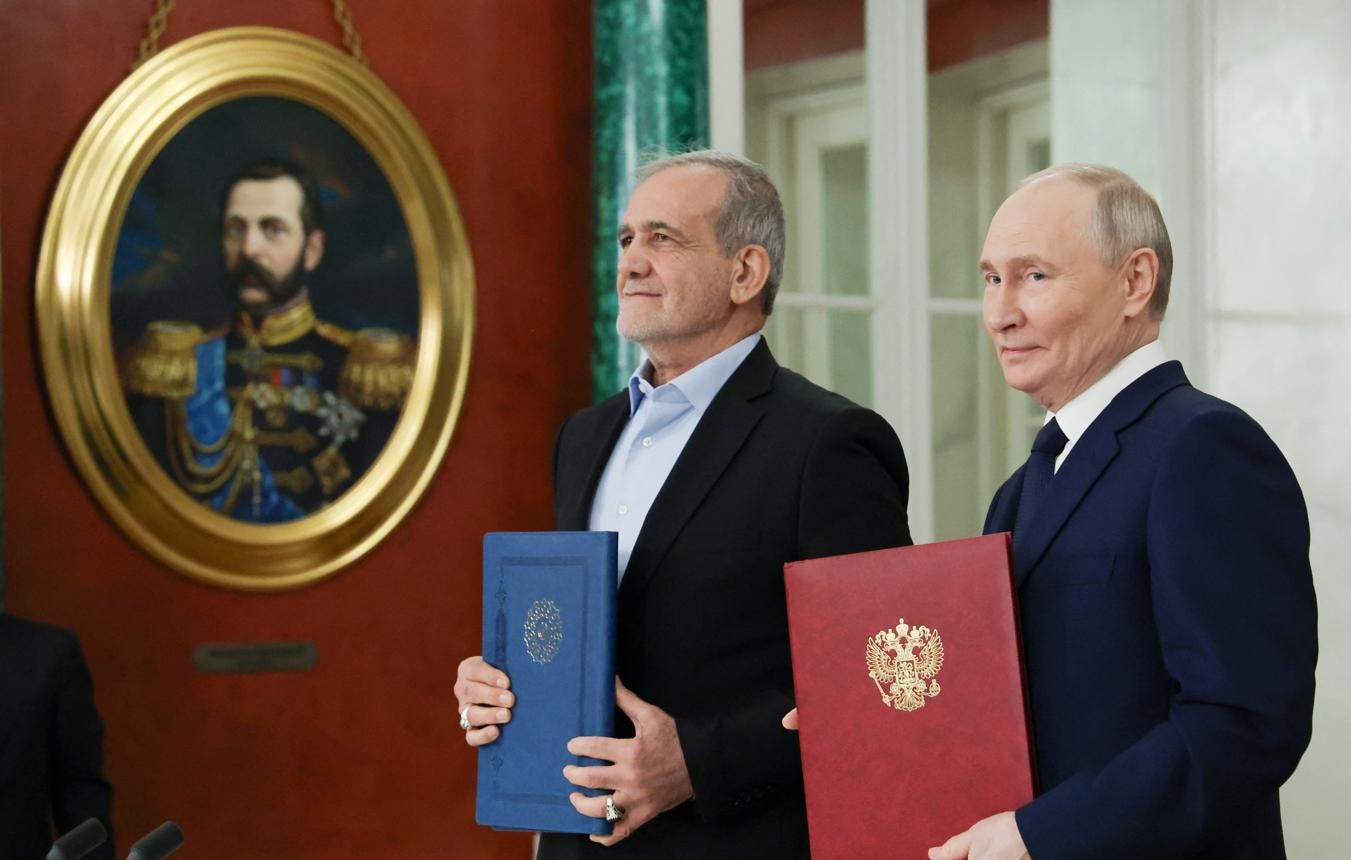
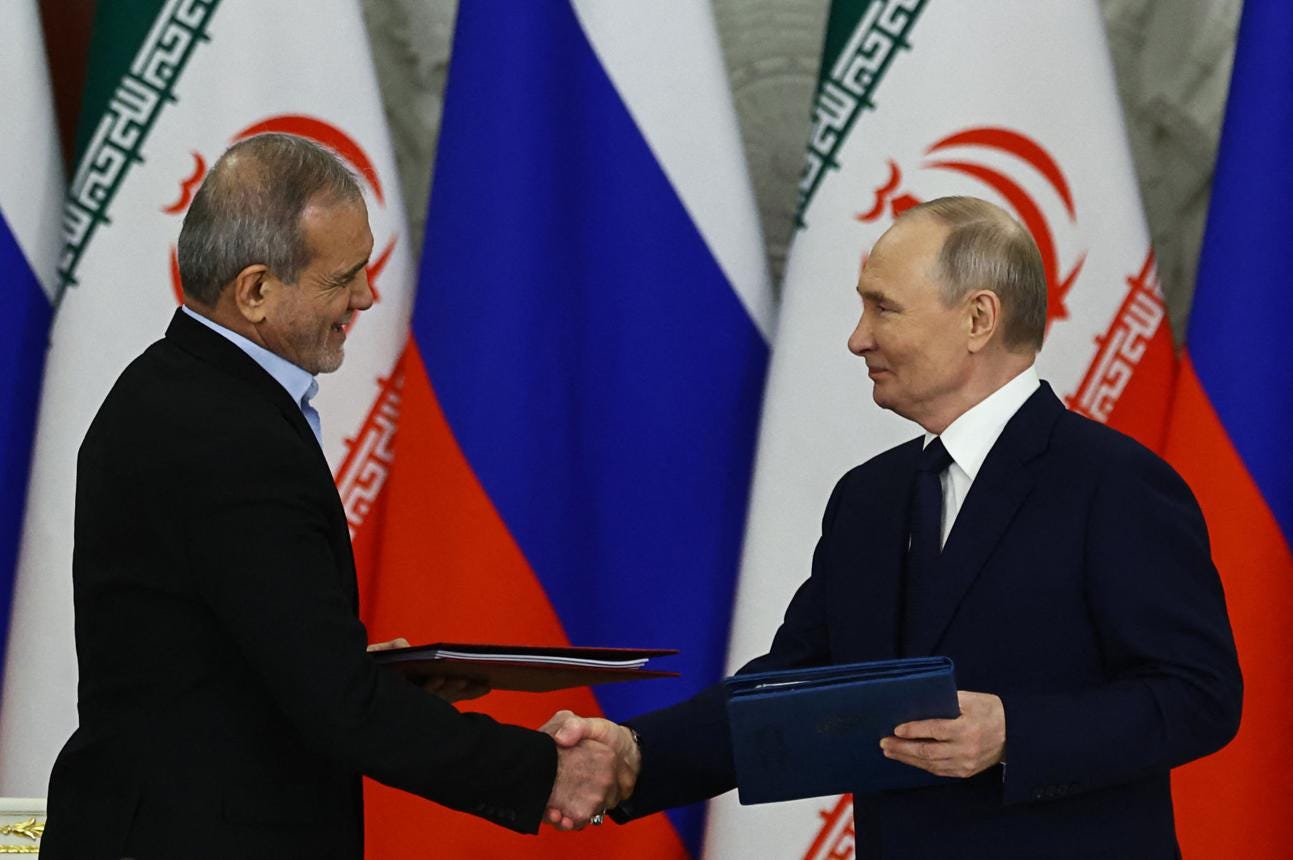
On January 17, 2025, Russian President Vladimir Putin and Iranian President Masoud Pezeshkian signed a comprehensive 20-year strategic partnership treaty in Moscow. The agreement covers security coordination, military cooperation, intelligence exchanges, energy development, financial transactions, transportation, and other activities. Iran’s parliament approved the agreement in May 2025.
The treaty is real. Its provisions are public. Its implications deserve investigation.
But its existence does not establish that Russia controls Iran, nor does diplomatic cooperation automatically amount to surrendering sovereignty. The relevant question is more precise: How much independent decision-making power does Iran retain when important elements of its economic and security systems depend on cooperation with a powerful foreign government?
That question becomes particularly significant when examining allegations of Russian assistance in Iranian security operations, controversial statements attributed to Putin concerning Iranian protests, and the language Pezeshkian has used to describe Moscow’s political and security guidance.
The Red Blood Journal investigation must follow actions, agreements, financial interests, technological dependencies, and their consequences for ordinary Iranians rather than treating either government’s declarations as conclusive proof of its intentions.
I. The Treaty: What Iran and Russia Actually Agreed To
The 2025 comprehensive strategic partnership agreement contains 47 articles and establishes a framework intended to last 20 years, with provisions for subsequent renewals.
Its language repeatedly affirms national independence, sovereign equality, territorial integrity, and noninterference. Article 3 specifically sets out those principles as foundations of the bilateral relationship.
At the same time, the treaty establishes mechanisms for considerably closer coordination between the two governments. The parties agree to exchange intelligence and security experience, expand military-technical cooperation, coordinate on international issues, and promote financial arrangements that reduce reliance on Western-controlled payment infrastructure.
These provisions create both opportunities and risks.
For Iran, cooperation offers potential access to military systems, civilian nuclear technology, diplomatic support, trade, and financial channels that may help reduce the effects of international sanctions. For Russia, the relationship provides an important regional partner, defense and energy opportunities, access to commercial routes, and the possibility of coordinating with another government opposed to significant elements of American foreign policy.
The crucial detail is that the agreement does not contain a mutual-defense obligation requiring Russia to enter a war on Iran’s behalf. The countries undertake not to assist an aggressor attacking the other, but that commitment is materially different from guaranteeing military intervention.
This distinction became especially relevant during the 2026 Iran conflict.
Iran could obtain Russian diplomatic support and assistance without possessing a treaty-based guarantee that Russian forces would directly defend Iranian territory.
The partnership therefore cannot be understood simply as an alliance of equals promising unconditional mutual protection. It is a strategic arrangement in which both countries have identifiable interests, differing capabilities, and limits to their obligations.
The practical test of sovereignty is whether Iran can refuse Russian demands, independently reconsider major policies, and alter its foreign relationships without facing consequences that effectively remove its freedom of choice.
That question cannot be answered through the treaty’s language alone. It requires examination of how the partnership operates.
II. The Intelligence Relationship: Cooperation or Dependence?
One of the most consequential elements of the Russia–Iran relationship concerns intelligence.
The strategic partnership explicitly provides for cooperation between the countries’ intelligence and security services. This is not merely an allegation offered by political opponents; it is an acknowledged feature of the formal relationship.
Such cooperation can encompass security assessments, exchanges of technical knowledge, and information relating to shared threats. However, the public treaty does not establish the full operational scope of intelligence sharing, nor does it disclose which organizations receive what information.
The relationship acquired further significance during 2026.
In April, Reuters examined a Ukrainian intelligence assessment alleging that Russian satellites had conducted detailed observations of military facilities and critical infrastructure across the Middle East, with the resulting intelligence potentially assisting Iranian attacks on American and regional targets. The assessment described a pattern of satellite reconnaissance followed by attacks, although such a pattern alone does not independently demonstrate the transmission of every targeting detail.
An Associated Press investigation published in October similarly examined Russian satellite activity around locations subsequently attacked by Iran-aligned armed groups. Its findings suggested substantial intelligence-related concerns, while acknowledging that the analysis did not directly observe the transfer of satellite data.
These reports are significant because they concern observable surveillance activity, geospatial analysis, and intelligence assessments rather than political speeches alone.
Yet an important distinction remains: Russian assistance to Iranian military operations does not itself demonstrate that Putin commands Iran’s armed forces or determines its political leadership.
Intelligence cooperation can create reciprocal advantage, but it can also generate dependency. A government that relies on another country for surveillance capabilities, military technologies, or technical expertise may become increasingly dependent upon that country’s willingness to continue supplying them.
The questions demanding further investigation are who requests intelligence, who controls its collection, what conditions govern its exchange, and whether access to these capabilities influences Iranian strategic decisions.
An independent state may choose to exchange intelligence. A dependent state may discover that its choices are constrained by the prospect of losing it.
The difference lies in the actual decision-making relationship.
III. Putin’s Statements About Iranian Protests: What Was He Really Saying?
One of the most revealing passages in the supplied Persian-language transcript concerns statements attributed to Vladimir Putin about protests in Iran.
According to the transcript, Putin discussed how social networks facilitated protest activity and how Iranian authorities struggled to control communications occurring through platforms outside their direct supervision. The report attributes to him an observation that Iranian officials were left with the option of shutting down communications.
The narrator interprets these remarks as evidence of Russian familiarity with the Islamic Republic’s internal security decisions. The transcript further attributes to Putin a statement that Russian officials had received information from the Revolutionary Guard while also independently monitoring events.
These statements, if accurately reproduced and placed in their complete context, would raise legitimate questions about the scope of information exchanged between Russian and Iranian authorities.
However, the particular speech has not been independently authenticated through a complete recording or official transcript in the sources reviewed here. The interpretation that Putin directed Iranian protest suppression is therefore not established.
What can be independently documented is that Iran imposed extensive internet restrictions during the nationwide protests beginning in late December 2025. On January 8, 2026, authorities initiated a near-total shutdown of internet connectivity. Restrictions continued in varying forms for months, and another severe interruption followed the beginning of the February 28 military conflict.
Iran’s documented internet restrictions
Jan 8
Nationwide shutdown begins
Feb 28
New blackout during military strikes
May 26
End date of tracked extended disruption
Timeline based on Internet Society Pulse. It does not mean every service was uniformly inaccessible for the entire period.

ISOC Pulse
The shutdowns affected communication, commerce, access to information, and the ability of Iranians to document and report events. They also demonstrated the importance of communications infrastructure as an instrument of governmental power.
The question is whether Russia merely observed these developments, exchanged information concerning them, supplied technical capabilities, or participated in decisions about their implementation.
Those are four different possibilities requiring four different standards of evidence.
IV. Russian Technology and the Suppression of Information
The original transcript advances the hypothesis that Russian and Chinese technology contributed to Iranian surveillance capabilities and efforts to restrict communications, including access to satellite internet.
It is a legitimate subject for investigation, particularly given both countries’ substantial experience in internet regulation and surveillance technology. But technical cooperation and direct participation in a particular crackdown must not be treated as interchangeable.
A July 2026 analysis from the Center for Strategic and International Studies examined Russian–Iranian cyber cooperation and cautioned that public descriptions of their collaboration sometimes exceed the available evidence. The analysis recognized substantial security and technological connections but found insufficient support for some sweeping claims about coordinated cyber operations.
This distinction matters because three different activities can look similar from outside: Iranian authorities using domestically controlled technology, Iran purchasing or adapting foreign equipment, and foreign intelligence personnel directly participating in an Iranian operation.
Establishing responsibility would require procurement records, technical documentation, credible testimony, authenticated communications, or forensic evidence identifying the relevant systems and operators.
The broader sovereignty concern exists regardless of which explanation proves correct.
When a government acquires technologies that can restrict communications, identify protesters, or monitor political activity, the public has a legitimate interest in understanding how those technologies are obtained, governed, and used.
If equipment or expertise comes from a foreign government, additional questions arise concerning continuing maintenance, access to collected information, technical dependencies, and the possibility of foreign influence.
A society’s communications infrastructure is not simply a technical asset. It is part of the practical foundation upon which citizens exchange information, conduct business, obtain medical assistance, and participate in civic life.
Control over that infrastructure can therefore become a powerful form of political control.
V. Pezeshkian’s Words: Diplomacy, Gratitude, or Political Subordination?
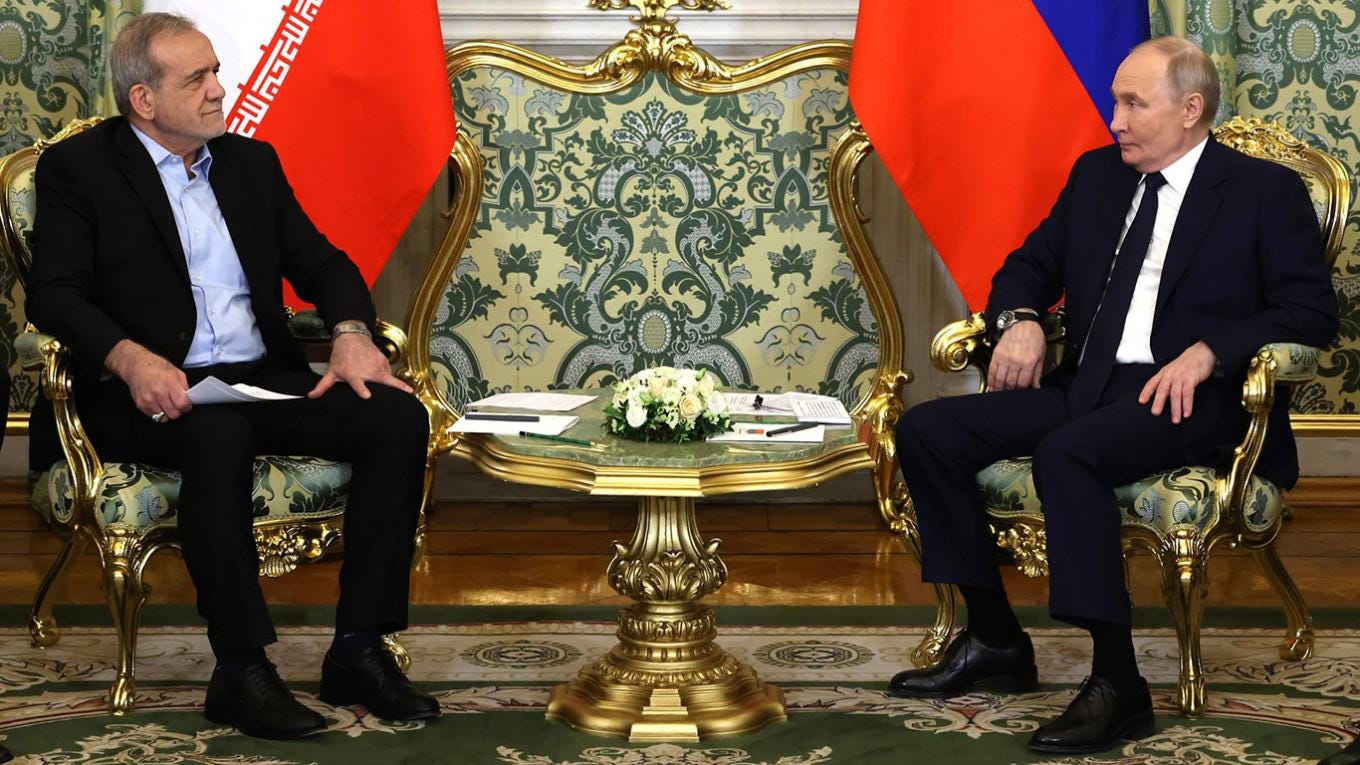
The supplied transcript also examines Masoud Pezeshkian’s meeting with Vladimir Putin and criticizes the Iranian president’s expressions of appreciation for Russian guidance and support.
In the original Persian remarks presented by the program, Pezeshkian refers to Russian assistance involving political, security, and economic matters. He also describes Foreign Minister Sergei Lavrov in familiar, fraternal language.
The narrator and a quoted Iranian reformist commentator interpret the encounter as unusually deferential, raising questions about whether the Iranian presidency is behaving as an equal diplomatic counterpart or as the representative of a dependent government.
There are two different levels of analysis here.
The first concerns the words themselves. A political leader’s public appreciation for another government’s support can indicate an important diplomatic relationship. It may also reflect political culture, negotiating style, personal language, or an attempt to communicate solidarity.
The second concerns actual decision-making authority. Establishing that a foreign government exercises political control would require evidence concerning instructions, obligations, coercive leverage, or decisions undertaken against Iran’s independently determined interests.
Formal appreciation is not sufficient proof of command.
Nevertheless, the remarks are worth studying alongside the broader relationship. Reuters reported in September 2026 that Pezeshkian thanked Putin for Russia’s position concerning the Iran conflict and publicly emphasized cooperation between Moscow and Tehran in resisting American unilateralism.
The question is not whether an Iranian president should speak warmly about a foreign leader. It is whether the language of friendship corresponds to arrangements that expand Iran’s independent choices or restrict them.
Political sovereignty is better measured through decisions than gestures.
VI. The Economic Relationship: Following the Money
Military and political cooperation receives much of the public attention, but economic arrangements may reveal more about the long-term structure of Russian–Iranian relations.
The strategic partnership includes cooperation in oil and gas development, civilian nuclear projects, banking, payments, transportation, and other commercial activities.
In September 2025, Russia’s state nuclear corporation Rosatom signed a reported $25 billion agreement to construct four nuclear power units in Iran. Moscow also promoted broader economic cooperation, including financing arrangements and commercial channels intended to operate despite Western sanctions.
A project of that magnitude raises questions extending far beyond diplomatic friendship.
Who finances construction? Which companies receive contracts and subcontracts? Who owns the resulting assets? What are the contractual obligations governing technology, maintenance, fuel, financing, and long-term operations? How will the costs and benefits be distributed among Iranian institutions, businesses, and consumers?
These questions do not assume wrongdoing. Foreign investment can provide genuine public benefits, including improved electricity generation, industrial development, and technical training.
But the greater the financial and technological dependence, the more important it becomes to examine contractual transparency and the government’s ability to pursue alternative arrangements.
An infrastructure agreement may be commercially beneficial while also creating strategic constraints. A country can gain electricity-generating capacity while remaining dependent upon foreign suppliers for maintenance or specialized components.
The sovereignty question therefore concerns the distribution of control, not merely the amount of investment.
A useful test is whether the Iranian population receives measurable improvements in living standards relative to the resources committed, while the state preserves meaningful control over essential services.
The same scrutiny should apply to Russian, Chinese, European, and American investments wherever foreign agreements significantly affect public infrastructure.
VII. The Ukraine Connection: What Does Russia Receive from Iran?
The relationship is not exclusively one in which Russia supplies Iran.
Since Russia’s full-scale invasion of Ukraine in 2022, cooperation involving Iranian-designed drones has become a major component of the two countries’ military relationship.
Russia has made extensive use of Iranian-designed drone technology in the war. Western governments have also accused Iran of transferring additional weapons to Russia, while Tehran has disputed particular allegations concerning its military support.
This means the relationship cannot be analyzed solely as Iran relying on Russia for protection.
Both governments have gained access to capabilities or strategic opportunities through cooperation.
For Russia, Iranian drone technology has played a role in sustaining military operations. For Iran, cooperation with Moscow provides access to a major military-industrial state, international diplomatic support, and economic relationships that may otherwise be difficult to obtain.
This creates a strategic partnership based partly on reciprocal necessity.
Yet reciprocal necessity does not necessarily create equal bargaining power. The parties have different economic resources, international relationships, military capabilities, and alternatives.
The danger emerges when cooperation becomes difficult to reconsider because each side has developed significant dependence on the other.
Iran’s independence must ultimately be assessed not only by its resistance to Western demands but by its capacity to make sovereign choices concerning Russia as well.
VIII. The Historical Memory: Iran Between Great Powers
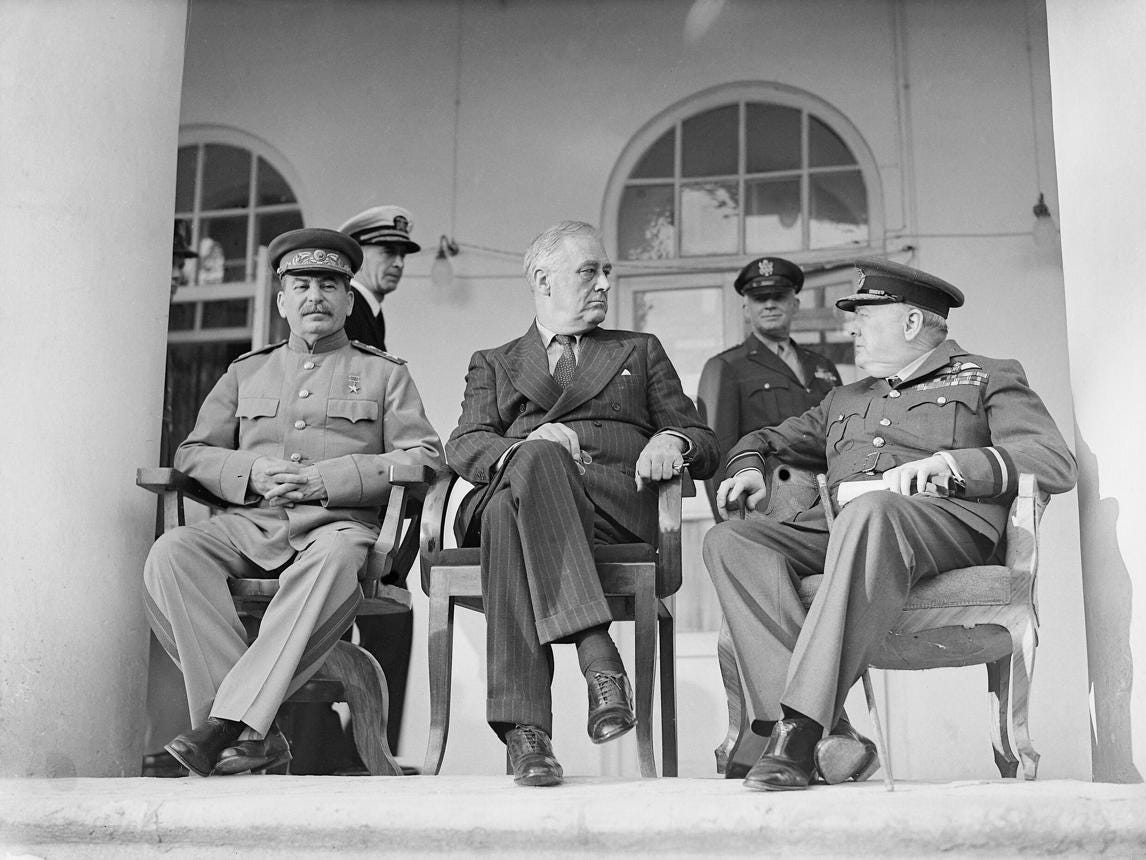
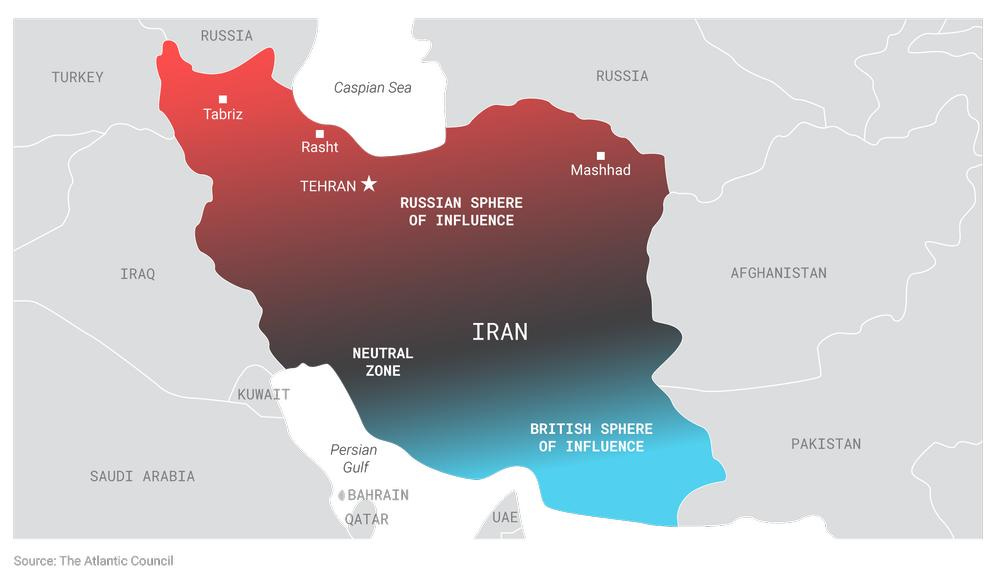
Iran’s suspicion of foreign influence has deep historical foundations.
In 1907, Britain and imperial Russia agreed to divide Persia into spheres of influence, without treating the wishes of the Persian population as the determining factor. During the Second World War, British and Soviet forces occupied Iran in 1941, citing strategic and wartime concerns. Soviet reluctance to withdraw from northern Iran after the war helped generate the 1946 Iran crisis.
These events matter because they demonstrate that Iran’s relationship with foreign powers cannot be reduced to a modern dispute between Washington and Tehran.
The country has repeatedly occupied a strategic position between larger powers interested in transportation routes, energy, military geography, and regional influence.
But historical experience should not be used to presume that every contemporary agreement reproduces the same pattern. The relevant question is whether today’s arrangements create identifiable constraints resembling earlier forms of external influence.
The lesson is institutional rather than nationalistic: governments should not confuse foreign protection with permanent alignment of interests.
A state that depends exclusively upon one powerful partner may find itself vulnerable when that partner’s priorities change.
IX. The Third-Party Beneficiary: Sanctions, Isolation, and Dependency
International sanctions form an important part of this investigation because they affect the range of economic relationships available to Iran.
Sanctions can restrict access to international banking, investment, technology, transportation, and commercial markets. Their stated purposes vary, including pressure concerning nuclear activities, military programs, human rights, and other security concerns.
But the consequences extend beyond the governments targeted by sanctions.
When conventional economic channels are restricted, specialized intermediaries and politically connected commercial networks may acquire increased importance. Countries capable of maintaining trade with the sanctioned state may gain additional bargaining leverage.
This creates a possible connection between international isolation and strategic dependency.
For Iran, relationships with Russia and China can provide alternatives to Western economic systems. At the same time, limited access to competing suppliers, investors, and financial institutions may reduce Iran’s negotiating leverage.
For Russia, its own sanctions exposure creates incentives to develop alternative financial channels and trading relationships. The agreement with Iran includes provisions designed to expand settlement using national currencies and banking arrangements independent of third countries.
The existence of these incentives does not establish that Moscow or Tehran deliberately seeks to prolong international isolation. Demonstrating such a strategy would require specific evidence.
But the economic structure is worthy of investigation.
Who earns fees when ordinary banking channels become unavailable? Which companies receive preferential contracts? Are alternative financial arrangements competitively priced? What percentage of trade benefits state-connected entities rather than independent businesses? And how do these arrangements affect ordinary Iranian consumers?
An action-first investigation should trace the financial consequences of sanctions and dependency without presuming that every outcome was deliberately engineered.
The central concern is whether political conflict creates a business environment in which some institutions benefit while the general population bears persistent costs.
X. The Most Important Question: Who Can Say No to Putin?
Perhaps the most practical test of political sovereignty is surprisingly simple.
Can Iran’s leaders refuse a Russian request when that request conflicts with Iran’s interests?
Can Tehran independently develop relations with governments that Moscow opposes? Can it purchase essential military or industrial technology from alternative suppliers? Can it decline intelligence cooperation? Can it renegotiate financial arrangements that cease to benefit Iran? And can it pursue a diplomatic settlement with the United States without requiring Russian approval?
The answers would provide more meaningful evidence of sovereignty than the language used during presidential meetings.
A government may have excellent relations with another country and remain independent. It may also maintain formal diplomatic independence while becoming heavily constrained by debt, technology, trade, intelligence cooperation, or security obligations.
These conditions exist on a spectrum rather than in a simple division between freedom and foreign control.
The 2025 treaty formally recognizes both countries as sovereign and independent. The available evidence also demonstrates extensive strategic cooperation.
Neither fact should be ignored.
What remains insufficiently established is the degree to which Russian preferences directly determine major Iranian decisions.
That is the unresolved investigative question.
XI. The Warden Change: Could Iran Exchange One Dependency for Another?
There is another dimension to this investigation that extends beyond Russia.
If Iran’s political system undergoes significant change, the removal of an existing leadership structure would not necessarily eliminate the economic, military, intelligence, and commercial arrangements that have developed around it.
Foreign governments, international investors, security organizations, and domestic financial networks may all seek to preserve valuable relationships regardless of which political figures occupy public office.
This does not establish a coordinated foreign plan to replace Iranian leaders while preserving their underlying networks. It identifies an institutional risk that can be investigated through contracts, ownership, continuity of personnel, and changes in decision-making authority.
The important distinction is between replacing rulers and establishing accountable institutions.
An Iranian government closely aligned with Washington would not automatically be more sovereign than one closely aligned with Moscow. Its independence would depend upon its actual capacity to make decisions in the interests of the Iranian population.
Similarly, a government that rejects American influence while accepting Russian political instructions would face its own sovereignty questions.
The principle must remain consistent regardless of which foreign country is involved.
The measurable objectives of independence include transparent government, accountable security institutions, meaningful economic choice, the protection of civil liberties, and the ability to enter or withdraw from international arrangements through lawful national decision-making.
A genuine transformation would require examining these structures rather than merely changing the identities of those who manage them.
🩸 The Red Blood Perspective — Follow the Agreements, Money, and Decisions
The documented relationship between Russia and Iran is extensive and consequential. The two governments signed a 20-year strategic partnership, expanded military and intelligence cooperation, developed trade and payment arrangements, and pursued major energy and infrastructure projects.
These are observable actions.
Reports concerning Russian intelligence support during the 2026 conflict add further evidence of significant strategic cooperation, although individual allegations about the transfer or operational use of intelligence require their own verification.
Iran’s internet shutdowns are also documented. Claims that Russian officials directed particular Iranian domestic security decisions, however, remain unestablished in the sources examined.
The evidence therefore supports an investigation into dependency and foreign influence. It does not establish that Putin secretly governs Iran or that Iranian leaders receive all their political instructions from Moscow.
The Red Blood approach asks the public to look beyond declarations of friendship and independence. It calls for examination of contractual rights, payment obligations, ownership, intelligence arrangements, technological reliance, and the actual freedom available to Iranian decision-makers.
It also demands consistency. Questions about foreign influence are legitimate whether the foreign power is Russia, China, the United States, Britain, or another country.
The central issue is not which foreign government receives the warmest diplomatic welcome. It is whether Iran’s institutions can independently protect the interests and rights of the people they govern.
An independent government is not defined by which foreign power it opposes. Its independence is demonstrated by the decisions it can make without surrendering control to another.
🌊❤️✨ The Ocean of Love and Positivity Perspective — When Fear Becomes Dependence
Political dependency has a human counterpart.
An individual can surrender personal independence through fear, attachment, material desire, or the belief that survival depends entirely upon someone stronger. Governments, although very different from individuals, can encounter similar pressures in their relationships with powerful partners.
The desire for security is understandable. Nations seek protection, economic opportunities, technological assistance, and international cooperation. Individuals seek stability, recognition, and belonging.
But protection and dependence are not the same thing.
In the Ocean of Love and Positivity perspective, freedom begins with the awareness that fear should not become the sole authority directing our actions. The physical human vehicle seeks survival and comfort, while the inner awareness can evaluate whether the choices made in pursuit of security remain consistent with dignity, compassion, and responsibility.
This distinction provides a useful moral lens through which to examine political power.
A leader may believe that preserving an institution justifies almost any compromise. Yet preservation of authority is not identical to protecting the population. The human consequences of the decisions must remain visible.
The same principle applies to the public. Replacing hatred of one foreign country with unquestioning trust in another does not necessarily create genuine independence. It may simply redirect emotional dependence toward a different authority.
Love and positivity do not require political passivity. They encourage responsibility, truthful examination, cooperation without domination, and respect for human dignity.
Iranians, Russians, Americans, Israelis, and people throughout the world should not be treated as extensions of their governments. Each population contains individuals with their own fears, hopes, responsibilities, and aspirations.
Political disagreements should not erase that shared humanity.
A more constructive form of international cooperation would allow societies to exchange knowledge, develop economic relationships, protect legitimate security interests, and maintain their independence without requiring hostility toward other populations.
For the individual, the path begins with conscience. For institutions, it requires accountability. For nations, it requires relationships that preserve the capacity to choose.
The objective is not isolation from the world. It is connection without domination.
Conclusion: Independence Cannot Be Outsourced
Iran’s relationship with Russia is no longer merely a matter of diplomatic symbolism. It includes a formal strategic treaty, military cooperation, intelligence relationships, financial arrangements, and major infrastructure commitments.
These developments have practical implications for Iran’s economy, defense capabilities, foreign policy, and bargaining position.
The available evidence does not justify the conclusion that Putin commands Iran. It does, however, justify sustained scrutiny of the degree to which Iran’s leaders can exercise independent judgment under conditions of international isolation and increasing strategic cooperation.
For ordinary Iranians, the most important question may not be whether a particular foreign capital gains influence over Tehran. It may be whether Iranian citizens gain meaningful influence over the institutions making decisions in their name.
A country’s independence is incomplete when its people lack the ability to scrutinize governmental decisions, examine major commitments, and hold officials accountable for their consequences.
The question must therefore remain open, evidence-based, and directed toward the public interest.
If Iran declares that no foreign power can determine its future, the measure of that declaration is not whether its leaders reject Washington or embrace Moscow. It is whether the people of Iran possess the institutions and rights necessary to determine their own future.
🩸🌊❤️✨ — Ocean of Love and Positivity
Blood connects us. The ocean unites us. Love guides us. Positivity illuminates our path.
Red Blood Journal | Independent Investigation
Research Sources
The report incorporates the previously supplied Persian-language transcript, especially the portions concerning Putin’s reported remarks about Iranian protests and Pezeshkian’s relationship with Moscow. Those passages are treated as attributed source claims where independent confirmation is incomplete.
Full text — Russia–Iran Comprehensive Strategic Partnership Treaty, January 2025
CSIS — Understanding Russia–Iran Collaboration in Cyberspace, July 2026
Internet Society Pulse — Iran’s 2026 internet shutdown timeline
Associated Press — Russian satellite reconnaissance and Iran-aligned operations, October 2026
📄
The Moscow-Tehran Sovereignty Paradox
Oct 30, 2026
The provided text investigates the complex and evolving relationship between Russia and Iran, questioning whether Tehran’s long-standing pursuit of national sovereignty is compromised by its growing reliance on Moscow. It examines a twenty-year strategic partnership treaty, alongside increased intelligence sharing, technological cooperation, and multibillion-dollar economic agreements signed in recent years. While acknowledging extensive military and diplomatic collaboration, the report notes that available evidence does not definitively prove that Russian President Vladimir Putin directly commands Iranian leadership or dictates its internal policies. Instead, the investigation emphasizes that true national independence must be measured through transparent governance, verifiable contractual obligations, and the capacity of Iranian citizens to hold their own institutions accountable rather than merely shifting reliance from one foreign power to another.