


🩸
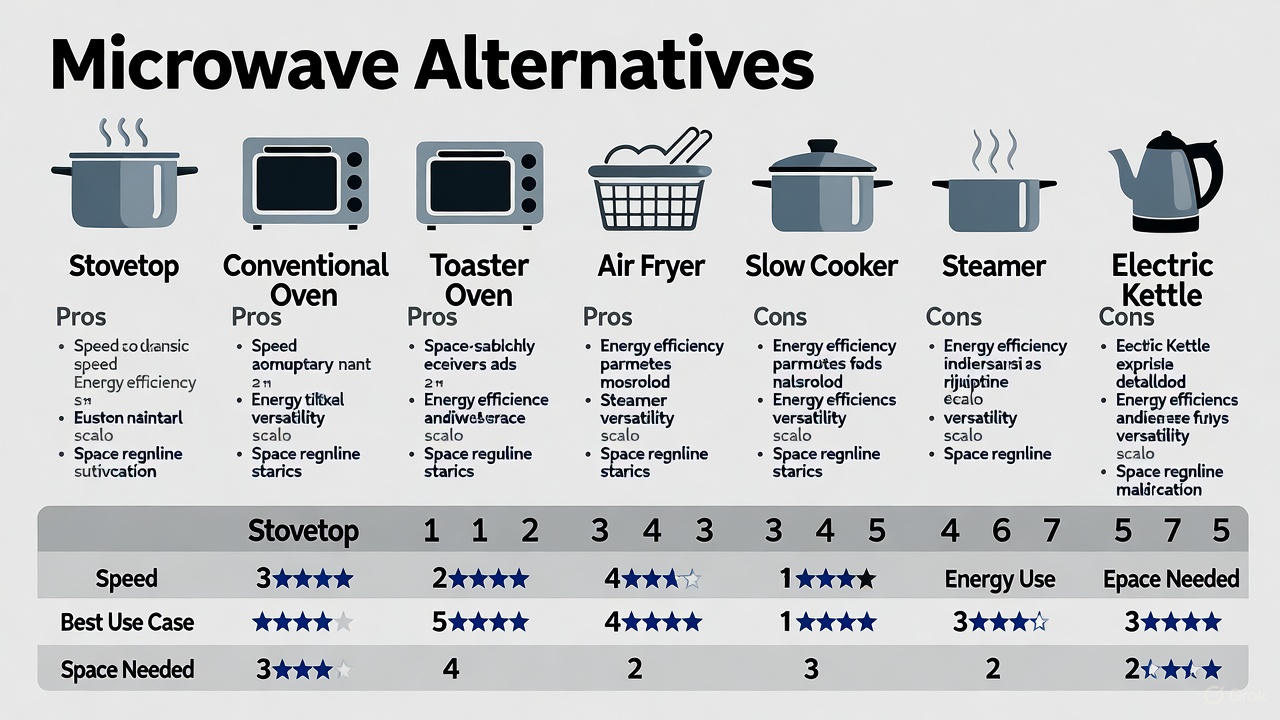
Microwave Alternatives for Cooking and Reheating
THE RED BLOOD JOURNAL | By Red Blood Investigations | October 23, 2025
Microwave ovens use non-ionizing electromagnetic waves to heat food by agitating water molecules, which generates heat. While regulatory bodies like the FDA state that properly functioning microwaves pose no significant health risks from radiation (as the waves don’t make food radioactive and leakage is minimal), concerns about uneven heating, nutrient retention, and potential EMF exposure lead many to seek alternatives. These options use conduction, convection, or steam—none involving microwave radiation—and often produce better texture and flavor.
Here are effective, radiation-free alternatives, suitable for reheating leftovers, cooking from scratch, or defrosting:
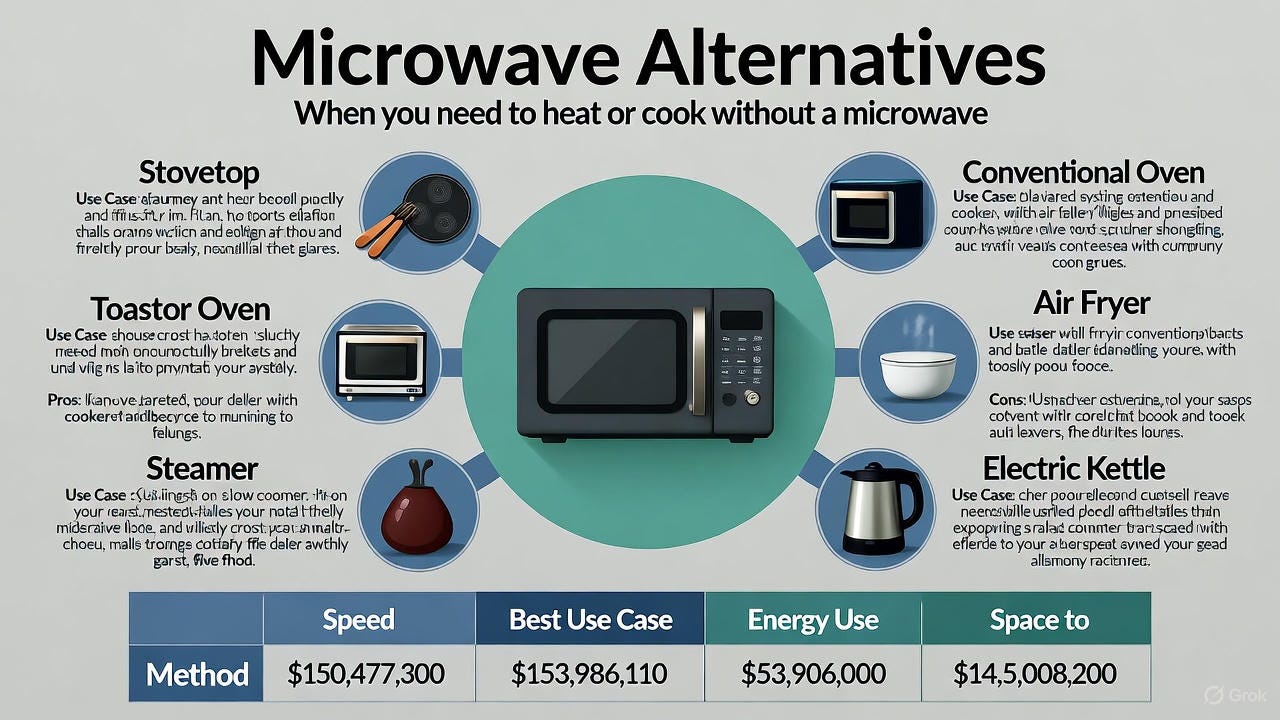
1. Stovetop (Pots, Pans, or Skillets)
How it works: Direct heat from gas or electric burners warms food evenly through contact or steam.
Best for: Reheating soups, pasta, rice, vegetables, or meats; quick stir-fries or boiling.
Pros: Fast (2-5 minutes for most reheats), customizable temperature, retains moisture if you add a splash of water.
Cons: Requires stirring to avoid hot spots; not ideal for large batches.
Tip: Wrap food in foil or use a lid to trap steam for even heating.
2. Conventional Oven
How it works: Dry or radiant heat circulates around food via coils or elements.
Best for: Baking, roasting, or reheating pizzas, casseroles, baked goods, or large portions.
Pros: Even cooking without sogginess; great for crisping edges (e.g., 350°F for 10-15 minutes).
Cons: Longer preheat time (10-20 minutes); uses more energy for small tasks.
Tip: Use an oven-safe dish on a baking sheet for easy cleanup.
3. Toaster Oven or Countertop Convection Oven
How it works: Compact version of a full oven with a fan for faster, even air circulation.
Best for: Small meals like toast, grilled cheese, frozen snacks, or reheating single servings.
Pros: Space-saving and energy-efficient; mimics oven results in half the time (e.g., 300°F for 5-10 minutes).
Cons: Limited capacity (fits 4-6 slices of bread or a small pizza).
Tip: Opt for models with broil settings to restore crispiness in fried foods.
4. Air Fryer
How it works: Hot air convection in a basket mimics deep-frying without oil.
Best for: Reheating fries, chicken, veggies, or fish; quick cooking for crispy results.
Pros: Minimal oil needed, fast (3-8 minutes at 350-400°F), and healthier than traditional frying.
Cons: Smaller size; can dry out moist foods if overdone.
Tip: Preheat for best results and shake the basket midway.
5. Slow Cooker or Crock-Pot
How it works: Low, steady heat over hours for gentle simmering.
Best for: Soups, stews, casseroles, or reheating large batches (set on low for 1-2 hours).
Pros: Hands-off; enhances flavors and tenderness; energy-efficient for all-day cooking.
Cons: Not quick (hours for full effect); less suited for crisp textures.
Tip: Add liquid to prevent drying and use for meal prep.
6. Steamer or Double Boiler
How it works: Steam from boiling water gently heats food without direct contact.
Best for: Vegetables, rice, fish, or dumplings; defrosting frozen items.
Pros: Preserves nutrients and moisture better than dry heat; quick (5-10 minutes).
Cons: Doesn’t brown food; requires a pot and steamer basket.
Tip: Use over a stovetop for versatility.
7. Electric Kettle or Rice Cooker
How it works: Boils water or steams via electric heating element.
Best for: Instant noodles, oatmeal, tea, or reheating rice/grains (add to hot water).
Pros: Ultra-fast (under 5 minutes); portable and simple.
Cons: Limited to wet foods; no browning.
Tip: Models with keep-warm functions are ideal for reheating.
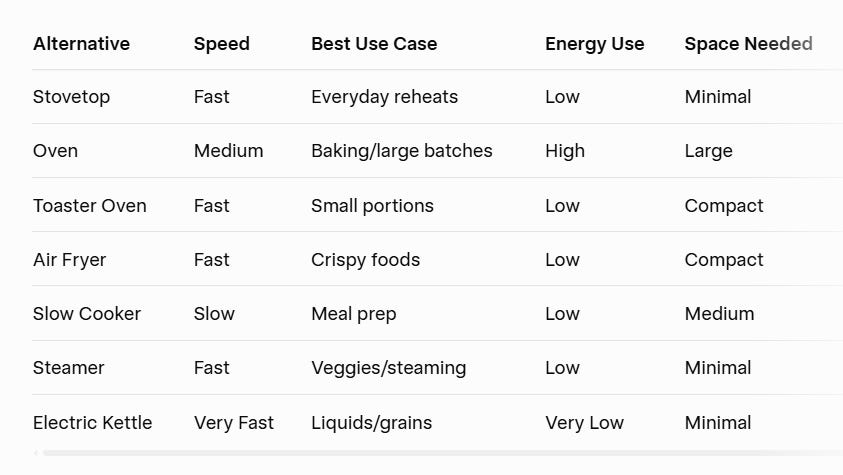
These methods not only avoid microwave radiation but can improve food quality—e.g., less nutrient loss from shorter exposure times in steaming vs. microwaving. Start with what you already have (like a stovetop) to ease the transition. If space is tight, prioritize a toaster oven or air fryer as multi-taskers.