


🩸 🏦 💵 ⚖️ 👁️ ⛓️ 🌊 — Everett Stern: The Whistleblower Who Exposed a Banking Scandal—and the System That Survived
From a young compliance officer at HSBC to a $1.9 billion banking settlement, the struggle for accountability, and the consequences for America’s financial system.
RED BLOOD JOURNAL | INVESTIGATIVE REPORT | OCTOBER 15, 2026

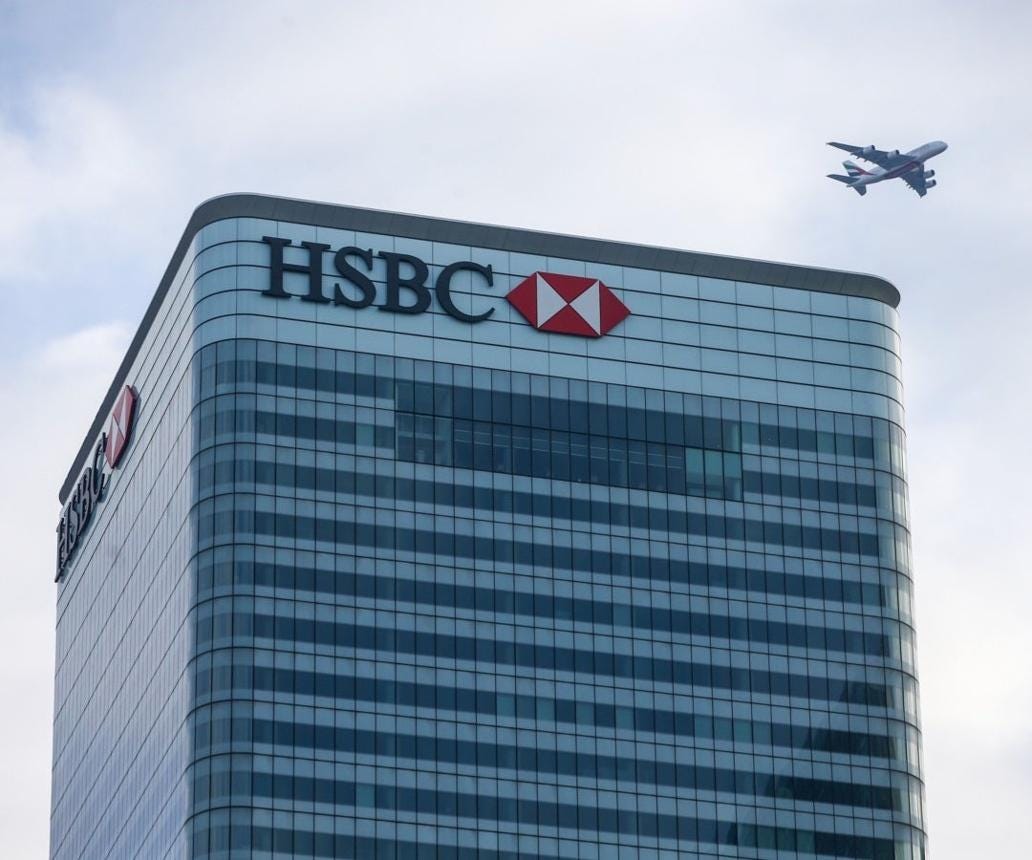

What happens when an employee discovers that a bank entrusted with safeguarding the financial system has allowed enormous sums of suspicious money to move through it? What happens when the employee reports concerns, the wrongdoing becomes a federal scandal, the institution pays an extraordinary financial penalty, and the bank continues operating?
The story of Everett Stern begins with one man’s reported experience inside HSBC, but it leads to a much larger question about the American banking system: when financial institutions violate the law, who ultimately pays the price, who decides the consequences, and what changes afterward?
In 2012, HSBC entered into a historic $1.921 billion settlement with American authorities involving anti-money-laundering and sanctions violations. Federal investigators documented failures that had exposed the United States financial system to drug-trafficking proceeds, prohibited international payments, and other financial-crime risks. Stern became a publicly recognized whistleblower connected to this scandal. Yet the difference between uncovering wrongdoing and establishing personal responsibility for every part of the government’s investigation remains important. The record supports the seriousness of the institutional failures; it does not establish that Stern alone brought about the settlement.
Red Blood Journal — Think Beyond the Script. Do not accept the bank’s explanations merely because they come from an institution, the government’s conclusions merely because they come from authorities, or the whistleblower’s assertions merely because he challenged both. Question the evidence, including the conclusions in this report. Follow the actions, the money, the incentives, and the consequences.
I. Before the Whistleblower: The Making of Everett Stern
According to his published biographical information, Stern was born in New York City, graduated from Florida Atlantic University, and received an MBA from Stetson University in 2010. His educational background placed him on a career path into finance and business, and his early professional experience would eventually bring him into one of the world’s largest banking organizations. His precise early employment history and childhood circumstances are not sufficiently documented in the independently accessible records to reconstruct them reliably.
In 2010, Stern joined HSBC in an anti-money-laundering compliance position. Banking compliance is not normally the part of finance that attracts attention. It operates behind the transactions, monitoring warning signs, reviewing customers and counterparties, and determining when potentially suspicious activity should be escalated. Its purpose is to prevent financial institutions from becoming channels through which criminal proceeds or prohibited payments move unnoticed.
Stern’s assignment involved examining international transactions, including activity connected to the Middle East. According to his account, he began identifying transactions and relationships that raised serious concerns about terrorist financing, sanctions compliance, and the effectiveness of HSBC’s internal controls. As he investigated, he says he encountered resistance rather than the institutional support he expected. This description comes from Stern’s account of his experience; the documentary findings about HSBC’s wider failures are independently established, but every detail of his conversations with supervisors has not been publicly verified.
The distinction between what a compliance officer is supposed to do and what an organization actually rewards is central to this story. A bank earns money by maintaining relationships, processing payments, and providing financial services. A compliance officer may have to recommend restrictions, additional scrutiny, or termination of those same relationships. That creates an inherent tension which responsible governance must manage. The existence of such a tension does not prove corruption, but it explains why independence, escalation procedures, and protection against retaliation are indispensable in financial compliance.
II. The Warnings: When the Internal System Failed
Stern says he reported suspicious activity internally, became frustrated with the bank’s response, and ultimately contacted American authorities. His account describes a decision that altered the direction of his career: he would no longer rely entirely on the bank to investigate its own conduct.
This is the defining moment in many whistleblower cases. An employee is not necessarily trying to destroy an institution when raising a concern; the employee may initially be trying to make the institution follow its own policies and the law. But if internal escalation produces no meaningful correction, the employee confronts the question of whether professional loyalty means protecting the organization from disclosure or protecting the public from the organization’s failures.
Stern’s 2026 remarks to compliance professionals emphasized precisely this institutional dilemma. His argument is that an external whistleblower often emerges because internal warnings were not effectively resolved. That is a valuable general observation, though independently verifying how HSBC handled each warning he made would require the original internal records.
The central issue is therefore not simply whether HSBC had a compliance department. It clearly did. The question is whether its compliance systems had sufficient authority, staffing, accurate information, and independence to challenge profitable banking activities. The subsequent federal findings show that, across significant parts of HSBC’s operations, these controls were seriously inadequate.
III. The Money: What Investigators Actually Found
By the time Stern was raising his concerns, weaknesses within HSBC’s American operations had already developed over several years. The Department of Justice determined that, from 2006 through 2010, HSBC Bank USA had failed to maintain an effective anti-money-laundering program and had inadequately monitored high-risk correspondent banking relationships. HSBC Mexico was especially important because it provided access to the American dollar system while operating in an environment with serious drug-trafficking and money-laundering risks.
Federal investigators found that HSBC Bank USA had failed to adequately monitor enormous transaction volumes involving its Mexican affiliate. The government’s findings included more than $670 billion in wire transfers and $9.4 billion in physical U.S. dollar purchases over the relevant period. Those numbers describe activity inadequately monitored, not amounts conclusively established to be criminal proceeds. Treating all $670 billion as laundered drug money would misrepresent the evidence.
Wire transfers inadequately monitored
$670B+
Physical-dollar purchases inadequately monitored
$9.4B+
HSBC Mexico-related transaction volumes described in the U.S. Department of Justice findings. These are not equivalent to proven criminal proceeds.
The Senate investigation described how global banks could expose the American financial system to money-laundering and terrorist-financing risks through correspondent accounts and affiliated institutions. HSBC’s problems involved more than one country and more than one control failure. They included deficiencies relating to suspicious travelers’ checks, high-risk international relationships, and financial transactions connected to sanctioned jurisdictions.
The Iranian connection is also significant. HSBC’s sanctions violations included prohibited transactions involving Iran and other restricted jurisdictions. The evidence establishes that these transactions breached American sanctions requirements. It does not establish that every transaction involving Iran financed terrorism or that the Iranian population as a whole was responsible for such activity. Distinguishing the conduct of financial institutions and prohibited counterparties from the ordinary people affected by international sanctions is essential.
The deeper significance is that American dollars function as a major international settlement currency, giving U.S. banks and dollar-clearing channels an influential position in global finance. When monitoring fails at those gateways, financial risks originating far outside American borders can enter the U.S. system. HSBC demonstrated how an institution’s international structure could magnify the consequences of domestic compliance failures.
IV. The Federal Investigation and the $1.9 Billion Settlement
On July 17, 2012, the Senate Permanent Subcommittee on Investigations held a hearing on HSBC’s financial-crime vulnerabilities. The inquiry examined what went wrong inside the bank and how regulators had supervised its activities. In December, the Department of Justice announced the resolution of its criminal investigation through a deferred prosecution agreement.
HSBC accepted responsibility for specified violations, agreed to financial penalties and forfeiture, and committed to changes in its anti-money-laundering and sanctions controls. The combined payments to American authorities totaled approximately $1.921 billion, including $1.256 billion in forfeiture and approximately $665 million in civil penalties.
How the 2012 settlement was structured

■ Civil penalties
■ Forfeiture
Combined payments to U.S. authorities, approximately $1.921 billion
USD millions. The settlement combined separate legal and regulatory components; it was not one undifferentiated fine.
Yet a deferred prosecution agreement is different from a completed criminal prosecution. The government agreed to defer the case while HSBC fulfilled specified requirements. Those included cooperation, compliance improvements, oversight by an independent monitor, and financial consequences. The arrangement gave prosecutors a mechanism to compel organizational reforms without immediately taking the corporate criminal case to trial.
The decision also raised legitimate public-policy questions. A deferred prosecution agreement can encourage cooperation and reform while potentially reducing collateral harm to employees, customers, and financial markets. Critics can reasonably ask whether the same approach creates insufficient personal deterrence when senior decision-makers do not face comparable individual criminal consequences. These are competing considerations within enforcement policy, and the HSBC settlement remains a useful example for examining them.
The government reported substantial management changes and recovery of some deferred compensation from senior compliance officials. These are real consequences, but they are not equivalent to criminal convictions of all individuals who may have been responsible for the violations.
V. The Aftermath: A Bank Under Supervision
The settlement did not end the story. In July 2013, an independent compliance monitor began evaluating HSBC’s progress under the agreement. The purpose was to determine whether the bank was making meaningful improvements to the systems that had failed: transaction monitoring, risk assessment, sanctions screening, escalation procedures, and internal controls.
This period is particularly important because it provides an opportunity to judge the outcome through conduct rather than promises. HSBC’s own regulatory disclosures reveal that, although improvements were taking place, serious concerns remained. Its 2016 annual filing acknowledged the monitor’s concerns about slow progress, unresolved control deficiencies, and potential financial-crime issues requiring further review. The monitor had not certified full implementation of the agreed remedial measures at that time.
The findings complicate any simple narrative that HSBC paid a penalty and immediately corrected its weaknesses. A bank can spend years strengthening procedures while still struggling to make those procedures work consistently across a global organization. This also illustrates why changes to official policy documents do not necessarily translate into operational improvements.
In 2017, an additional legal development clarified the boundaries of oversight. In United States v. HSBC Bank USA, the Second Circuit Court of Appeals held that the district court lacked the asserted authority to supervise implementation of the deferred prosecution agreement in the manner it had attempted. The ruling also restricted the legal basis for public access to the confidential monitor’s report in that proceeding.
This was not a judicial declaration that HSBC had committed no wrongdoing. Rather, it concerned the separation of powers, prosecutorial discretion, and the extent of judicial oversight of such agreements. Nevertheless, it exposed another important dimension of the story: the public was being asked to rely heavily on prosecutors and regulators to evaluate compliance with an agreement whose most detailed monitoring findings were not fully available for public examination.
By December 2017, the five-year deferred prosecution agreement had expired, and the deferred charges were dismissed. HSBC’s 2017 annual report confirmed that outcome, while also explaining that monitoring-related activity could continue in other regulatory capacities. The original criminal case had reached its conclusion without a corporate conviction following trial.
The result leaves two facts that must be held together. HSBC faced substantial financial consequences and was required to undertake genuine remedial work. At the same time, the record does not justify saying that the bank’s entire compliance culture had been permanently transformed or that all underlying risks had disappeared.
VI. What Happened to Stern After HSBC?
While HSBC continued operating under federal oversight, Stern’s career moved in another direction. He has described professional and personal costs resulting from his decision to report the bank’s conduct. His own account is that whistleblowing damaged his opportunities in the financial-compliance field and forced him to build a new career.
He subsequently founded Tactical Rabbit, a private intelligence company providing investigative and analytical services. The transition from bank employee to private intelligence entrepreneur is revealing: instead of remaining within a large financial institution’s compliance structure, Stern attempted to create an independent business focused on uncovering information for clients.
Later federal court records show that this business had engaged contractors and undertaken intelligence-related contracts. In litigation, Stern and Tactical Rabbit represented that the company generated approximately $1 million in gross revenue between 2017 and 2021. This figure is a party’s representation documented by the court, not an independently audited financial result.
Stern also entered politics, campaigning for the United States Senate in Pennsylvania, and later made allegations involving people connected to Michael Flynn and post-2020 election political activity. Those allegations generated additional disputes, including litigation. Their existence does not make the alleged conduct proven, just as legal conflicts involving Stern do not automatically invalidate his earlier whistleblowing.
By 2024, Stern and Tactical Rabbit were pursuing federal litigation alleging misappropriation of business information, defamation, and client diversion involving former associates and other defendants. In February 2026, a Pennsylvania federal court dismissed claims against several defendants on jurisdictional grounds. Such rulings have important procedural consequences but do not necessarily resolve whether the underlying factual allegations are true.
The most recent chapter identified in this investigation comes from September and October 2026. Stern continued publicly discussing compliance failures and whistleblower protection, including at a professional compliance conference. His central message remained focused on what happens when organizations fail to respond effectively to employees who raise concerns.
As of October 15, 2026, Stern’s story is not concluded. He remains a living public figure with continuing professional activity and legal disputes. It would therefore be misleading to describe this as a completed life story. What can be examined is the documented trajectory of his career through the present.
VII. The Effects on American Banking: What Actually Changed?
This is where Stern’s personal story connects to the wider American financial system. The HSBC settlement became a significant example of the risks created when international banking services, sanctions compliance, and anti-money-laundering controls are not effectively coordinated.
But the banking system did not change overnight, and it would be inaccurate to attribute all subsequent American banking reforms to one whistleblower or even to one enforcement action.
Timeline: The scandal and its banking consequences
2006–2010 — The underlying compliance failures
HSBC Bank USA failed to adequately monitor major international transaction flows and maintain effective financial-crime controls.
2010–2011 — Stern’s disclosures
Stern says he escalated suspicious activity concerns and contacted external authorities after becoming dissatisfied with internal responses.
2012 — Congressional scrutiny and enforcement
The Senate investigated HSBC; American authorities announced approximately $1.921 billion in combined financial consequences.
2013–2017 — Mandatory remediation
HSBC implemented reforms under an independent monitoring arrangement, though significant deficiencies remained during part of the period.
December 2017 — Deferred prosecution ends
The original deferred criminal charges were dismissed after the agreement expired.
2020s — Continuing banking regulation
Anti-money-laundering law, financial-crime detection, and whistleblower protections continued to evolve through legislation and regulatory programs extending well beyond the HSBC case.
1. Banks faced greater expectations for monitoring international payments
One major lesson from HSBC concerned correspondent banking, the arrangements through which banks provide services to other financial institutions. These relationships make international commerce possible, but they can also conceal risks when the institution processing payments has insufficient information about the underlying customers and counterparties.
The HSBC case provided a particularly detailed public example of how a bank’s foreign affiliates and correspondent relationships could transmit risks into the United States. It strengthened the evidentiary foundation for demands that banks examine international relationships more carefully, maintain reliable customer information, and escalate suspicious activity.
However, many of the relevant duties existed before the HSBC settlement under the Bank Secrecy Act and related regulations. The scandal did not invent anti-money-laundering law. It exposed failures to meet obligations that already existed.
2. Compliance became a question of governance, not merely software
The record showed that financial-crime controls depend on more than computer programs detecting unusual transactions. A monitoring alert must be assessed by qualified employees, important concerns must reach appropriate decision-makers, and management must have both the authority and the willingness to restrict profitable relationships where necessary.
This is why the HSBC agreement required improvements extending beyond transaction screening. Corporate governance, reporting procedures, personnel, and compliance independence were also important. The case illustrates the limits of treating financial crime as a purely technical problem.
3. Regulators demonstrated the scale of corporate financial penalties
A $1.921 billion settlement demonstrated that financial regulators and prosecutors could impose very substantial costs on a global banking institution. The penalties were significant in absolute terms, and the accompanying obligations affected the bank’s organization and compliance expenditures.
Yet the deterrent value cannot be judged from the dollar amount alone. To evaluate it, investigators would need to compare the penalty with the economic benefits associated with the conduct, the institution’s ability to pay, the personal consequences for decision-makers, and whether similar violations recurred.
Without those comparisons, neither the claim that the settlement was sufficient nor the claim that it was meaningless is adequately established.
4. Deferred prosecution became a central accountability question
The HSBC case illustrates an enduring tension in financial law enforcement. Prosecutors sometimes seek institutional reform through negotiated agreements because a corporate criminal conviction may have consequences for customers, markets, and employees who were not involved in wrongdoing.
But negotiating with an institution creates another difficulty: the organization may avoid a trial in which evidence and individual responsibility would receive more extensive public examination.
The question is not whether deferred prosecution agreements are always appropriate or always inappropriate. It is whether their conditions produce measurable changes and whether public oversight is sufficient to establish that the changes occurred.
5. Whistleblower protection remained a crucial weakness
Stern’s reported experience demonstrates how much an employee may risk by reporting concerns about a powerful employer. His allegations of personal and professional retaliation require individual evidentiary scrutiny, but the broader structural problem does not depend on accepting every part of his account.
Organizations cannot rely on employees to identify wrongdoing if those employees reasonably fear that reporting it will end their careers. Conversely, whistleblower systems must incorporate fair investigation and protection against unsupported accusations. Effective compliance requires both the freedom to report and procedures to determine what the evidence actually shows.
6. American banking did not become immune to financial crime
One of the most important conclusions is also the simplest: a major enforcement settlement cannot eliminate money laundering from an international financial system.
Financial institutions continue to face risks arising from international payments, complex ownership structures, criminal organizations, sanctions evasion, and weaknesses in customer due diligence. The HSBC case changed the public record of what could go wrong and imposed substantial obligations on HSBC itself, but there is no sound basis for claiming that Stern’s disclosures permanently corrected American banking.
Financial-crime prevention remains a continuing process, not an event that ends when a settlement is signed.
VIII. The Question of the Federal Reserve: Who Was Watching the Banks?
The history becomes more revealing when we examine the distribution of responsibility within American banking regulation. The Federal Reserve supervises important parts of the banking system, but it is not the only authority responsible for financial crimes or bank oversight. The Office of the Comptroller of the Currency supervises national banks, FinCEN administers important Bank Secrecy Act requirements, OFAC administers economic sanctions, and the Department of Justice investigates and prosecutes federal crimes.
That division of authority helps explain why the HSBC settlement involved several government agencies. The Federal Reserve also issued orders concerning HSBC’s activities, and the bank subsequently disclosed that its independent monitor had regulatory responsibilities associated with Federal Reserve oversight.
The relevance to the Federal Reserve’s creation in 1913 is not that the bankers who drafted the original Jekyll Island proposal secretly directed HSBC’s misconduct a century later. There is no evidence supporting that historical leap. The deeper institutional connection is the ongoing question of how a banking system can combine private financial activity with public supervision without allowing commercial interests to compromise regulatory effectiveness.
A bank is privately operated, but its access to payment networks, dollar clearing, deposit infrastructure, and the broader financial system has public consequences. When its controls fail, the damage may extend beyond its shareholders. Regulators therefore have responsibilities that cannot be delegated entirely to banks’ internal compliance departments.
HSBC’s record suggests that a well-designed framework must examine both sides of the relationship: what banks do with the authority and opportunities available to them, and what supervisors do when warning signs become visible. An independent investigation should evaluate the conduct of each rather than assuming either institutional innocence or institutional conspiracy.
IX. The Human Consequences: Who Pays When a Bank Breaks the Rules?
The largest figures in the HSBC record concern dollars, but the human consequences extend beyond balance sheets. The federal findings involved exposure to drug-trafficking proceeds and other financial-crime risks. Those activities are connected to real-world harm, including violence, corruption, exploitation, and the weakening of lawful institutions. But the government’s documentation of money-laundering vulnerabilities must not be treated as proof that each inadequately monitored transaction directly produced a particular harm.
Employees also bear consequences. Compliance personnel who report genuine concerns may face professional risks, while ordinary workers in a sanctioned bank may face restructuring, increased scrutiny, and organizational disruption without having participated in wrongdoing. Customers and communities depend on banks functioning reliably, making enforcement design a question of public interest as well as punishment.
What about the people who approve risky relationships, override controls, or fail to respond to warnings? The HSBC settlement demonstrates the difficulty of translating corporate responsibility into a complete public accounting of individual decisions. Financial penalties, changes in management, compensation recovery, and compliance obligations address different parts of that problem, but they should not be mistaken for one another.
In this sense, the central conflict is not simply between Stern and HSBC. It is between a system that concentrates decision-making power within institutions and a system of accountability that must establish who exercised that power, what they knew, and what consequences followed.
X. 🩸 The Red Blood Perspective
The temptation in a story like this is to choose a hero and a villain, then interpret everything through that choice. Everett Stern becomes either the courageous outsider who brought down a corrupt banking operation or a controversial figure whose later disputes invalidate his earlier disclosures. HSBC becomes either an example of corporate corruption beyond repair or a bank that made mistakes and paid for them. Neither simplified narrative is an adequate substitute for examining the record.
What the documents show is more important. HSBC failed to maintain effective anti-money-laundering controls across significant areas of its operations. American authorities documented the failures, imposed historic financial consequences, and required extensive remediation. The bank nevertheless continued operating, and the original deferred criminal charges were dismissed in 2017. Stern, meanwhile, developed a career outside banking compliance and continued to face professional and legal controversy.
Those outcomes lead to questions that must remain open to evidence. Did the settlement impose enough personal accountability? Did regulators intervene as effectively as the available warning signs required? How much of the government’s evidence originated with Stern? Did the reformed controls work over time? And how should a democratic society ensure that institutions exercising enormous financial influence remain answerable to the public?
The Red Blood method is to follow actions rather than accept speeches as proof. In this case, that means examining transactions, warnings, regulatory orders, judicial decisions, compliance findings, financial incentives, and actual consequences. It also means refusing to accept Stern’s every assertion merely because his earlier warnings concerned a genuine scandal.
The purpose of investigating power is not to replace one unquestioned authority with another. It is to make authority answerable to evidence.
XI. 🌊❤️✨ Ocean of Love and Positivity Perspective
A society cannot protect itself through fear, suspicion, and punishment alone. It also needs the conditions under which people can recognize errors, report wrongdoing, correct harmful practices, and rebuild trust. Properly understood, accountability serves those goals. It should protect victims, prevent repetition, restore what can be restored, and make destructive conduct less likely.
For banks, that means creating environments where employees can raise concerns without having to destroy their careers to be heard. For regulators, it means acting consistently and transparently. For whistleblowers, it means protecting the right to speak while remaining responsible for the accuracy of accusations. For the public, it means evaluating the evidence without surrendering judgment to institutions, personalities, or political loyalties.
Justice should be measured not only by the size of a penalty but by whether people are better protected afterward. The purpose is correction and prevention, not revenge.
A Final Challenge from Red Blood Journal — Think Beyond What You Are Told
Before accepting this report, challenge it. Return to the Senate findings, the Department of Justice settlement, HSBC’s regulatory disclosures, the judicial opinions, and Stern’s own accounts. Identify which statements are confirmed by primary documents and which remain allegations or interpretations. Examine the arguments for negotiated corporate enforcement as carefully as the arguments against it.
Then ask the question that belongs to every citizen: if the same evidence concerned an institution with less money and less influence, would the legal process and practical consequences have been the same? The available record does not prove the answer, but it provides a serious basis for asking the question.
Red Blood Journal does not ask for belief. It asks for examination. Imagination can suggest possibilities, but evidence must determine conclusions. Question the world, question the powerful, question the whistleblower, and question Red Blood Journal itself.
Red Blood Journal — Think Beyond the Script
🩸🌊❤️✨ — Ocean of Love and Positivity
Blood connects us. The ocean unites us. Love guides us. Positivity illuminates our path.
Primary-source documentation
This report deliberately prioritizes government records, court opinions, corporate disclosures, and Stern’s own public statements rather than mainstream media accounts.
U.S. Senate — HSBC hearing and investigative evidence, July 2012.
Department of Justice — Original HSBC settlement documents, 2012.
HSBC USA — 2016 regulatory disclosures and monitor findings.
HSBC USA — 2017 regulatory disclosures and completion of deferred prosecution.
Federal appeals court — United States v. HSBC Bank USA, 2017.
Society of Corporate Compliance and Ethics — Stern’s experience, October 2026.
Final investigative assessment: The strongest documented effect of the HSBC scandal was on HSBC itself: financial penalties, management consequences, mandated compliance reforms, and several years of monitoring. The affair also became an important case study for the larger American banking system. But a precise nationwide reform or quantifiable reduction in financial crime directly attributable to Everett Stern has not been established by the records examined. That distinction is essential to preserving this report’s credibility.
🏦
Banking Scandals and Whistleblower Accountability
Oct 15, 2026
The provided sources examine the monumental HSBC banking scandal of 2012, highlighting the severe anti-money-laundering and sanctions failures that exposed the United States financial system to massive illicit fund flows. The narrative centers on Everett Stern, a former compliance officer whose internal warnings and subsequent outreach to federal authorities helped ignite a historic investigation resulting in a $1.9 billion corporate settlement. While the bank faced significant financial penalties, mandatory reforms, and years of federal monitoring under a deferred prosecution agreement, the texts critically evaluate the ongoing challenges of individual accountability and corporate deterrence. Furthermore, the material explores Stern’s subsequent career as a private intelligence entrepreneur and public speaker, emphasizing that major financial penalties alone do not permanently eliminate systemic vulnerabilities in global banking.