


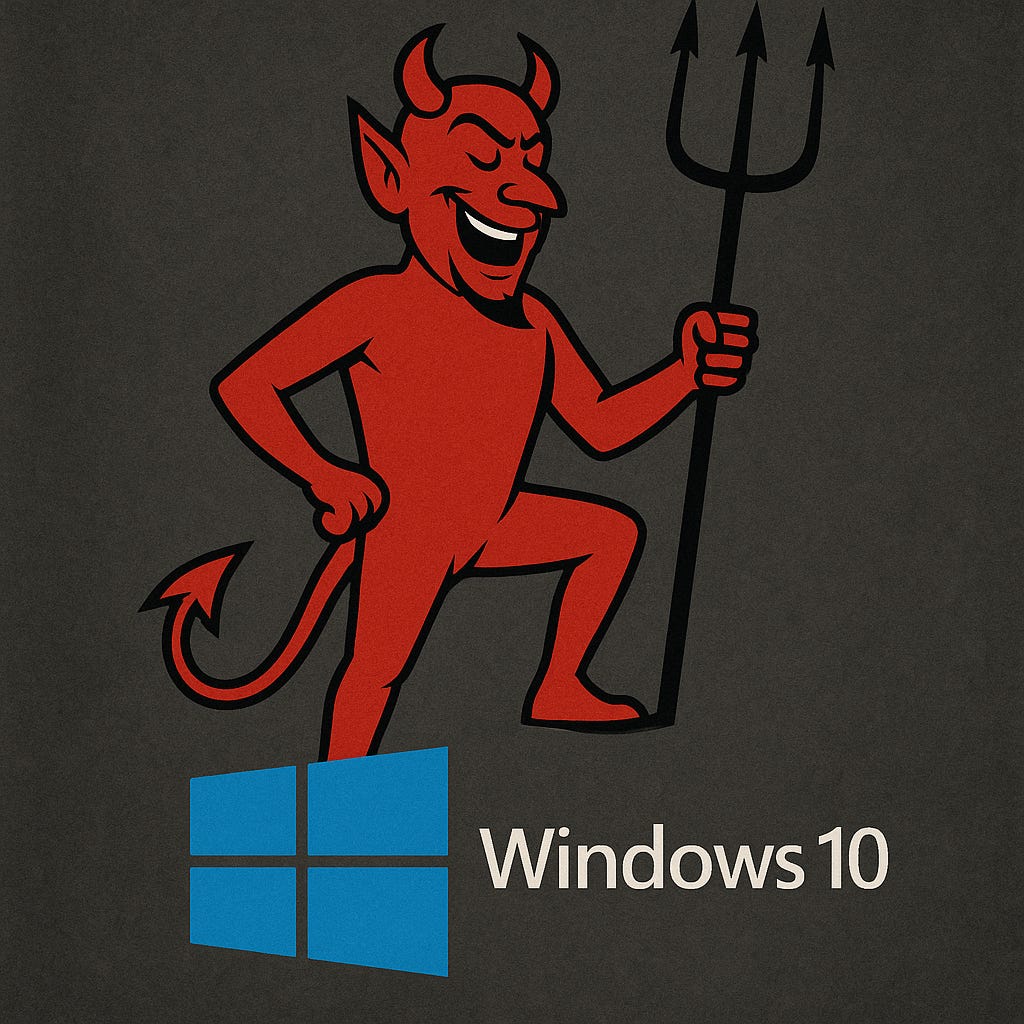
🧩 Behind the Curtain of Microsoft’s “Security Modernization”
When a company like Microsoft announces the “end of life” for a product used by hundreds of millions, it’s rarely just about innovation. The public story—security, modernization, progress—often masks deeper corporate motives. What’s happening with the end of Windows 10 is not a simple software update; it’s a forced migration that exposes how modern tech empires manipulate “security” and “progress” to sustain profits, control markets, and accelerate planned obsolescence.
💻 The Narrative: Security & Modernization
Microsoft’s official explanation is that “a core principle of security is modernizing to the latest software versions.” On its surface, this sounds logical: newer code, fewer vulnerabilities. But as security journalists and right-to-repair advocates point out, that logic collapses under scrutiny.
If modernizing truly meant “keeping users safe,” the company could easily extend updates for Windows 10—especially given that it’s charging European customers for extended support. The U.S. cutoff therefore isn’t about capability; it’s about incentivizing mass hardware replacement.
💰 The Hidden Motive: Economic Engineered Obsolescence
More than 400 million computers will be rendered “insecure” overnight—not because they’re broken, but because they don’t meet Windows 11’s arbitrary hardware rules. The infamous TPM 2.0 requirement is less a security necessity than a built-in sales trigger for PC manufacturers, chipmakers, and Microsoft’s OEM partners.
This isn’t a glitch; it’s a business model. By declaring hundreds of millions of functioning machines obsolete, Microsoft ensures a wave of hardware demand that benefits:
Intel, AMD, and hardware vendors, who need new cycles to keep Wall Street happy.
Microsoft itself, which gains license revenue and telemetry control from a more centralized, cloud-dependent Windows 11 ecosystem.
Cloud and AI partners, since Windows 11 is designed to integrate tightly with online authentication, Copilot AI, and subscription-based services.
In effect, the “end of support” is a controlled demolition of independent computing—replacing it with a subscription-cloud dependency loop.
🧨 The Security Mirage
When updates stop, Microsoft warns of “security risks.” But the real danger is systemic: the company is creating a security crisis to justify upgrades. The moment unpatched Windows 10 systems are exploited by ransomware, the narrative will shift from “optional upgrade” to “public necessity.”
It’s a subtle psychological tactic: manufacture vulnerability, then sell safety. And all under the banner of cybersecurity responsibility.
🌎 The Environmental Lie
Buried in the chaos is the ecological disaster. Analysts estimate that killing Windows 10 will send over 1.6 billion pounds of e-waste into landfills—working machines filled with rare minerals and toxic components. Microsoft has spent years advertising its “sustainability goals,” yet this move undermines every green pledge it has made.
The reality is simple: a functioning computer doesn’t stop working because of software. It stops because corporations decide it should.
🧠 The Deeper Layer: Digital Control
Windows 11 isn’t merely an operating system—it’s a gateway to a monitored computing environment. The new OS integrates tighter identity requirements, hardware-bound encryption, and AI features that rely on constant cloud connectivity. The coming phaseout of Windows 10 removes the last widespread platform where users could still operate semi-independently—without mandatory online verification or integrated AI data collection.
In that light, October 14 2025 marks not just the end of Windows 10, but the end of an era of user sovereignty in personal computing.
🔧 The Counter-Movement
Grassroots groups like PIRG and Secure Resilient Future Foundation are leading campaigns urging users to resist the upgrade cycle: install Linux, revive machines through open-source OSes, or pressure lawmakers to enforce extended support. Their message is clear—ownership must outlast the corporate timeline.
Because when updates become a lever of control, the right to repair becomes a right to freedom.
✍️ Final Word
In a world where “security” is the new language of obedience, Microsoft’s Windows 10 sunset isn’t a technical inevitability—it’s a manufactured extinction event.
Behind the corporate slogans of innovation lies a quieter truth: the world’s largest software company is using fear, not progress, to rewrite what it means to own a computer.
—Red Blood, Investigative Tech Report